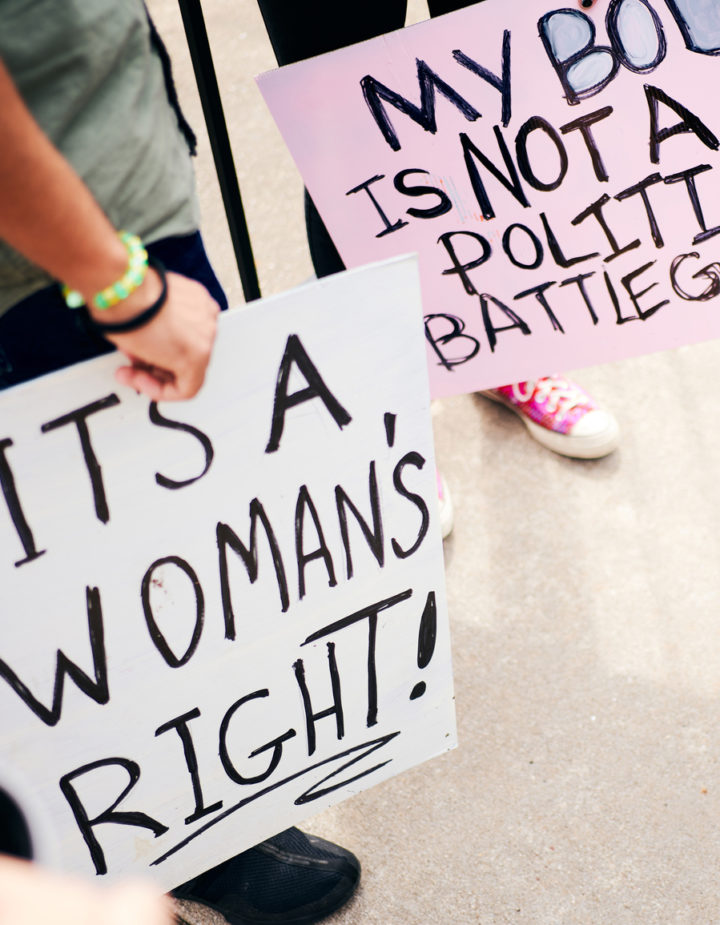
The Reversal of Roe v. Wade Will Set Off A Drastic Chain of Events From reproductive health to IVF.

By Babe | Photo by Stocksy

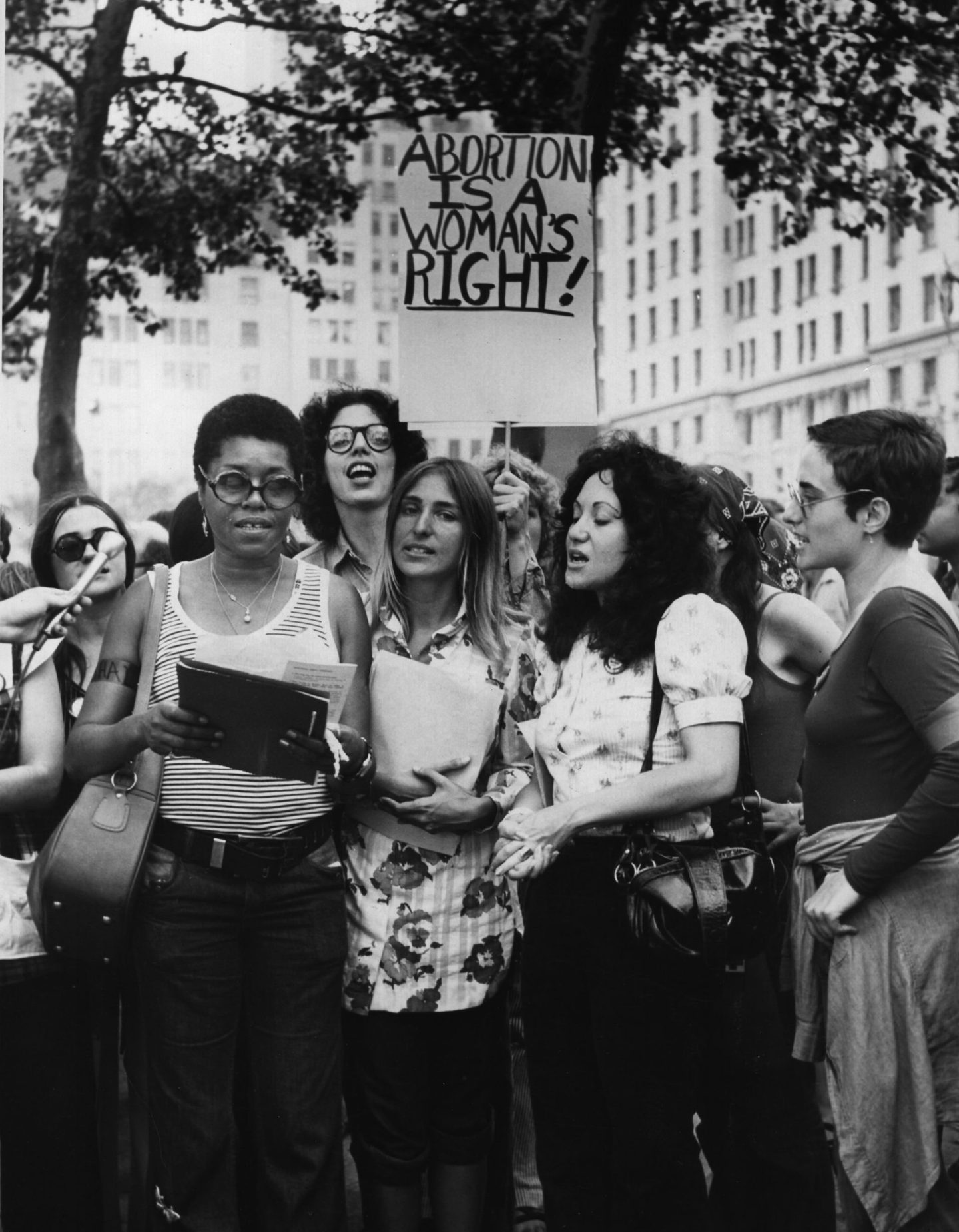
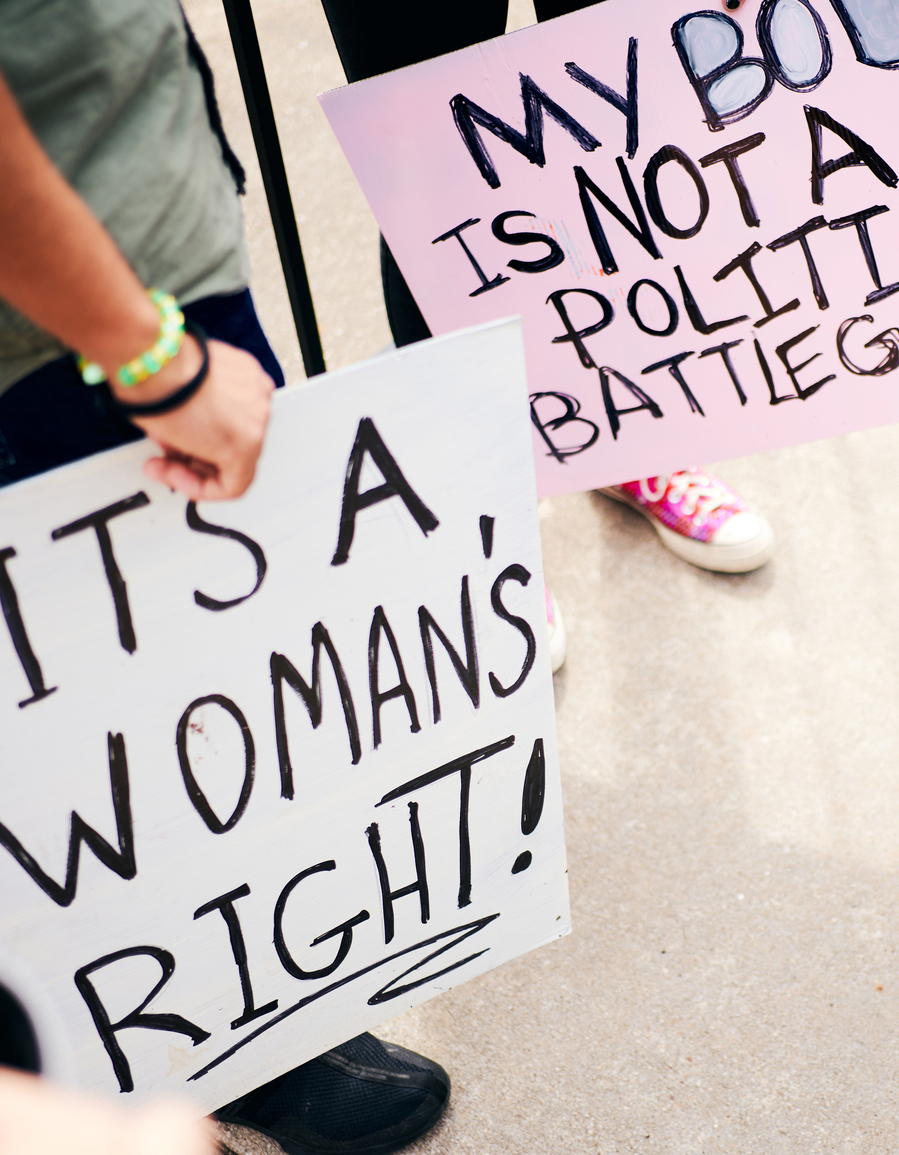
Now that the unthinkable has happened – Roe v. Wade has officially been reversed by the Supreme Court – we’re starting to slowly understand the drastic chain of events it will set off across all aspects of society and our lives at large. From surrogacy options to the economy, we’re dismantling the longterm consequences of this decision across multiple areas of women’s lives.

It Will Affect the Economy by Forcing Women Out of The Workplace

Even when abortion was federally legal, new mothers have always lacked the support and infrastructure to enable them to succeed at work and at home. The pay gap plus lack of affordable childcare and lack of paid leave policy are just a few of the factors that forced women out of the workforce at higher rates than men. Today there are still 656,000 fewer women in the workforce than there were pre-pandemic, according to the National Women’s Law Center.

Now, overturning Roe v. Wade will impact women’s ability care for their future children and work at the same time. Approximately 60% of women in the U.S. who have abortions are already mothers, and approximately one-third of women seeking an abortion cite wanting to terminate the pregnancy to care for children they already have, according to a study in the Journal of Pediatrics.

It Will Affect Disabled and Marginalized People At Higher Rates

Disabled people are at high risk of being in a situation where they would need access to an abortion. According to a survey conducted by the Bureau of Justice Statistics, disabled people were over three times more likely than non-disabled people to experience sexual assault. The likelihood increases for people with multiple disabilities.

Mia Ives-Rublee, director of the Disability Justice Initiative at the Center for American Progress, said that access to abortion is crucial to the survival of disabled people because for some, carrying a pregnancy to term could put their own life in danger.

The U.S. Supreme Court’s decision also means Black and Hispanic women will bear the brunt of the decreased access to care, according to statistics analyzed by the Associated Press.

Where abortions are outlawed, those same women — often poor — will likely have the hardest time traveling to distant parts of the country to terminate pregnancies. They could end up raising children they might struggle to afford, according to Laurie Bertram Roberts, a Black woman and volunteer at Mississippi’s only abortion clinic. Roberts is also executive director of the Alabama-based Yellowhammer Fund, which provides financial support for women seeking abortions.

It Will Affect IVF Offerings

The Supreme Court’s decision has raised fears that it could have “far-reaching ramifications” on people looking to get pregnant and the clinics providing services to help them. Experts have previously told CNN that a high court ruling could open up the legal terrain for states to interfere with IVF. Fertility doctors and academics who study the legal landscape around fertility told CNN there is uncertainty — both about how abortion laws already on the books will be interpreted and about how lawmakers and local prosecutors may seek to push the envelope. They fear the lack of clarity will affect the treatments doctors are willing to offer IVF patients and the decisions people will have to make about how to pursue growing their families.

It Will Affect the Surrogacy Industry

According to the International Fertility Law Group, in surrogacy arrangements, “intended parents, the surrogate and her husband and family agree in a written contract what measures will be taken in specific circumstances.” That means that both parties might agree that, if the surrogate became pregnant with multiple embryos, the number would or could be reduced. For instance, as in the case of fetal abnormality or disease, the parties might agree to terminate the pregnancy.

Now with Roe overturned, a surrogate who lived in a state where abortion was banned would be forced to travel to another state where the procedure is allowed. Some state legislators already have advanced plans to prevent women from traveling from a state. Roe’s overturn may result in a decline in surrogacy in anti-abortion states and an increased demand for surrogates in pro-choice states.

It Will Affect Abortion Training and the Future Of Reproductive Health

According to the Association of American Medical Colleges, overturning Roe v. Wade will make it harder for future OB-GYNs and other providers to learn to perform abortions. It will also affect other forms of medical training, including miscarriage management, counseling patients, and emergency care.

“The widespread criminalization of an aspect of health care and the effect we expect on medical education is unprecedented,” says Scott Sullivan, MD, a spokesperson for the American College of Obstetricians and Gynecologists (ACOG), the country’s largest OB-GYN professional organization.

The academy predicts it will also have a profound impact on the education of tens of thousands of medical trainees, among them OB-GYN residents who are required to learn abortion-related procedures such as those done after miscarriage.

It Will Hurt Women and Babies

One of the most immediate impacts Roe v. Wade will have on women’s health is maternal health, especially considering that the United States already has one of the highest maternal mortality rates in the developed world, according to Dr. Ana Langer, director of the Women and Health Initiative and a professor of public health at the Harvard T.H. Chan School of Public Health.

According to the Centers for Disease Control and Prevention (CDC), around 700 women die each year due to pregnancy or delivery complications within the first year after giving birth in the U.S., which continues to have the highest maternal mortality rate among developed nations.

Public-health researchers and economists submitted evidence to the Supreme Court ahead of the case showing that restricting abortion access has negative consequences for pregnant people, who are at increased risk of physical and mental-health issues when they are denied an abortion, and for infant health. “We know from other severe restrictions in states like Texas what happens when abortion access is curtailed,” says Liza Fuentes, a senior research scientist at the Guttmacher Institute.

Another potential consequence of restricting access to abortion is that people might try to end their pregnancies without clinical supervision. Some are likely to do this with abortion medications, which are safe and effective, according to the World Health Organization.
Physical and Emotional Healing During Postpartum Because it's been a lot.

By Babe | Photo by Valeria Harris

The postpartum stage is a lot of things. Amazing, intense, joyous, and for many women, incredibly traumatic both physically and emotionally. Join Gina Conley, doula and founder of MamasteFit, Bonnie Silva, doula and newborn care specialist, Nikki Knowles, a midwife and founder of Dallas Birth, and Aviva Romm, MD, midwife, and herbalist as they explore paths to wellness and healing in the postpartum phase.

Peace Out, Bug Bites These patches are the solve for all your outdoor hangs.

By Babe | Photos courtesy of All Better Co.

Say good-bye to itchy legs, yucky cortisone and the obscene odor of traditional bug spray – you know, the kind that makes you feel high? (not the good kind.)

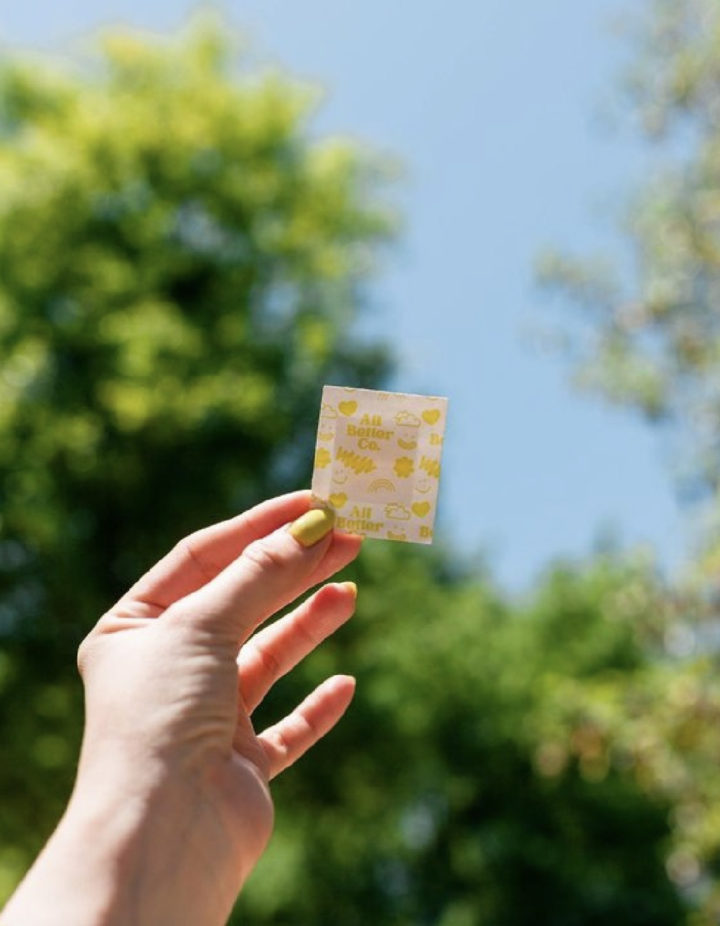
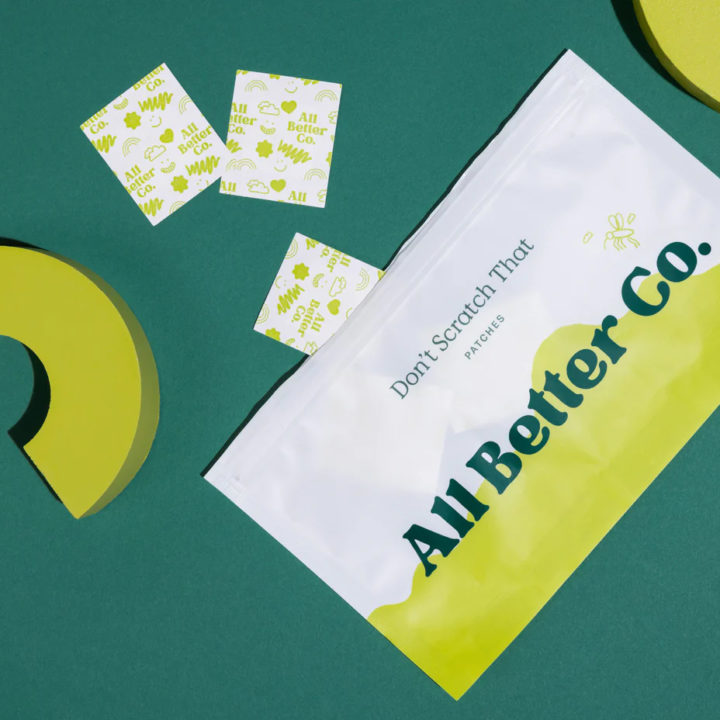
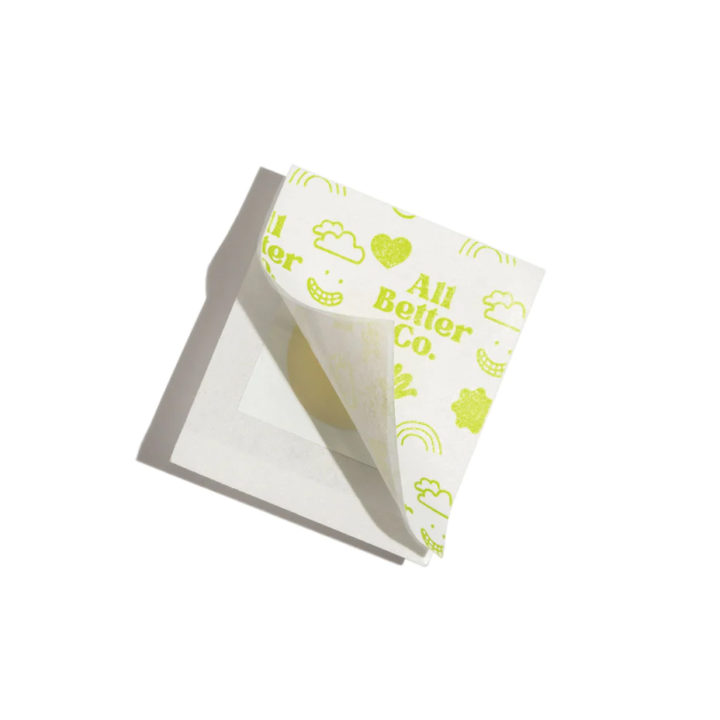
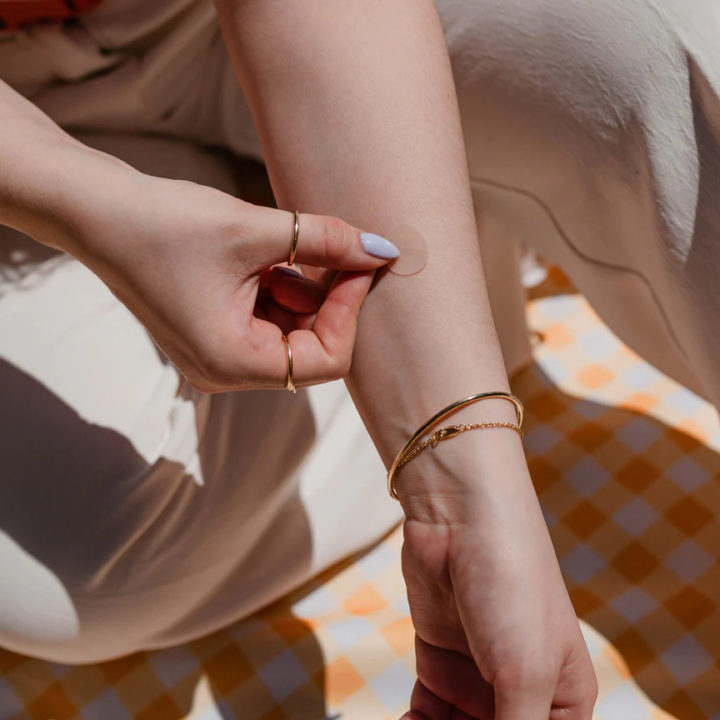
We’re obsessed with All Better Co.’s Don’t Scratch That patches, the first-of-its kind solution for itchy bumps and bites that is as smart as it is simple. These self-adhesive hydrocolloidal patches creates a seal around the targeted area to concentrate the reaction so your and your babe’s skin can just focus on calming down and chilling out. It’s all due to one hero ingredient – tea tree oil that helps soothe inflammation and quiets the itch.

It’s also super easy to use and kinda cute, too. So you and your babe can be itch-free all summer.

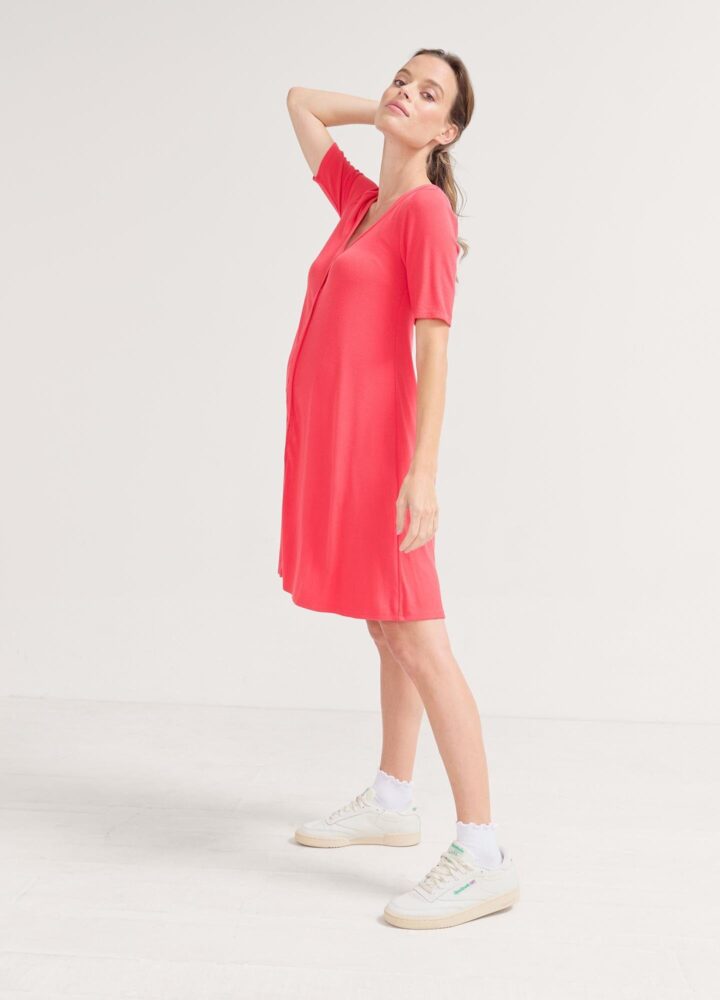
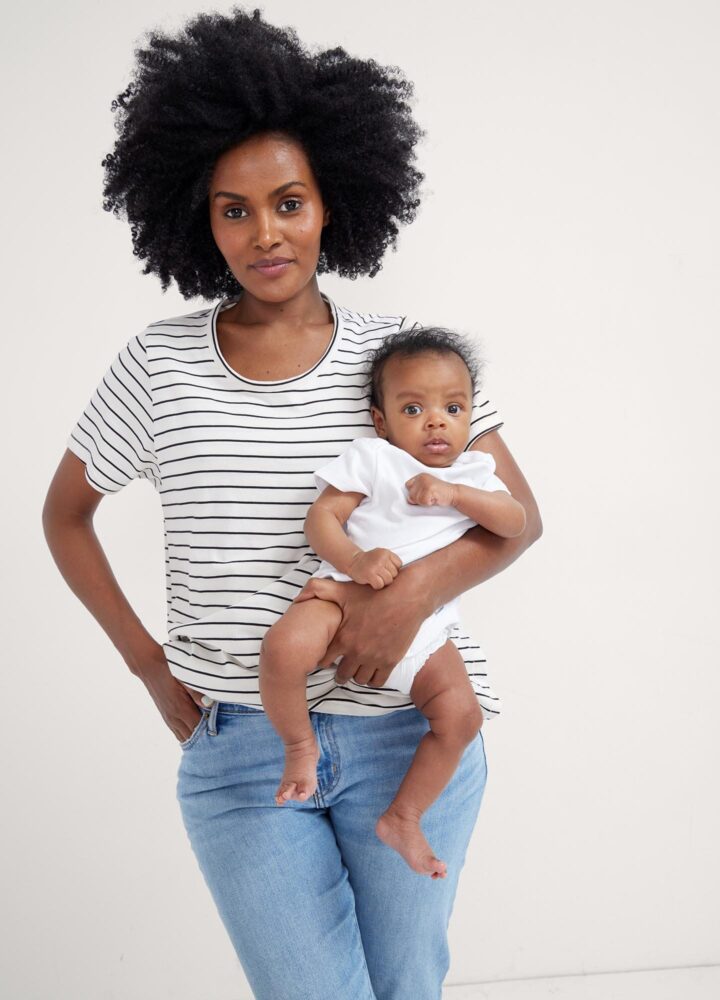
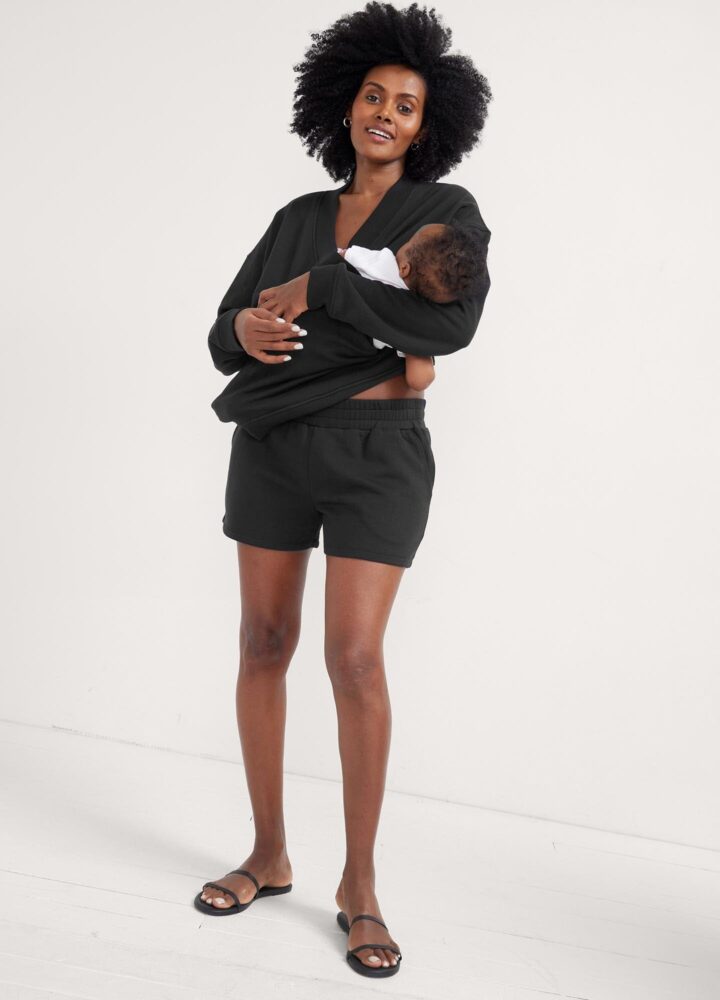
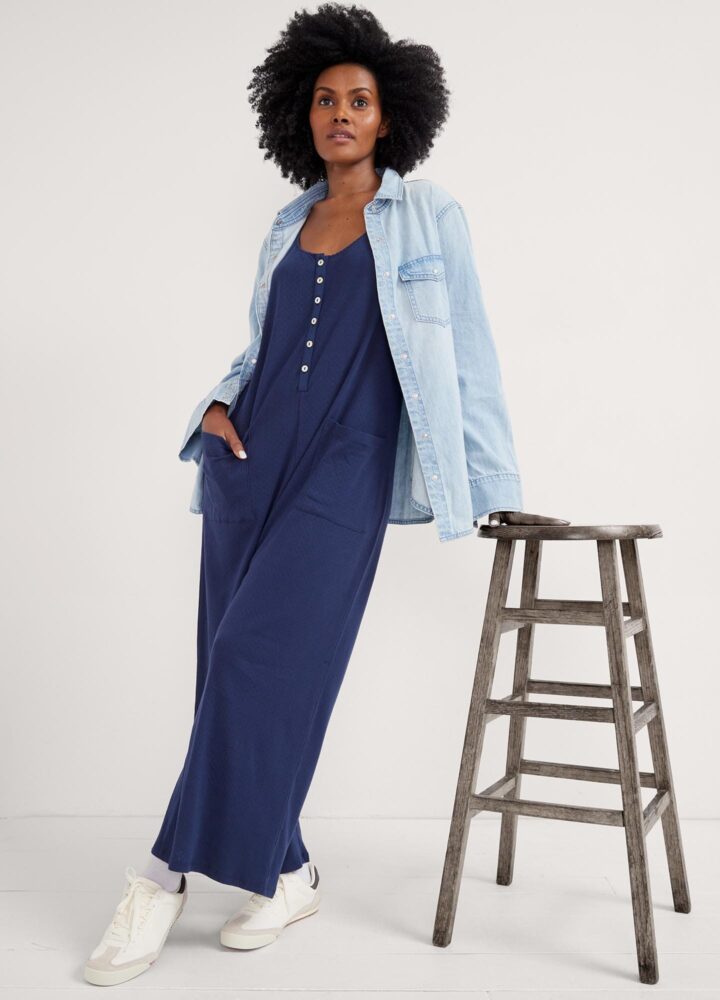
Everything you Want to Wear When You're Postpartum in the Summer You're welcome.

By Babe | Photos by HATCH

Embracing motherhood in the heat of summer can often feel like a daunting task, but don’t worry. We at Babe understand your (sometimes sweaty) journey and are here to make it a little easier and a lot more stylish. Our summer collection is here to be your companion in these warm months ahead.

Imagine this: the sun is shining, the days are long, and the heat is on. But you, beautiful mama, are cool, calm, and collected. How, could this be possible, you ask? With our effortlessly chic, easy-to-wear, summer styles, of course! This collection is designed to keep you comfortable while ensuring you look your best.

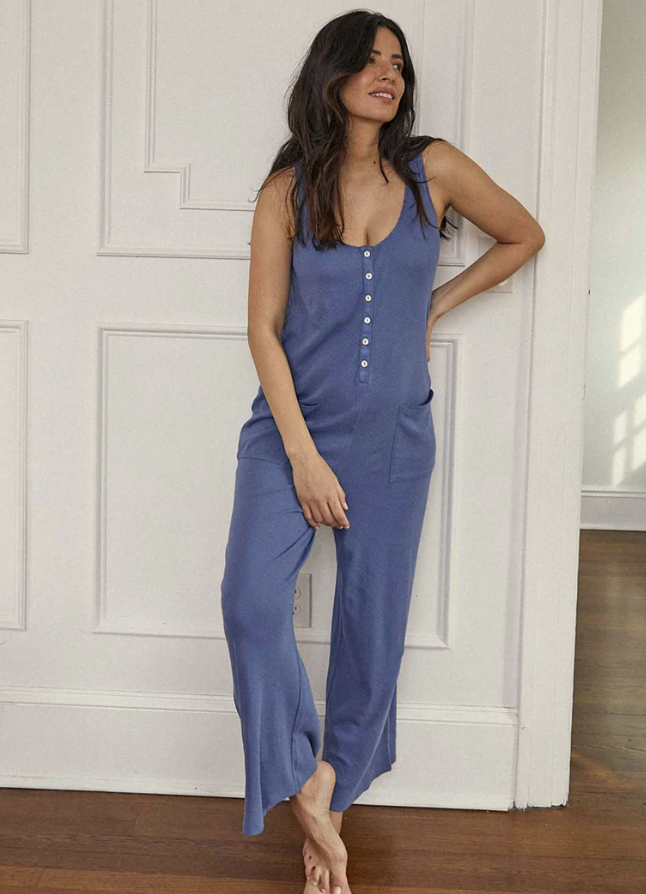
Our fashion-forward summer essentials are not just clothes, they are your armor, your comfort, and your style statement. From breezy dresses that allow for easy movement and breathability, to stylish tops that make nursing a breeze, we’ve got it all. And the best part? These pieces are designed to keep you cool and comfortable until the leaves fall. So, dear mama, take on the heat, enjoy the summer, and remember, you’re not alone in this journey. With Babe by Hatch Collection, you’re always taken care of, always loved, and always in style.

Normalizing "Help" In Motherhood Writer Ashley Alt is letting go of the guilt.

By Ashley Alt | Photo by Stocksy

If being a mom is the “hardest job in the world,” why do moms get judged for getting help? From nannies and au pairs to daycare centers and help from our own parents, why do we feel guilty for letting other people take care of our kids?

When I moved to Connecticut, I was entertained by routine questions I received from fellow parents regarding my children’s caretaking. Questions like, “What do you do for fun?” instead of “What do you do for work?” and “What nanny service do you use?” instead of “What daycare center do your kids go to?” left me intrigued by the clear cultural differences that were present from just mere states away. 

I grew up in Ohio, where parents dropped their kids off at in-home babysitters before jetting off to work — houses where 15+ kids were packed in with cartoons blaring and snacks at the ready. Here, it’s assumed that the mother stays at home and/or has an au pair for her children. And in some instances, a nanny for each child (as I have seen firsthand).

While the snap reaction is to roll your eyes at women clearly privileged enough to have live-in au pairs at their beck and call, I wanted to take a look at the whole picture of how and why having a “Mother’s Helper” in the house was just as normal as having a family pet — and once I started asking questions, I understood. 

These women, the ones with multiple nannies and postpartum doulas and Errand Assistances are privileged, obviously, but they’re also onto something. Why are we judged for outsourcing help if it makes our lives easier? These women don’t buy into the motherhood martyrdom mentality that the Midwest pushes, and that’s a great thing. “You sacrifice for your children,” I can still hear the women at the town salon hissing.

Why do we feel guilty for letting other people take care of our kids?

With spouses traveling frequently for work and grandparents unable to help when school gets canceled or kids get sick, what other option do working mothers have?

Instead of judging one another for the caretaking choices we make, and in many instances the choices mothers are forced to make, is it possible to come to a place of understanding and acceptance instead of judgment? Can we normalize “help” in motherhood?

We Need To Stop Striving For Perfection

Parenting expert Robbin McManne adds insight on how moms can feel good about their caretaking choices, whether they need an extra set of hands because they’re working late, or vacationing with friends in Bora Bora. 

“We need to stop thinking everyone else has it together but ‘me’,” McManne says. “It’s simply not true. Everyone struggles, gets it wrong, doesn’t know what to say, and fails. This is what it is to be human. When we do, we stop the façade of perfectionism and open up a space to be real. It helps everyone do the same.”

McManne also suggests we reframe what asking for help means, as many people think asking for help signifies weakness, when really, it’s the opposite.

“We need to stop telling ourselves we don’t need help or our needs don’t matter,” McManne tells me. “Why? Because when we don’t get the help we need, who suffers? Us and our kids! We’re giving them a mom who’s burnt out, exhausted, and barely surviving. Don’t we want to show our kids what it is to lead a happy and healthy life? When we’re running on fumes, we are quick to anger, frustration and impatience. That will impact your parenting in ways you won’t feel good about.”

We also don’t think about how when we ask someone for help, it makes them feel good, McManne pointed out. It’s nice to know you’re needed, trusted, and loved by someone, whether it’s a text from a friend asking to chat, or a phone call from a neighbor offering to give you a kids-free afternoon.

McManne’s final reminder on normalizing help is that motherhood ebbs and flows. There are times when things are going well, and times when we really need help – all of which deserved recognition.

“In the times you’re doing well, be on the lookout for someone who might need your help and reach out to them,” she advises. “There is so much joy to be found in giving, connecting, and helping others.”

"I expected this diagnosis in some way. What I didn’t expect was the PTSD I would have." Emmy Marucci on her son's febrile seizures.

By Emmy Marucci | Photo courtesy of Emmy Marucci

There’s no cute way to say this: the last six months have been shit.

First, my 14-month-old son, August, had a febrile seizure. Shortly after, we found ourselves at the plastic surgeon’s for a split lip from a fall on a concrete driveway. He had another seizure three weeks later, and then my mom had a heart attack. Well, actually it wasn’t a heart attack. It was Broken Heart Syndrome, quite literally the saddest named syndrome to ever exist. This is the story of my January to May 2022 and how I’m only now figuring out how febrile seizures have affected me and other parents. 

It was a late afternoon in New Jersey and I was escaping our small Jersey City apartment by visiting my mom in the suburbs with August. We’d spent the morning doing all the normal things: making messes in the basement, spilling sippy cups, stacking blocks.

We’d placed him in his high chair for lunch. The light came in through the blinds, danced throughout the room. Little lines of light grazed the back of his head. His golden hair lit up with sparkles. There were blueberries. He picked them up one by one by one. Index finger and thumb. In between, he clapped with happiness. Pure joy. And then, suddenly, in an instance, like no time had passed. And then. And then. It was happening again.

Three weeks earlier, I’d gotten a call from my husband, “Augie is seizing,” he said. I was strong the first time because I didn’t see it happen. I’d only seen the aftermath. The nanny whispered to me a few days later, “he [my husband] was holding him in his arms running from room to room, calling his name out. “August, August, August.” She said the voice coming out of my husband was otherworldly, animal-like. I’d pictured it in my head but couldn’t quite figure out how it might have sounded. I was glad I couldn’t.

And then. It was happening again. This time I was there. Eyes rolled back, chin up. “It’s happening,” I said to my mother, a pediatric nurse of 30 years. She swiftly picked him up. He was limp and lifeless-looking. She was stern and stoic. I was stuck in time. 

I felt a pull, as if a heavy blanket had wrapped around me head to toe. Like I couldn’t move.  Weighted legs. Stiff fingers dialing 911. Even with the heaviness, there was also a  need to run away. As far away as possible, as far as I could get, I didn’t want to stop at all until he was out of my sight. 

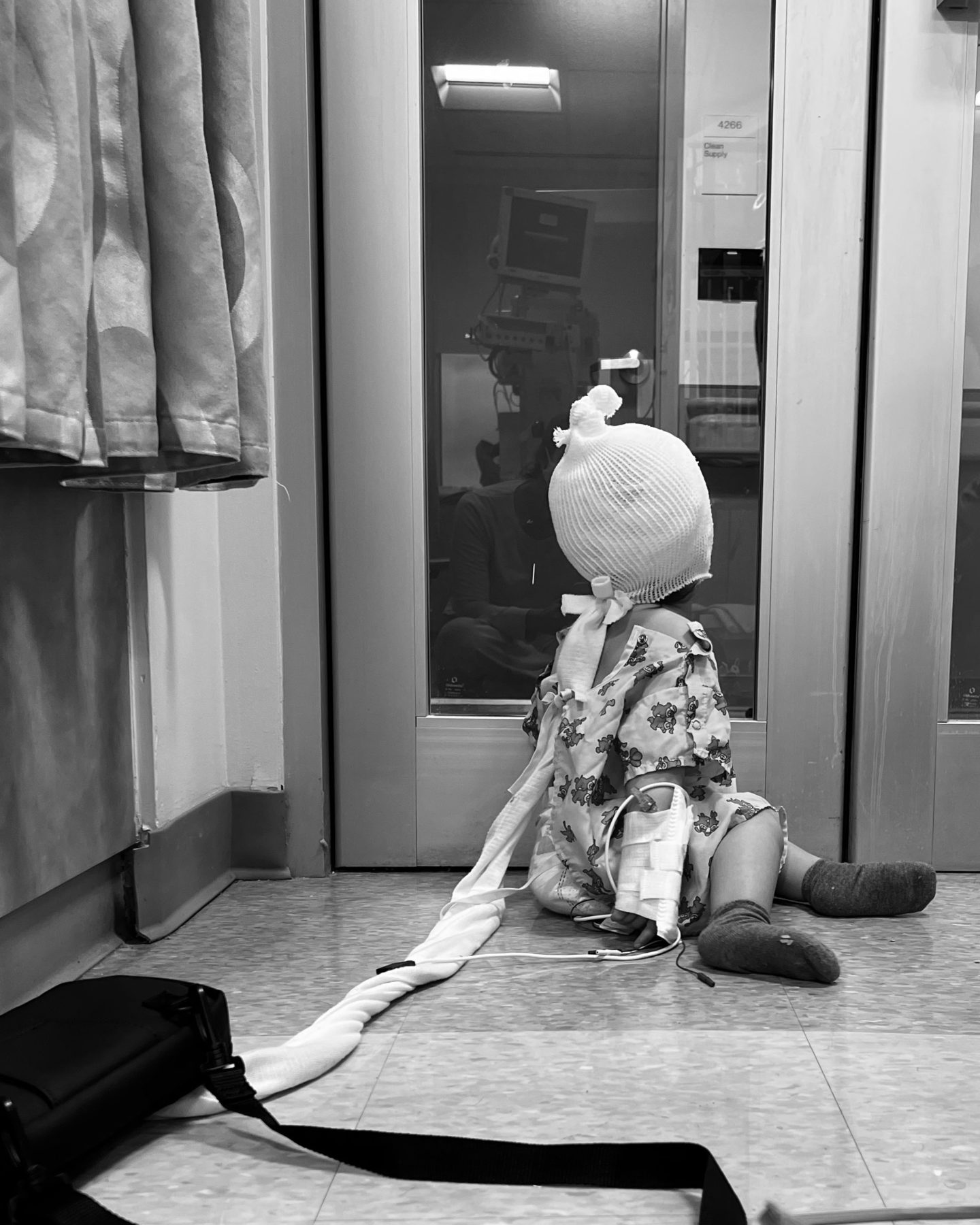
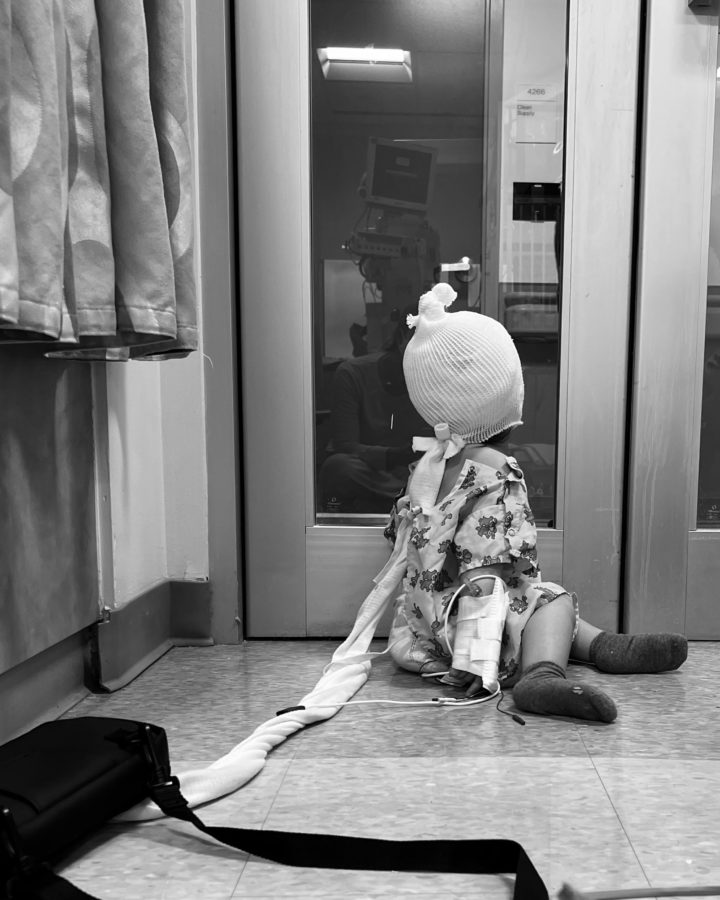
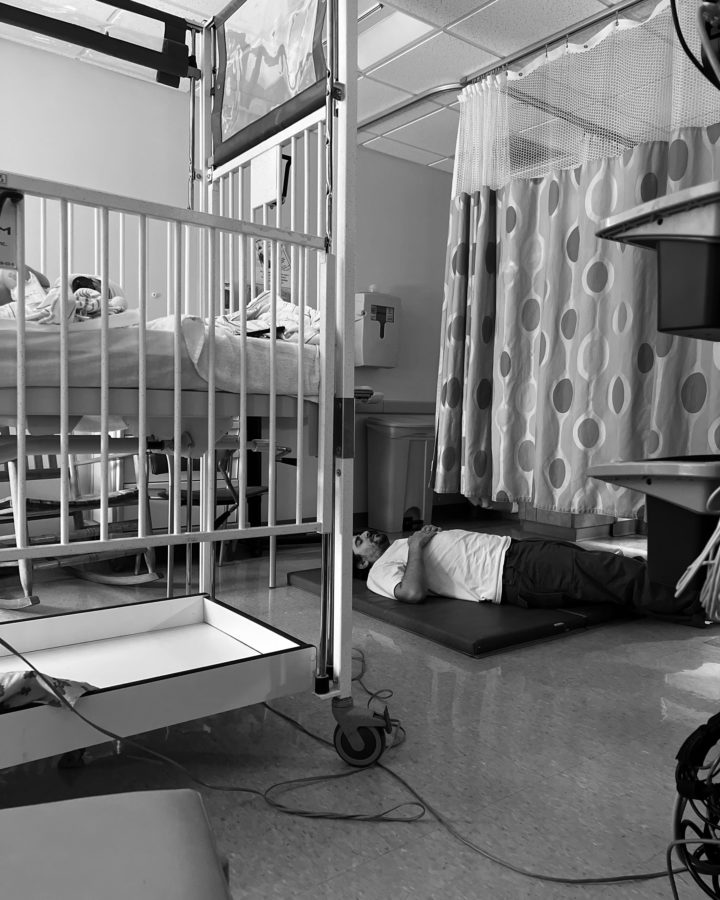
We rushed through the doors of the hospital. The same doors where I’d left with him in his going home outfit 14 months earlier. A teeny hat covering his golden hair, swaddle, knitted boots, sweet smelling. On the floor above the ER, the other mothers in the wheelchairs beamed with their hidden high-waisted postpartum underwear, robes and war wounds – their lullabies and “welcome to the worlds!” Little inked up handprints hang on the walls and balloons float through the air. This time, that same golden hair was being covered in gauze, layers and layers, circling, circling, tape and wires. Tangled up in tubes. Kleenex for me, bloodwork for him, sleeping on the floor for my husband. 

In the weeks that followed we learned , or rather, we trudged through mud, to arrive at the diagnosis of Febrile Seizures (which are benign — more on that below). The same thing I’d had as a little girl. I’ve heard stories from my parents during late nights over wine and spaghetti. We heard how my dad fell running to a neighbor’s house searching for help. 

I expected this diagnosis in some way. What I didn’t expect was the PTSD I would have, how I would run in at every little sound coming from his room in the months following. How I would feel his forehead throughout the day for any kind of warmth. How I would take his temperature at every diaper change. What I didn’t expect was what would happen next. “Everything is fine, but…” My oldest brother said. “Mommy had a heart attack.” 

We rushed through the doors of the hospital. The same doors where I’d left with him in his going home outfit 14 months earlier.

Ever hear of someone dying from a broken heart? That’s Broken Heart Syndrome or “Takotsubo” (a Japanese word for the name of a pot used by fishermen to trap octopuses). When the left ventricle of the heart changes shape, it develops a narrow neck and a round bottom making it look similar to the octopus trap. In very simple terms, it’s heart failure, but it’s more complex than that. It’s heart failure caused by a sudden emotional event. She had seemed stern and stoic but internally there was more going on. Perhaps it was the history repeating itself. Perhaps my reaction meant I put too much pressure on her to make things right. Whatever it was, her heart had changed forever. And well, the truth is, all of ours did.

It wasn’t all bad. I know I said it was a shitty time. It was. But it was like this cosmic sort of hell. Because, in fact, we felt lucky. Looking into the other rooms on the PICU floor is all you need to feel that way. And broken hearts heal, even when you have Broken Heart Syndrome. Completely actually. Our astounding love, the one between a mother and a son, would live on. Some people don’t get that.

We started to feel thankful for the small things. You know. The silly things. Food thrown on the floor. Tickling his forehead at bedtime. Laying on the floor and looking at the glowing stars on the ceiling. Early 5am mornings. Tired, sleepy minds and burning eyes. Diaper changes and creams. Warming bottles in the microwave. Thank you. Thank you. Thank you. The mundane, the stuff that felt hard, became sweeter. Like the blueberries. Little sweet circles of blue. Little sweet boy.

Febrile Seizure Facts

What are febrile seizures? Febrile means having a fever. Seizures are convulsions caused by an abnormal burst of electrical activity in the brain. 

  • Are triggered by a high fever
  • Most often occur in otherwise healthy children, ages 6 months to 3 years
  • Last less than 15 minutes
  • Usually run in families

Symptoms: Most febrile seizures last only a few minutes and are accompanied by a fever above 101°F. Symptoms may include:

  • The child will lose consciousness
  • Both arms and legs will shake uncontrollably
  • Eye rolling
  • Rigid (stiff) limbs

How common are febrile seizures? One in every 25 kids experience them. 

  • Young children between the ages of about 6 months and 5 years old are the most likely to experience febrile seizures.  
  • Children are at the greatest risk of having a febrile seizure at age 2.

Outlook: Although they can be frightening for parents, brief febrile seizures (less than 15 minutes) do not cause any long-term health problems. 

How it affects us: According to The Journal of Pediatric Nursing, many of the parents could not identify what was happening during the seizure and often thought that it was something serious and life-threatening. Not knowing what it was or how dangerous it might be contributed to the parents’ fear. Many of the parents imagined their child dying. Even the parents who identified it as a febrile seizure felt uncertain as to whether it really was just that.

  • Parents feel anxiety, fear and shock when their child suffers a febrile seizure.
  • Many parents think their child is dying.
  • Healthcare professionals’ support is crucial for how parents handle the situation.

  • After a febrile seizure, some parents develop signs of fever phobia.
  • Parents tend to overuse antipyretics after their child has had a febrile seizure.

Sources

  1. Parents Experiences of Their Children Suffering Febrile Seizures, Journal of Pediatric Nursing: https://www.pediatricnursing.org/article/S0882-5963(17)30340-8/fulltext 
  2. Healing a Broken Heart, Cedar Sinai: https://www.cedars-sinai.org/blog/healing-a-broken-heart.html
  3. Febrile Seizures Fact Sheet, NIH: https://www.ninds.nih.gov/health-information/patient-caregiver-education/fact-sheets/febrile-seizures-fact-sheet

Emmy Marucci is a mother, published poet, writer and content-producer for all things in the baby space (Coterie, Oso & Me, Gooselings). Her book “tell me another story” explores grief, family and the importance of storytelling. She’s currently writing a children’s book with her husband, who is also a writer. For more stories follow her @emmymarucci. 

erectile dysfunction what you need to knowerectile dysfunction what you need to know

5 Surprising Facts About Erectile Dysfunction You May Not Know Can you separate hard facts from flaccid fiction?

This article was written in partnership with Hims.

If Babe were a person and had a male counterpart (husband, bestie, brother)…. it would most likely be Hims. Just like Babe works hard to share the unspoken stories often considered “taboo” surrounding pregnancy, Hims is normalizing conversations for men around issues that have previously gone unspoken – like hair loss, depression, and erectile dysfunction solutions. In tandem with Father’s Day, we teamed up with Hims to shed light on these issues and provide facts (in the totally no-holds-barred voice you know and love from Babe).

The topic of erectile dysfunction has certainly come a long way since the days of Jim’s American Pie ordeal, but there’s still a very real stigma attached to men having any issues when it comes to their sexual prowess. And as we all know too well, most stigmas come from a lack of information. Like, don’t you think Pops would feel a lot better about his supposed “problem” if he knew, say, 52% of men over 40 experience ED at some point in their life.

So some news you (and pops) can use:

It’s not just about “getting it up.” It’s about erection satisfaction

“Erectile dysfunction is the inability to achieve or maintain an erection that is sufficient for satisfactory sexual performance. As a man, it’s common and perfectly normal to occasionally have difficulty getting or keeping an erection. However, when difficulty getting or maintaining an erection starts to interfere with sex life, it’s generally viewed as erectile dysfunction,” says Dr. Stahl, a Urologist, and SVP of Men’s Sexual Health and Urology at Hims & Hers. ED is really about having a satisfactory sex life, which means: it’s not just about him. ED really manifests in relationships and is something couples experience (and work through) together.
This is common.
If you think you/your significant other’s struggle is unique to them, find comfort in the hard fact that 52% of men over the age of 40 experience ED at some point in their life. In fact, ED affects about 30 million men in the United States alone. “Although erectile dysfunction can potentially affect men of any age, it’s generally more common in middle-aged and older men than younger men,” Dr. Stahl tells us. “40% of men experience ED at the age of 40 and that climbs 10 percent with each additional decade so by the age of 70 it grows to 70%. While age can affect one’s risk of developing ED, as shared above, it is not the only factor to be considered.”

It’s not just older guys.

While the chances of ED get greater as you get older, this isn’t a geriatric syndrome. It’s a total myth that only older people experience ED. It can happen at any age for a variety of reasons including diet, mood disorders, lifestyle, and other health issues.

It’s not just mental, either.

Mental stress can definitely be a contributing factor when it comes to ED, but almost always, ED stems from a combination of factors, both physical and psychological. For example, there can often be a contributing related blood flow issue. “Believe it or not, ED is actually one of the early warning signs of cardiovascular disease,” Dr. Stahl warns, “which is why, if you’re experiencing ED, you should speak with your healthcare provider.”

There are REAL solutions.

Here’s the good news: Over 80% of men with ED see improvement with treatment in the form of medication. And it won’t cost you an arm and a leg. Viagra may be the most recognizable medication on the market, but generic, FDA-approved ED meds with the same active ingredient are available online through Hims for 90% cheaper than name-brand Viagra, which means you could get your hands on treatment for as little as $3 per use. Through these affordable, doctor-trusted treatment options, Hims has been able to help hundreds of thousands of men with ED. 
Ready to learn more about how Hims can help you and your partner? Click here.

More:

The Science of Fatherhood The evidence-based benefits of a strong father-child relationship.

By Mariel Benjamin, LCSW, Director of Groups at Cooper | Photo by Stocksy

That parenting blog? Your Instagram feed? The latest podcast episode? Chances are, most of the chatter focuses on moms and their roles in their children’s lives with little discussion about the unique role of fathers.

In honor of Father’s Day, we’re helping to turn the spotlight onto dad, and the evidence-based benefits of a strong father-child relationship.

While the parenting world spends a majority of time focusing on mothers, we have compelling research that fathers have a powerful part to play in their child’s development. Even cooler? The benefits of a strong father-child relationship exist on both sides of the dyad, improving both the quality and health of dads, and the lives of their children.

Let’s start with a few amazing studies. Research has shown that the more time fathers spend with their children, the more confident they feel as caregivers. Time spent caregiving actually lowers father’s risk of depression, and is associated with an increase in happiness, social connection and autonomy.

That’s no small feat. These results are based on a set of three studies sampling more than 18,000 dads that examined how fathers’ life satisfaction, well-being, and happiness are linked to the time they spend with their kids. And in this case, “time spent with kids” equals parenting. Not babysitting. Not “giving mom a break.” Just being with their kids, no matter the activity.

⁣(Of note, the families in these studies were in heterosexual two-parent families. Although there is a push to include diverse family structures in research, there is still a long way to go!) ⁣In addition, these results are correlational, meaning that dads who felt less stressed to begin with are more likely to find spending time with their children to be fulfilling.⁣ That further highlights why dad’s mood plays an extraordinary part in his ability to be present and satisfied in his role.

The benefits of a strong father-child relationship exist on both sides of the dyad, improving both the quality and health of dads, and the lives of their children.

So what would interfere with dad’s mood around a new baby? Well…everything. Around 1 in 4 dads develop postpartum depression in the 6 months after becoming a father, according to results of a meta-analysis published in 2010.⁣ Risk factors for postpartum depression included things like unemployment, low social support, stress, financial strain, multiple children, history of mental illness and low relationship satisfaction with their partner. These risk factors aren’t unique to dads, but there is growing research around postpartum depression and anxiety among fathers that is gradually coming into focus as a vital issue. Understanding the transformation to parenting from a father’s perspective is crucial to building stronger resources to support fathers and keep them engaged in family life. 

Families are systems, meaning that when one member of a family gets the support they need, it benefits everyone. This is especially true for our children, who are looking to their relationships with caregivers to create a blueprint for the future and a foundation for development. We don’t mean this as pressure, but instead as an incentive to make sure both parents get the help they need, not only to benefit their own mental health, but to be able to support their child most effectively.

It may also surprise you to learn that a study of first time dads found that two hormones linked to caregiving – prolactin and oxytocin – were important factors in how fathers both played – and emotionally connected – with their babies. First time dads with higher prolactin levels were more likely to engage their babies in exploratory play.⁣

Why does this matter? Well, through this exploratory play, babies learn about objects in the world around them. They look at, taste, touch, smell, listen to, and manipulate objects, and each interaction builds on their understanding of its properties. Promoting this type of play can have a significant impact on a baby’s development, sense of autonomy, and critical thinking.⁣ In the same study, dads with higher oxytocin levels (known as the love hormone) had greater “affect synchrony” with their baby. Affect synchrony is when a caregiver and their infant are attuned to one another’s emotional states. ⁣This attunement can be seen through eye contact, parentese (that high-pitched, sign-song voice that many of us use naturally with our children), displays of affection, warmth and love. 

Amazingly, caregivers’ hormones are also connected to one another, and caregivers’ oxytocin and cortisol levels synchronize when they care for children together. ⁣Parenting is a team sport on a very primal level! The question is, does caregiving trigger the release of these hormones, or do our hormone levels trigger our interest in caregiving? The jury is still out in the research, given that these studies tend to be correlational, but we know for sure that increasing caregiving behaviors can and does improve the overall mood for baby and dad. ⁣

Now onto the impact of father’s on their children. Studies show that when fathers gently push their children out of their comfort zones and encourage them to take risks, children are less likely to have anxiety. For boys, the more engaged a father figure is, the less likely the child is to have behavioral problems. For girls, their risk of struggling with a mental health problem as an adult is lowered by increased time and engagement with their dads. Using 12 years of data from over 6000 firms, economists found that when CEO’s had a daughter, the wages of their female employees’ rose relative to the wages of their male employees. In addition, warm, sensitive father-child interactions are linked to toddlers’ planning, memory, problem solving, and impulse control. This isn’t nice-to-have, it’s vital. 

We also understand that support for the co-parent enriches the emotional environment in which children live. Having a partner who is involved, sensitive, and responsive, not only benefits the child, but the co-parent as well (even if they are not married). In the partnership around their children, fathers can add balance, bring new perspective, and uniquely inspire and influence day-to-day life. Perhaps if we celebrated their contributions more, or invested in support and education for those new to fatherhood, we could change the narrative about parenting to be more inclusive, inspiring, and representative of the dads we all know and love.

Parenthood is complicated – Cooper’s goal is to help un-complicate the parts of parenthood that should be simpler. We are your online parenting homebase, carefully matching you with a group of kindred parents, and using research-backed expertise to guide you through your parenting journey.  

⁣⁣

Sources:

Dahl, M. S., Cristian L. D., & Ross, D. G. (2011). “Like Daughter, Like Father:⁣ How Women’s Wages Change When CEOs Have Daughters.” Working paper. Columbia⁣ Business School. Available at: http://www1.gsb.columbia.edu/mygsb/faculty/research/⁣pubfiles/4558/DaughtersofCEOs.pdf.⁣

Feldman, R., Braun, K., & Champagne, F.A. (2019). The neural mechanisms and consequences of paternal caregiving. Nature Reviews Neuroscience, 20, 205-224.⁣

Gordon, I., Zagoory-Sharon, O., Leckman, J. F. & Feldman, R. (2010). Prolactin, oxytocin, and the development of paternal behavior across the first six months of fatherhood. Hormones and Behavior, 58, 513–518.⁣

Hertz, S., Bernier, A., Regueiro, S., & Cimon-Paquet, C. (2019). Parent-child relationships⁣and child executive functioning at school entry: The importance of fathers. Early Child⁣ Development and Care, 189, 718-732.⁣

Möller, E. L., Nikolić, M, Majdandžić, M., & Bögels, S.M. (2016). Associations between maternal and paternal parenting behaviors, anxiety and its precursors in early childhood: A meta-analysis. Clinical Psychology Review, 45, 17-33.

Nelson-Coffey, S. K., Killingsworth, M., Layous, K., Cole, S. W., & Lyubomirsky, S. (2019). Parenthood is associated with greater well-being for fathers than mothers. Personality and Social Psychology Bulletin, 45(9), 1378–1390.⁣

Paulson, J.F., Bazemore, S.D., 2010. Prenatal and Postpartum Depression in Fathers and Its Association with Maternal Depression A Meta-analysis. Jama-J. Am. Med. Assoc. 303 (19), 1961–1969.⁣

Sarkadi, A., Kristiansson, R., Oberklaid, F., Bremberg, S. (2008). Fathers’ involvement and children’s developmental outcomes: A systematic review of longitudinal studies. Acta Pediatrica, 97, 153–158.

Wang, D., Li, Y., Qiu, D., & Xiao, S. (2021). Factors influencing paternal postpartum depression: A systematic review and meta-analysis. Journal of Affective Disorders, 293, 51-63.⁣

More:

5 Facts You May Not Know About Male Infertility The team at Beli Babe is normalizing the convo.

By Jessica Timmons | Photo by Stocksy

It’s 2022, yet here we are, living in a world where the idea of preconception care and fertility is still centered around women. From healthcare providers to earnest articles on the internet, whenever the conversation involves infertility or pregnancy or childbirth, the focus remains largely on the female. That’s interesting, considering the influence paternal involvement has on pregnancy outcomes. And when you consider that roughly 10% of all U.S. males attempting to become fathers are dealing with infertility, it’s more than interesting — it’s downright bewildering. But knowledge is power, so let’s buck the trend and spill the tea on male infertility.

Surprise — it’s not just a woman’s problem

Way back in 2015, infertility was considered a serious clinical issue, with worldwide stats finding that between 8 and 12% of all couples were affected. At that time, between 40 and 50% of all infertility cases were the result of male factor infertility. 

You’d think those are big enough numbers for people to pay attention, but it’s still common for couples who are struggling to conceive to overlook the entire male half of the equation. Still, it doesn’t have to be that way. A simple sperm analysis can tell you just about everything you need to know about a guy’s fertility.

Sperm issues are the most common culprit

There are a few reasons for male infertility, but sperm issues tend to be the most common. Problematic sperm is, well, problematic, because the preconception health of both parents can have a direct influence on a pregnancy and the baby’s health, including brain development and birth weight. And that’s if it doesn’t affect a man’s ability to successfully impregnate his partner to begin with.

Some ten years ago, a study found that just one man in four had what was considered optimal sperm quality, which is itself measured in a few ways:

  • Sperm count. Between 15 and 200 million sperm is considered the normal range in a single milliliter of semen. Anything below the 15 million mark per milliliter falls into the low sperm count range. And since pregnancy is a numbers game, the more sperm you have, the better. 
  • Sperm motility. Motility describes movement patterns, and sperm fall into three general movement groups. Some sperm swim in straight lines or big circles. Others swim in all directions but forward. And then, you have the sperm that don’t move at all. If 40% of a man’s sperm is motile — in any direction — he’s considered fertile
  • Sperm morphology. This is the shape and structure of the sperm. Normal sperm are like tadpoles, with their oval heads and long tails. But some sperm are pretty funky, with two heads, weird tails, or missing parts. And in news that will surprise no one, sperm with poor morphology are associated with lower fertility rates.

Sperm deficiencies can often be linked to a lack of nutrients

The most common reason for sperm deficiencies, whether it’s count or motility or morphology, is a lack of key nutrients. That’s pretty fantastic news. If you can point to a nutrient-void diet in a man who’s struggling to conceive with his partner, you can take immediate steps to flip the script. Proper prenatal nutrition and supplementing — which is where a high-quality men’s prenatal vitamin comes in — is tied to higher-quality sperm and fewer DNA abnormalities.

And it’s easy! Eat a better diet, swap the daily multivitamin for a men’s prenatal that’s formulated for fertility, and see if things don’t improve.

Men have a biological clock, too

Women may be consistently portrayed as haunted by the tick-tick-tick of their biological clock, but men aren’t immune. While it’s true that men generally produce sperm literally until their dying day, the quality of that sperm declines significantly the older they get. That means a greater likelihood of men passing on genetic mutations and, after about age 40, a higher chance of experiencing infertility issues.

Lifestyle choices can have a surprisingly big impact

We’ve already established that sperm quality is a key player in male fertility. But there’s more. A man’s overall health is often an indication of his sperm health. Specifically, low-quality sperm is often just one of a handful of health issues, most commonly related to hormones, circulatory problems, or skin conditions. That means a guy with a lot of bad habits beyond a crummy diet —  think too much beer, not enough sleep, too much stress, not enough exercise, recreational drug use, smoking — could be unintentionally torpedoing the quantity and quality of his little swimmers. 

But remember — this relationship can actually work to your advantage. Clean up your lifestyle, and you can often overcome the negative effects of all those risk factors.

The bottom line

Let’s go back to Bio 101 for a minute. Some people make it look unbelievably easy, but conception is a complex process. So many things need to go right to successfully conceive, and there are a lot of moving parts. If anything goes sideways, guess what? You’re potentially dealing with infertility. It’s true for both women and men, and the sooner we fully include men in the infertility conversation, the faster we can address any fixable issues stemming from his side of the equation. Bottom line? For a healthy conception, pregnancy, and baby, fully-functioning sperm is key.

Meet the Women of The Spread Hot takes served extra spicy.

By Caroline Tell | Photo courtesy of The Spread

Rachel Baker and Maggie Bullock have hot takes, lots of them. As former work wives at Elle (where they were both editors in the ladies’ mag heyday), not to mention text chain life-mates, writers, and, somewhat separately, moms, they find themselves discussing everything from the slow dismantling of Roe v. Wade, to parenting trends, to the latest celebrity divorce. 

So they did what only felt right. They started a newsletter. The Spread is a weekly round up of the best journalism and most major news taking place (where else?) on the internet, that’s picked apart, tossed around, cooked up and served hot with a heaping side of spicy analysis by Baker and Bullock.

So naturally we had to get these ladies on the line to get a sense of what they’re thinking about, talking about and feeling around for these days, and how whether you’re up all night nursing or angling for a good old fashioned read before your long haul flight, The Spread has you covered.

So what’s on your minds these days?

Rachel: I’ll say what’s on my mind. Just minutes ago, I got back from an internal pelvic massage because I’m very pregnant and having some pelvic floor issues and I have a team of people working together on my pelvic floor, including this woman who massages the inside of my body four times a week. 

Maggie: I’m a support member on Team Pelvic Floor. I get minute-to-minute updates on the status of the general region. If I were there, I’d be physically wrapped around your body, lifting the baby up.

Rachel: Maggie, you’re for sure on that team. And by team I mean I’m counting the woman who’s massaging my perineum. Maggie, you can be number nine on my team.

Maggie: I get texts while Rachel’s perineum is being massaged. We’re close.

Rachel: But really, what’s on our minds? Maybe it’s true to the nature of The Spread, but we’re constantly processing our lives as mothers and working mothers, and The Spread formed out of that. It has a personal basis in our lives. Rachel and I dealt with infertility, we’ve been through a lot of physical, ethical, financial and emotional milestones. It’s one of the things we have in common. So with The Spread, we’re always talking about anything with those issues. We also talk a lot about baby naming, about issues of identity and gender. All of that stuff. It’s a huge part of the bubbling pot that we’re always thinking about. 

Between the two of us, we cover most age cohorts. I have an 18-month-old and I’m T-minus two months until I give birth. Also Maggie has a four-year-old and seven-year-old. I also have two big step-kids who are 11 and 15. We really have the whole range to talk about, which is rich. 

Maggie: Most of our friends are raising kids. So we’re in a group that’s thinking a lot about these issues. We’re processing some social stuff happening right now. It’s interesting. My seven-year-old is bringing me into stuff around gender and trans rights and identity and sexuality. That’s super early. But we live in liberal enclaves and our first graders are head on dealing with it. It’s very much happening in my house and in my family, which is great.

Rachel: Having older kids while being pregnant is a really easy way for us to talk about so many reproductive, gender, social, cultural and emotional dynamics with our older kids. During the pandemic, when I was pregnant with my first pandemic baby, and before my pelvic floor was shot, my big kids and husband and I would hike all the time. And they could ask questions in a safe space. I’d be hiking with our 14-year-old, and he would say, “So how do trans people have babies?” And my husband would say, “Rachel, why don’t you take this one?” And we’d talk about it. They would ask what they wanted to know, and they were always leading us and we don’t lead anything. We’re not in charge. The inmates are running this prison.

And we always talk about what we’re not allowed to say and political correctness. It’s interesting and constantly changing and it also applies to our kids. There’s cancel culture and political correctness. The Spread is out there and we’re unafraid but we do make mistakes from time to time. 

Maggie: We both came out of establishment media, so everything we wrote and edited went through weeks and weeks of revisions and edits. It had multiple eyeballs on it, and it was highly scrutinized. We were some of those people doing that, too. Now we write the newsletter together and it’s fast and furious. We write it in one day and it goes out that night and we do have this very smart, nice lady who helps us copy edit. She saves our ass every week. So this feels very immediate and we shoot from the hip. Can I say that one Rachel? 

Rachel: I think that euphemism is still OK. 

Maggie: We love the immediacy of it. But we’re also swinging from limb to limb hoping not to mess up horribly. 

Rachel: We’re talking about hot button stuff. It’s a combination of shooting from the hip that’s fast and furious, but with a collection of stories we talk about all week long. We’re putting pen to paper like crazy on Tuesdays. We usually cover 10 or 15 ideas in the newsletter. It’s a combination of our former jobs as print magazine editors, where we’re making the whole animal and putting our name on every bit of it. It feels a little exciting and scary. 

Maggie: It’s fun to do it as a duo. I couldn’t do this by myself. It wouldn’t be fun to do this by myself. I like many things, but the fact is this burden doesn’t rest on either one of us. We have to have each other’s backs. Rachel is out there safeguarding me from my own outdated idioms and I’m trying to manage her heartaches, which can be spicy.

Rachel: I want to write about it all.

Maggie: We came from women’s media, so everything we do and the way we think is always filtered through that. Sometimes what we write about is not necessarily what people would define as women’s stories, but something that we, as women, find relevant. That’s why we started The Spread. I think motherhood is an indelible aspect of our lives. It’s always going to be a certain percentage of what we cover. And it’s what we wanted to gravely talk about at this stage. 

Rachel: But not everything is that and we try to be conscious of that, too. I like being a parent and going on dates and having moments alone where our rule is please stop talking about the kids. We cover it but we want it to be one slice of the pie. Sometimes I want to talk about things not through a mother’s lens. And there are people I know who read who aren’t moms and don’t fit our demographic, and I want to be conscious of that. We can’t take the mother out of the woman, but I’m as interested in women’s decisions not to have children as I am in parenting. And I’m always looking for unconventional narratives.

I’m as interested in women’s decisions not to have children as I am in parenting.

Maggie: We go through things that have happened in the last week. Sometimes there’s genuinely great reads. Or it says something about the culture that’s relevant or super quirky and funny, and you put it all together and it’s our mini magazine of the week that we get to make using other people’s great work, but it’s also our own takes. We choose things we have something to say about which isn’t that narrow of a bar.

Rachel: We have a lot to say.

Maggie: I feel like I’m in my 13-year-old bedroom where I’m ripping apart magazines and putting them on the wall. I really idolized print magazines and the stories and pictures and covers and there’s a version of us doing that with our mental scissors, where we’re collaging together our dream magazine for women about women or women adjacent humans.

Rachel: That’s how we originally conceived of The Spread. It was Maggie’s idea to have a newsletter because there was too much out there to read. We always talk about how traditional women’s magazines are thinning, but that mainstream media organizations are covering women with a rigor they haven’t before. There’s lots of stories in The New York Times, The Atlantic, The New Yorker – where five years ago there wouldn’t have been. It’s a lot to get through each week. So we’re a one stop shop.

Maggie: The original idea was to do a reading list. A friend of mine was going on a long haul flight with her family and got so excited to go to the newsstand at the airport. Then she realized nothing was there – even at the airport, which is the last bastion of all magazines. So I felt The Spread was a way to prove that there’s still really rich stuff to read, but you have to know where to look. And who has the time? Yesterday, I spent hours scrolling through women’s sites and it was all “how to clean pores,” or “15 pairs of new sneakers.” It’s all junk food. We’re looking for things that are more sustaining.

Rachel: People often ask me how The Spread is different from other sites out there doing similar work. We think we’re the full fat version of what’s already out there. We’re going deep on these stories instead of skimming the surface. That’s how we think about things. And that’s the whole setup of The Spread. 

Maggie: But really going back to what’s on our minds. I think it’s relevant to say there’s a lot of stuff on our minds. Like Ginni Thomas, the wife of Clarence Thomas, who has a terrifying influence on the Supreme Court. That could be a beat in and of itself. But really, a feminist take on anything happening in pop culture, also. So much of The Spread comes out of text chains with our girlfriends, and we’re intrigued by all of it. We could have a whole discourse on why Ben and J. Lo are deciding to get married after countless marriages and divorces. We’re also interested in the disillusionment of certain American demographics. But isn’t that how we think as women? We just go from one thing to the next.

1 28 105