How do I stay hydrated during pregnancy?

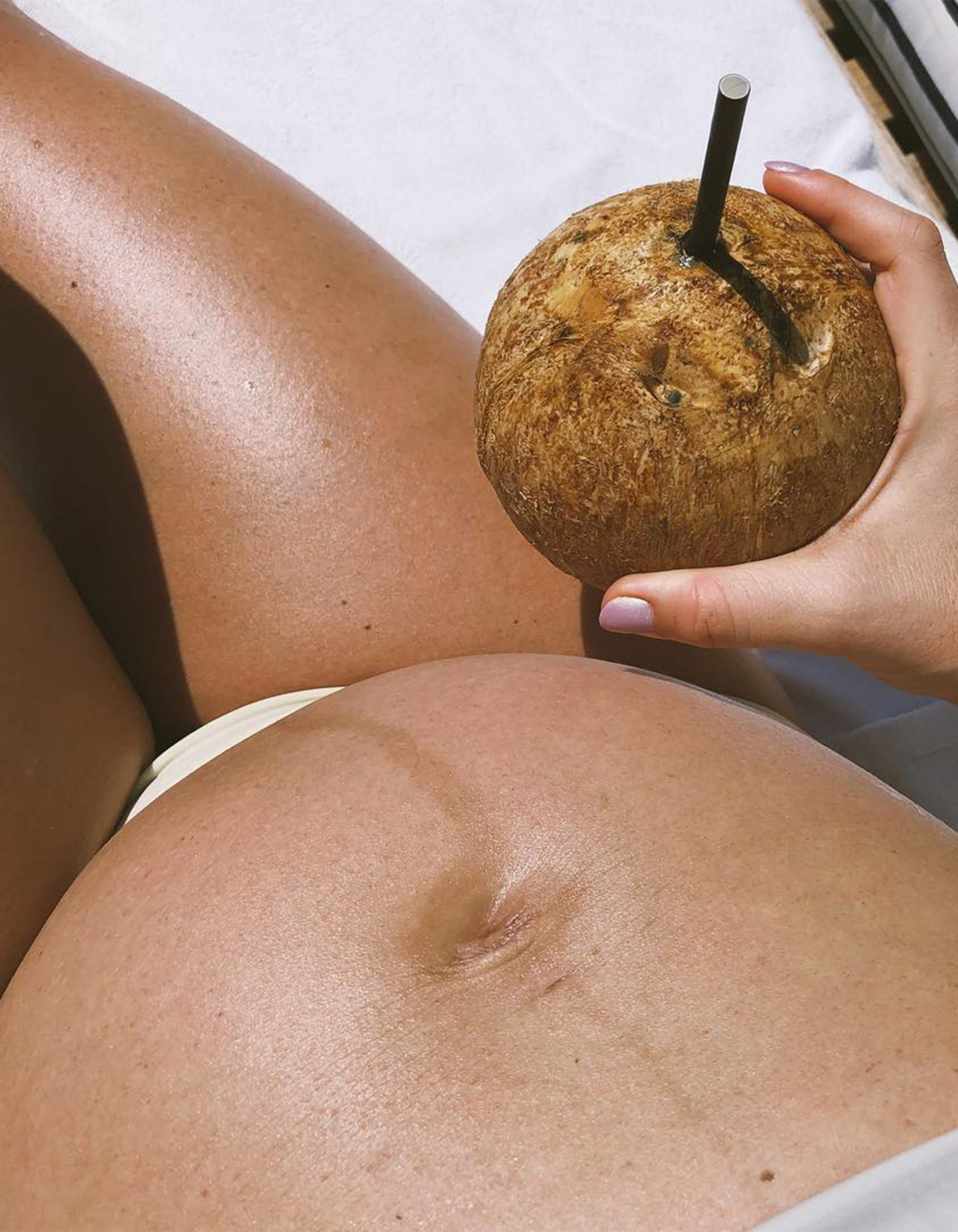
Hydration during pregnancy is key, so keep that Swell bottle or Poland Spring handy. As a pregnant woman, you need more water than the average person since it plays a huge role in the development of your babe. Did you know water helps form the placenta? It’s also used to form the amniotic sac later in pregnancy and it keeps the blood properly hydrated, making it easier for the heart to pump. It also oxygenates the organs + muscles, which reduces the risk of cramps, strains, and circulation problems as well as UTI’s. So do your job, mama, and drink at least 8 cups of water everyday. Don’t wait until you feel thirsty, just keep it coming, and remember to eat hydrating foods like fruit and vegetables.

What's colostrum and what do I need to do about it?

Starting at around 12-18 weeks, your body is going to start producing this protein-packed “liquid gold.” It’s the earliest form of breast milk that drips from your boob in a yellowish, clear, sticky concentrate that’s made up of protein, sugar, fat + immunity factors to protect your babe from germs in those first days of life. Colostrum coats the intestines + forms a barrier that seals to your babe’s insides to prepare them for a healthy life. It also kills harmful microorganisms and provides protection from inflammation. It’s basically a wonderful first meal for any babe that they’ll enjoy in very small doses as your milk starts to come in.

Is it normal not to look pregnant yet?

Yes, girl. There’s no one moment when you’re suddenly supposed to pop. Depending on your height, weight, diet, genetics, basically everything, you’ll start to show when that bump of yours is good + ready. As long as your healthcare provider says your baby is developing properly and you’re gaining the right amount of weight for you, there should be very little cause for concern.

By the way, if you’re a first time mom, you’ll likely start showing later than a 2nd or 3rd timer as your muscles haven’t been properly stretched by a previous pregnancy. Also, women who are tall may have a smaller looking belly, simply because there’s more space. As you get further along, your healthcare provider will use various measurements to assess your baby’s growth, such as abdominal ultrasounds and later, she’ll chart the progress of your bump on your belly itself.

While it can be a bit unnerving to progress into your pregnancy + not need those maternity jeans just yet, try to relax and trust the process. If at any moment, you’re concerned with your size, contact your medical provider.

What's up with food aversions and food cravings?

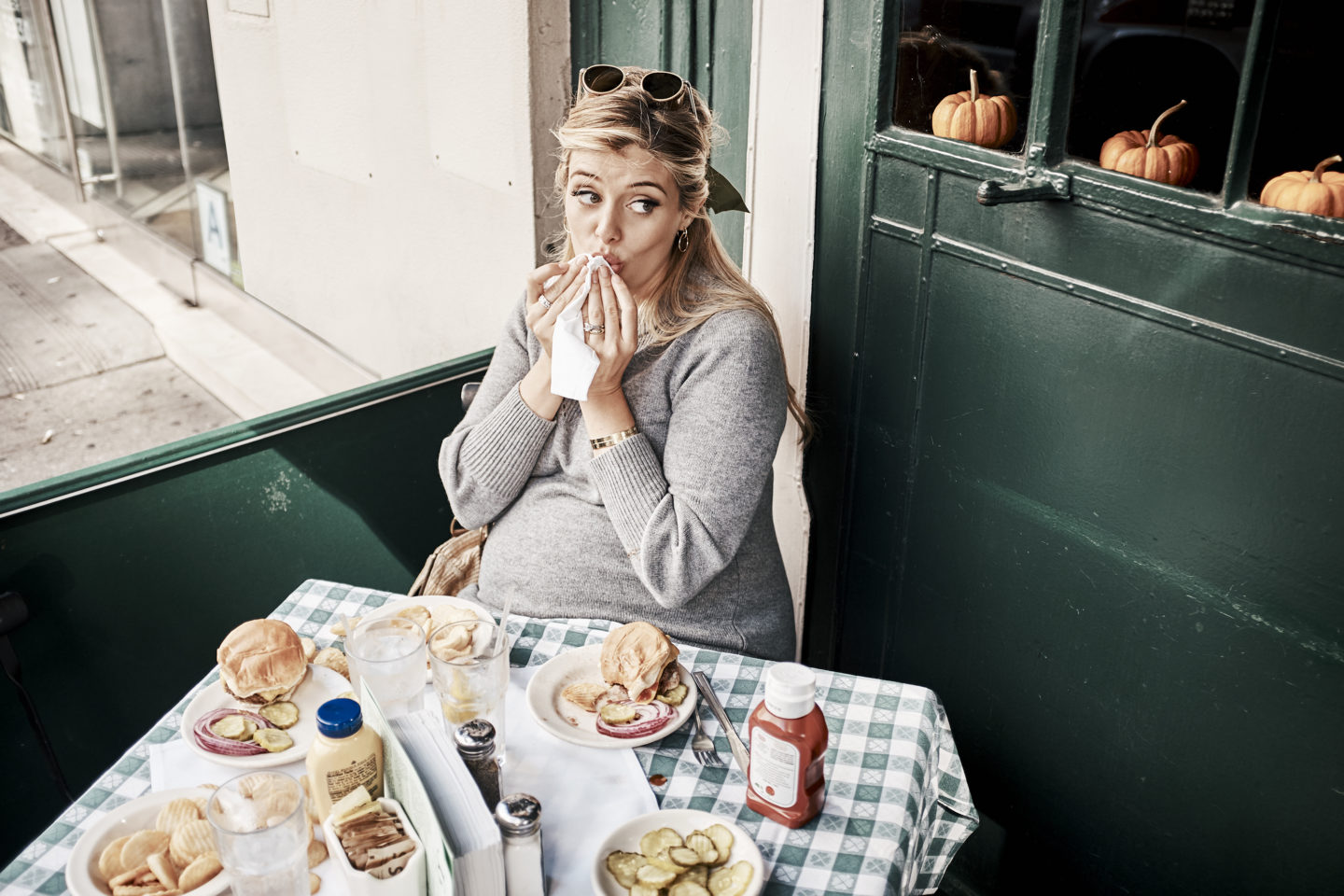
If the sight of salmon has you gagging, or just the thought of a Krispy Kreme donut has you foaming at the mouth, you might be experiencing intense food aversions and/or cravings. They usually start at the end of the 1st trimester, peak in the 2nd trimester, and then typically subside. While food aversions are often associated with nausea, there’s no 100% reason you’re experiencing either. Here are a few possibilities:

Hormones: During early pregnancy when your hormones are raging, you might be inclined to devour certain foods, similar to how you might crave chocolate (or a burger) before your period. 

Heightened senses: Your taste receptors + sense of smell are super sensitive during pregnancy. So a piece kale might seem overly bitter because your taste buds are so plugged in.

Crossed nutritional wires: There might be some truth to the idea that you crave what your body needs and is turned off by what you don’t. This might be why a glass of Sancerre looks like pee. But it doesn’t quite explain why you might get grossed out by healthy foods you loved pre-pregnancy.

A need for comfort (food). You may crave foods that you associate with “comfort.” So if you want that slice of pizza, go for it!

What's the NT scan?

An NT scan, or nuchal translucency is a super common screening test that happens in the 1st trimester of pregnancy. Your healthcare provider will give you an abdominal ultrasound to measure the size of the clear tissue (also called the nuchal translucency), at the back of your baby’s neck. It’s not unusual for a fetus to have fluid or even clear tissue there, but too much of either can indicate Down syndrome or another chromosomal abnormality. (Babies born with Down syndrome have an extra copy of chromosome 21.) Downs can’t be cured + it causes developmental delays and distinct physical characteristics. It’s a condition that affects 1 in every 700 babies born in the United States.

The NT test will also include blood work to measure your levels of plasma protein and the hormone human chorionic gonadotropin (HCG). Abnormal levels of either may also indicate a chromosome problem. Your doctor will then calculate the risk of your baby having an abnormality. Just know that an NT scan CANNOT diagnose Down syndrome or any other chromosome abnormality. The test only predicts the risk. Talk to your provider if your results require further testing or more clarification.

When should I worry about abdominal cramps?

Stomach pain + abdominal cramping is totally normal during pregnancy and can be linked to everything from contractions to gas! At every stage and trimester, a whole new slew of culprits show up as to why. During the 1st trimester, there’s increased blood flow to the uterus that can lead to mild pain, while the expanding of the uterus can lead to round ligament pain in the 2nd + 3rd trimesters. In some cases, stomach pain can signal something more serious, like a UTI, miscarriage, preeclampsia or even labor. When is pain more than pain? To be on the safe side, always contact your doctor if you’re concerned about cramping. And if it’s severe pain, go straight to the hospital. Also get in touch with your healthcare provider if your pain is joined by any of the following: 

  • Spotting/bleeding
  • Fever/chills
  • Headache
  • Vision changes ((ie blurred vision, flashing spots, sensitivity to light, or temporary blindness)
  • Dizziness
  • Pain/Burning during urination
  • Steady contractions (hellooo labor)

How do I choose prenatal vitamins?

Prenatal vitamins are a non-negotiable when it comes to prenatal care. They’re stocked full of vitamins + nutrients that are essential for healthy fetus development, like folic acid, calcium and iron – each at increased levels you can’t produce on your own. But if combing the vitamin aisle at CVS has your stressin’, know that prenatal vitamins can vary greatly in price, brand + nutritional focus. For more information, check in with your doctor in determining the right option for you.

What are these dark splotches on my face?

Your skin’s going to do a lot of funky sh*t during pregnancy. Some good, some err…splotchy! If you’re experiencing sudden dark splotches all over your face, you’ve got the “mask of pregnancy,” or, according to a dermo, melasma. These spots will commonly show up on your forehead + cheeks and are the result of increased pigmentation. See, when you get pregnant, your body starts producing more hormones, which leads to more pigmentation. Don’t stress, nearly half of all pregnant women experience some sort of mask of pregnancy. To help prevent it, wear a really strong sunscreen (that’s mama + baby-safe, natch’) whenever you plan on being outside, as well as a sun hat. Fortunately, after pregnancy, your skin won’t be nearly as sensitive to the sun, though you should still practice good sun prevention anyway. 

How do I prevent stretch marks?

We prefer the term “Warrior Marks” or “Mama Marks.” After all, if you have stretch marks from pregnancy, why not rock them with pride?! But we get it. Sometimes you’re just trying to maintain that youthful, supple pre-preggo bod. Is that so wrong?! Of course not. The bad news is that in large part, stretch marks are hereditary, so if your mama had them with you, odds are you’ll carry on that genetic code. But some defenses exist in tackling stretch marks along the way.

One of the best stretch mark strategies is making sure your skin maintains maximum elasticity. You can achieve this by eating Vitamin-rich foods that help form collagen. Vitamin C in particular helps protect tissue from damage, while Riboflavin and Niacin are known to promote healthy skin. Also, drink at least 2 liters of water a day to help strengthen and renew skin. 

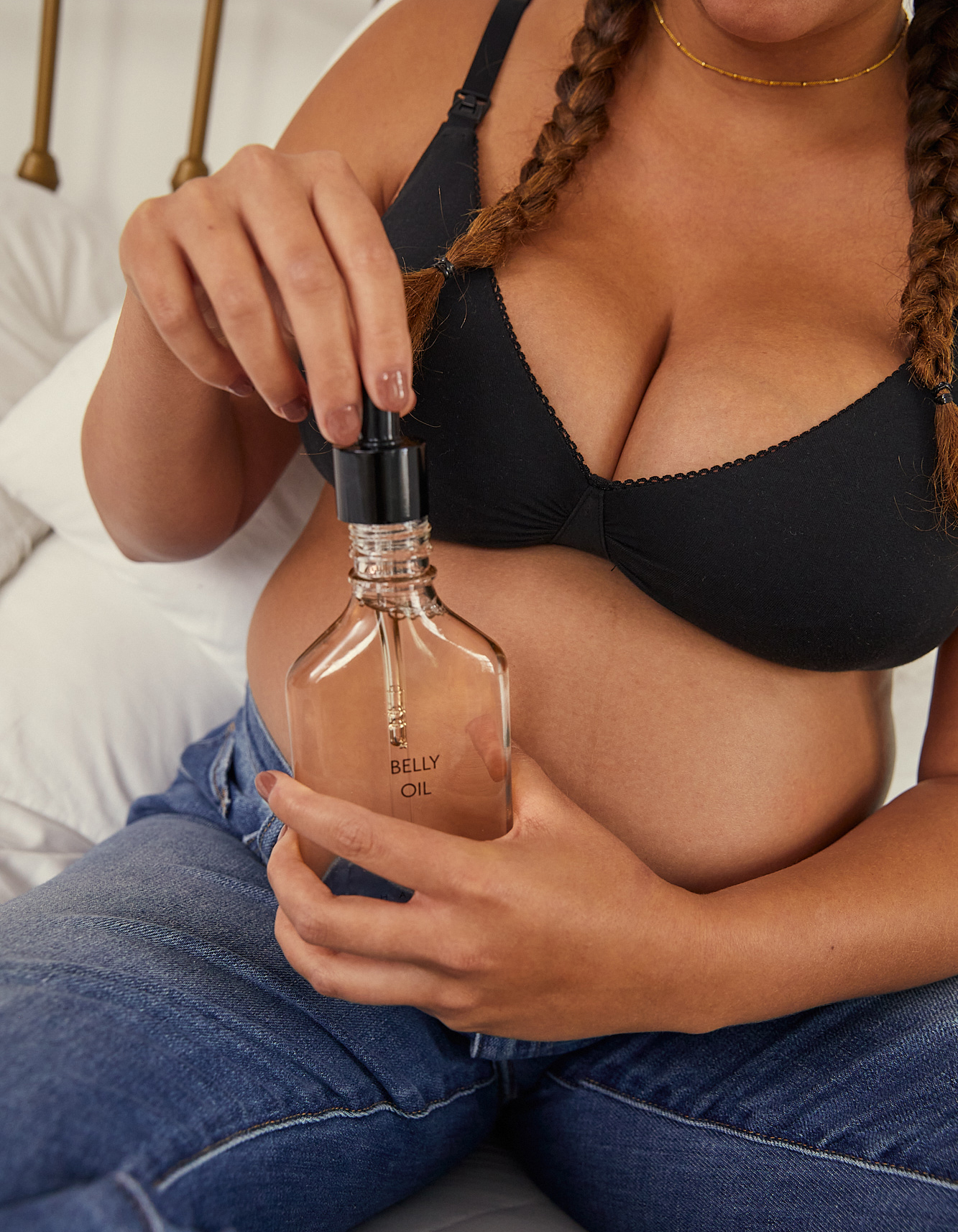
In tandem with eating well, our best-selling Belly Oil is a nutrient-rich quick-dry oil that helps relieve itching + reduces the appearance of stretch marks. Its baby-safe botanical blend is formulated to support skin as it stretches and provides deep hydration without leaving a greasy feel. It’s a one-two, power packed hydration from the inside out AND outside in.  

Lastly, get moving! In addition to fighting fatigue, helping with sleep + reducing mood swings, working out improves circulation, which helps with skin elasticity and offers more stretch as it grows. Same goes with varicose veins! So hit up the pilates studio, the spin class, or go take a hike, literally.

What's up with heartburn?

Are you still feeling Taco Tuesday on Wednesday morning? Do you find that you can’t leave home without a roll of Tums? Don’t stress. Heartburn is a super common issue during pregnancy. It has nothing to do with the heart, so rest assured. But it does involve a yucky, burning-like feeling in the chest, which is highly uncomfortable and annoying. Heartburn happens when the valve between the stomach + esophagus can’t prevent stomach acid from coming back up into the esophagus. During pregnancy, the hormone progesterone causes the valve to relax, which can increase the frequency of heartburn. The stomach acid will then pass into the esophagus and irritate the lining. Heartburn + indigestion are more common during the third trimester when your expanding uterus starts putting pressure on the intestines. 

Here’s what you can do to prevent heartburn. Eat smaller meals more often throughout the day, rather than a few large meals. Also avoid spicy, greasy food. If you’re having heartburn, try eating some yogurt or milk, as dairy can help calm the acid in your stomach. If your heartburn is severe, call your doc and she might prescribe some mama and baby-safe medication.

1 98 105