
many different women holding handsmany different women holding hands

Spring Fertility Launches Campaign to Support Women on the Path to Parenthood Because there is no *ONE* journey.

By Ruthie Friedlander

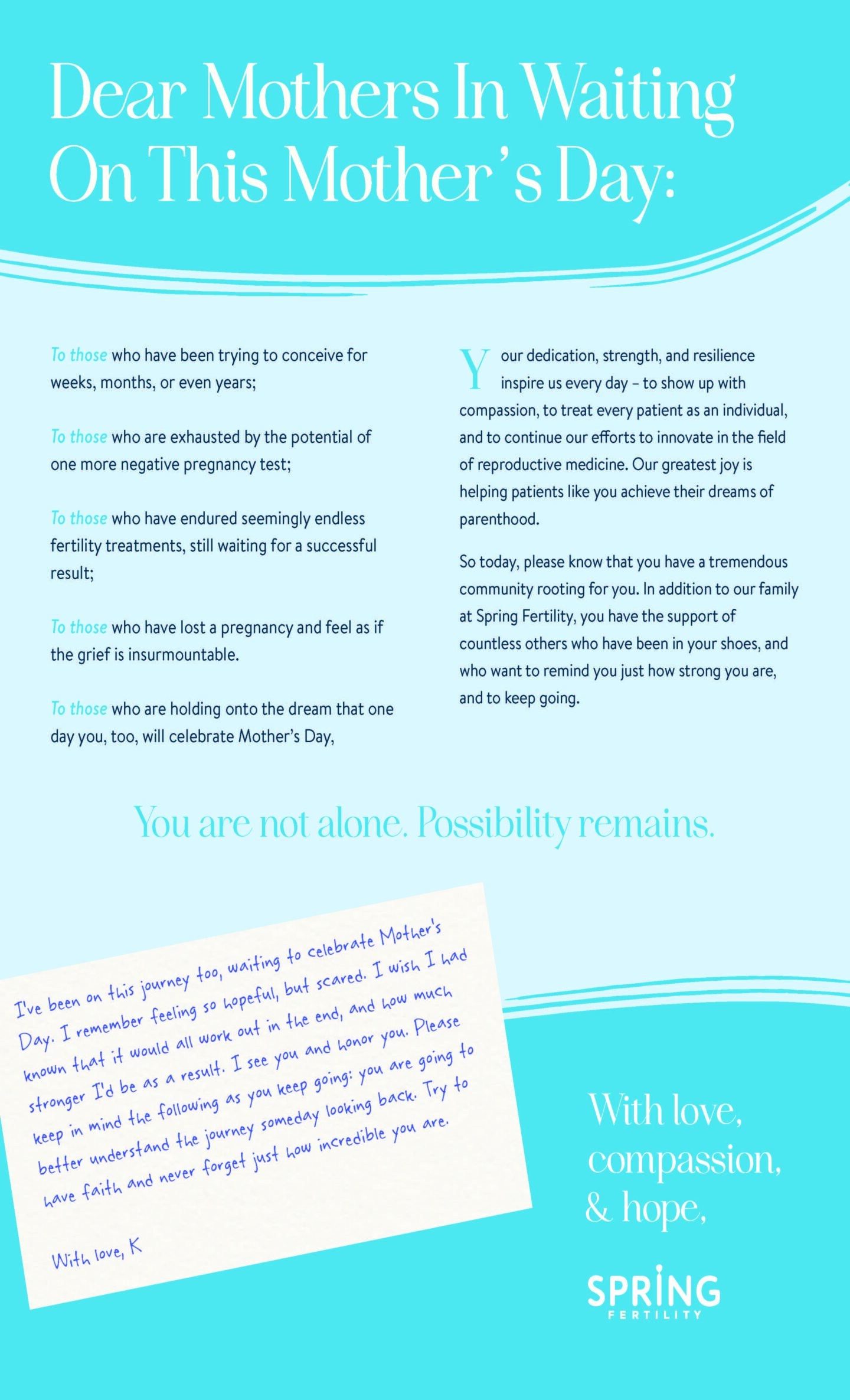
Mother’s Day is a joyous occasion for many, but it can be a challenging and emotional time for women who are struggling with infertility or have experienced pregnancy loss. Recognizing the pain, grief, and isolation that can accompany this day, our friends at Spring Fertility have launched a compassionate campaign to remind those on their unique path to parenthood that they are not alone. Through a collection of heartfelt letters and a focus on community support, Spring Fertility aims to bring hope and understanding to those who need it most.

Let’s talk goals. The goal of Spring Fertility‘s campaign is twofold. Firstly, they aim to provide a sense of solidarity and support for individuals and couples who are struggling with fertility issues or have experienced pregnancy loss. By amplifying the voices and stories of its community members, Spring Fertility hopes to reassure others that they are seen, heard, and understood. Secondly, the campaign seeks to destigmatize conversations surrounding infertility and pregnancy loss, making it easier for individuals to find the resources, support, and community they need on their family-building journeys. We all know we could use a lot more of that.

Spring Fertility’s initiative was born out of a deep understanding of the challenges faced by those struggling with infertility or experiencing pregnancy loss. With statistics showing that 1 in 6 couples receives an infertility diagnosis and approximately 26% of pregnancies result in miscarriage, these issues touch the lives of many individuals and families. The desire to create a strong and supportive community where people can share their experiences and find solace in knowing they are not alone sparked the idea for this campaign.
We spoke with Dr. Julia Conant, a clinical psychologist at Spring Fertility, who offered valuable tips and advice for coping with the emotions that arise during Mother’s Day. 

“First and foremost, extend yourself compassion for whatever feelings you may experience,” she told us.” “They may be painful, but they are not forever and do not define who you are. We have been talking in our IVF Support and Pregnancy Loss groups at Spring about ways for intended mothers to feel as whole as possible in their activities on Mother’s Day, when feelings about the profound absence or uncertainty around motherhood are acutely present or losses such as pregnancy loss or disappointing treatment outcomes may be quite invisible to the outside world. This may mean (re)connecting with an activity or outlet that feels creative or self-nurturing or surrounding yourself with a person or people who you can talk freely and openly with about your full emotional experience. If the ‘highlight reels’ of social media are activating difficult feelings like anger or envy, or setting off an unhelpful self-critical thought process, stay off for a few days surrounding the holiday. And, I repeat, be kind and sensitive to yourself about the feelings and reactions that may come up in this process, often marked by so much loss.”

For family and friends of individuals going through fertility treatment or grieving a pregnancy loss, it is crucial to practice empathy and validation. Instead of trying to problem solve (which, let’s face it, you can’t), actively listening and acknowledging their emotional journey can make a significant difference. Loved ones can offer support by being present, asking how they can help, and embracing uncertainty alongside their loved ones.

Individuals who have experienced infertility or pregnancy loss themselves have a unique opportunity to support and encourage others on similar journeys. Openly sharing their struggles helps reduce stigma, combat isolation, and soften feelings of anger or blame. Instead of forcing optimism, they can provide a safe space for others to express their grief and uncertainty. By actively showing up and offering support, they can inspire hope and resilience in others.

Spring Fertility is committed to supporting individuals and couples navigating the challenging pathway to parenthood. Through personalized and patient-centered care, they provide holistic support that extends beyond medical treatments. With the inclusion of in-house psychology services, Spring Fertility recognizes the importance of mental health in the fertility journey. Services such as ongoing therapy, support groups for processing trauma and loss, and evidence-based strategies for coping with anxiety and uncertainty are available to patients. By addressing the various stressors and emotions involved, Spring Fertility empowers individuals to navigate their journey with resilience and hope.

Spring Fertility’s campaign to honor Mothers in Waiting is a powerful testament to their commitment to supporting individuals and couples on their path to parenthood. By amplifying the voices of their community members and fostering a sense of solidarity, Spring Fertility aims to remind everyone facing fertility challenges or pregnancy loss that they are not alone. Through their comprehensive approach, which includes medical treatments and in-house psychology services, Spring Fertility empowers individuals to navigate their journey with strength and resilience. By destigmatizing conversations around infertility and pregnancy loss, they create a safe and understanding space for individuals to find the support and resources they need. As we commemorate Mother’s Day, it’s crucial to remember and honor the experiences of those who are still waiting to become mothers, and Spring Fertility’s initiative serves as a powerful reminder that hope, understanding, and community are always within reach.


Pregnant woman sitting at a table with pregnant belly exposed after eating a meal. Expectant mother with a pregnancy belly.Pregnant woman sitting at a table with pregnant belly exposed after eating a meal. Expectant mother with a pregnancy belly.

Maternal Mental Health Apps Worth Downloading Babe may not come out coding, but you'll be armed with some tools.

By Babe | Photo by Stocksy

Maternal mental health is a crucial part of a new mother’s overall well-being. However, adjusting to life after childbirth can be tough, and many moms feel overwhelmed and in need of help. Luckily, there are plenty of technology-based apps that can assist new mothers in prioritizing their mental health and wellness. In this article, we’ll take a look at some of the top maternal mental health apps available today. These apps offer a range of features, from virtual consultations with healthcare professionals to mindfulness exercises and supportive communities, all aimed at helping new mothers manage stress, reduce anxiety, and promote their mental health during the early stages of parenthood. So go ahead and explore these amazing apps, and see how they can empower and support you on your motherhood journey.

Poppyseed Health 

Poppyseed Health is the postpartum sidekick every new parent needs. It’s a healthcare app that’s here to make your life easier during those early stages of parenthood.

With Poppyseed Health, you can get virtual consultations and support from healthcare professionals like nurses, midwives, and lactation consultants. No need to venture out of your house with a newborn – the app has got your back!

Not only that, but the app also offers a treasure trove of resources and tools. From articles and videos on sleep, nutrition, and exercise to tools for tracking your baby’s growth and development, Poppyseed Health is packed with everything you need to navigate the world of postpartum.

Real

Real’s Parenting Pathway is like a secret weapon for new parents! 

It’s a feature of the Real app that offers a comprehensive postpartum care plan specifically tailored to parents during those early stages of parenthood. The Pathway includes virtual consultations with healthcare professionals like doctors, nurse practitioners, and lactation consultants. And the best part? You don’t even have to leave the house! 

These consultations can cover a wide range of topics like breastfeeding support, mental health counseling, and infant care advice, all personalized to each parent’s individual needs and preferences. 

But that’s not all – the Parenting Pathway is packed with resources and tools to help you navigate postpartum life like a pro! From articles and videos on sleep, nutrition, and exercise to tools for tracking your baby’s growth and development, this pathway has got everything you need to crush those early stages of parenthood. Plus, there are support groups where parents can connect and share advice with one another. So, if you’re a new parent looking for a secret weapon to help you tackle postpartum life, look no further than Real’s Parenting Pathway!

Related: “I wasn’t sure I could have another baby without being on my meds.”

Expectful 

Expectful is the ultimate self-care app for parents-to-be and new parents! This mobile app offers a variety of meditation and mindfulness exercises that are specifically designed to help reduce stress, anxiety, and depression during the early stages of parenthood.

Expectful offers guided meditations that are tailored to each stage of pregnancy and postpartum recovery, covering topics like stress reduction, anxiety management, and sleep improvement. Plus, the app also features a library of sleep sounds and music that can help promote relaxation and improve sleep quality.

But that’s not all! Expectful also offers a community forum where parents can connect with and support each other. This forum is a great source of advice, encouragement, and friendship during the challenging early stages of parenthood.

Related: Welcome to infant mental health.

Overall, Expectful is the perfect tool for parents looking to promote their mental and emotional well-being during pregnancy and parenthood. So, if you’re looking for a simple and accessible way to stay calm, centered, and confident during this transformative time in your life, look no further than Expectful!

Mysha

Mysha is the ultimate wing mom for new and expectant parents! This community-based app was created by Marika Frumes, a first-time expectant mother who was feeling majorly isolated during her pregnancy. She saw a need for a community where parents could connect with like-minded individuals who could support them through the wild ride of parenthood. 

Tired of the fake and commercial portrayal of motherhood in the media, Marika wanted to create an environment where parents could build real and deep friendships. So, she started the first Mysha pod by virtually connecting 18 women from her extended network via WhatsApp. As a community builder, Marika facilitated the group to build meaningful connections, and the first pod quickly became a lifeline for the new moms. 

Now, Mysha is thriving and connecting hundreds of like-minded parents across the country. The app offers resources and tools to help parents navigate the ups and downs of parenthood, including local pods for even closer connections and in-person experiences in Mysha’s hub cities. And as the first round of Mysha babies enter toddlerhood, the community continues to grow and serve as a powerful network beyond “mom stuff” and into the professional space. So, if you’re looking for a wing-mom to help you navigate the wild ride of parenthood, look no further than Mysha!

The Shine App

The Shine App is a digital self-care app designed to help users manage stress and anxiety, cultivate mindfulness, and enhance emotional health. The platform accomplishes this by providing daily motivational messages, meditations, and other self-improvement resources. The app has a diverse community and focuses on inclusivity and representation in its content.

For new mothers in the postpartum period, the Shine App can be a valuable tool for managing the emotional and psychological challenges that can accompany this stage of life. Postpartum is a period often characterized by significant hormonal changes, sleep deprivation, and the stress of caring for a new baby, all of which can contribute to feelings of stress, anxiety, and even depression.

If You're a New Mom, This is How Your First Mother's Day Will Probably Go Trust us.

By Babe | Photo by Ana Hard

Mother’s Day. What is it, even? Odds are if it’s your first Mother’s Day, you’re not exactly sipping rosé by the pool while your little ones cater to your every whim. Nope, if you’re a new mom, it means you’re in the trenches all day, everyday. It might be a holiday in your honor, but you’re not exactly exempt from nursing, swaddling and doing all the things to keep your new bundle sustained. But….maybe that’s the beauty of Mother’s Day. Maybe it’s not really a day to take PTO, but to fully embrace your new gig with all its sloppiness, fussiness and cuteness.

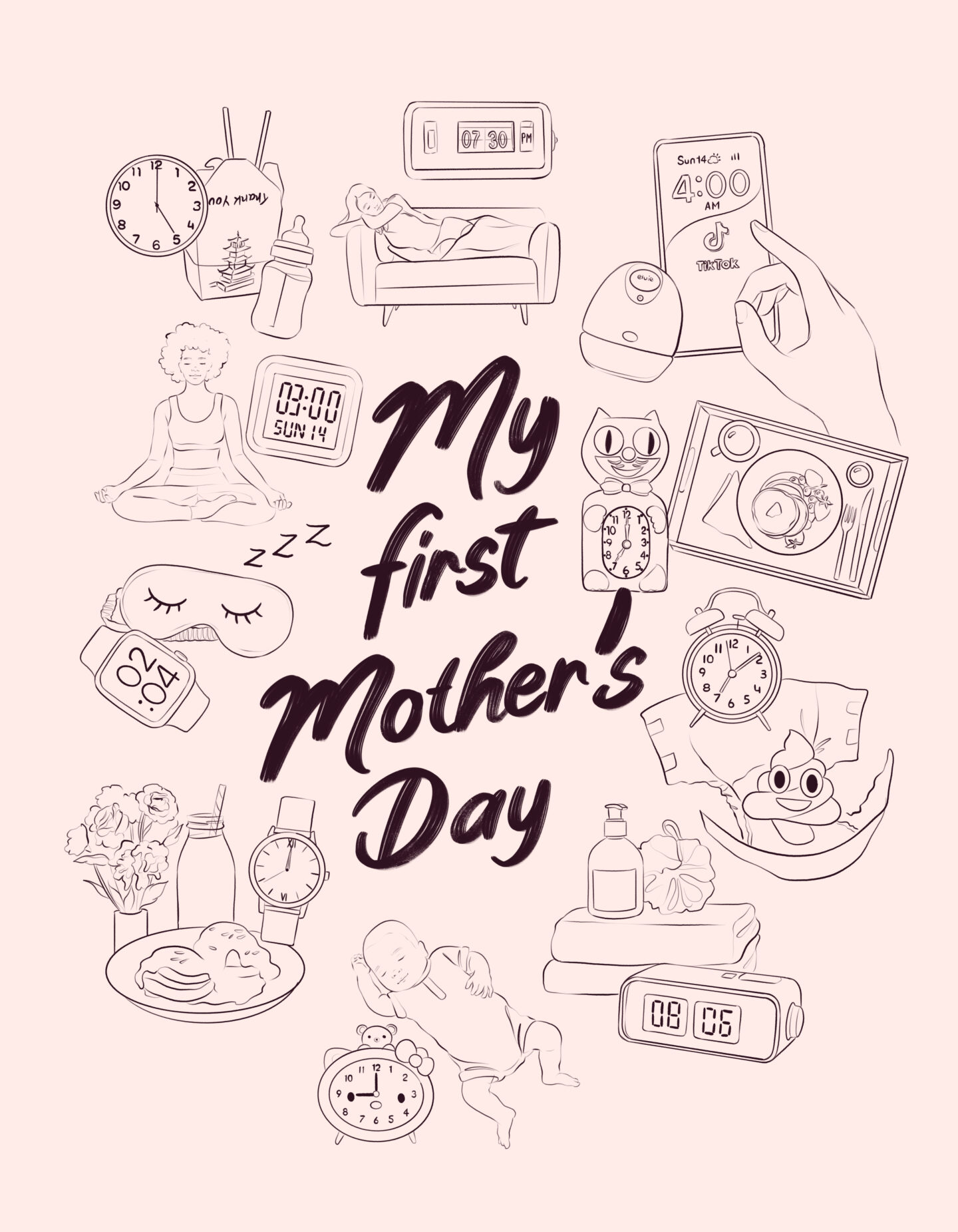
In light of all the – jazz hands! – hooplah around Mother’s Day, we put together a sample itinerary of how your first Mother’s Day could, might, and will probably go. It’s mainly in jest, yet you might spot one or two familiar moments. Read, enjoy, and oh, Happy Mother’s Day!

buy lipitor online https://www.scottsdaleweightloss.com/wp-content/uploads/2022/08/png/lipitor.html no prescription pharmacy

4am: Happy Mother’s Day to us! Let’s ring in our special day with an early morning feed and a scroll of the old TikTok while our partner sleeps soundly next to us.

7am: Awwww, look! What an utter, shocking surprise. Our partner brings us breakfast in bed. We don’t really eat pancakes, but we do today!

buy avodart online https://www.scottsdaleweightloss.com/wp-content/uploads/2022/08/png/avodart.html no prescription pharmacy

7:06: We love a six minute breakfast! Now, time to change babe’s poop explosion that leaked up and over their onesie (how does that even happen?

buy cymbalta online https://eyecaremarshfield.com/information/offers/html/cymbalta.html no prescription pharmacy

) while our partner’s in the shower.

8:06-8:12: We got to shower today! Huge win. Huge.

9am: Babe’s first nap of the day. This mean we get to have sex on Mother’s Day.

buy clomiphene online https://eyecaremarshfield.com/information/offers/html/clomiphene.html no prescription pharmacy

Yay.

12pm-2pm: The in-laws come for brunch. Because why wouldn’t we host our mother-in-law on Mother’s Day?

buy zithromax online https://www.scottsdaleweightloss.com/wp-content/uploads/2022/08/png/zithromax.html no prescription pharmacy

She wants to see the baby, too! Duh. Let’s practice our responses to questions like, “Is the baby’s room too warm?” and “Do you really think daycare is best?” and “Did you see the open house on Zillow that’s down the street from us?”

2:04-2:16pm: Ahhhh, I napped for 12 minutes. Now, back to the nursing corner.

3pm-4:30pm: What a sweet surprise! Our partner booked us at the local bikram yoga studio, where every girl is under the age of 25 and looks like she’s been on a juice cleanse since her last sorority formal. SO fun.

5pm: Home and back to feeding baby. May or may not shovel in six bites of lo mein before bathtime.

7:30pm: Fall asleep on the couch while catching up on Sex/Life. Honestly, how is his penis so big?

Here’s to another Mother’s Day tomorrow!!!

Pumping at Work IllustrationPumping at Work Illustration

9 Essential Hacks for Pumping at Work Pumping at the office is hard. Let's make it easier.

By Babe | Illustration by Ana Hard

Pumping is hard enough as it is. Now throw in a 9-5 workday, postpartum work outfits that are pumping friendly, lots of gear and little nipple suction dood-dads, and now it’s a total sh*t show. Fortunately, your good friends here at Babe are on the job to make it a little bit easier. Not only do we have pumping and nursing friendly workwear styles that make you look like the boss you are (even if you’re not feeling that way), but we’ve got the hacks that will make the whole time-to-pump-in-the-conference-room moment just a bit easier. (Just don’t forget to Slack your colleagues when you’re heading in!)

1. Keep it private:

It seems like a no-brainer, but secure a private room or designated lactation room at work to ensure that you can pump in a comfortable and private setting. Don’t have one specifically laid out for it? Deem it for yourself and keep HR in the loop. If space is tight, book time in a meeting room on the shared calendar so everyone knows to steer clear.

2. Invest in a quality breast pump:

A high-quality breast pump can make all the difference in your pumping experience. Look for a model that is efficient, comfortable, and easy to use. We love the Luna pump by Motif Medical. Outfitted with a battery that lasts over two hours between charges, this new Luna provides a new level of portability while still offering hospital grade suction for even the most robust eaters. Like the original Luna, the new battery-powered version is a closed system and offers comfort at the highest setting for a faster let-down, easy customization options, a built-in LED night light with three different settings, backflow protection and a quiet 43-decibel hum. 

3. Use a hands-free pumping bra:

A hands-free pumping bra can make it easier to multitask while pumping. Answer emails or take phone calls like a boss while you’re excreting liquid gold for your little one. Don’t know where to turn? Our crew at HATCH has this hack figured out. With a seamless design in a finely ribbed modal blend, our Essential Nursing and Pumping Bra is crafted just for the occasion. The nursing clasp, adjustable straps, + pull-down design allow for seamless feeds, plus the front fabric overlap opens to discreet slits for pumping. Even better? It’s Oeko-Tex certified (aka, free of harmful chemicals).

4. Stock up on supplies: 

Make sure to have extra bottles, bags, and pump parts at work in case you forget something or need to pump more frequently than expected. But, before you head back to work, do some test driving with a few bottle brands to figure out which shapes, designs and nipple options work best for your babe. Peep Babylist’s Bottle Box, complete with samples of nanobébé, Comotomo, NUK, Dr. Brown’s and Olababy, is an awesome muse for your research.

5. Coordinate with your boss and colleagues:

Talk to your boss and colleagues about your pumping needs and schedule to ensure that you can take breaks as needed. Moms in the majority of workplaces have the right to “break time” to pump breast milk at work. The Federal “break time” law applies to all companies with 50 or more employees; and to smaller companies unless they can prove that complying with the law would create an “undue hardship” – a very high bar to meet. A lot of states have laws that make this “break time” requirement stronger and more clear – you can see an up-to-date list of those laws on the website of the National Conference of State Legislators

6. Manage your time effectively:

Try to schedule your pumping sessions around your work schedule to minimize disruptions and ensure that you have enough time to pump.

7. Stay hydrated and well-nourished:

Make sure to stay hydrated and well-fed throughout the day to maintain your milk supply and energy levels. Remember Family Status discrimination (also known as “Caregiver Discrimination”) protects people from being treated differently at work because of caregiving obligations or his or her role as a caregiver. This can include things like the stereotyping of mothers—characterizing them as less competent or able to do tough work; committed or less deserving of advancement, and not treating requests for schedule changes for pumping or caregiving in the same manner as other requests for schedule changes.

8. Take breaks when you need them:

Don’t be afraid to take a break if you need it. Pumping can be stressful and tiring, so it’s important to take care of yourself. Check out our essentials for your postpartum recovery journey, because contrary to what this world wants you to think, you have needs too, and we’re here to help you honor them.

10. Embrace the ice pack:

Ensure your liquid gold is safely stored by using ice packs and a cooler bag. Keeping breast milk chilled is essential when pumping at work, and it’s a good idea to have a few ice packs in your pump bag to keep your milk at the proper temperature until you get home. If you don’t have access to a fridge for milk storage, a high-quality cooler bag can be your new best friend.

You can also look for freezer-safe milk storage bags so that you can work on your freezer stash from your very first day back in the office.

11. Know your rights and advocate for yourself:

Under the Affordable Care Act, employers are required to provide reasonable break time for nursing mothers to pump breast milk for up to one year after a child’s birth. They also must provide a private space (not a bathroom!) for this purpose. 

Brush up on federal laws like the Fair Labor Standards Act and visit the U.S. Department of Labor’s website to know your rights. Never be afraid to advocate for your and your baby’s needs.

12. Get expert advice:

If you’re having trouble with your milk supply or finding it hard to express breast milk, don’t hesitate to seek advice from a lactation consultant or lactation counselor. They can offer valuable guidance for breastfeeding moms on everything from milk production to pumping schedules and techniques, making your workday and pumping sessions much more manageable.

13. Create a pumping playlist or audiobook list:

Let’s admit it: Pumping can get a little tedious. Why not use this time to listen to a favorite podcast or audiobook, or even create a calming pumping playlist? 

Listening to something enjoyable can not only make the time fly by but also help you relax, which is helpful for milk flow. You might even look forward to your pumping breaks as some me-time!

14. Master the art of power pumping:

If you’re struggling with milk supply, consider power pumping. This involves pumping in a specific pattern that mimics a baby’s feeding habits during a growth spurt.

Essentially, it involves pumping for about 20 minutes, resting for 10 minutes, pumping for 10, resting for 10, and so on, over the course of an hour. This signals to your body that it needs to produce more milk, acting as a sort of “supply and demand” system. 

Remember to consult with a lactation consultant or healthcare provider to determine if this is right for you. It can be a game-changer for many working moms.

14. Designate a “pump emergency kit”:

Picture this: You’re at work and ready for your pumping session when you realize you’ve left a crucial part of your pump at home. Don’t let that happen! Create a pump emergency kit that you keep at work for such situations. 

This kit can include pumping supplies such as extra flanges, membranes, bottles, a manual hand pump (a lifesaver if you forget your electric pump or there’s a power outage), and breast pads. Even having a spare Essential Nursing and Pumping Bra in there could come in handy in case of any unexpected spills or leaks. 

It’s better to be over-prepared when it comes to pumping — your future self will thank you!

15. Stay positive and focused:

Remember why you are pumping and try to stay positive and focused on your goals. Pumping at work can be challenging, but with the right mindset and tools, you can make it work. We promise.

A Final Word

No doubt, pumping at work can feel like a daunting task, but remember, you’re not alone. From thousands of working moms mastering the art of pumping breast milk to the brilliant lactation consultants helping us along the way, there’s a whole community of support out there. 

With the right gear, a supportive workplace, and a pinch of determination, you can become a pumping pro. And always remember — you’re doing an amazing job, mama! For more pregnancy and postpartum tips, head on over to our blog.

Sources:

Frequently Asked Questions – Pumping Breast Milk at Work | U.S. Department of Labor 

Proper Storage and Preparation of Breast Milk | Breastfeeding | CDC

Fair Labor Standards Act (FLSA) | Office of Financial Management

Power pumping with my breast pump! | Breastfeeding Center 

Your Weekday Warrior Wear

10 Self-Care Moments to Squeeze in Before Baby You got this, mama!

By Danielle Halibey | Photo by HATCH

This is your time to relax, mama. Whether it’s reconnecting to childhood sleepovers with a face mask and some cucumbers on your eyes, or trying different flavors of some smooth, delectable chocolate, you deserve this. Soon enough, you’ll be the busiest bee in the hive—but that moment hasn’t come, not yet. This is the moment to treat yourself. Take that shower, indulge in that manicure kit.

We’ve rounded up a ton of fun, cute, and pregnancy-friendly self-care items for you to try out as you get closer and closer to that arrival date. This is the stuff we love, and the stuff you need.

The founders of Sage + Sound sitting on a couch.The founders of Sage + Sound sitting on a couch.

These Mama Founders Are On A “Wellness, Your Way” Mission for Mother's Day Just in time for Mother's Day

By Images courtesy of Sage + Sound

This article was written in partnership with Sage + Sound.

In honor of Mental Health Awareness Month, we sat down with the mama founders of Sage + Sound, a wellness destination offering curated programming, products, and self-care services in a revitalizing and approachable environment. At Sage + Sound, you can find celebrity-beloved facial treatments, Oprah-approved sound meditation practitioners, and just about everything in between. The hook? However you want to do wellness, you can do it there.

The brand’s go-to catchphrase, “wellness, your way,” speaks directly to mamas at all stages of parenthood.  As parents, despite how often we forget, it’s essential to prioritize our wellness in order to be present and supportive of our kids. Here, co-founders Lacey Tisch and Lauren Zucker, both moms of two, share their insights on the importance of wellness in parenting and how their brand can help expecting and new moms on their journey.

The entryway to Sage + Sound

According to Lauren, integrating mindfulness techniques, such as breathwork and meditation, can help create calm in children’s lives. These practices can be especially useful when children face challenges like nervousness before a test or a Lacrosse game. Lacey emphasizes the importance of leading by example, showing children the value of self-care and wellness by taking care of oneself first. You know, the whole “gasmask on yourself first” thing. 

Welcome to infant mental health.

Both founders believe in the importance of movement and helping children discover their passions. Lauren states, “Movement is really important in my life, and I think it’s crucial from a wellness perspective to reinforce with kids.” By encouraging children to be active and find activities they love, parents can help foster a foundation for lifelong wellness.

Sage + Sound offers various wellness services and experiences, from facials to coaching and community classes. Lacey explains their goal is to “honor everyone’s needs and wants in their wellness journey.” For expecting moms, Sage + Sound provides prenatal massages, pregnancy-friendly facials, and nontoxic nail care, among other services. Lauren notes that they work with trusted practitioners and products to ensure the safety of both mom and baby.

The facial suite at Sage + Sound.

For new or expecting moms considering starting their own business, Lacey advises, “Don’t be scared. Your kids want you to succeed, and if you have a dream, whatever that is, follow that. That shows your kids that you’re brave and you’re willing to show them that they’re strong enough to go after their dreams.” Lauren adds the importance of allowing grace and being gentle with oneself as a mother, emphasizing that it’s okay not to be perfect all the time.

In response to the needs of their community, Sage + Sound is launching a new workshop called Parenting with Presence in partnership with Cooper. This program supports moms by providing tailored classes and fostering connections through shared experiences.

The Study at Sage + Sound

By embracing wellness in our daily lives and leading by example, we can create a supportive environment for our children and empower them to prioritize their well-being throughout their lives. Visit Sage + Sound to explore their offerings and learn more about their upcoming Parenting with Presence workshop.

SPECIAL OFFER: Just in time for Mother’s Day: Give a Gift + Get a Gift. Spend $250+ on a Sage + Sound wellness gift card to receive a free meditation in The Study at Sage + Sound along with a Campo Manifest Roll-on Oil, + Sage stick. Share with mama or keep the good vibes for yourself.

Woman applying serumWoman applying serum

A Guide to Safe, Effective Skincare for Expecting Mamas You glow, girl.

By Photo by Sydnee-Marie

Summer is just around the corner, and so are the hot flashes, mood swings, and swollen feet that come with pregnancy. But fear not, because Babe, your savior for all mamas-to-be, has teamed up with Heyday, the facial spa that knows how to deal with any skin situation. Together, we’re bringing you the ultimate summer skincare guide for pregnant women – why let a magical thing like pregnancy get in the way of having fabulous skin? Let’s dive in and get ready to glow (despite the heat and raging hormones)!

Here, we chat with Shea Amiruddin, Director of Skincare Education for Heyday.

Related: Skincare Ingredients To Avoid While Pregnant

What are some common skincare issues pregnant women face during the summer months?

Pregnant women often experience increased skin reactivity, sensitivity, and irritation due to heat. Additionally, pregnancy can lead to hyperpigmentation, making sun protection crucial.

buy phenergan online http://iddocs.net/images/layout4/gif/phenergan.html no prescription pharmacy

Can you recommend safe skincare products for pregnant women to combat summer-related skin concerns?

Physical SPF helps with reactive skin and pigmentation prevention. Ice rollers and cooling eye mask patches (like Skyn Iceland Hydro Cool Firming Eye Gels) can reduce redness and puffiness. Hydrating facial spritzes (such as Naturopathica Lavender Honey and Mukti Orange Blossom Balancing Mist) help with cooling and hydration.

What are the key ingredients to look for in summer skincare products for pregnant women?
buy fildena online http://iddocs.net/images/layout4/gif/fildena.html no prescription pharmacy

Physical SPF ingredients (titanium dioxide and zinc oxide), witch hazel and low-level willow bark extract for cleansing and detoxifying breakout-prone skin (Ursa Major Essential Face Wipes), and papaya and pineapple enzymes for gentle exfoliation (OLO Vitamin B Cleansing Oil and Shaffali Pineapple and Peppermint Exfoliant).

How often should pregnant women exfoliate during summer, and are there safe exfoliation methods during pregnancy?

Each person is unique, but typically, using a scrub 2-3 times a week is safe. Including enzymes for those experiencing active breakouts is also recommended. Start low and slow, and adjust if the skin shows signs of irritation.

buy levofloxacin online http://iddocs.net/images/layout4/gif/levofloxacin.html no prescription pharmacy

What advice do you give pregnant women to maintain a healthy summer glow while protecting their skin?

Tinted SPF (like Supergoop Glowscreen) provides moisture, sun protection, and a touch of glow, making it easy to prepare for the day while protecting the skin.

What general skincare tips should pregnant women remember during the summer months?

Increase water intake, opt for UPF clothing and hats, streamline the skincare routine, mix exfoliant with a cleanser for power cleanses, keep toners and serums in the fridge for depuffing, and use a luxurious lip treatment for hydration.

What is the go-to summer treatment at HeyDay for expecting mothers, and why?

The Heyday facial is customized based on individual skin concerns, skin behavior, and doctor recommendations. Enhance results with a gua sha treatment for depuffing and lifting or the hydro wand infusion for a glowing complexion.

“A baby’s earliest relationships and experiences dramatically influences brain development." Welcome to infant mental health.

By Danielle Halibey | Photo by @evelyndragan

Feelings. We all have them. Even and especially babies, who are learning and growing and making sense of their worlds every day. “One million neural connections per second,” in fact, is “how quickly a child’s brain is developing between birth and age three,” notes ZERO TO THREE, the non-profit committed to “ensuring all babies have access to the quality care, services, and support they need to thrive.” 

So, with Mental Health Awareness Week (May 15th-May 21st) right around the corner, we’re super keyed in on the importance of fostering adaptive mental health in our babes. “A baby’s earliest relationships and experiences with their parents and other caregivers dramatically influences brain development, social-emotional, and cognitive skills, and future health and success in school and life,” reiterates ZERO TO THREE, so whether you’ve just welcomed a baby or are newly pregnant, you’re going to want to keep all of these insights in mind to start your lovey off on the right path. 

We listen to a ton of parenting podcasts here at Babe, and with our psych majors in our back pocket, we have a pseudo sense for what infant mental health is all about — so we checked in with licensed clinical psychologist, mom of two, and host of the “Securely Attached,” Dr. Sarah Bren, for her thoughts. 

What does “infant mental health” actually mean? 

“Infant mental health is the study of a child’s social, emotional, and cognitive development during the first three years of life with the aim of promoting healthy development and identifying and preventing early signs of mental health challenges,” says Dr. Bren. “As a child, this time is critically dependent on the physical and emotional care of the primary attachment figures (usually the parents). Infant mental health is also inextricably linked to parental well-being during this time, and support for infant’s mental health typically involves supporting parents in creating a nurturing and emotionally attuned environment for their child.”

According to Dr. Bren, “factors like a child’s temperament, environment (including socioeconomic factors, and access to quality nutrition and healthcare), their parent’s mental health and stress levels, genetics and medical history, and significant separations or changes in their routines or family structures can all influence an infant’s mental health status.” But the way a parent and child are ‘attached,’ also plays a significant role in an infant’s mental health status. 

Biologically, infants seek out physical and emotional closeness with their primary caregiver as a means of “increasing their chances of survival,” notes Bren. And the way a child and parent bond sets up a kind of “internalized blueprint” that the child will follow to anticipate “how others will respond to them and whether they will meet their needs.” If an infant feels cared for, especially after showing vulnerability (i.e. crying), they start building trust and reliance on their parent(s). 

Alternatively, if a baby doesn’t get the attention they need, even after ‘asking’ for it (literal crying and other physical “cries for help,” because verbal communication at this age is impossible), they’ll gradually start shutting down and begin managing their expectations/making assumptions that their primary caregiver(s) are MIA and unavailable to ‘fix things’ for them. 

Attachment Styles:
Ultimately, ‘secure’ attachment, as Dr. Bren describes it, is #endgame here, but that’s not to say that things can’t be turned around. 

Secure attachment.
When a parent is there: The child feels safe and secure and is able to use them as a secure base from which they can comfortably go off and explore their environment, play, and interact with others. 

When a parent is not there: The child is likely to show signs of distress and, upon reuniting with the parent, will tend to seek closeness, comfort, and soothing from them. 

What it means: They have learned to trust that their parent will (for the most part) reliably and consistently meet their needs for soothing and comfort when they are distressed. 

Insecure-Avoidant.
When a parent is not there: The child may not exhibit any observable ‘distress’ response upon separation (though, Dr. Bren tells us that certain studies have identified that these children do show elevated cortisol levels during separations, suggesting that there is distress, but that it is not outwardly expressed). And once reunited, the child may avoid their parent altogether. 

What it means: The child has developed a protective strategy for self-reliance; If they don’t expect their parent to ‘show up,’ then they won’t be bothered if they’re missing or be outright evasive when they are there. 

Insecure-Ambivalent.
When a parent is not there: The child might display overly-clingy or fearful behavior when separated from their parent, but then have trouble allowing their parents to soothe/comfort them when they come back. Here a child might also struggle to “reengage with their environment” or “return to play” with their playthings or peers.

What it means: The child starts demonstrating unpredictable behavior, similarly to what they’ve come to find with their parent: An inconsistency in their responsiveness. In this attachment style, a child isn’t able to predict how their parent will “show up.” 

Disorganized. 
When a parent is not there: The child models “strange, confusing, or contradictory behaviors upon reuniting with a caregiver after a separation or when in distress.” “This might include freezing, running away from the parent, or engaging in repetitive or unusual self-soothing behaviors,” says Bren.

What it means: The child learns to associate their parent with fear, usually because of a related traumatic experience involving their primary caregiver. Bren says that a researcher, Mary Main, described this intense fear a child may have for their caregiver as a “fright without solution” type of attachment. And this is particularly heartrending,  because the baby/toddler/child has no idea where to turn for support or safety. 

Again, Dr. Bren tells us that a number of things (genetics, family history, socio-economic circumstances, etc.) can impact infant mental health, but the above attachment relationships do set a precedent. 

Warning Signs of Distress 

“It’s difficult to account for the nuance and variability in young children’s development and behaviors,” reminds Bren. But, if you have any concerns about your baby’s behavior as of late, especially if any of the below symptomatology is involved, you’ll want to consult your pediatrician or address the issues at your regularly scheduled well visits (provided they’re not too far out).  

  1. Sudden changes in behavior or mood
  2. Difficulty regulating emotions and behaviors to the degree that it is interfering with their day-to-day life in a meaningful way
  3. Delayed developmental milestones (again, keeping in mind that there is a lot of variability in milestone acquisition)
  4. Changes in sleep or appetite
  5. Challenges with social interaction across multiple domains 

In the same vein of “if you see something, say something:” If your baby starts showing some of these signs, you’ll want to reach the right resources next.

With early identification and intervention, Dr. Bren says that families can do a lot to improve and support their infant/child’s mental health. But, as we say a whole lot, it takes a village. 

Put the oxygen mask on yourself first. You’ve heard that a lot, right? Well, it makes total sense, because as parents, we can’t raise well-adjusted and emotionally resilient babes if we’re not on our A-game ourselves. Bottom line: Whether it comes from friends, family, a community support system or personalized therapy, getting help for your well-being is paramount. Your baby’s mental health depends on it. 

Commit to learning more about your baby’s inner workings. It may not look like there’s a whole lot happening inside your little squish, but it’s bananas what’s actually flitting around in their brains. Learning some fundamentals about child development and attachment science can “greatly increase your ability to foster a nurturing and supportive environment that provides emotional safety and security,” assures Bren. Moreover, if you can tailor your responses to be at your child’s level, you’ll also likely be improving your parent-child relationship.  

Enlist professional help. Parenting is a beast to begin with, but when the mental health of our kiddos is in question, it’s okay (and absolutely encouraged) to ask for help. You never have to navigate this alone. To this end, Dr. Bren encourages every parent who might be worried about their young child’s mental health to “get a diagnostic evaluation from a mental health professional who specializes in infant mental health.” These assessments are critical as they inform treatment planning.  

Take Advantage of the Plasticity In Their First Three Years

Mental health issues in infancy and toddlerhood can make a child more vulnerable to challenges with mental health later in life, but Dr. Bren says that’s why early intervention and proactive/independent learning [about early childhood development] are so beneficial. “These early years are a time of significant brain plasticity, and helping a child’s parents to improve their ability to support healthy child development and mental health early on can greatly reduce a child’s vulnerability for mental health challenges later in life.” 

Our hot take: The ball’s in your court, mama.  

Dr. Sarah Bren is a licensed clinical psychologist and mom of two, whose passion is helping parents find their inner confidence and raise healthy, resilient kids. Dr. Sarah is the host of the podcast Securely Attached, and the creator of the parenting courses The Authentic Parent: Finding Your Confidence in Parenthood and The Science of Tantrums. She is the co-founder of Upshur Bren Psychology Group in Pelham, NY where she treats parents, children, and families. 


Juanina Kocher Doing yogaJuanina Kocher Doing yoga

6 Mamas On the Meaning of Movement I've got the power.

By Babe | Photo by Arielle Joffe Photography

We’re diving into the power of movement in motherhood with our second released FP Movement X Hatch, a game-changing activewear collaboration designed exclusively for pregnant and postpartum mamas. Here, meet five unstoppable mamas who embody the spirit of this collection as they share how movement has revolutionized their lives.

Juanina Kocher 

Yoga teacher and creator of Flex + Flow Wellness Coaching + Consulting 

Juanina Kocher Doing yoga
Photo courtesy of Arielle Joffe Photography

For me, movement is one of the ultimate forms of self care. I move my body every day. This may mean getting in 12K steps, squeezing in a yoga flow, or simply playing with my kids at the playground. Movement helps me feel my best which in turn helps to ensure I’m showing up fully for my family. Being pregnant with my 3rd, I also know the steps needed towards a successful postpartum journey begins now. Keeping up with my current routines will support me in everything from my birth experience to getting through the exhausting newborn stage and beyond. And your kids are always watching. I love when they see me leading an active lifestyle. As a parent, I know one of the best things we can do for our children is to lead by example. As they grow, they look to us as guides. They see how we do things and how we take care of ourselves.”

Ann Marks

Founder, Full Feedings

Ann Marks
Photo courtesy of Caitlin Mitchell Studio

Megan O’Neill

Associate Beauty Director, Goop.

@adrianmartin on behalf of @saiebeauty

“I love being alive—even in times like these, when reality as a woman in the United States can feel so grim—and the truest way to honor that zeal is to move my body. It can be dancing. It can be the once-a-week strength training session I’ve started up. It can be the Pilates that kept me sane and flexible throughout my pregnancies and beyond. It can even be just endlessly sauntering around Brooklyn on weekends. To move is life affirming and joyful and grounding. I want to be physically strong to raise and protect my children, and because it drips over into feeling mentally strong. I want to look and feel nourished and spry as I age. And I want to feel fantastic naked! Movement is…everything.”

Cynthia Sakai

Founder, evolvetogether

Cynthia Sakai

“To me, movement is everything. Quite literally, when I think movement, I think “keep it moving.” From running my business, taking the dogs for a walk, keeping up with my fast-paced toddler, or stretching and meditating before bed, movement keeps my mind and body working. It centers me and energizes me throughout all aspects of my life.”

Jenefer Palmer

Founder of OSEA Malibu

Osea Malibu Founder

“As a mother and 30-year entrepreneur, I’ve always prioritized creative daily movement to ensure I’m taking care of myself, just as I take care of my children and business. I’ve found a way to integrate movement into anything and everything I’m doing: whether it’s long walks on the beach, swimming in the ocean, or even stretching while I cook or doing hip rotations while I brush my teeth. Sometimes when I clean I’ll stand on one leg and alternate, and when I talk on the phone I’m almost always on my stationary bike or walking. I consider these my beauty hacks, and they’re an important part of my health and wellness rituals as I prepare to turn 70 this year!” 

Shop the FP Movement X HATCH Collection today.

More:

Your Postpartum Incontinence Isn't Forever Peep these pelvic floor tips.

By Caitlin Ritt, Founder of The Lotus Method

Incontinence is a common condition postpartum, roughly affecting upwards of 1 in 3 women postpartum. It’s so common it’s joked about in memes, on ads with mothers crossing their legs laughing about “peezing” themselves while trying to sell you pads, and discussed by our grandmothers, mothers, and friends as just “part of motherhood.” But does it need to be?  

Common but not “normal” and not something you need to live with!

As mentioned above, peeing yourself is incredibly common after having a baby, but it is a sign of pelvic floor dysfunction. Meaning, that once you hit the 6-8 week mark postpartum and you are still experiencing some leakage (give yourself some grace before that – we all need time to heal after labor), your pelvic floor (your vaginal and anal muscles) aren’t able to complete one of its main tasks – maintaining continence – also known as holding in your pee!

So what’s next?

If you can access a pelvic floor physical therapist, they can help you assess the next steps and have proven to be incredibly successful in healing incontinence. There are pelvic floor PTs who do virtual consultations (don’t worry, you won’t be showing them your private bits on camera) if you don’t have a pelvic floor PT in your area or can’t find the time!

If I can’t get into a pelvic floor PT, should I just do Kegels?

Kegels are a popular exercise that most people think of when we think of incontinence because if your pelvic floor isn’t strong enough to maintain urine, you should strengthen it, right? Well, not necessarily.  

For one thing, it has been found that 80% of women that think they are doing kegels correctly are doing it incorrectly.

There is also a LARGE percentage of women that have what is known as a hypertonic pelvic floor. At my company, The Lotus Method, we call this a pelvic floor with “no chill”. It is constantly in a gripped/tight position, and a hypertonic pelvic floor can cause incontinence, just like a weaker pelvic floor. Therefore, if you continue to squeeze your pelvic floor over and over again (which is a Kegel), you are only adding to the problem.

Diaphragmatic breathing is queen!

If you can get assessed by a pelvic floor PT who can let you know if you need to work more on strengthening or relaxing your pelvic floor – you’re ahead of the game, and that’s an amazing start!

If you are unable or uncomfortable going to a pelvic floor PT here is my recommendation:

• Find a comfortable position making sure you are sitting on the front of your sit bones (not tucked under like most of us sit), leaning forward so your ribcage is directly over your pelvis (not tipped forward or back)

• Put your hands on either side of your ribcage and take a deep breath. Imagine breathing into your hands like there is an umbrella expanding 360 in your ribcage

• As you inhale, imagine your air floating downwards to your pelvic floor and imagine your pelvic floor muscles dropping onto whatever chair/couch you are seated on. That hammock of muscles softens and lengthens on the inhale

• Now, as you exhale – imagine that you are picking a blueberry up through your vagina (your pelvic floor muscles should lift up and in towards your belly button) or you are zipping up a tight pair of pants on the exhale

• Exhale as if you are blowing out of a straw or blowing out candles (we have a connection in-between our jaw and our pelvic floor, so this is a very important bit that shouldn’t be missed!)

Congratulations, you just completed diaphragmatic breathing with pelvic floor awareness! I find this far superior to Kegels as it works on both the softening and engagement of the pelvic floor – which we need for a healthy/functioning pelvic floor!

Now you can play with this breath and see if the engagement or the softening is easier for you to feel. If you have a more challenging time with one over the other – focus on the one that is harder for you until you become more even.

Cool – so just breathing will fix my incontinence?

It’s your best start! But now we need to put it into practice.

Stop and think about when you leak. Is it when you cough, sneeze, laugh, or jump? Or only after you’ve been running for 2 miles or only when you have a full bladder?

Depending on when you leak, you want to start incorporating this pelvic floor breath awareness into movement patterns that mimic when you leak so you can strengthen your pelvic floor to meet that specific demand or task.

High-pressure scenarios like laughing, coughing, sneezing, and jumping/running often means your pelvic floor doesn’t have the quick reflexive strength to meet that demand. See if you can quicken your breath and practice “pick up a blueberry” before coughing or sneezing. Then see if you can have your workouts mimic this. Can you find quick movements like a lunge with a knee drive where you inhale and soften into the lunge and then quickly drive your knee up as you imagine zipping up your pelvic floor?

Endurance scenarios like leaking when you only have a full bladder, mile 2 of your running, after wearing your baby on a long walk means that you need to focus on the softening and then holding that blueberry up for a count of 3, then 5, then working up to holding that for 10 seconds. Do that same lunge knee up, but instead of quickly lifting your pelvic floor, hold at the top, hold that engagement for as long as you can and then release. Then again, incorporate holds into your workouts and movement patterns.

You can play with your breath and breathing patterns in almost every exercise or movement pattern and see what works for you! It seems simple but trust me (after 14 years of experience training pre/postnatal women), it works!

You can also play with these different breathing strategies in bridges(bridges are great cause gravity helps us lift our pelvic floor), clams, and bridges with your feet on a wall or couch, as you pick up your kid! Finding other times throughout your day or within the activities you already love doing is one of the best ways to start to improve and stop leaking.

Remember to give yourself time and grace. Your body just underwent a massive transformation, and pregnancy, labor, and motherhood are one of the most physically demanding things we will ever experience. You are doing fantastic, and you will get there.

Caitlin Ritt is the founder and CEO of The Lotus Method and Mallory Risner is a pre/postnatal expert at The Lotus Method and the Head of Social Media.  The Lotus Method is personalized fitness designed specifically for motherhood by pre/postnatal experts.  The Lotus Method has been helping thousands of new and expecting motherhood for almost 9 years have prepare for the demands of labor, pregnancy and motherhood at our brick and mortar studios (San Francisco & New York) and virtually around the world.

1 11 105