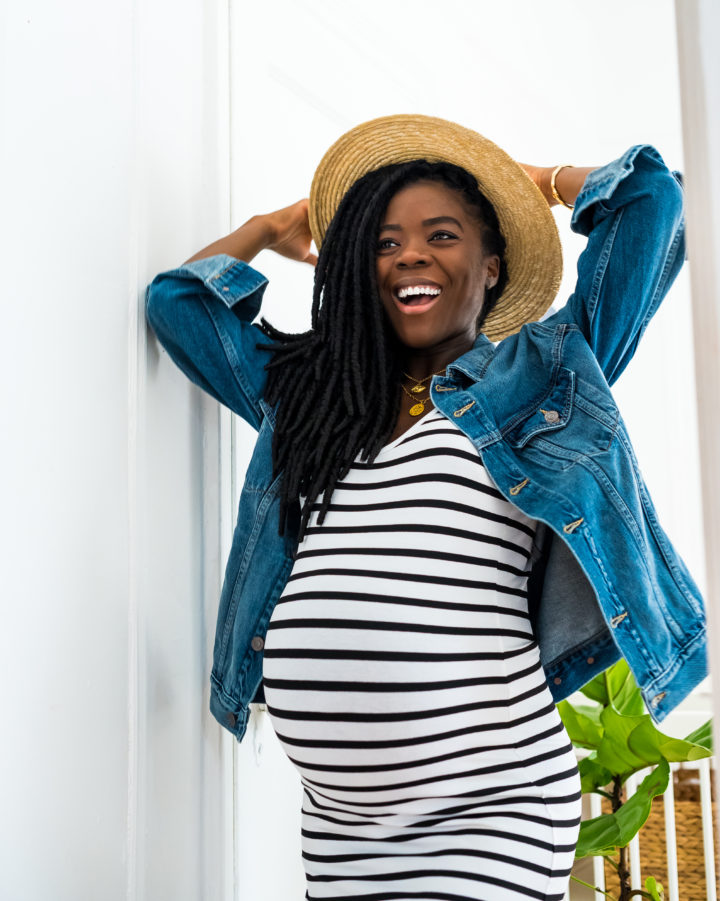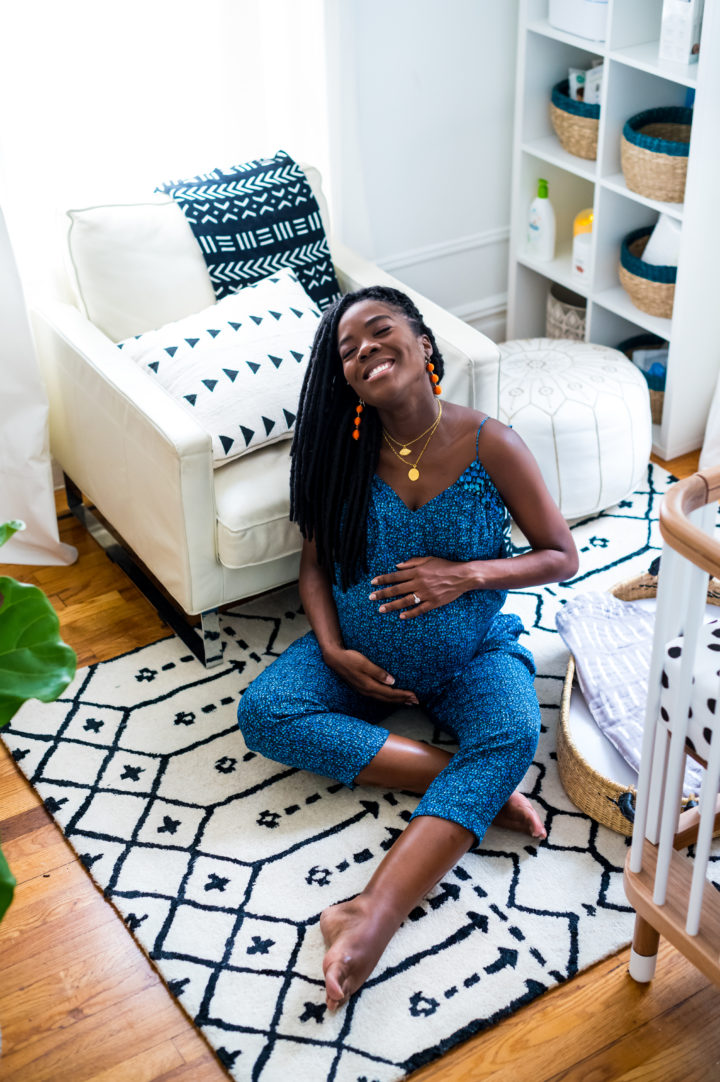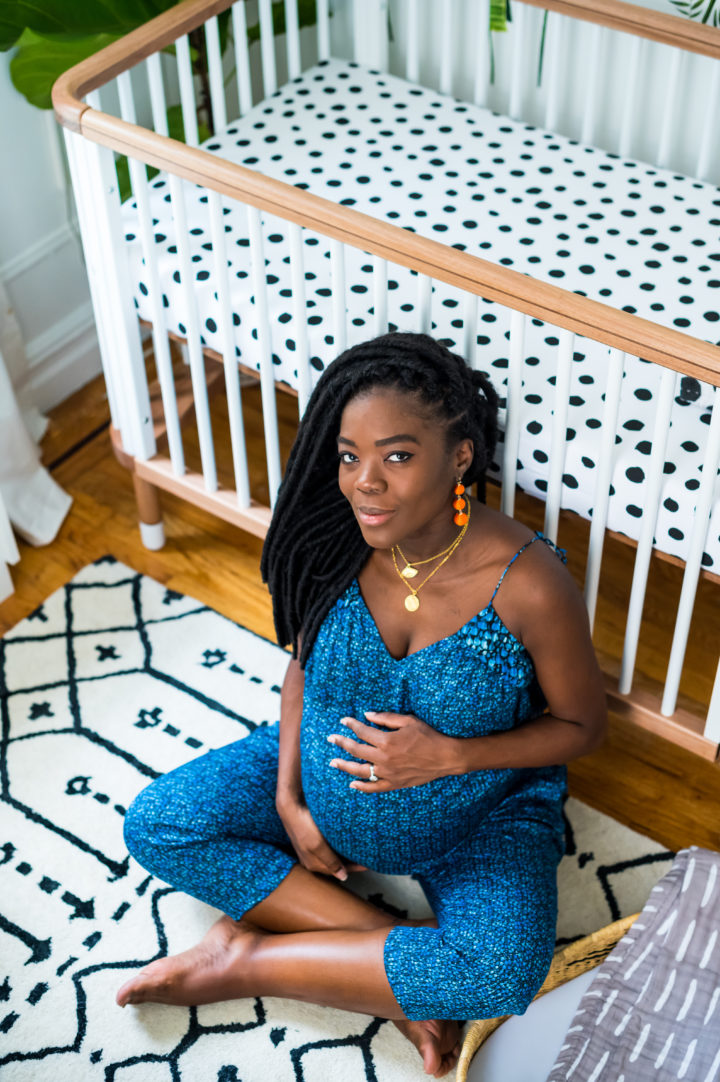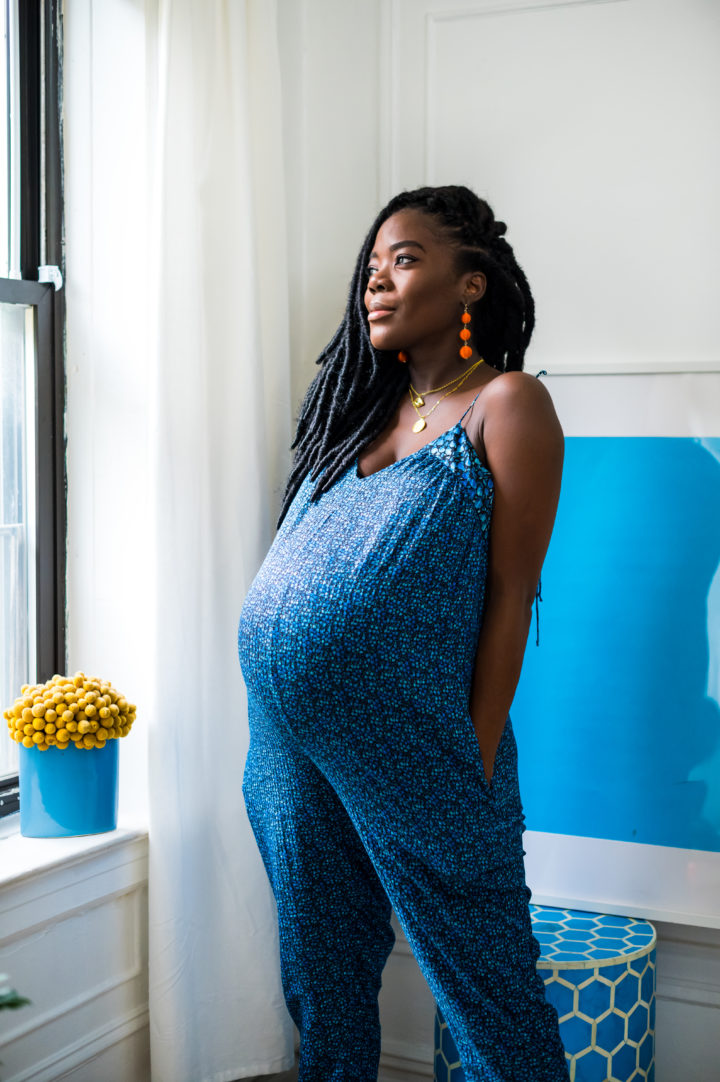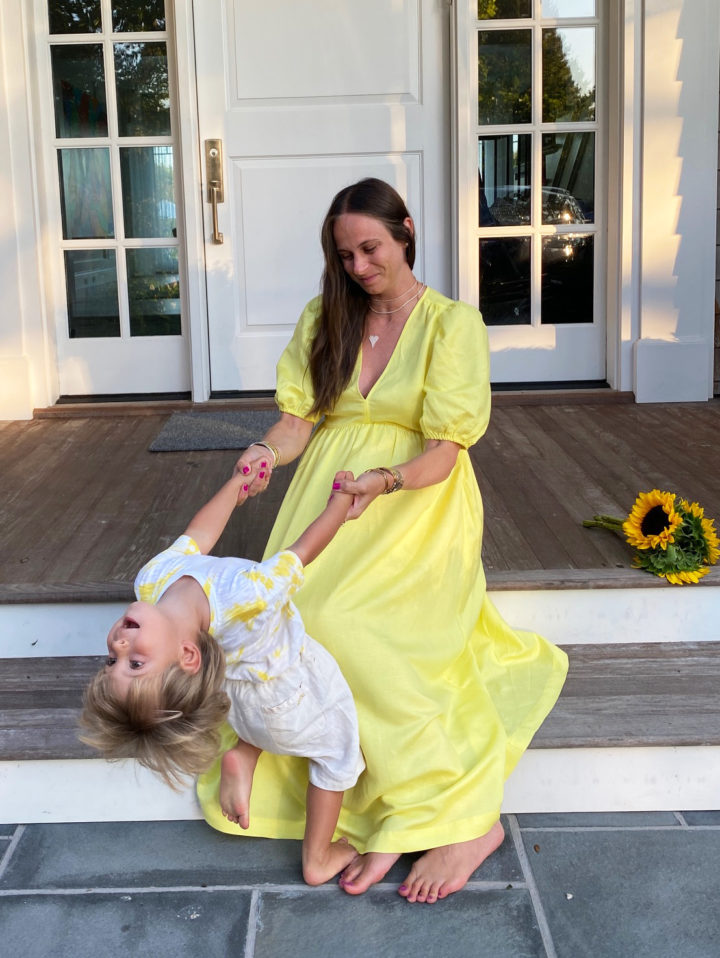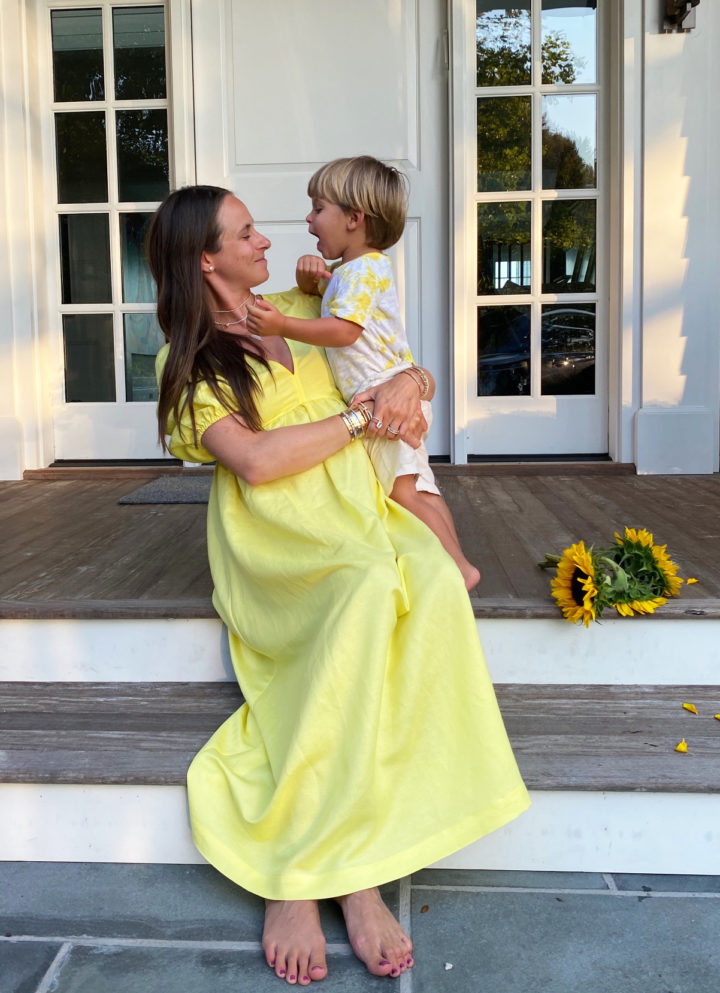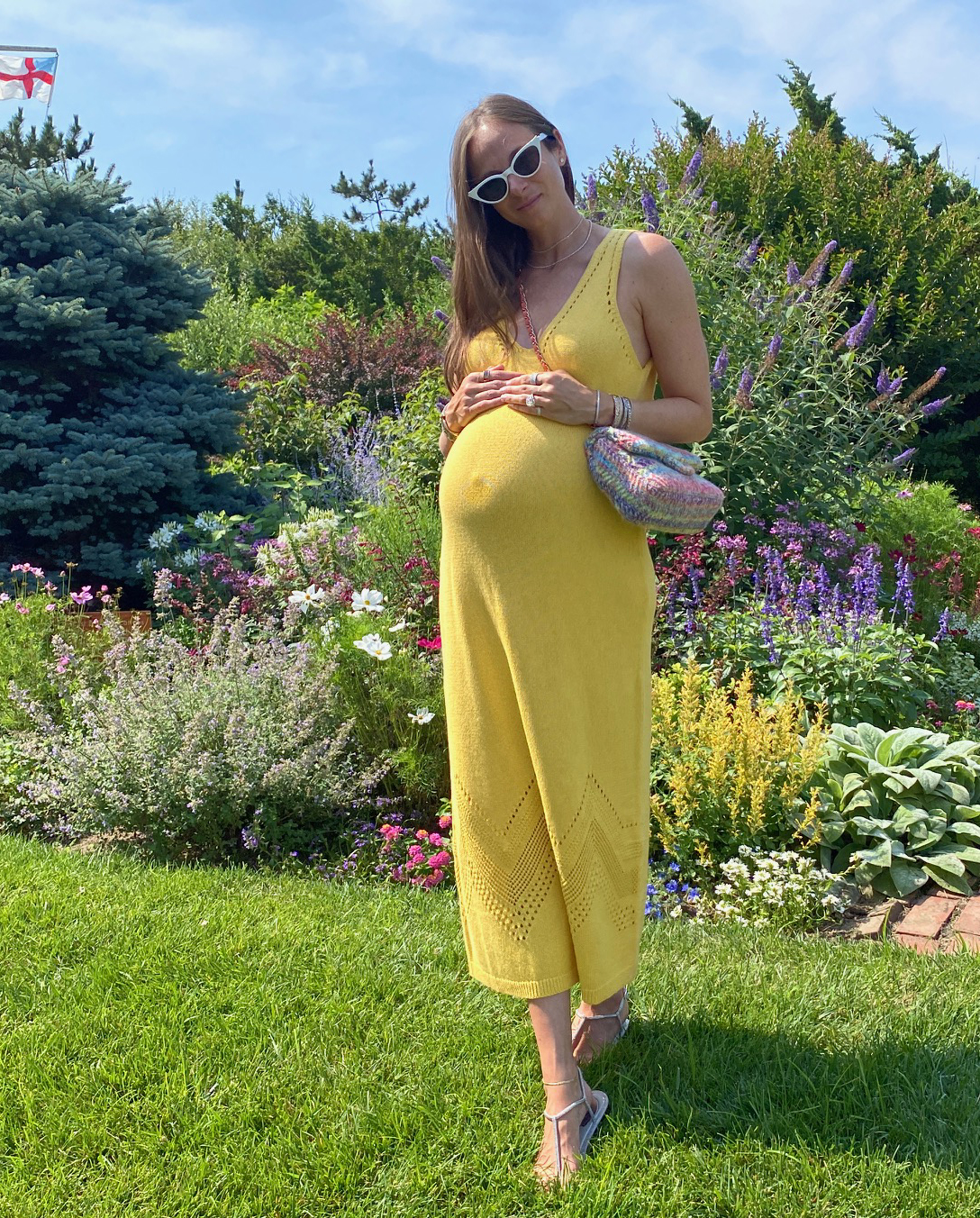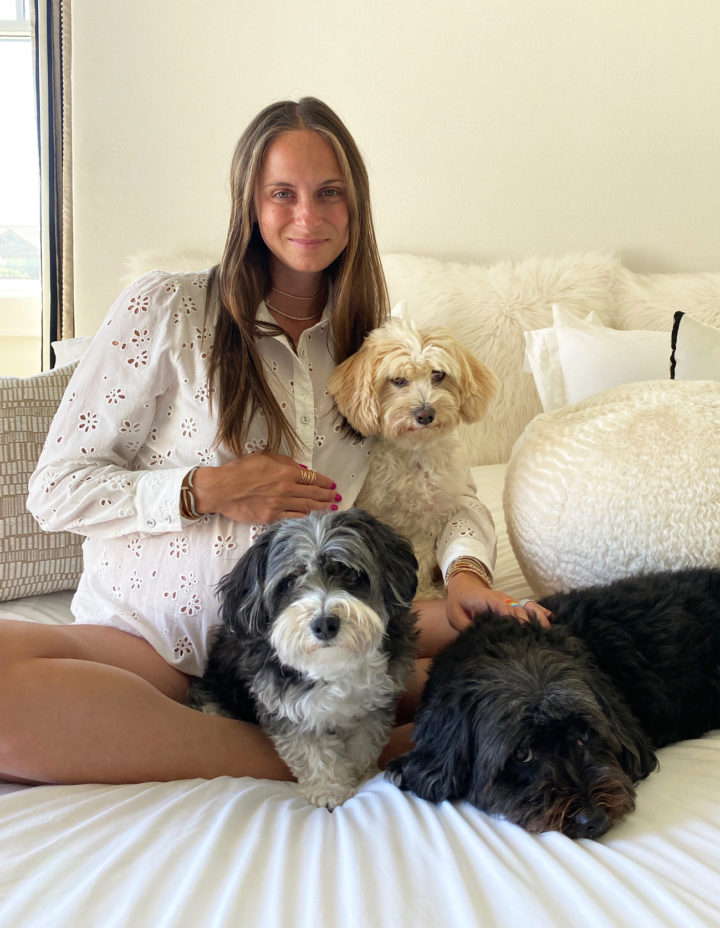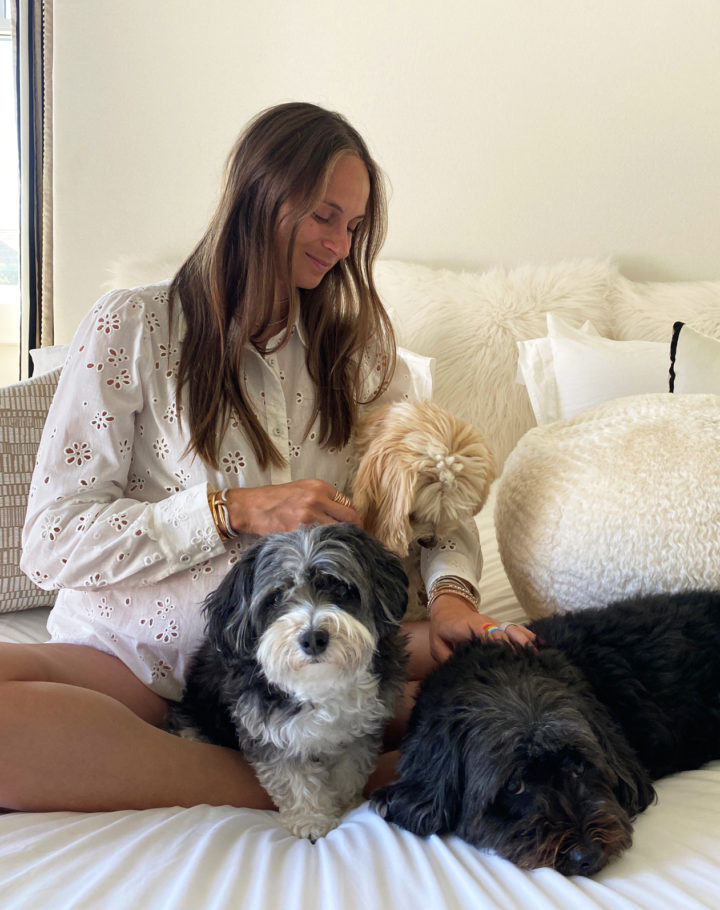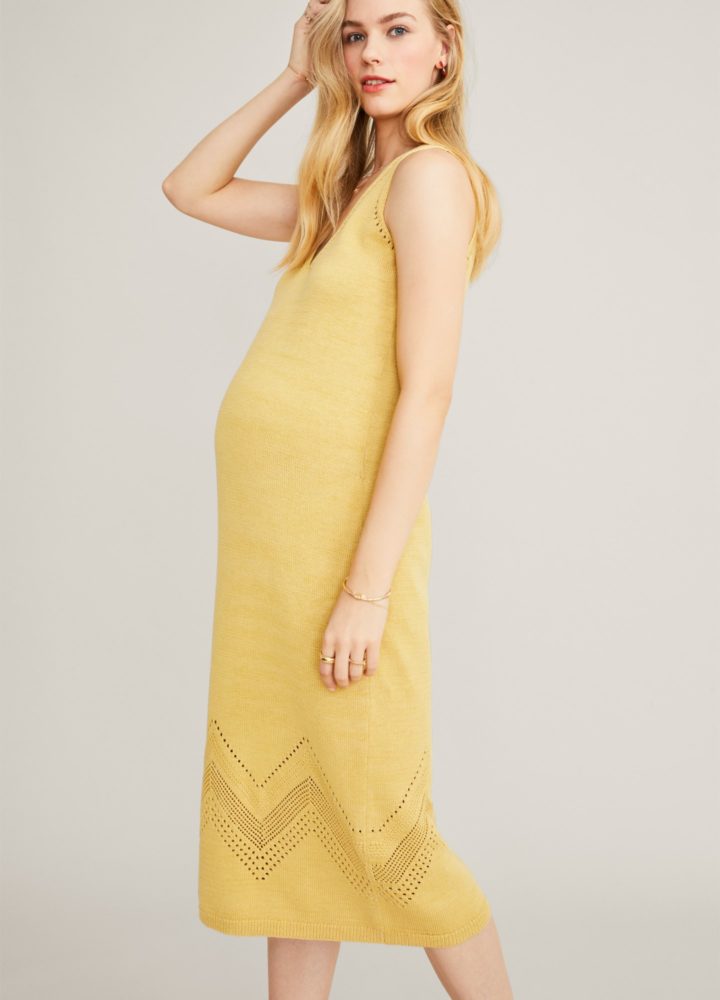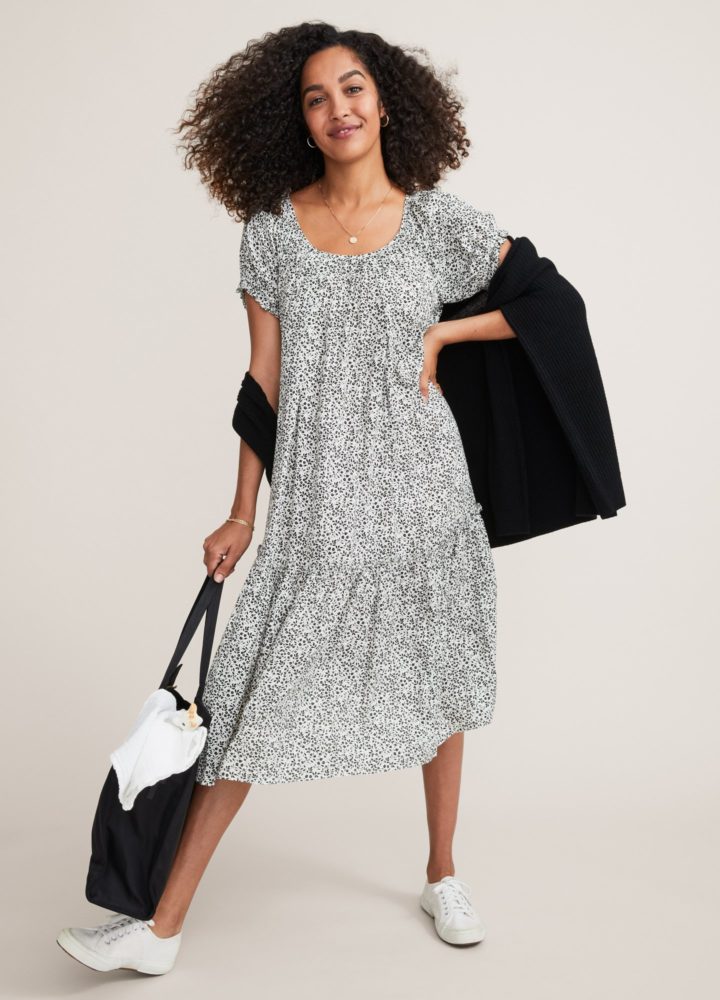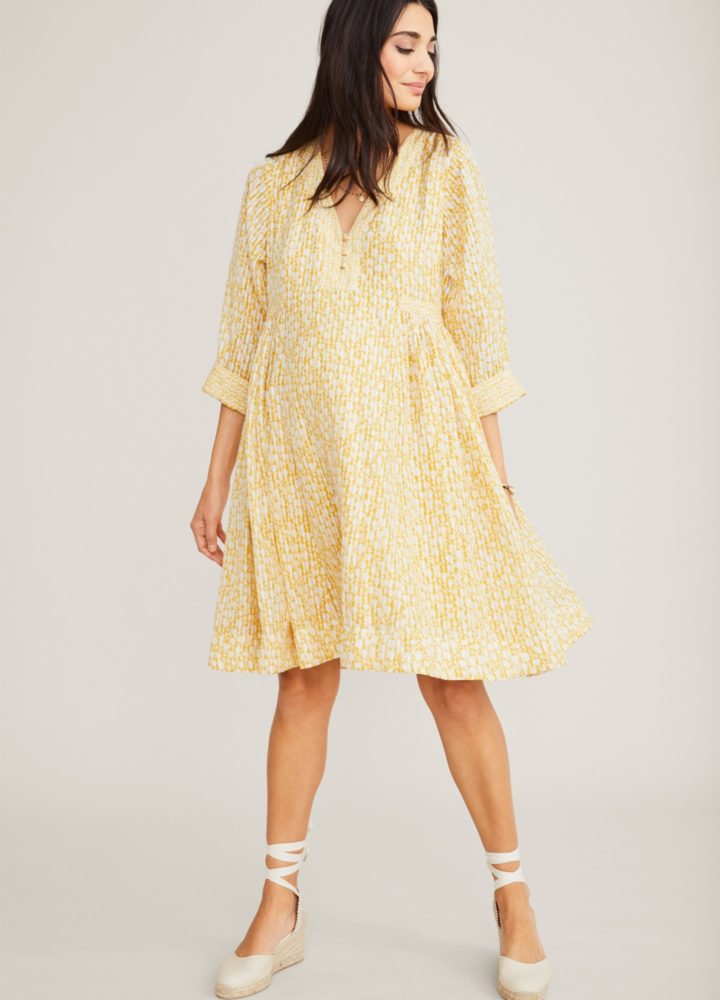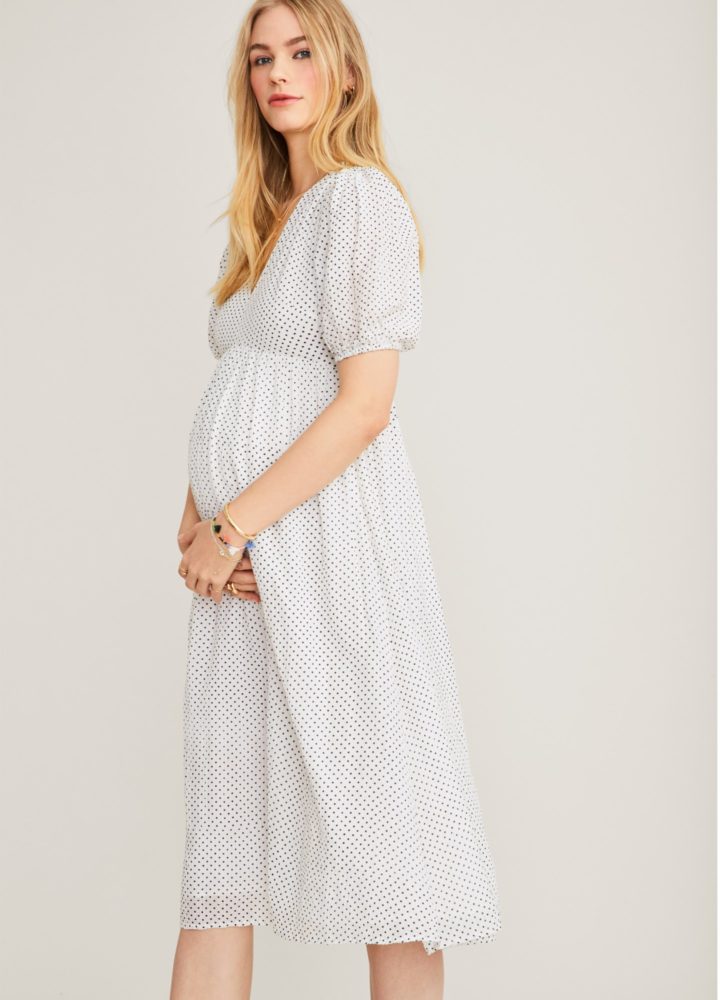
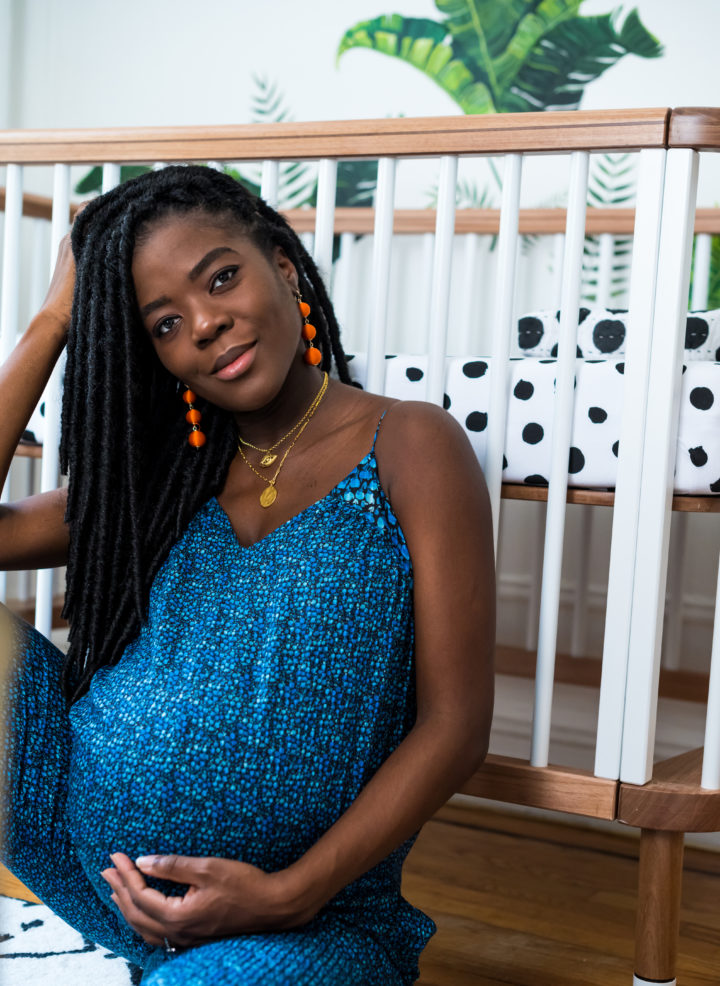
Attorney Turned Influencer Cynthia Andrew Talks side hustles + twins.

By Ruthie Friedlander

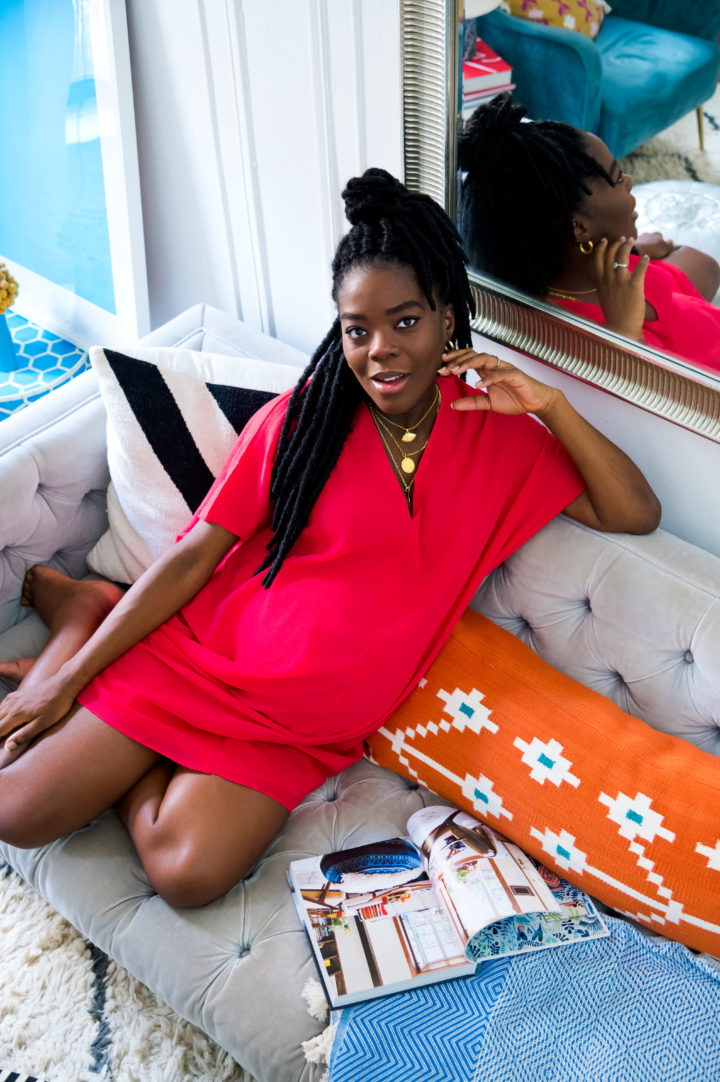
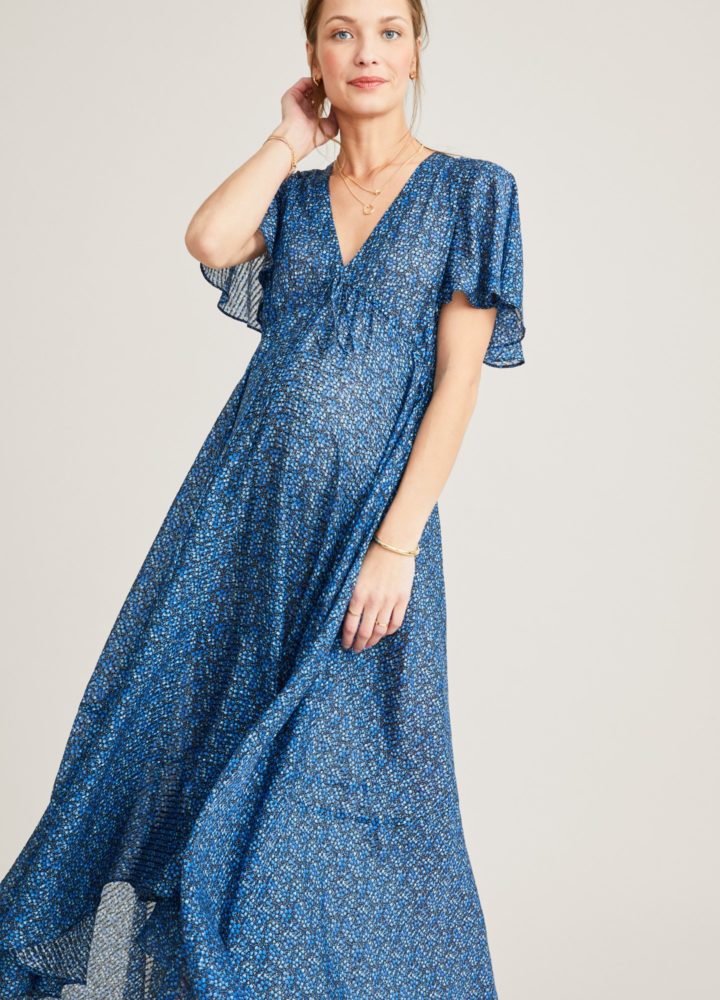
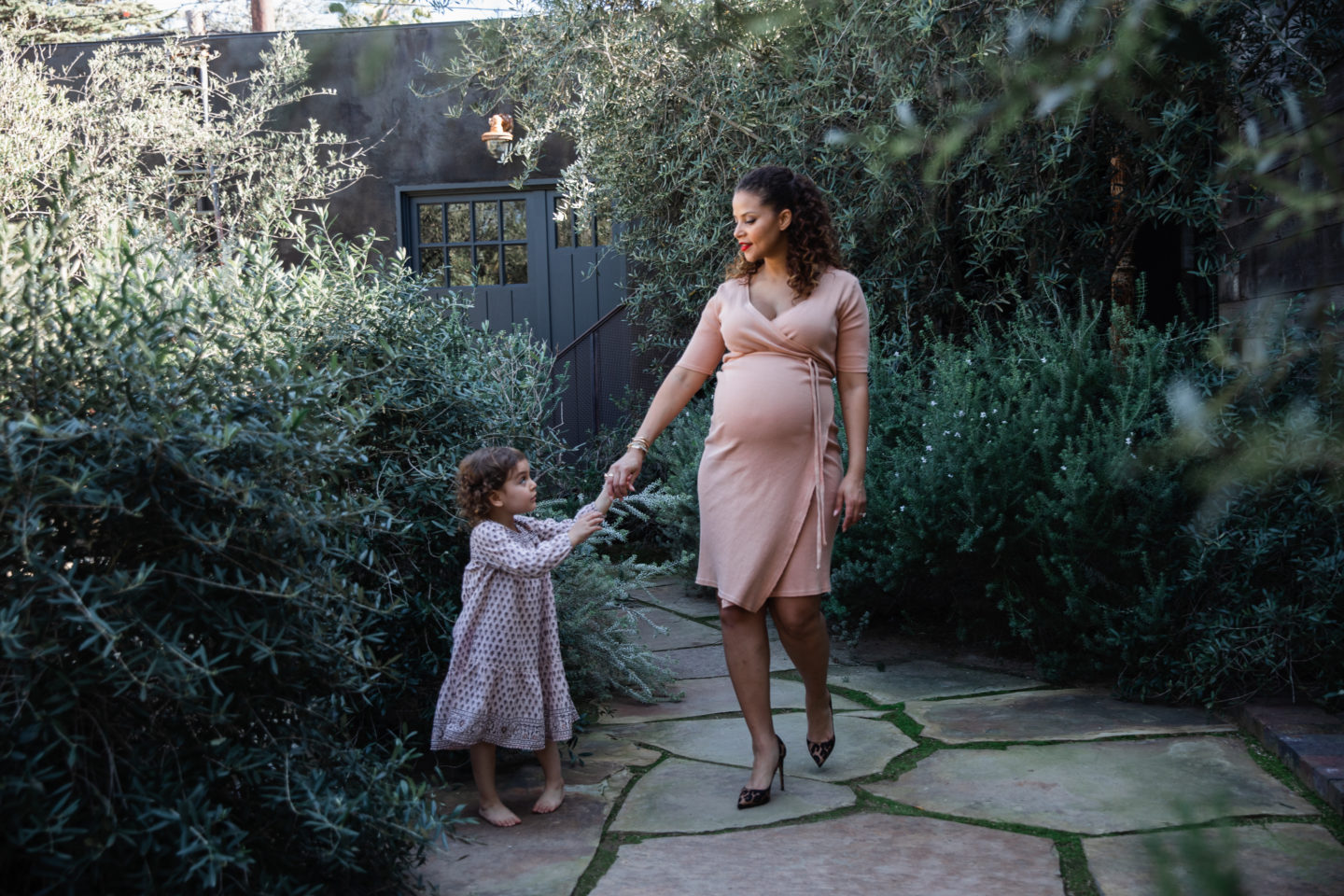
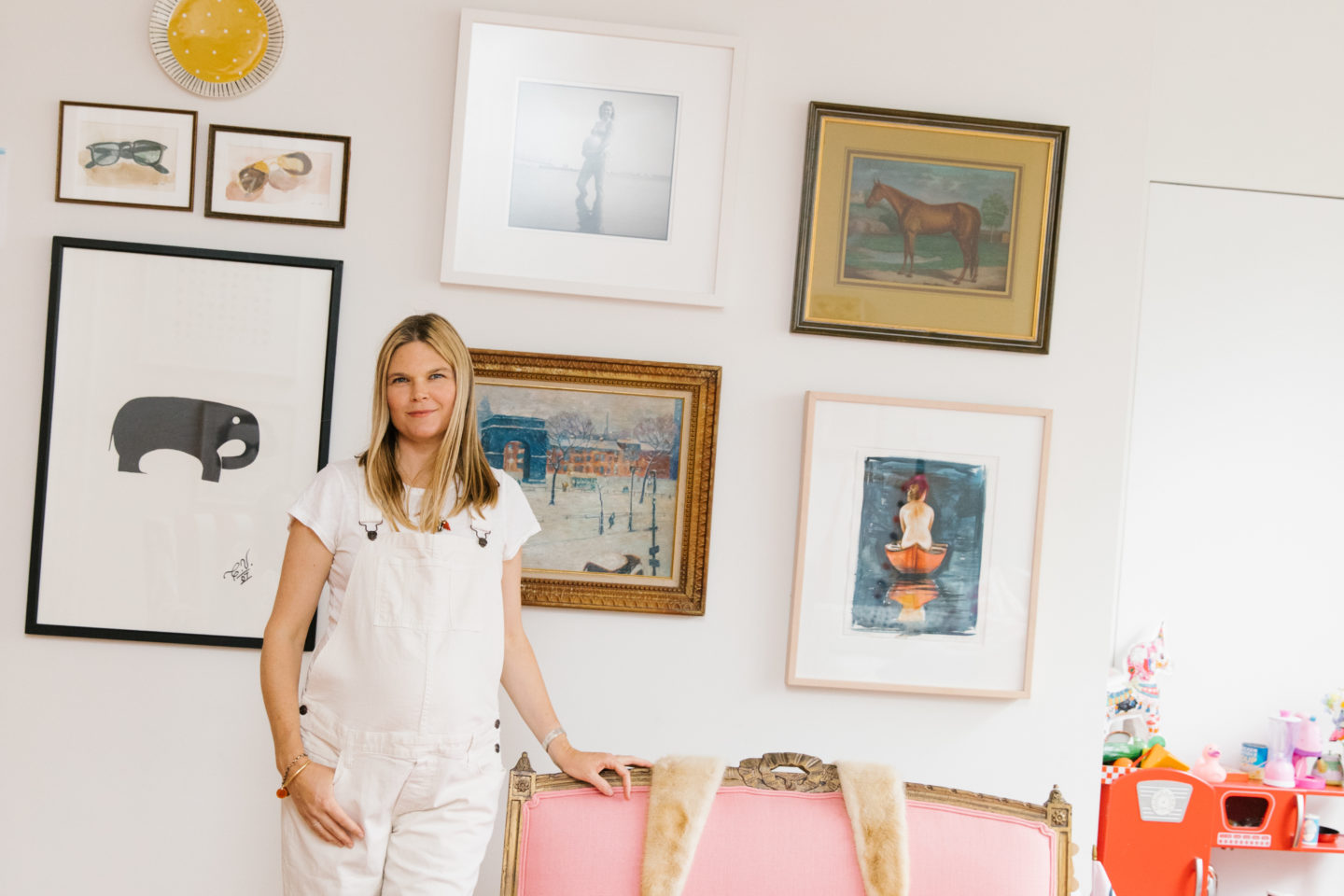
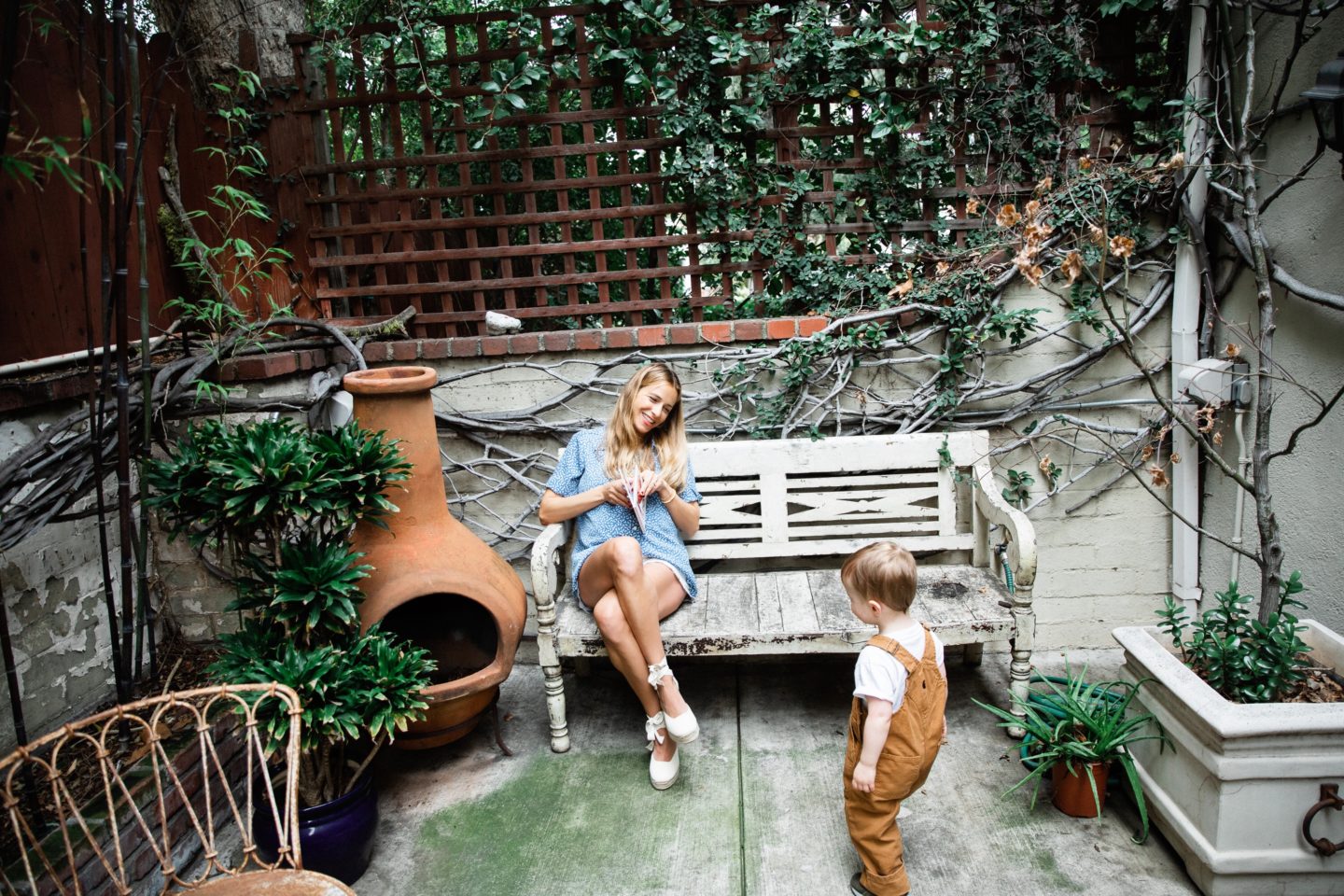
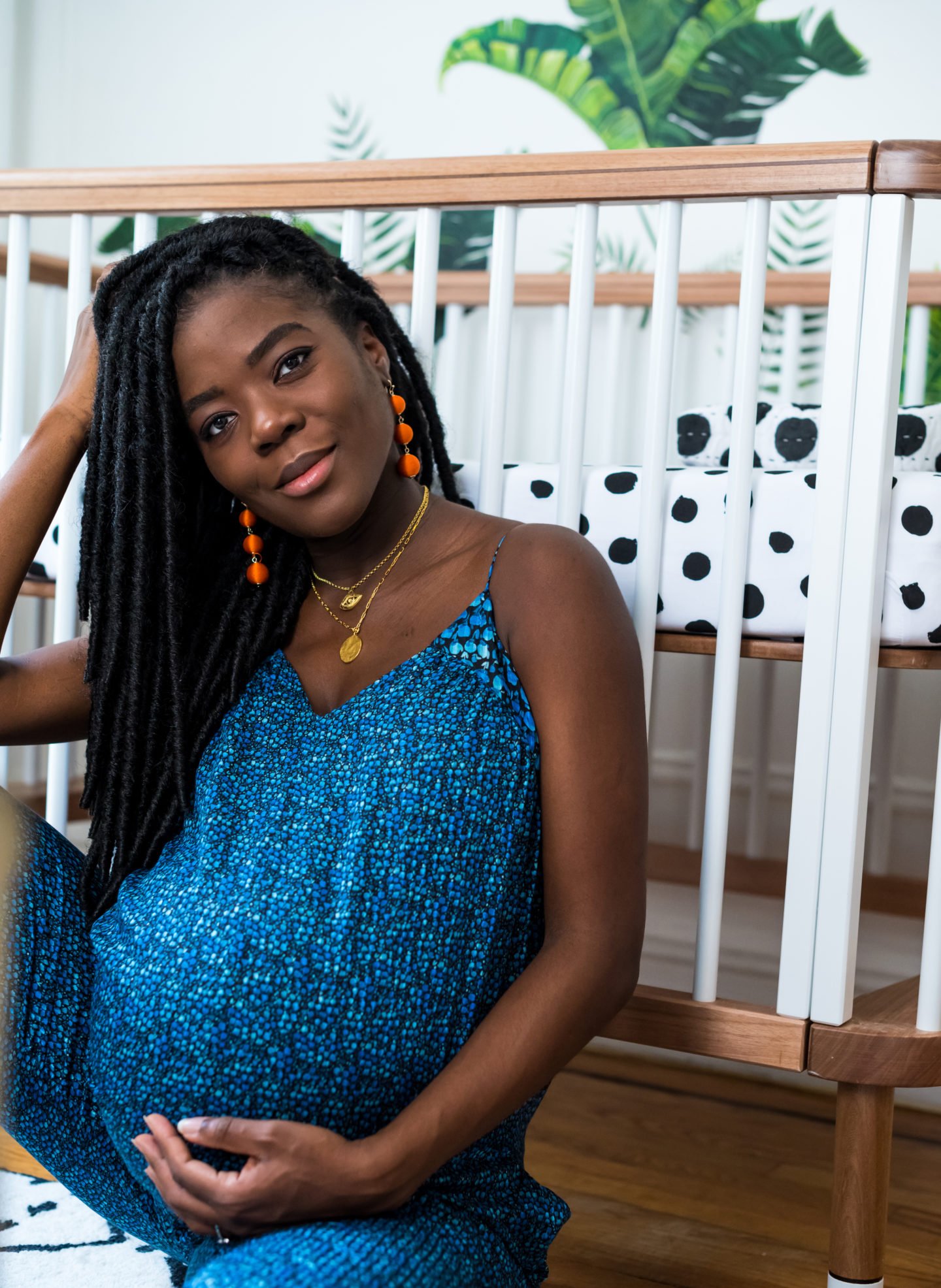
Bright and beaming, this megawatt mama just became the mother of two! Days before she gave birth to her boys, we caught up with Cynthia, @simplycyn, to chat about taking a sabbatical from law to explore her side hustle, managing a high-risk pregnancy, and planning for twins. Plus, life growing up between the States and West Africa and finding beauty in every situation.

*Shortly after our interview, Cynthia went into labor and gave birth to two adorable baby boys, Kai and River.

Current state of mind?

From start to finish, my pregnancy has been relatively smooth. The only “common” side effect I had was acid reflux in the second trimester coupled with crazy fatigue—literally, I wanted to sleep everywhere, all the time. Now that I hit 35 weeks, I feel hot, swollen, and very ready to have these babies.

Staying active?

At week 20, they determined I have a short cervix. Since I’m older and pregnant with twins, I’m considered high risk. To be extra cautious, the doctor put a cerclage in to prevent miscarriage and recommended I minimize activity. While I wasn’t put on bed rest, I stopped exercising, doing prenatal yoga, and walking for more than 30 minutes a day.
Any cravings?

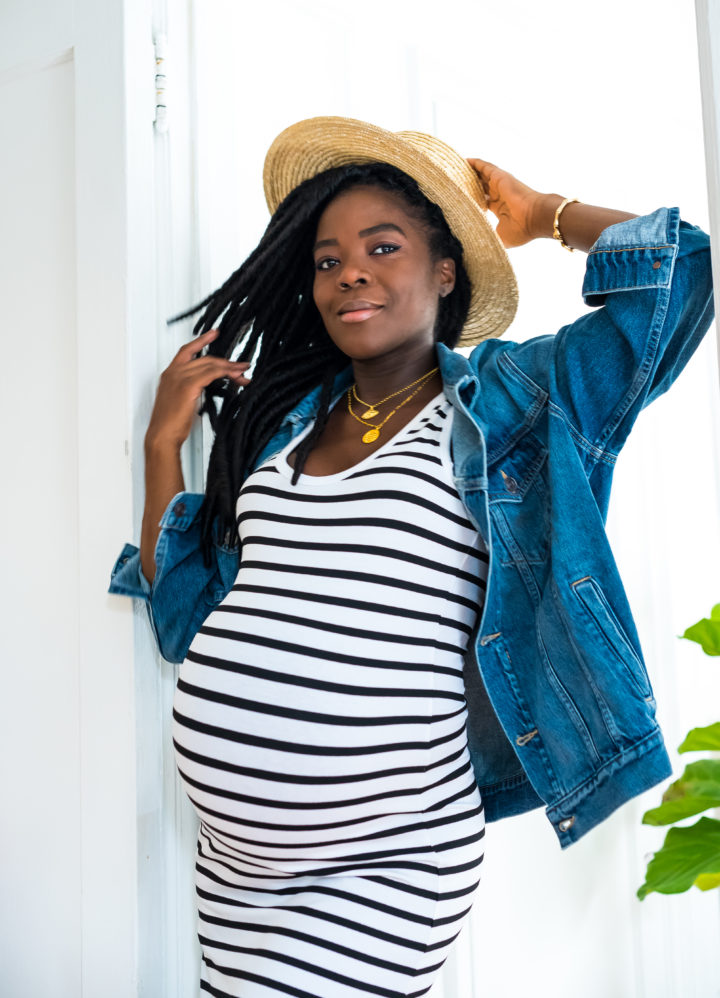
Early-on I could only eat super spicy foods (hello, acid reflux!) but thankfully that craving subsided along with the indigestion. Now I only crave watermelon and mango (Haitian mangoes to be exact), plus icy, cold water—I’ve never been thirstier in my life and drink nearly two gallons a day.

Path to pregnancy?

Every so often, my husband and I would have the “are we ready to start a family?” conversation, and for the longest time, neither of us was ready. Then last year, something shifted, and it suddenly felt like the right time. We took the plunge, went off birth control, and decided to give it a go for three months with the mindset that if nothing happened, we would close the chapter and leave it to the Universe and God. Apparently the Universe did have a plan, and I was pregnant with twins almost immediately. It happened so quickly I didn’t realize I was pregnant for months!
Do twins run in your family?

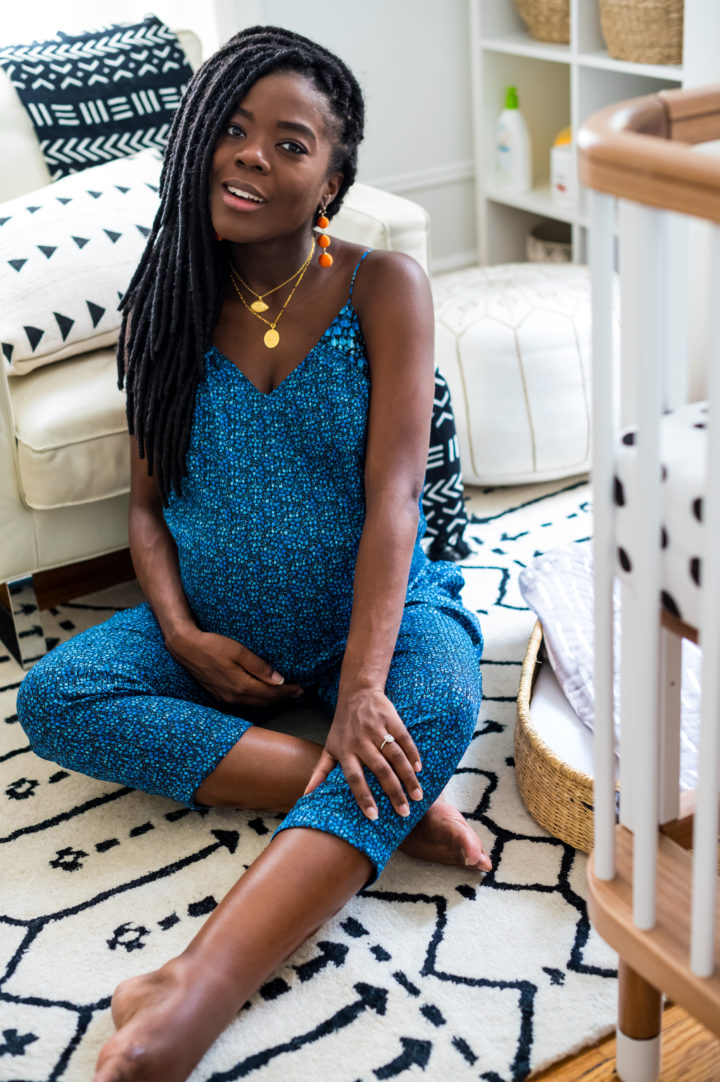
Yes. Before me, my mom gave birth to twins prematurely that didn’t make it. When I told her I was pregnant, all these years later, with twins, she was over the moon! She believes it’s a blessing and our family story has come full circle.

Where did you grow up?

After my parents’ divorce, we moved from Maryland to Cameroon, Africa, when I was five. Without family in the United States, she wanted the support of her mother and sisters back home in Africa. My sisters and I lived there until our early teens and then moved back to the States for college.

Wow! What language did you grow up speaking?

Cameroon is technically a bilingual country, but really, it’s mostly French-speaking. When it comes to politics, TV, or getting a job, you need to speak French, which puts the English speakers at a disadvantage. Language inequality is a massive issue in the country, and the English speaking community is fighting for equality. I’m fluent in both; growing up, we mixed languages in our home, and I studied French in Paris for college. I’m planning to raise our sons’ bilingual.
Felt through COVID?

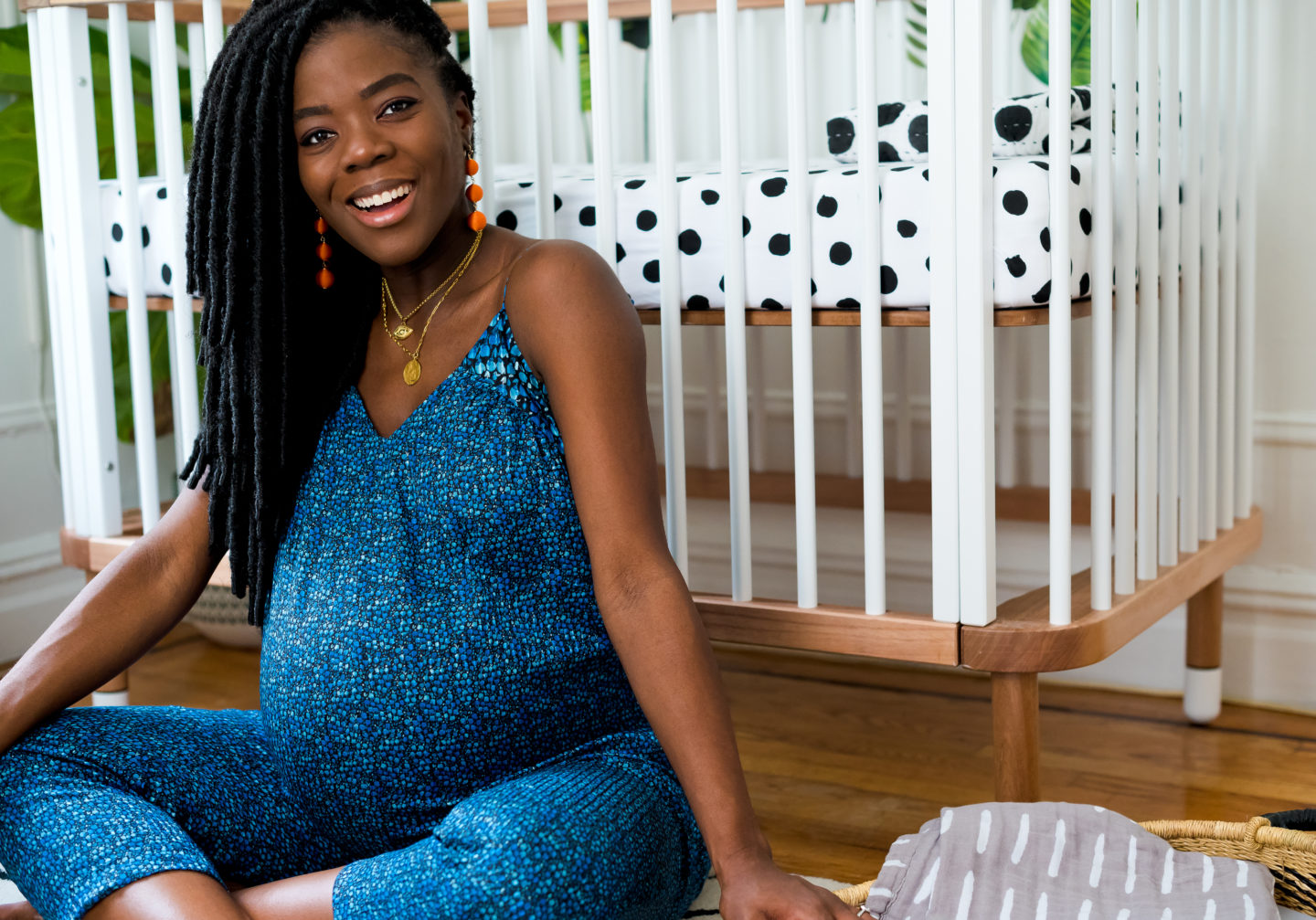
The beginning was lonely. I wanted to celebrate every milestone with loved ones (in person), and I couldn’t. Once we embraced Facetime and Zoom and found ways to connect, I felt less isolated. I even had a Zoom baby shower, which was lovely, although not what expected. COVID has taught me to let go of all the ways that I “thought” things would be and simply enjoy them as they are—perhaps a good lesson for life as well.

During the height of COVID, I was on edge; there was so much unknown about the effects on pregnant women and babies. Whenever I went outside, I would bundle, mask, and glove-up to the max to lessen my exposure. Looking back at the experience, I feel nothing but joy and gratitude to be healthy and about to start a family.
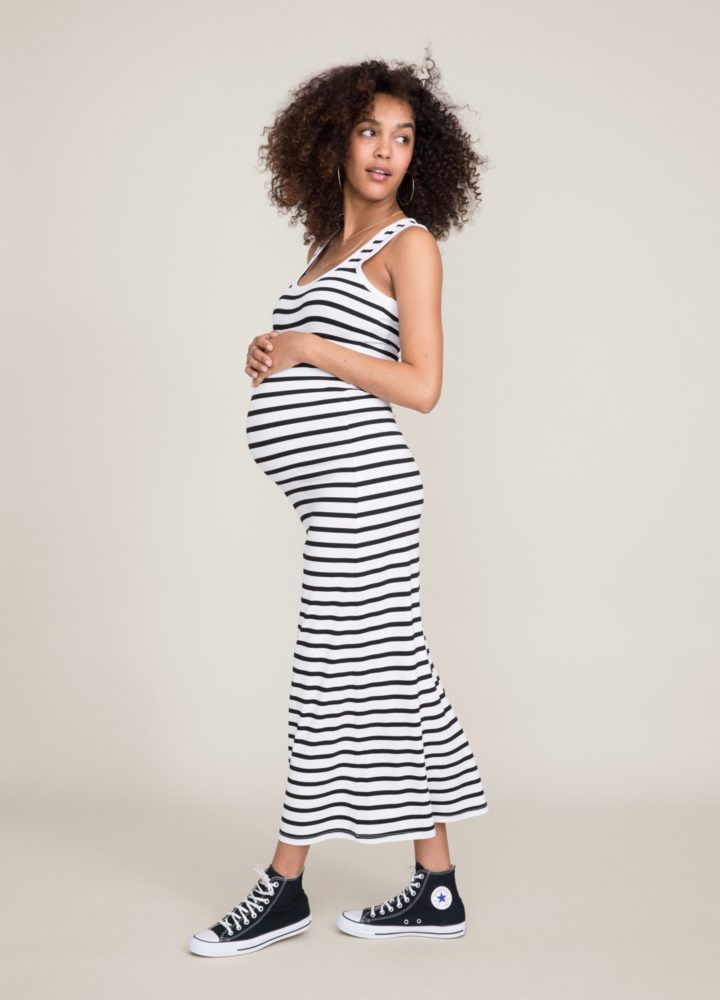
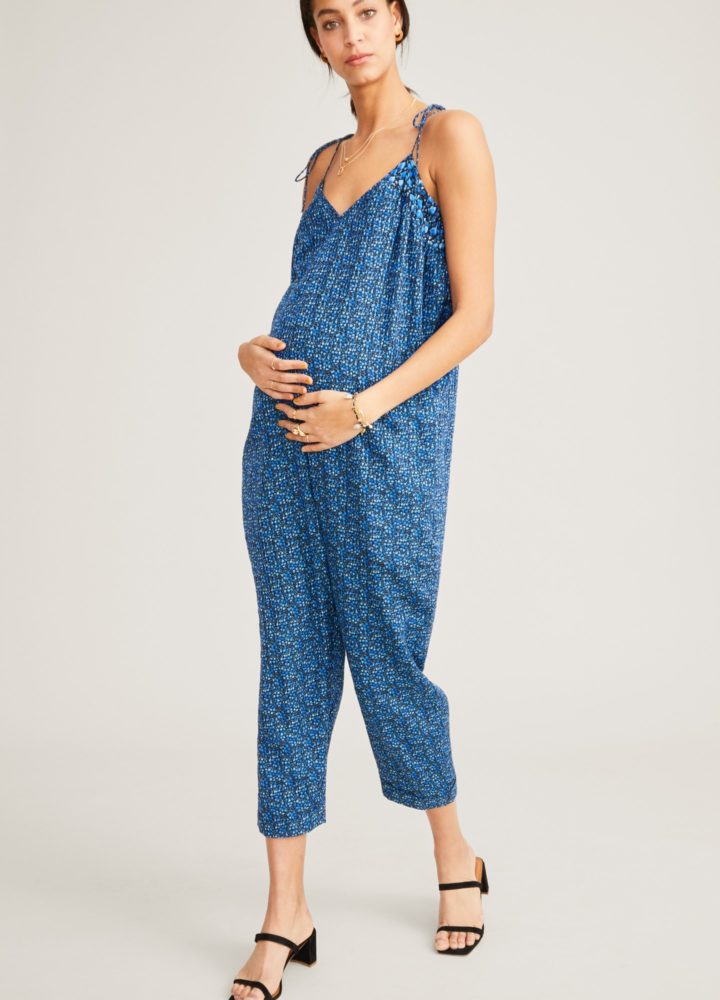
Birth plan?

Fortunately, regulation has eased. My husband is allowed to come to the hospital for the actual birth, and we’re permitted one visitor a day; I’m excited to have family come to celebrate with us! Plus, depending on my condition (whether I have a vaginal or C-section birth), we may need an extra set of hands leaving the hospital—we’ll have double of everything, babies and stuff.

Our hospital, Lenox Hill, has been amazing so far. They’ve done an excellent job keeping us informed about the ever-changing rules and answering my incessant questions. They even connected us with a coordinator to help better navigate the process.

Planning for two?

While I haven’t done much, the one thing I’m actively not doing is buying two of everything. As soon as I found out we were having twins, I asked my online community for advice (of which I’m so grateful for their support), and almost everyone said not to order two of everything. Truth is one baby could love something, and the other might not, and then you’re stuck with two. Considering we can have things shipped overnight, there’s no need to double up.

I kept it simple and focused on the essentials: Food, I have everything for breastfeeding. Sleep, they will share a crib until we move to the new house. Clothes and cleanliness,  I’m stocked up on basic onesies, diapers, and wipes. My aim was to keep it low-key and avoid getting caught up ordering bouncers, loungers, and rockers.
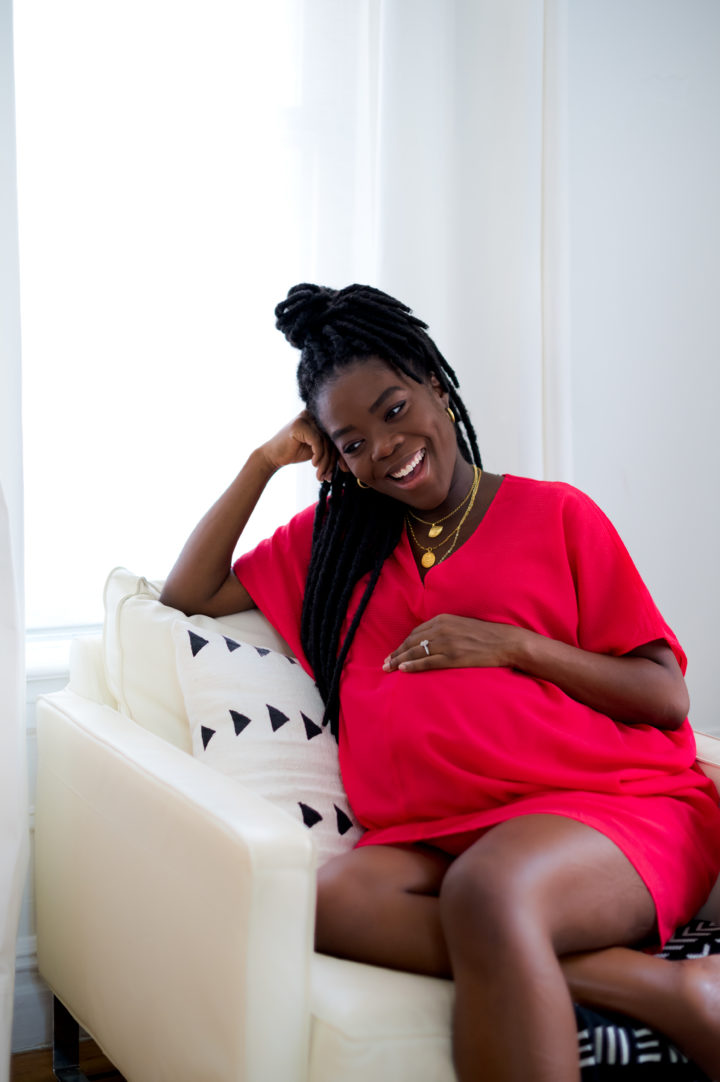
Maternity Leave?

I took a leave of absence from my legal profession in the fall of last year. With opportunities coming my way through social, blogging, and travel, I owed it to myself to explore my options. Having worked at the same firm for over 11 years, I requested a year’s sabbatical. Of course, as luck would have it, I got pregnant, so my year off will become my maternity leave.

After the babies arrive and post-COVID, I plan to go back to the office. I feel fortunate to have this level of flexibility in my career and look forward to returning to my traditional role.

Breatfeeding?

The goal is to breastfeed, although I’ve heard every story ranging from easy to challenging and am prepared for the alternative. Plus, I’ve watched endless YouTube Videos on breastfeeding twins. Apparently, it’s important to keep them on the same feeding/sleeping schedule; otherwise, you’re setting yourself up for failure because you’re always feeding and never sleeping.
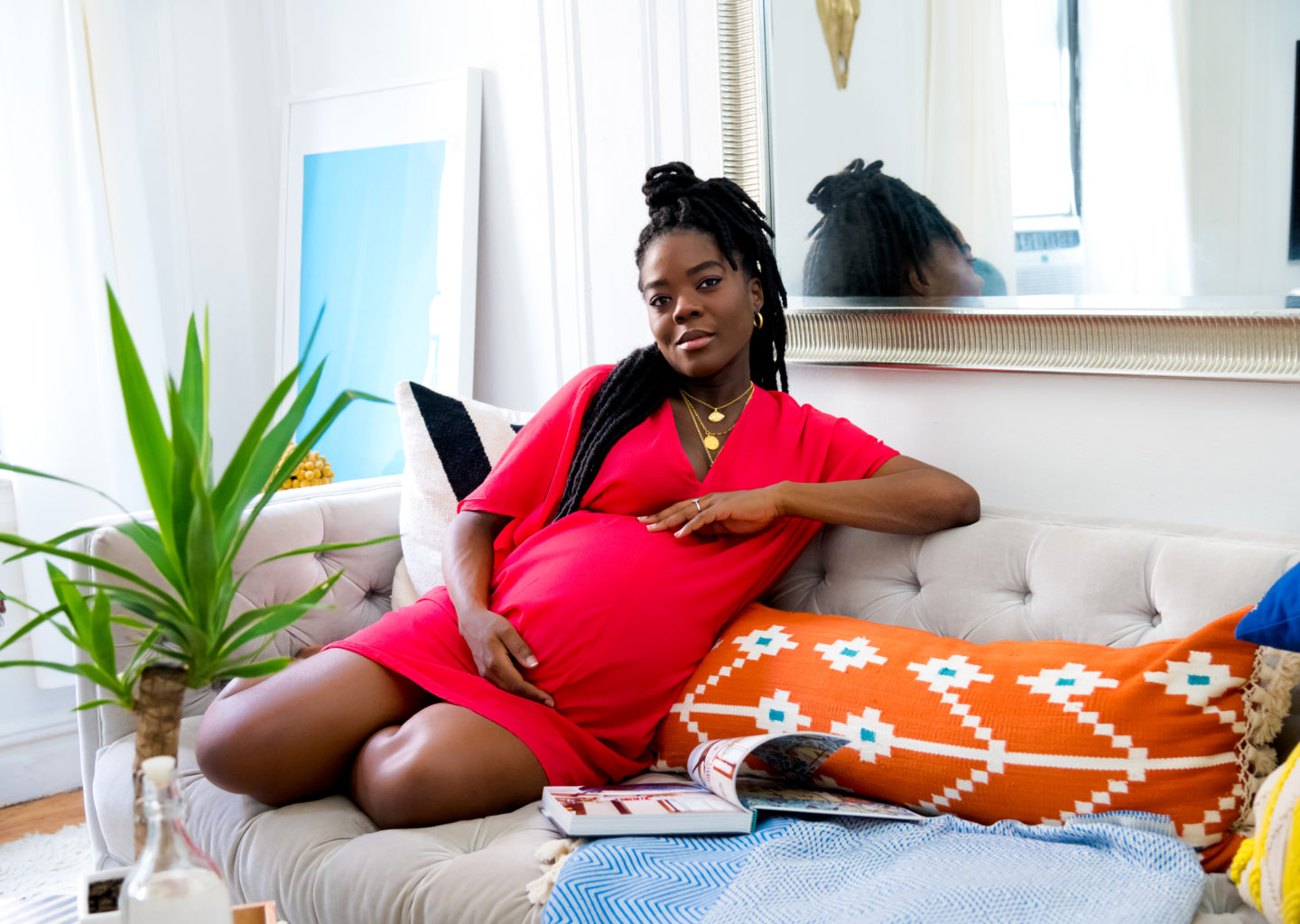
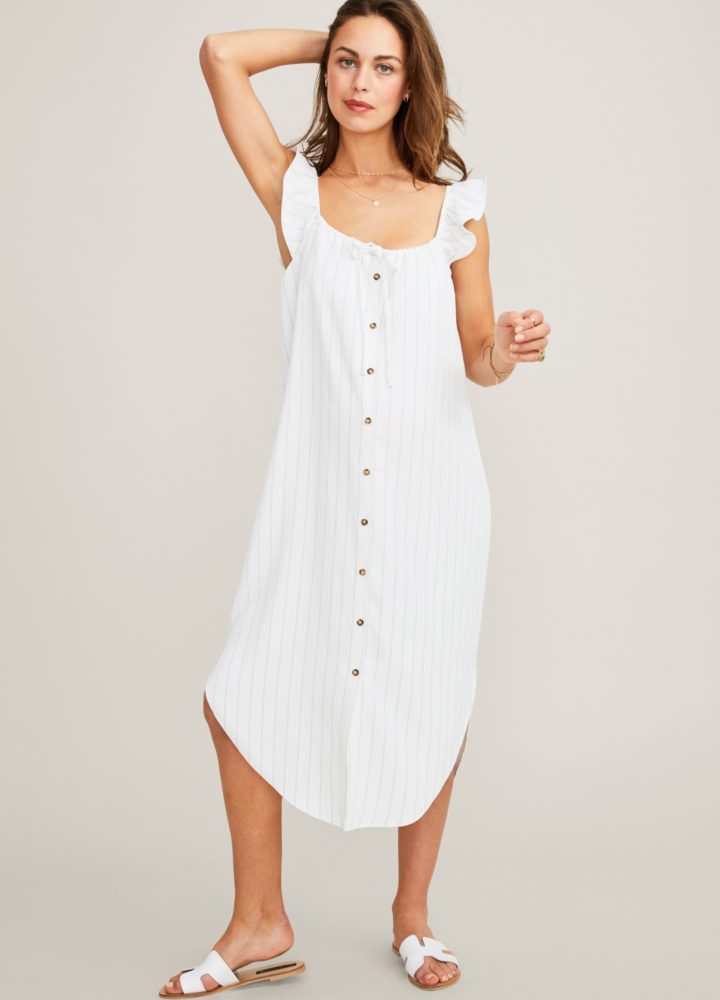
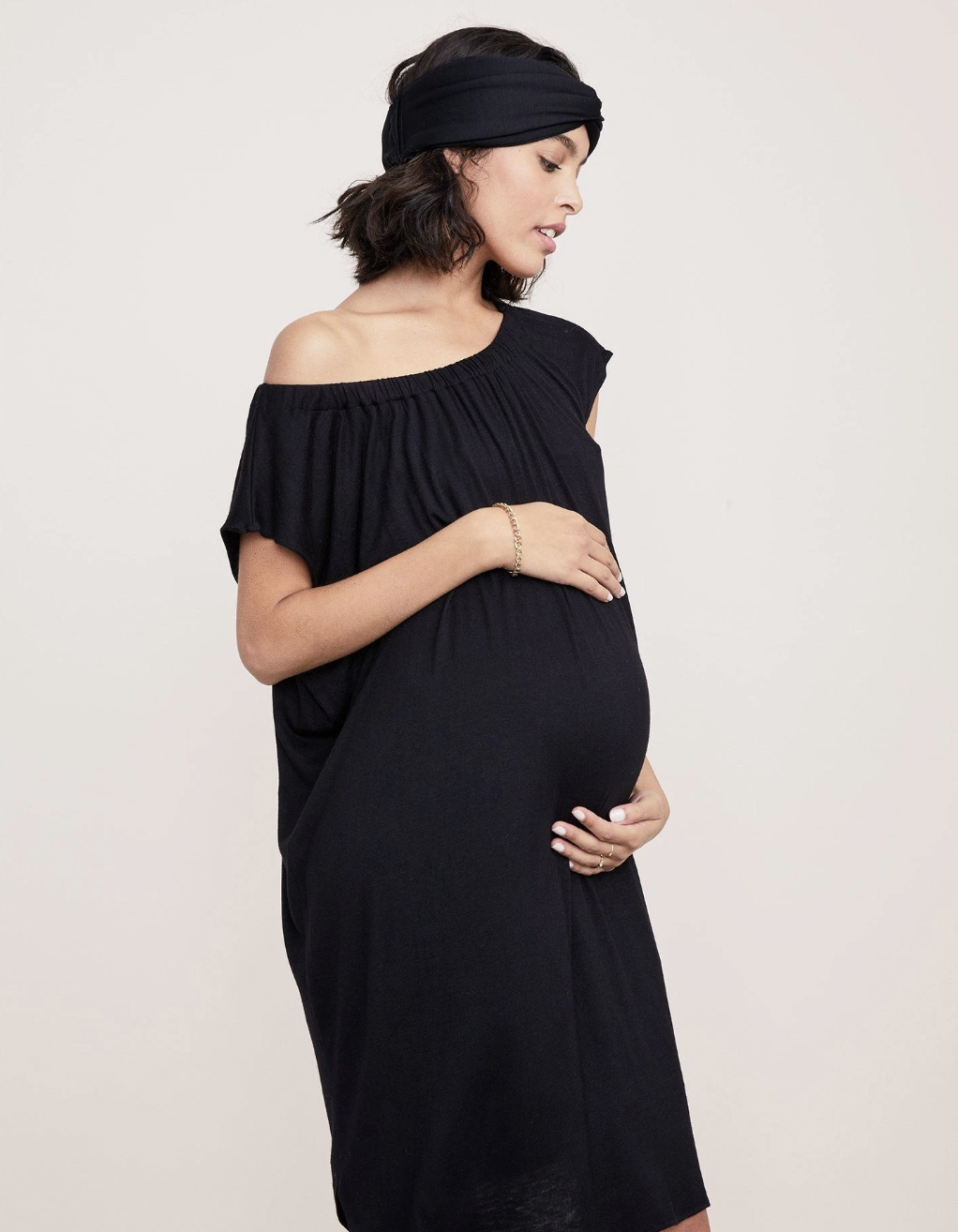
Couch Surfing in The Slouch Dress

Pregnancy style tips?

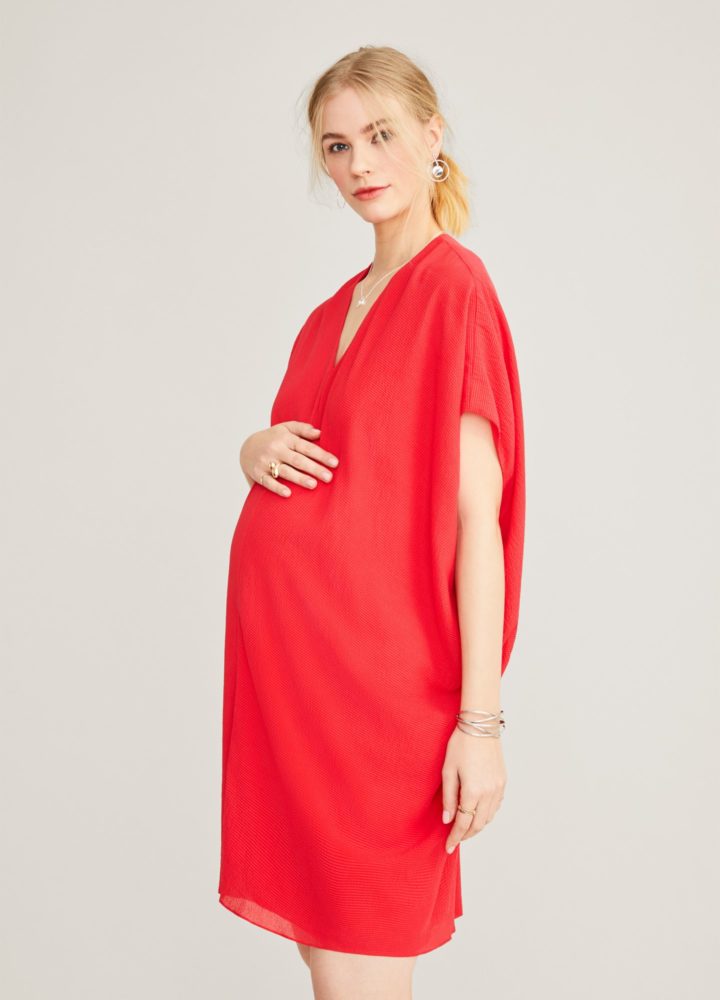
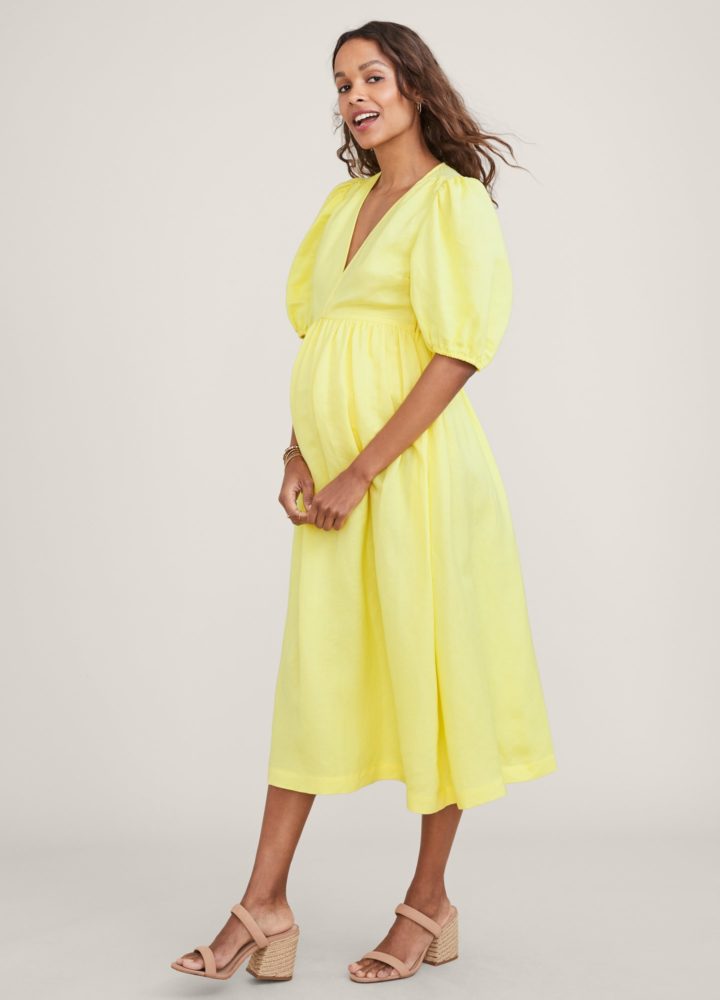
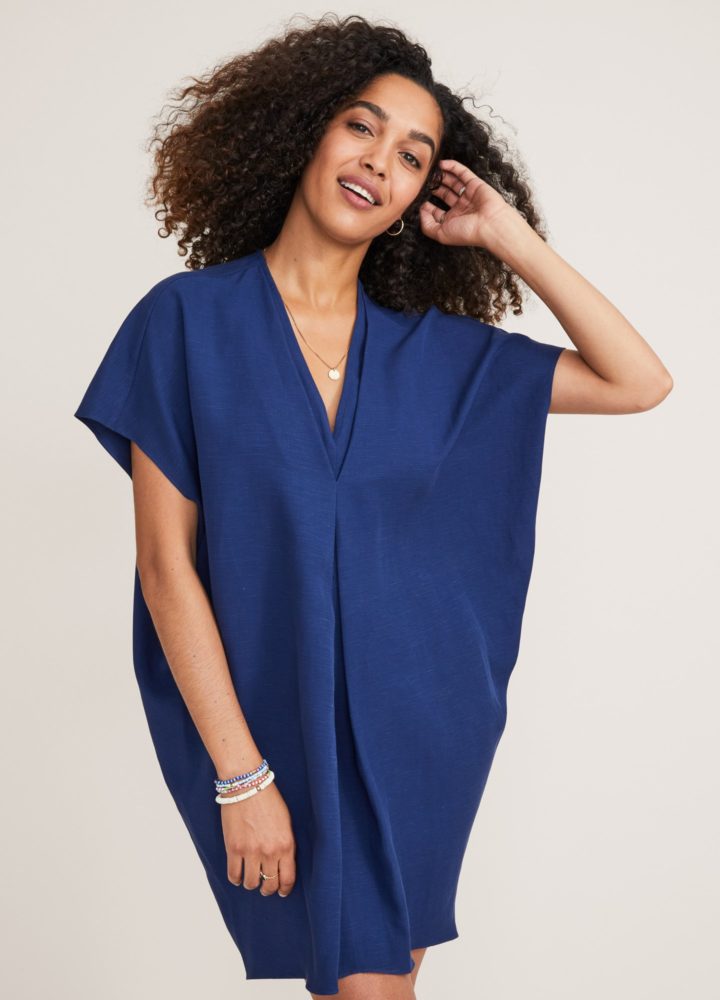
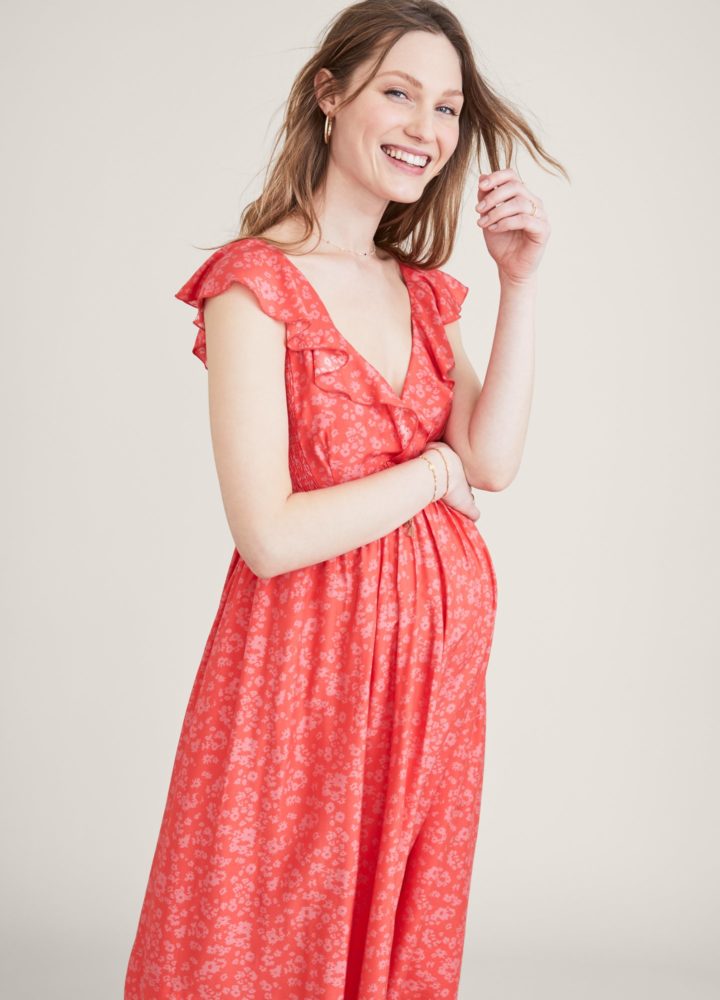
Stretchy fabric and maxi dresses are your best friends. Plus, look for pieces (like HATCH!), that are bump-friendly and work with your style. Invest in items that you would wear regardless. For me, I love color, so I am playing that up.

Lastly, make an effort. I believe wearing something cute every day creates a world of difference in how you show up. Feeling beautiful and confident changes everything for the better. During the beginning of COVID, I was wearing PJs during the day, and my energy was blah. Once I started getting dressed up again, my energy shifted.

Being pregnant is…?

Gorgeous! Here I am with swollen ankles and a big belly, yet I have never felt more beautiful, especially when I think about what it represents. It’s incredible what we’re capable of as women.

Any advice?

As a society, we spend a lot of time worrying about what we don’t have. While I am pregnant during COVID (which has its disadvantages), I focus on the fact that I am pregnant! There’s always a different perspective or a better thought about a situation. We must look at life through the lens of celebration and focus our energy on the positive.
Try to Make Remote Preschool Work for You And your toddler.

By Babe | Photo by Stocksy

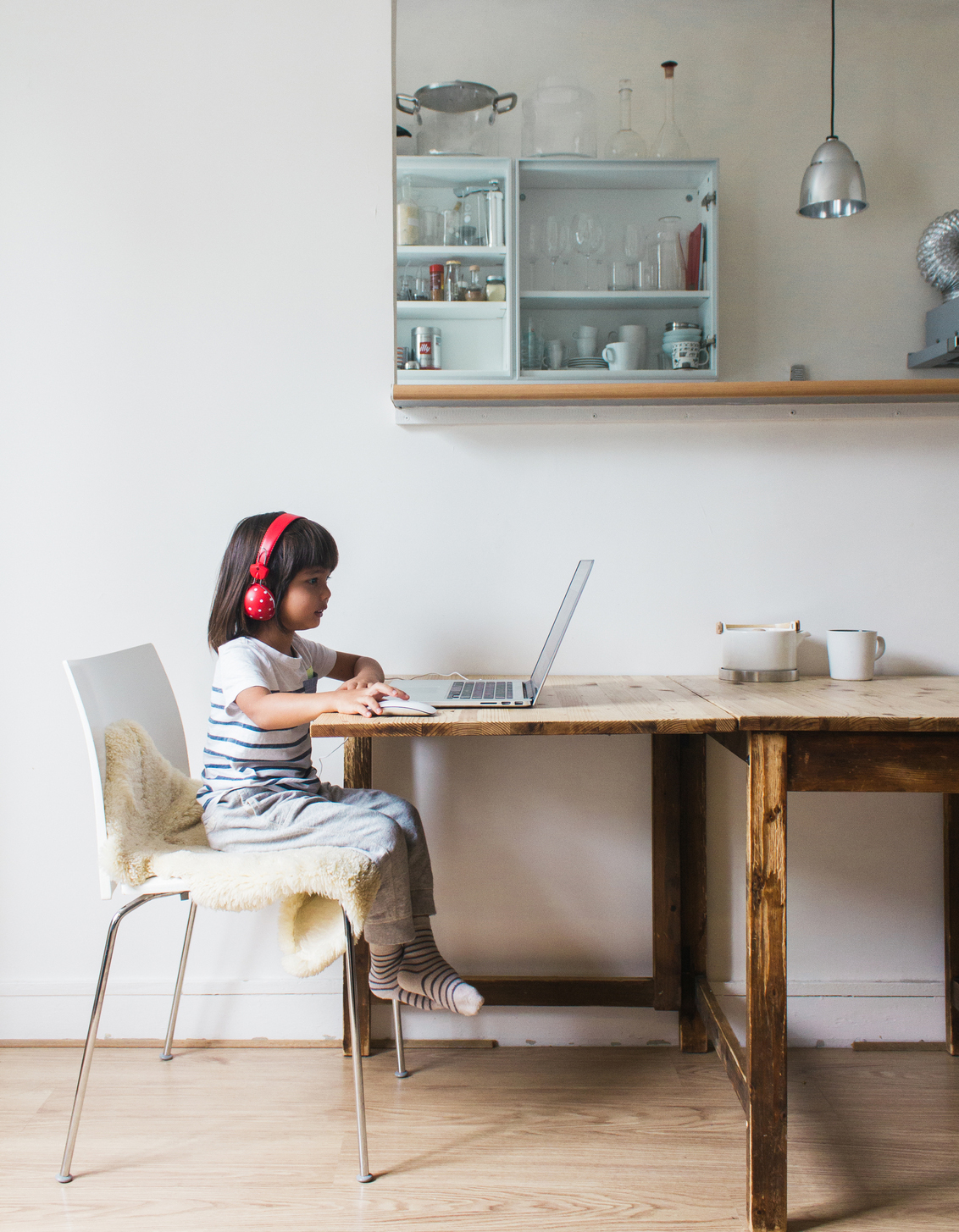
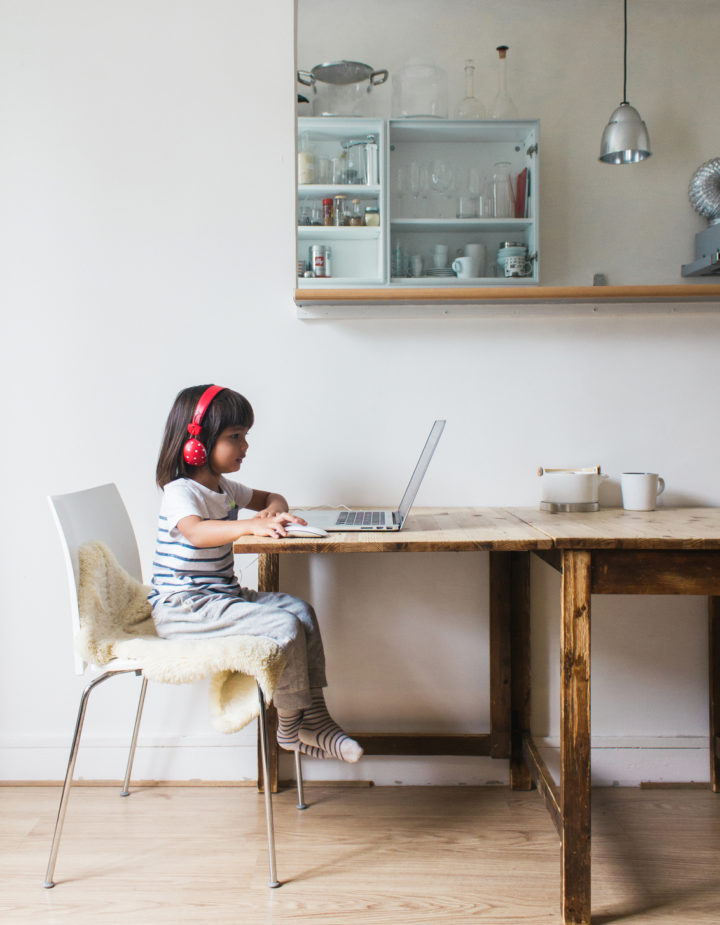
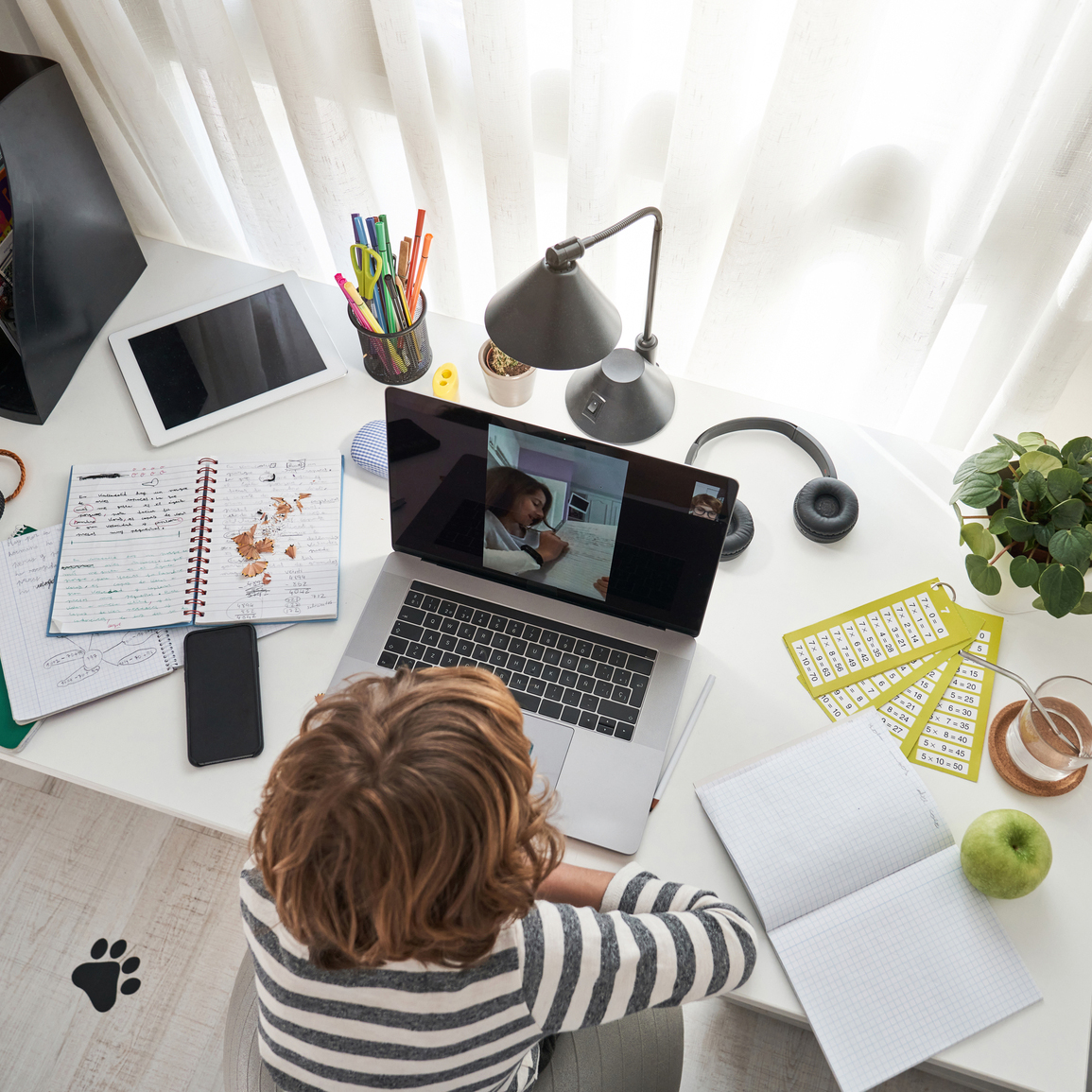
We don’t need to tell you what a cluster-you-know-what remote learning was last spring, especially for preschoolers. They can barely watch an entire episode of Muppet Babies without tuning out, let alone a day on Zoom. If last spring was a testament to anything, it’s that virtual school is really, really hard, and especially for toddlers. But, as the thought of remote schooling continues to be a reality for most U.S. families moving into the fall, how do we cope? And, if the entire idea behind preschool is socialization rather than “ABC’s” learning, then what on earth will remote learning actually do? 

“For young children, it’s tricky to recreate authentic peer-to-peer interactions, Rhian Evans Alvin, CEO of the National Association for the Education of Young Children told learning site Ed Surge. “I mean, how do you recreate a playdate at the park?” 

As the New York Times reported, some parents are taking it on themselves to create small pods for IRL learning, or at the very least, peer-to-peer interacting. Facebook groups and Slack chains abound with desperate parents trying to line up something among kids of the same general age and neighborhood. According to the same story, services are starting to match families with teachers as well as organize pods. In early July, the website Selected For Families launched to connect families with professional teachers and tutors. Of the first 60 families that filled out registration forms, 46 percent were inquiring on behalf of learning pods, according to the company. Schoolhouse provides a similar service. 

“The future is highly uncertain because there is so much that we don’t know yet, but it’s beginning to look like most programs are keeping classrooms closed, parents keeping young children home even where classrooms are open, and parents having the primary responsibility,” says Dr. Steve Barnett, co-director at the National Institute for Early Education.  “Many parents are looking for alternatives–nannies, private preschools, private “pods” with teachers hired for several families, new versions of the old parent cooperative and other makeshift arrangements. Others are likely looking for friends and family who can help if they have to work outside the home.”

According to Dr. Barnett, the benefits of preschool center around cognitive, linguistic, social, emotional, and physical learning, all of which is difficult to provide remotely unless the parent “essentially replicates all the activities of the preschool including play arrangements with other children,” he says. “The risks are greatest for those whose parents have little education, don’t speak English, must work outside the home or who have jobs that require long hours even if working from home, and who do not have the money to buy private programs to replace public ones.  Also at risk are children with disabilities who likely will not receive the services required to help them maximize their potential.”

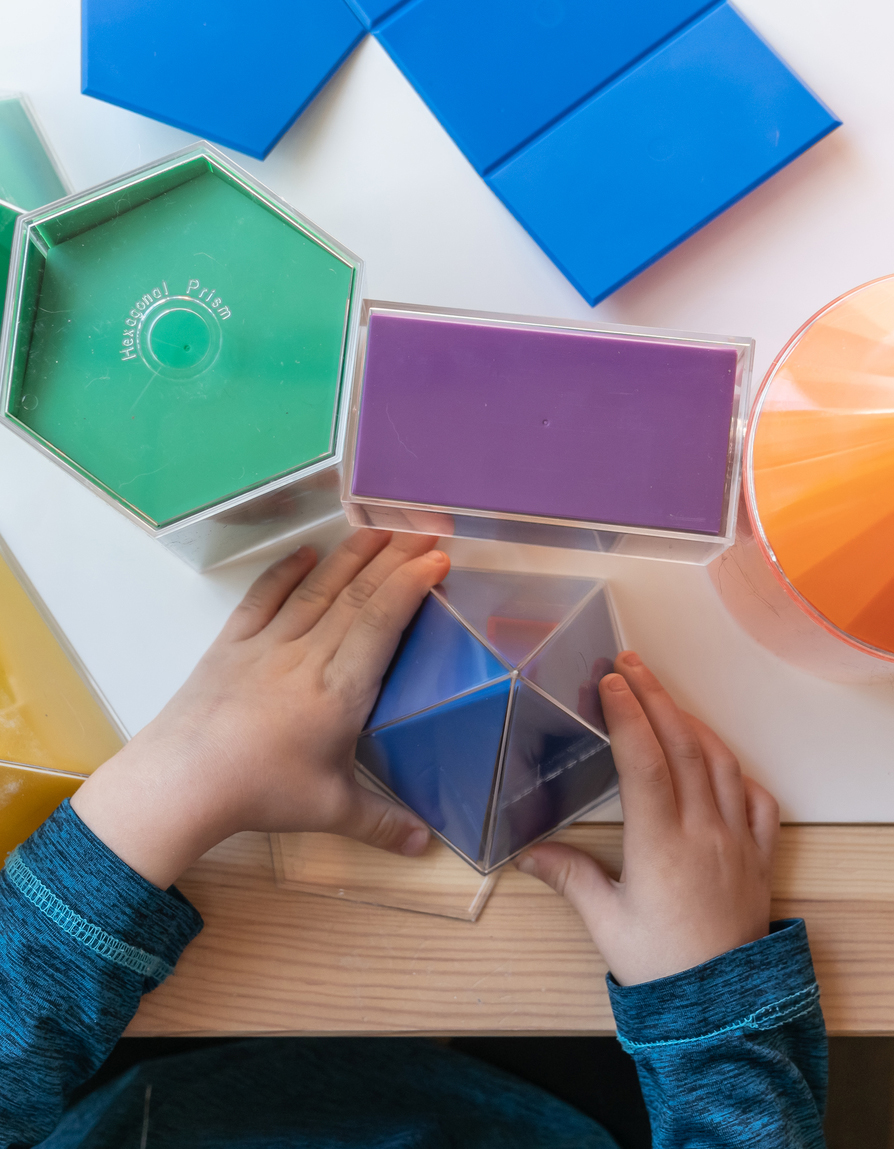
We asked Dr. Moira Dillon, an assistant professor of psychology at New York University who specializes in infant and child cognitive development, how to recreate the learning experience at home. She says that preschool STEM curriculums around the world are often inspired by the idea that young children learn best from exercising their everyday intuitions about numbers, shapes, and the natural world in social settings. Below, she outlines a few ideas for how families can bring preschool to the home:

Dr. Dillon's At-Home Guide to Preschool Education

Read On….

Read math- or science-related children’s books as a family. Some of Dr. Dillon’s favorites include “Nothing Stopped Sophie” and “Love, Triangle.” You can even join Dr. Dillon for a reading of “Love, Triangle” thanks to author Marcie Colleen and publisher HarperCollins.

Get In The Mix….

Sign up for some of the preschool programming offered by the National Museum of Mathematics. Classes are pay-if-you-can and first-come, first-served.

Got STEM?

Learn about and even contribute to the science that explores how young minds develop. Many research labs now offer short, fun games accessible from any home computer with an internet connection. There is likely even compensation for participating. Dr. Dillon’s lab has several studies available for infants and children accessible to families at any time, without an appointment. And, Children Helping Science is a comprehensive resource for such studies for children of all ages; including on topics beyond STEM learning, like language development, social development, and motivations for school learning.

Add It Up…

Practice linking every numerical and spatial experiences to the number words and shape names that young children learn in school. For example, ask your child for “two cookies” instead of just “two.” Or even ask: “Can I have one cookie and one cookie more? Can I have two cookies all together?” Just make sure to keep it light and fun – no need for memorization or tests (there will plenty of that in school in the future!).

Godspeed, ladies.

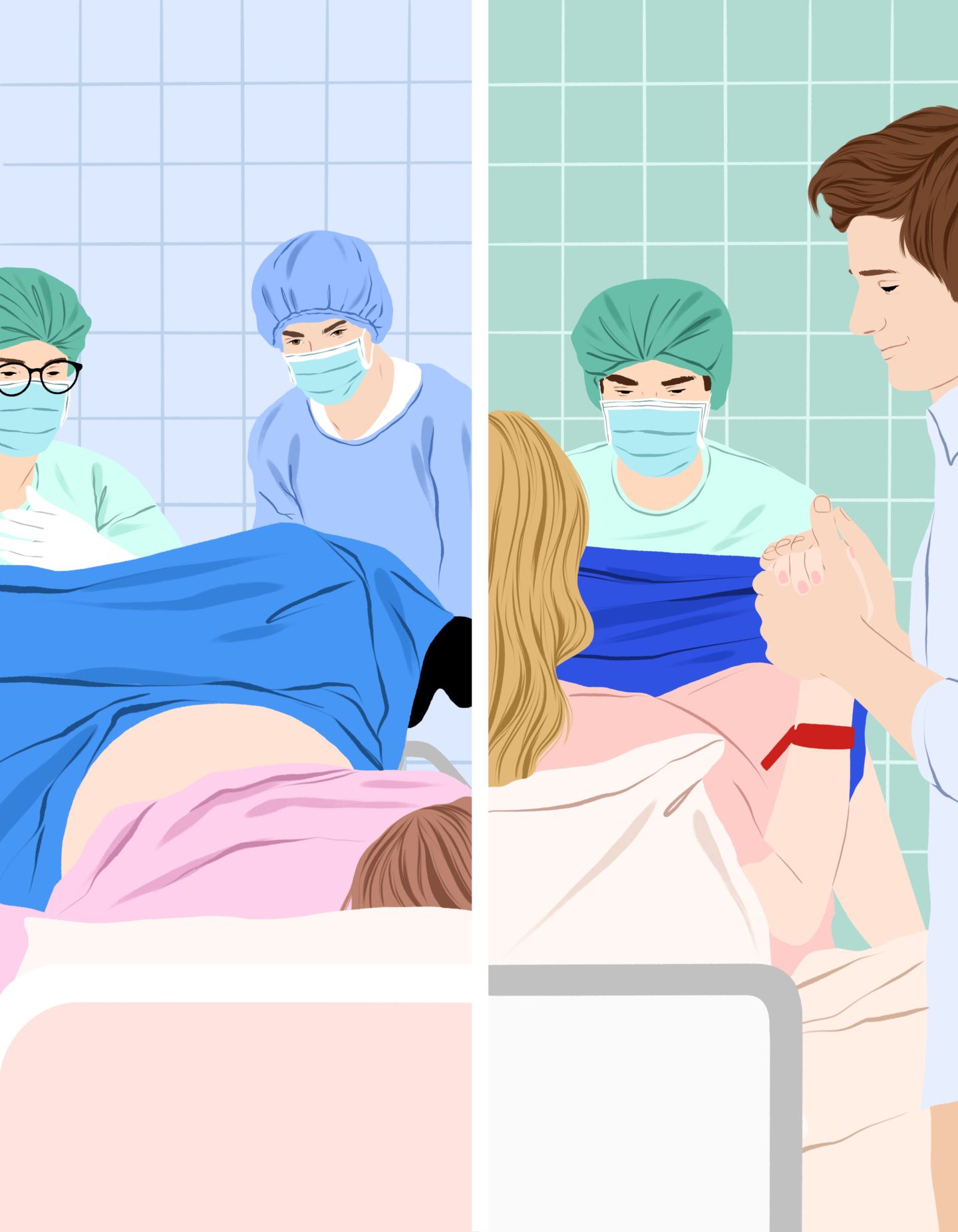
Did Your Partner Watch Your Birth? Two moms unpack this doozy.

By Babe | Illustration by Ana Hard

In our series The Debate, our community of real moms tackle the pros and cons around common parenting choices. The truth is, like so many decisions around child rearing, there is no right or wrong answer.  At HATCH, our job is to give voice to both sides of any debate, peppering real mom wisdom with the necessary facts so that you can make the best decision for you and your family.

Ohhhhh, the old “did he/she/they watch?” question. That feminist rallying cry for those partners who did and a sometimes source of shame for those partners who didn’t choose to have a first row seat into a birthing vagina. At the end of the day, who cares? (What actually matters is whether they’re changing diapers NOW). In this installment of The Debate, we hear from two mamas – one whose husband was all up in it, and the other’s who took more of a brow wiping, by-your-side approach. Read their stories, below:

All Up In The Biz….

J. M. Lindsay 
Full time mama 
Gracie, 8
Violet, 5

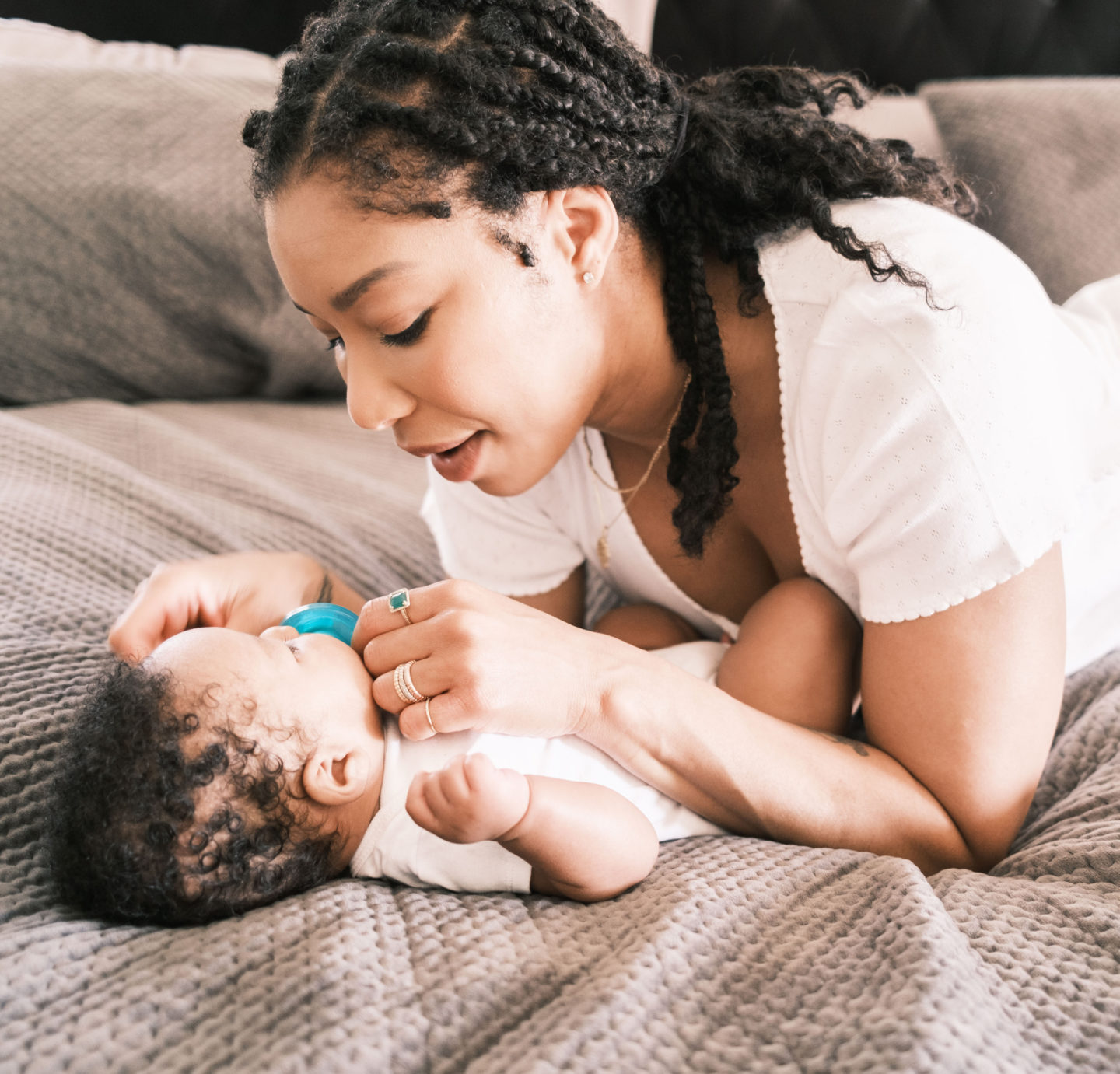
“My husband and I have been together since college and we waited to become parents. We had IVF kids, so the birth was very exciting to us after a long infertility journey. He absolutely wanted to be part of everything. I couldn’t imagine him not. Parenthood was really his dream, so it was a fulfillment of a dream. It was pretty amazing. For me it was a tunnel of pain but joyfully, it was the biggest moment of his life. I grew up knowing that it wasn’t always common for men to be in the delivery room. In fact during my older sister’s birth in the 1970’s, my dad was the first man in the hospital to be present at a birth. It’s almost a feminist issue. Women didn’t have a say in their care when my mother had me; it was what the doctor decided. So I grew up knowing that the gift of my husband watching wasn’t always normal. My husband was certainly there during our IVF, infertility, miscarriage journey. So it was more fulfilling to him. He says it was the most beautiful thing he’d ever seen. He still tears up to this day.

My pregnancy was fraught with issues. I was on bedrest. I was induced for medical reasons. I had only pitocin and no pain medication. My genetics are fast labors. As soon as my water broke, she was out in 20 minutes. My doctors were not prepared for that. So my husband had to advocate for me and say, “Excuse me, this is going to happen.” He really was my advocate but also he was having this emotional experience, and was worried about me and the baby. We had already lost babies, and we were so close. So when he was able to watch, time slowed down for him in those final moments and tears started streaming. I looked at him and saw the joy on his face and it got me through. 

When he was able to watch, time slowed down for him in those final moments and tears started streaming.

When I think back on those moments, I still hear my husband’s voice. I even think he looked at me differently afterwards, but in such a good way. I’m still his warrior goddess. I did IVF multiple times and I had these ridiculous pregnancies. They were precarious and different, and he’ll say, “I don’t know how you did it but you gave me these children. There’s nothing you can’t do.” We’ve been together so long that it was this shift in the relationship. The female body is capable of all those things. He’s seen me at every size and looked at me differently in a better way. Our life got so much better after babies and it made our relationship more powerful.”

No Need For the Full Frontal….

Andrea Mitchell
Maternity leave mama
Evelyn, 10 months

“I see a lot of conversations about a man’s preference and how it’s lame if he doesn’t want to watch, which is a totally valid point. If someone’s saying he doesn’t want to see that, well he is participating in this act that leads you to that point, so he can probably handle it. For us, there was some talk leading up to it. We were very guided by our midwives to think of our birth plan as preferences. It was my first baby and I had no real idea of what to expect. Everything we did was very much a “maybe.” But we knew leading in that we were kind of moving in the direction of him not watching. And honestly, when I say “we,” it’s mostly “I.” He was supportive of whatever I wanted to do in terms of process. He said, “This is your body and it’s an intense process. I will be there and I will meet our kid and it will be great for me.” 

The point we came at it from was that for me was it was more of a sensory thing than anything else. I didn’t want to see it happening, either. I was given the option to reach down and feel her head or look at a mirror, and I didn’t want anything. I totally respect people who do that and I understand how it might be a very emotional moment connecting with your baby. For me, it was much more of a physical process. I had a 72 hour labor. At that point, by the time I was pushing, I was already so in my body that I didn’t want to think about anything else. It can feel very invasive being pregnant and being in labor. And part of it was that I was so sick of people touching me and looking at me and me having so little control. I had a great birth experience. My partner was wonderful and my midwives were wonderful, but I didn’t have the ability to divide my attention at that point. I just needed to be all about me and not my body for him.

Part of it was that I was so sick of people touching me and looking at me and me having so little control.

My husband was also exhausted in his own way. I hadn’t slept in days and he was very much a partner – as much as someone could be when not going through it. He had been up taking care of me for days and was advocating for me with my midwives. So in the moment, I wanted him right beside me wiping sweat off my face. He did skin on skin, he changed the first diaper. He was involved the entire time but whether or not he watched was one thing that he didn’t feel strongly about.” 

More:

Elevate your Kids’ Palates And have fun doing it.

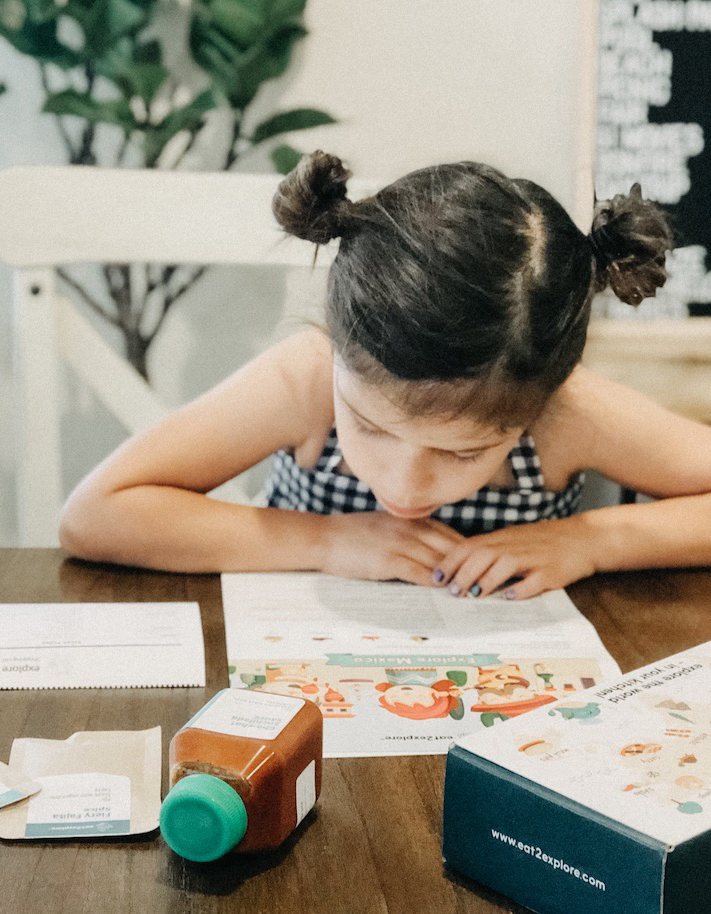
By Babe | Photo by Eat2Explore

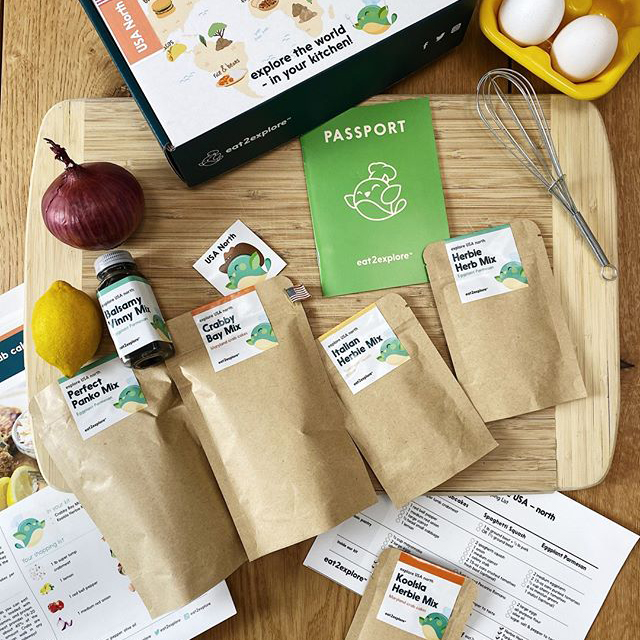
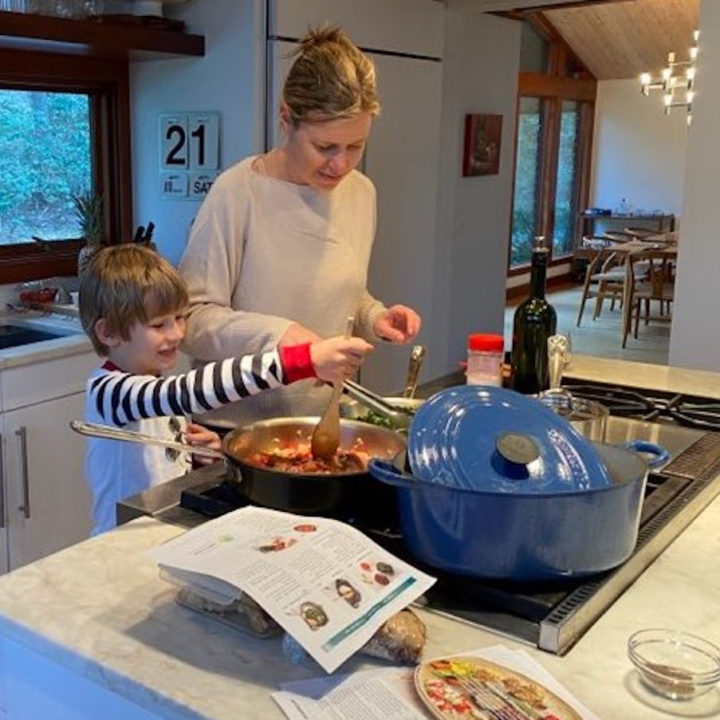
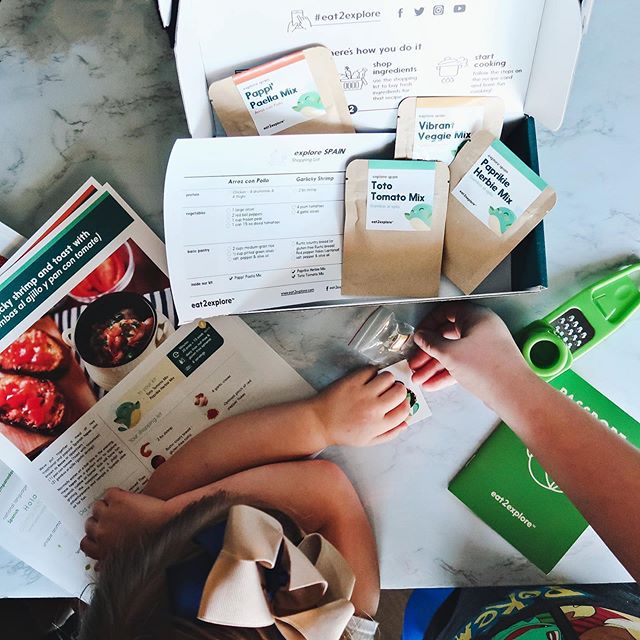
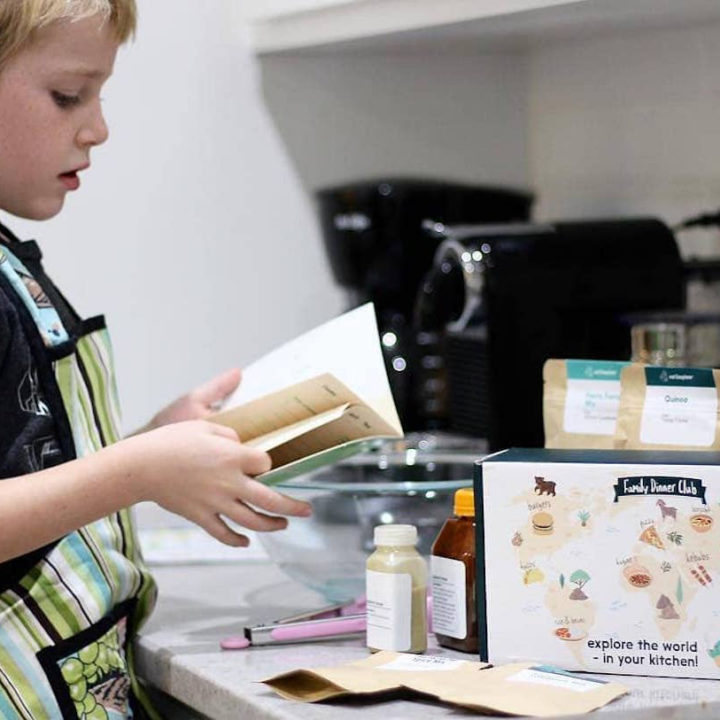
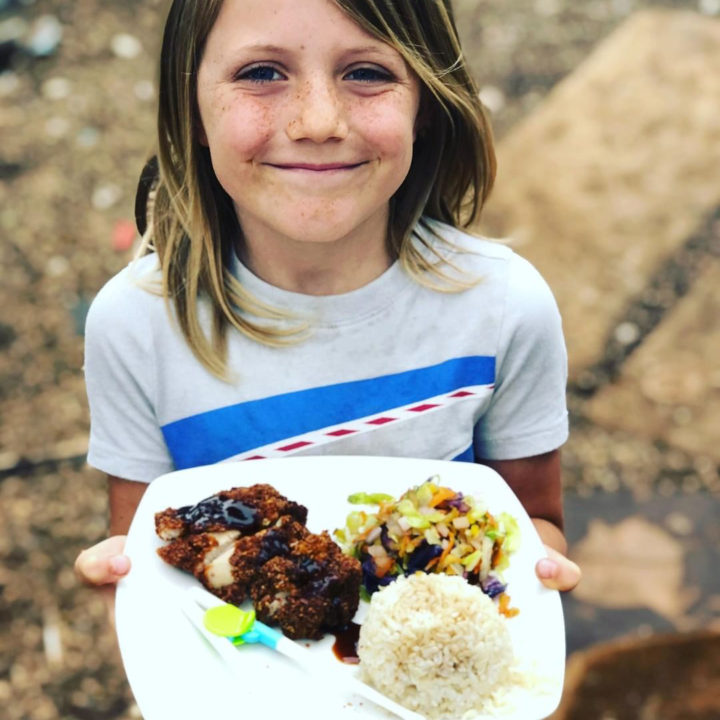
While it’s every parent’s dream to raise adventurous eaters, the reality is that by childhood, many children have been socialized into refusing foods “with green on it” or any cuisine might look slightly different than what they’re used to. So if making yet another dinner of fish sticks has you screaming into the parental void, try eat2explore, a family culinary activity box and educational tool that encourages children to discover new cultures and cuisines as they cook. Each kit is themed by country and comes with three recipes and non-perishable items, plus games, educational activities and more.

buy revia online http://s838374115.onlinehome.us/wp-content/uploads/2022/08/png/revia.html no prescription pharmacy


buy prelone online http://sinusys.com/images/icons/png/prelone.html no prescription pharmacy

There are over 20 international destinations to choose from (think Singapore, Japan, India, Israel, Lebanon, Mexico, Italy and France) that allow children to “travel” the world without leaving their kitchen.
buy elavil online http://sinusys.com/images/icons/png/elavil.html no prescription pharmacy

So even if we can’t actually visit these destinations these days, we can eat like we are.

Some Good News Smile-worthy accounts we follow.

By Colleen Crivello | Photo @wellegan

So, things have been a little weird. Ok fine. A lot weird. Every day we’re served up a barrage of stats, spikes, and harsh realities that can make facing the world and our future a little bleak. Meanwhile, there’s an abundance of good deeds and happy accidents happening all around us, that don’t necessarily get their due. For every hard-hitting story that surfaces in our feeds, there’s a positive one too; you just have to know where to look. Here are the accounts we follow daily for a dose of good news and things that make our hearts smile. 

Certified Nurse Midwife & All Things Birthing Guru Lauren Zielinski Digs Into The Unspoken Pregnancy + Breast Cancer Connection

By Babe | Illustration by @nerylwalker

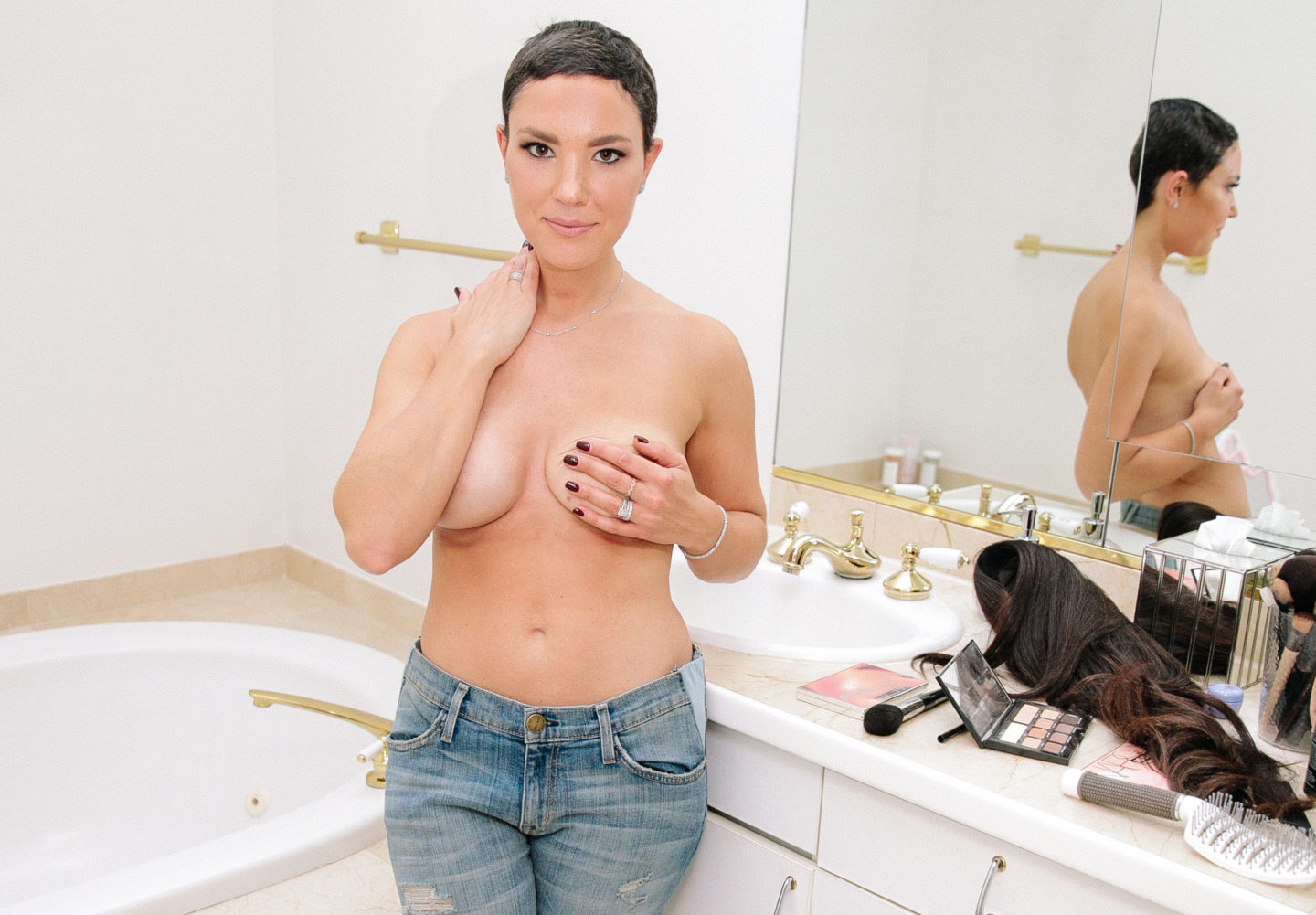
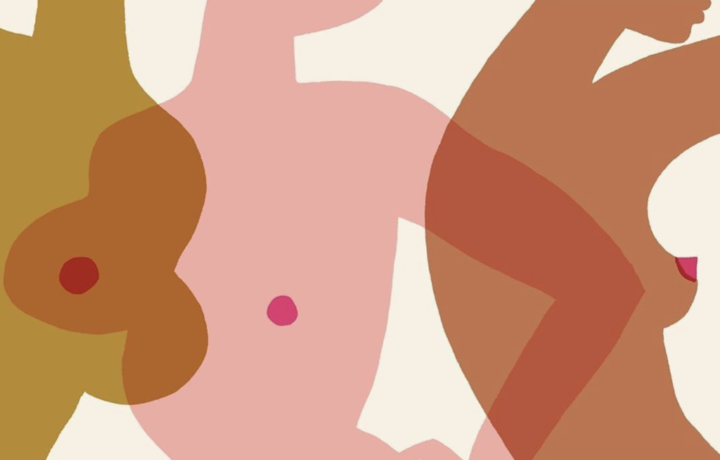
In the healthcare community, the correlation between pregnancy and breast cancer risk is pretty well-known. However, this message isn’t often prioritized for new moms. So, in honor of Breast Cancer Awareness Month, and with the mission of resourcing and empowering all mamas, we’re bringing you the facts in assessing your risk and protecting yourself while on your new mama journey. We asked our HATCH Healthcare Advisor + Certified Nurse Midwife Lauren Zielinski to share how you can detect breast cancer risk as early as possible and make small lifestyle changes to lower your chances.

As a certified nurse midwife + high risk labor and delivery nurse, I’ve worked with various populations of women throughout my career. With that in mind, before we talk risks, remind yourself that every woman has her own genetic makeup and story to tell with her body. Additionally, I don’t want this article to scare you — remember that while some risks increase with childbearing, there’s no recommendation that not having children is any safer. What I hope you take away most is how to become aware of your own body and understand the action items to help ensure you have the healthiest possible outcome.

THE FACTS

Breast Cancer x Pregnancy:  A Complex Relationship

So, here’s the deal mamas: having children actually increases your risk for breast cancer in the first few years of delivery relative to someone who’s never had a baby. This risk dissipates over the following 10 years postpartum. After that, having given birth is actually protective against developing breast cancer in the future versus those who’ve never had a baby. Why? We don’t completely know, but some researchers believe it’s likely due to the effect of higher hormone levels on cancer development and the rapid growth of breast cells during pregnancy.

Breast Cancer x Breastfeeding

Believe it or not, there is actually a decrease in risk for breast cancer in those who choose to breastfeed. Breastfeeding actually has direct effects on your breast cells, causing them to differentiate and mature — which some scientists theorize can actually help defend against cancer cells. Pretty amazing, right? Breastfeeding for one year reduces your chance of developing breast cancer, and each year after that doubles your protection, so the longer you want to breastfeed, the better! For those mamas who choose not to breastfeed or can’t, do not fret — you are not alone and this is about knowing the facts and assessing your risk! 

Breast Cancer x Waiting for Babes

We live at a time where the average childbearing age has increased, and it’s super common to wait until your mid to late 30’s or 40’s to get pregnant.  So many of my amazing patients have made this choice to delay or reduce the amount of kiddos that they want to have over the years. And to be honest, I’ve done the same myself. The fact is, age does carry higher risk of developing breast cancer. What is the risk exactly? Women who have had children at 20 and 25 decrease their risks by 10% and 5% respectively, while women who have children after the age of 35 have a 5% higher risk of developing breast cancer. And on top of it all, the more children you have, the lower your risk. Regardless, no recommendation says that you shouldn’t have kids within any age bracket, so breathe easy mamas. It’s important to look at the whole picture. 

Note: a great reference for more stats on this topic is the National Cancer Institute

THE ACTION

You may not know this (most people are shocked!), but over the past ten years, the guidelines have changed a bit for breast exams in office, breast self-examinations and mammograms! So, I’m here to help you out. The takeaway for all women is to get to know your body

Know Your Risks

First thing’s first — get on the phone with your female relatives and double check your family history for breast cancer. If you don’t know your family history because of adoption or estrangement, ask your doctor to discuss a personal strategy. You’ll want to find out:

– If any of your blood related family members has ever been diagnosed with breast cancer, ovarian cancer, tubal cancer, or cancer of the peritoneum.  

– If you are aware the BRCA Gene (1 or 2) runs in your family

– If you have ever received radiotherapy (radiation) treatment to your chest between the ages of 10 and 30. 

Take on Breast Self-Awareness

The big news you may not know about: once per month “Self Breast Exams” and annual clinical breast exams have actually gone away as a recommendation and providers are now encouraging something called “breast self-awareness.” Why? Because self breast exams actually did not prove to save lives but rather were found to cause more false positives and stress for women who had a hard time keeping up. 

This means that rather than just checking in once-in-awhile, it’s time to get very familiar with what is normal for your breasts as an everyday exercise. Being mindful and tuned into what is typical for your body is especially important postpartum with that slightly elevated risk. What is normal for you won’t be normal for something else — so take a good feel of your breasts (like right now, sister!) and make a mental or physical note of what they look and feel like. Where is there bumpy, fibrous, glandular or soft tissue? Where isn’t there? It’s also a good idea to remember to compare side to side. For example, if you feel a weird lump or bump – check the other breast in the same spot – if that same lump is present on both sides it’s likely normal anatomy. 

(And don’t forget the old saying that two eyes (or sets of hands) are better than one – if you’re partnered, ask them to get in on the fun.)

With this new mindfulness, you’ll want to be on the lookout for a hard, pebble-like lump, nipple discharge other than breastmilk, swelling, a sudden change of breast shape or swollen lymph nodes in the armpit. What can be challenging for postpartum mamas coming off of breastfeeding is that many of the other signs of breast cancer (such as nipple pain, redness or increase in breast size) can be masked, so staying in tune with your body will also come into play here during pregnancy, breastfeeding and after. Remember that if you’re ever unsure, make an appointment with your midwife or OB ASAP and get a second look.

Breast self-awareness is recommended for the length of your life, so make it a habit! Once you turn 40, it’s time to add mammograms to the routine every 1-2 years as well. The research is back and forth on how often you should receive mammograms, so discuss with your provider what this looks like for you.

Decrease Your Risk Factors

Research shows that a healthy lifestyle is one of the best ways to reduce your breast cancer risk. Not only is there a correlation between fat tissue and estrogen as related to breast cancer, but women who exercise just 2.5 hours a week lower their chances of developing breast cancer by 10-20%. THAT’S HUGE! While it can be hard to incorporate exercise into your daily routine as a new mama, even small changes like taking the stairs or walking on your lunch break adds up. It’s pretty important to stay healthy for these sweet babes we’re bringing into the world — talk about motivation! While life can certainly be a roller coaster of non-stop business, it’s so important to take good care of yourself so you’re present and healthy for your family later. 

Beyond exercise, try to limit your alcohol intake. We all love a good glass of vino, and you totally deserve to relax right now. However, the data is pretty striking. In a research study that looked at data from almost 150,000 women – those women who drank 2-3 alcoholic beverages per day had a 20% higher chance of developing breast cancer, and with more drinks the risk increases. So, grab that night cap with your partner from time to time but try to leave it there by shifting to another relaxing activity (like drawing a bath for a few minutes of alone time and taking deep, mindful breathes!).

Don’t Wait

If you do anything at all, be prompt, mama. If you know you have a family history, if you feel a lump, or if you have a concern – do not not procrastinate. Life can get so busy, especially as we juggle kids and partners, but the best thing you can do for yourself is to take the time to get the information, screening, and care. It feels so good to know. Even just reading this article should help you feel a little more prepared! Be aware of your risks, your breasts (very well!) and book appointments on time – you deserve it and it could save your life.

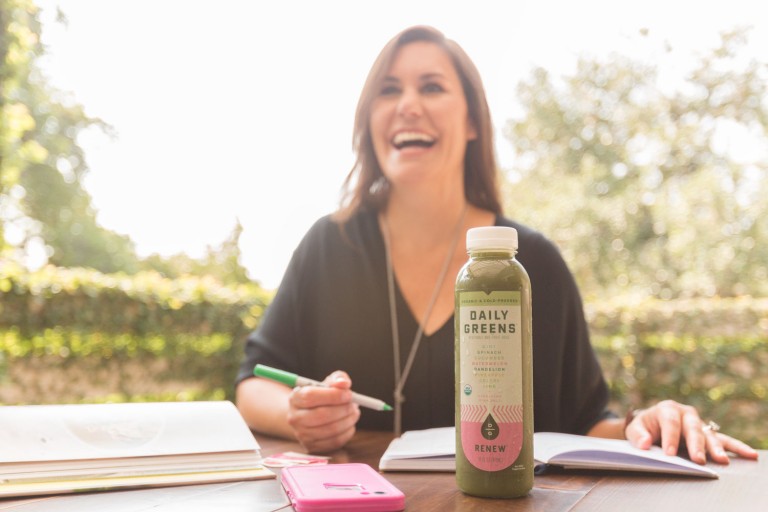
Daily Greens founder + Breast Cancer Warrior Shauna Martin Talks Diagnosis, Motherhood and Launching an Overnight Success

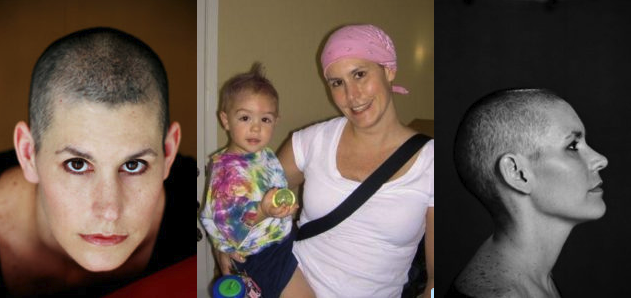
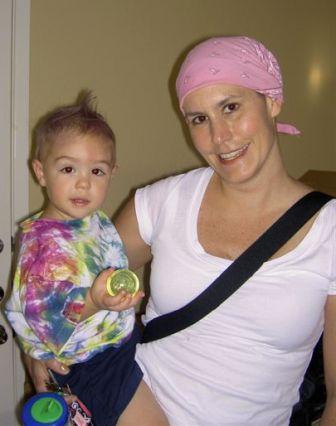
Shauna Martin is one resilient mama. At 33 years old while breastfeeding her nine-month-old Cooper, she found a lump that turned out to be breast cancer. This defining moment would send her on a journey of self-discovery, entrepreneurship and rebalancing. After 12 years in remission, she now lives actively with metastatic breast cancer and shares how she balances career, motherhood and the daily fight.

You were diagnosed at age 33 when your son was just one-year-old. Tell us about how you discovered your diagnosis.

I was actively breastfeeding my son Cooper — only nine months old at the time — and started to feel a lump. When I went to see my doctor, he was certain that it was just a clogged milk duct and told me not to worry. In his words, I was too young to get breast cancer. I was determined to check it out anyway, but due to the radiation required for a mammogram, I would have to stop breastfeeding. I was devastated, as I was determined to support him through breastfeeding for at least a year. So, I delayed going in for 30 days and breastfed as much as I could to stock up in the freezer. All to say, I’m so glad that I did. Before I could get out of the radiology clinic, my doctor had already given me a call to get to a surgeon right away. 

A double mastectomy, oophorectomy, a year of chemotherapy and six years of hormone therapy later — lovely Cooper got his full year of breast milk and is healthier than ever. Now, 15 years old and six feet tall, he amazes me. (And my doctor — who I see to this day — also completely changed his practice since seeing my story unfold and has diagnosed so many other young women. He gives me a big hug and thanks me each and every year!)

“When I went to see my doctor, he was certain that it was just a clogged milk duct and told me not to worry. In his words, I was too young to get breast cancer.”

In what ways did your breast cancer diagnosis transform your life?

After going into remission, I was broken down mentally and physically, and I knew my stats were not good. I had an over 50% chance of it coming back. At the time, I was a new partner at a law firm and needed to relook at what “self-care” meant for me. 

As my breast cancer feeds off of sugar, alcohol and fat, I immediately cleaned up my lifestyle and went vegan (which I’ve been for 14 years now!). Most importantly, I discovered the power of juicing. I truly believe that it was consuming green juice every day that helped my body recover from the debilitating chemotherapy treatments. I started to feel like myself again, and I was so excited to share the gospel of green juice to everyone I could… but it wasn’t as “trendy” then as it is now, and I had to play with recipes to get my friends and family to join in. I was able to add in fun Texas-inspired flavors like watermelon and jalapeno that made it enjoyable without sacrificing the nutritional content. 

It became so popular that I started bringing them from my kitchen to the local farmer’s markets in Austin. From there, my company Daily Greens was born. It was discovered so quickly that it went national overnight and all of the sudden Daily Greens was everywhere. It’s been seven years since then. We’re now producing all kinds of functional beverages and continue to grow and expand and evolve. It’s been a wild journey but a wonderful one.

Twelve years after remission, and at the prime of Daily Greens success, your cancer unexpectedly came back. What has this next chapter looked like for you?

I was re-diagnosed two years ago, and this time it’s metastatic, meaning that it has spread to my bones and is Stage 4. Listen, I did everything right and everything I was supposed to, but breast cancer can be so random.  I stay on a daily regime of chemotherapy which I will be on for the rest of my life, but I’m doing great. Chemo itself has come a long way too — I look normal, I have my hair, I work a full schedule and I’m a full-time mom.

Personally, I still drink 1-2 green juices a day and stay on a very strictly plant-based diet which makes all the difference. My doctors consider me to be actively treated for the time being because my meds are doing so well. But even more, they see a lot of years ahead for me and say I’m an outlier in part, attributed to my plant-based lifestyle and juicing! It only empowers me on my mission to get a green juice in the hands of every person I can. I plan to continue working and giving back as long as I’m able and not letting this diagnosis change my course.

“They see a lot of years ahead for me and say I’m an outlier in part, attributed to my plant-based lifestyle and juicing!”

You have now tackled motherhood, pivoting a career, launching a successful business overnight AND two breast cancer diagnoses. How do you deal with it all?

I’ve approached motherhood a little differently than my peers of the past.   Prior to the current game-changing class of chemotherapy that I take everyday, metastatic breast cancer was an incredibly devastating diagnosis for a mom, with an average life expectancy of just 5 years.  Now things are different, and I can think about life a bit differently than those affected before me, who were advised to quit their jobs, stay home with their kids, maybe get a little travel in and wait to die. I feel so blessed that this does not have to be my approach, as life expectancies for those of us living with metastatic breast cancer have doubled to 10 years. 

Cooper will always be my first priority because I don’t know how many years I have left, although I really hope to beat the 10 year average by a lot! That being said, I really need something to get up for in the morning and to make me feel alive — and that’s my work. I absolutely love my job and what I do. And frankly, it’s the best possible example I can set for my kid, especially for a boy. The only way we can crack this code of only 5% of the CEOs in the U.S. being women is in how we raise our boys. No amount of STEM is going to do as much for gender inequality as men seeing their own mothers as leaders in the business world. When men finally grow up seeing their moms being CEOs, founders, and executives in the workplace, that’s when change happens and no matter my condition, that’s how I’m trying to raise my son.

I also find community to be so important. So much of what is out there in the market to support breast cancer is in the research. And while I have seen first-hand the progress in technology and medicine that has taken place in the mere 12 years that I was in remission, it’s resourcing that gets left out of that equation. Building a community and navigating what to do when you get that diagnosis to find all the resources you need — especially as a young mom — is so incredibly difficult. I spent several years alongside Daily Greens supporting the Young Survivor Coalition. However, more recently, I’ve been drawn to a micro approach. The Breast Cancer Resource Centers of Texas really set the bar for patient navigation in the breast cancer arena locally, and I would love to see their model applied nationally in similar organizations all over the country.  So I continue to do a lot of work with them, which really feeds my soul. When I was first diagnosed, I worked with them on several programs and now I’m coming full circle. 

“When men finally grow up seeing their moms being CEOs, founders, and executives in the workplace, that’s when change happens and no matter my condition, that’s how I’m trying to raise my son.”

What about your journey would you want HATCH mamas to take back with them?

The number one thing I would tell young moms and mamas-to-be is you have to be your own health advocate. The medical system is not built to be that for you. You’re a bit of a cog and you absolutely have to stand up for yourself. Take the time to get to know your body, keep going back, keep asking questions, and stay curious. Had I not taken the control to have my lump checked, I might not have known early enough. 

Second — the hardest thing to do as a young mom but probably the most important part of my own health and resiliency has been SLEEP. As a new mom, sleep was always the first thing I’d cheat on because I thought I could get away with it. My son didn’t sleep through the night maybe the first 2 years of his life (he was a hungry boy!) and so I didn’t prioritize it. On my health journey, however — especially recently — I’ve learned how regenerative it can be and I urge all moms to focus on it. It’s just not worth skimping on, and not all sleep is equal. Snag an Oura Ring or track your sleep on your Fitbit and make sure you’re getting the right amount of REM and deep sleep…. Or my sleep hack: work in a 15 minute cat nap where you can! 

Lastly, what you put in your body is so critical right now more than ever. Beyond exercise, 90% of the way your body looks and feels is actually made up of what you put in your body, while 10% is related to your workout regimen. Living a plant-based lifestyle has been an incredible life change for me and I actually don’t drink alcohol anymore — it just had to go to allow me to live the life I wanted as I learned how truly debilitating it was to my body and my health. The last couple of years, new studies show that more than 7 drinks per week can do more harm than good, especially with breast cancer. Breast cancer is often driven by hormones, and alcohol + sugar turns into estrogen which turns into cancer. No medicine in the world can overcorrect for my (or your) habits so I always encourage moms to do what they need to get out of their head for a little bit in other ways.

At the end of the day, inherently moms know in their heart of hearts what to do — eat more plants, eat less sugar, drink less, exercise more, sleep more. So mamas, listen to your body, give it what it deserves, and tune in. You deserve it.

Jewelry Designer Stephanie Gottlieb On Her Surprise Pregnancy The fertility convo, and raising good humans.

By Ruthie Friedlander

Founder of cult-status namesake jewelry brand, Stephanie is always in motion. This go-getter shares her journey from IVF to an unexpected pregnancy with baby number two, a girl!

Here, this super-woman dishes on being in the best shape of her life, getting pregnant naturally (post IVF), navigating the changing landscape of her business through the pandemic, and the importance of raising good humans. @stephaniegottlieb 

Current state of mind?

Feeling good, but also, ready to be done.

Difference between pregnancies?

Overall they have been similar and relatively smooth. I tend to go at life a million miles an hour and find myself almost too busy to notice I’m pregnant. Last pregnancy, I worked up until I gave birth, and this time around, while there’s undoubtedly more downtime given the world’s status, I’m still working nonstop.

Any cravings?

I love sweets, in fact, I love them so much that after giving birth to my son, I got kidney stones! It was awful, and they put me on a highly restrictive, zero sugar diet. Now, I’m heavily monitored and almost failed the glucose test. Apparently, there are serious ramifications, and I’ve been warned that if I were to get gestational diabetes, the likelihood of developing full-blown diabetes post-pregnancy is real. But, of course, that’s ALL I want now. During my non-pregnant life, I usually have more self-control, but pregnancy is a whole other ballgame. Nevertheless, to avoid going crazy, I give myself two cheat days a week!

What was your path to pregnancy with both?

Looking back, the experience feels much easier than when I was going through it, especially considering it was a success.

Lately, the fertility and egg-freezing conversation has been coming up a lot among my girlfriends in their 30s who aren’t quite ready to start a family. Interestingly, I find that most women don’t know anything about their fertility until it’s too late or they’re a year and a half into trying to get pregnant, and nothing’s happening. As was the case with us. We were trying on our own for two years, and my OB never stopped to question ‘what is going on here?’ or advise me to look further into why we weren’t getting pregnant. Based on my experience, women need to start exploring fertility at an earlier age. Knowledge is power, and the sooner you can address issues or plan into them, the better. Otherwise, the weight of wanting to get pregnant and not is torture and mentally can destroy you.

After going through IVF with our son, I had every intention of doing it again, but then we got pregnant by surprise! I didn’t even think my body could get pregnant on its own, but my doctor said that often the body resets after having a baby. I feel very fortunate for this.

Start the fertility convo sooner?

We must teach the younger generation to be more proactive about their fertility. Simultaneously, OB doctors need to normalize the conversation, run tests, and look into genetics with girls straight out of college. Every woman should be informed about their body and the earlier, the better. While my 30-something friends are still in the viable age range to retrieve healthy eggs, they would have been in a stronger position if they had explored their egg health five years ago.

Will you have this conversation with your little girl?

As soon as it’s appropriate, this is something I’ll have her doctor introduce. Overall this needs to be a healthier and more frequent conversation within our society.

Thoughts on raising a boy these days?

When it comes to raising our children, we have a moral and social obligation that extends beyond grades and manners, to raise good humans that contribute to our nation’s wellbeing. While this is a huge undertaking that I haven’t fully explored, I am introducing books and toys that expose him to essential topics in delicate ways. The earlier we can normalize difficult conversations like racism and antiracism, the better.

Pregnancy through COVID?

Not knowing the state of the world when you bring a child into it is scary. I feel fortunate that it’s my second pregnancy and not my first, as I would have been more worried. Day to day, I’m doing my best to tune out the noise, be careful but not stress, and ultimately do what makes me comfortable.

It’s a bizarre and complicated time to be pregnant, but equally to be engaged, a student, or a student’s parent. We are all trying to figure out what to do and how to adapt.

Exercise, much?

Right before I got pregnant, I was in the best shape of my life, and perhaps that’s why I got pregnant naturally after having to do IVF with my son. For the first time (ever), I was toned and committed to taking care of my body. I still feel that way, and overall, I’m in a much healthier place, both physically and emotionally. 

Throughout this pregnancy, my sister and I have been working out three days a week with a virtual trainer. Plus, I have been doing laps in the pool because my back hurts so much, and it’s excellent exercise. I’m planning to keep doing both of these things until I can’t. 

Post-pregnancy, I’m super motivated to get back to where I was because I felt so good in that body. 

Are you planning to take maternity leave?

I have worked non-stop for as long as I can remember. We have a high-touch business, literally. People want to come in and try on rings, which has been challenging through COVID, but we’re figuring out ways to enhance the virtual experience. With so much changing day to day, maternity leave means I’ll be out of the office, but not out of touch; my business is also my baby. Last time I gave birth, I was texting a client between contractions! 

How did you start Stephanie Gottlieb?

When I graduated from college, I had no idea what I wanted to do. At the time, a family friend said they knew a family-owned diamond wholesaler looking for a summer intern. So, I took the role while, but in my mind, it was a temporary position while I continued to look for another job. I ended up loving it and stayed for five years! Through that experience, I wore many hats and learned the business inside and out. Ultimately I enjoyed the company, but long term wanted to do my own thing.

Seven years ago, I took a leap of faith and started my business. While slow to start, I was able to promote the brand through Instagram, and it’s grown into something much bigger than I imagined. For the first two years, it was just me, then my sister came on board, and now we’re a team of 10!

Managing your brand through COVID?

I was definitely concerned, especially in the beginning, as our business literally shut down. Our jewelers couldn’t work, and there was nothing people could do for weeks. My sister and I set up a remote office and have kept to our 9-5 routine. Luckily my team stepped up and did everything they could to keep this going. A significant silver lining of quarantine is my time and ability to focus on developing and innovating. We’re launching a new site with a gentle rebranding and fresh designs, which I am excited to see come to fruition this fall.

Books you’re reading?

My son’s favorite is ‘One Big Heart: A Celebration Of Being More Alike than Different.’ The story celebrates diversity and commonality. No matter if we’re a curly-hair girl or a brown-skinned boy, we have one big heart. I’m loving incorporating sweet messages like this into his days. 

I haven’t had a ton of time to read over the past several months, but I made a point of reading ‘Me And White Supremacy.’ With everything heightened and so much surfaced, I felt I needed to educate myself to round out my understanding and effectively contribute to change.

Any advice…

While lovely to get advice, take it all with a grain of salt. Ask five friends the same thing, and they will have five different answers because they all had different experiences. As a mother, one of the first things you learn is to trust your instincts, go with that. It will be better than the varying opinions you’re going to get from others.

Will I Really Poop During Labor? Probably.

By Babe | Illustration by Ana Hard

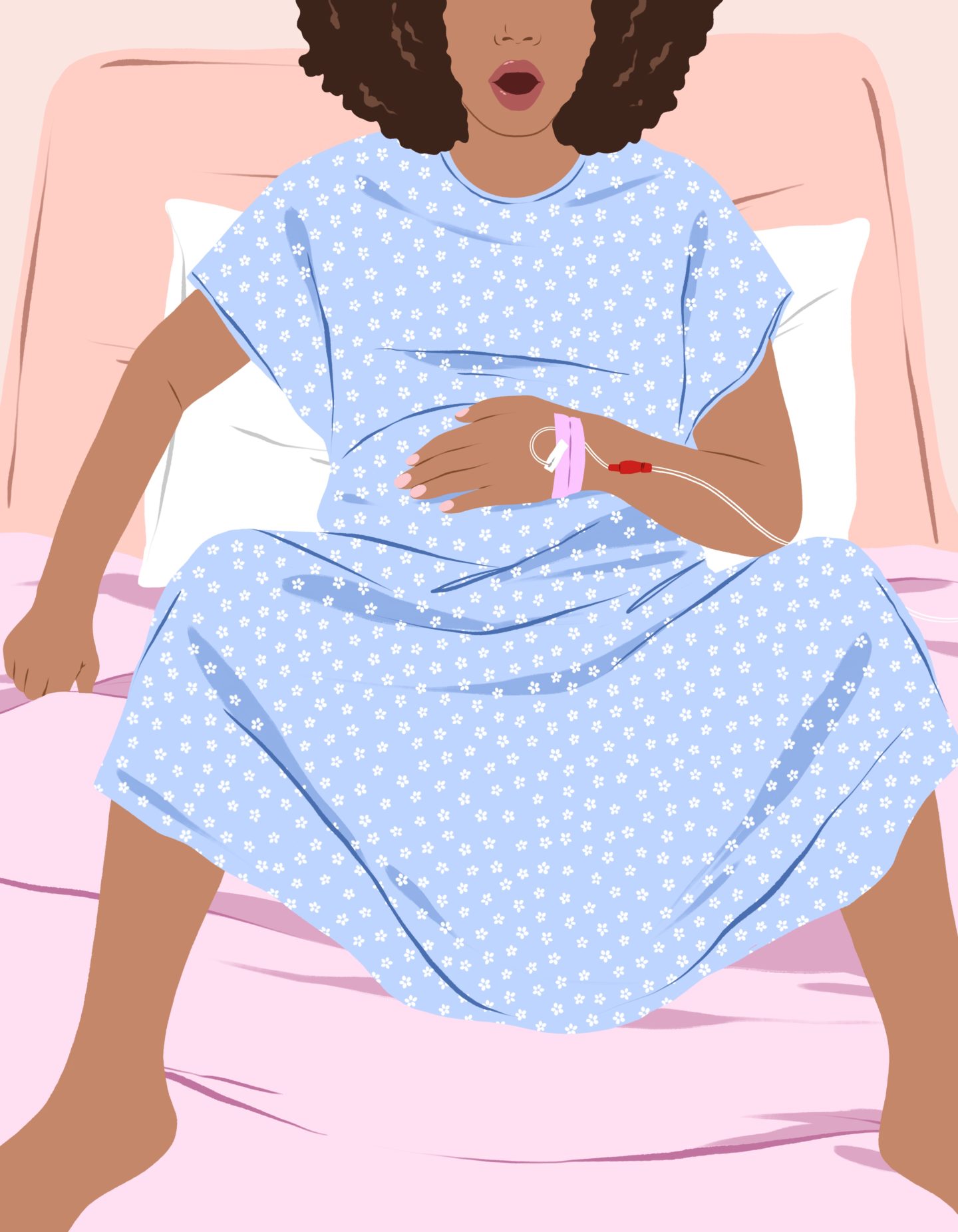
Out of everything you could possibly stress over during childbirth – you know, like unexpected medical intervention or whether you’ll have a healthy baby – one rather innocuous idea tends to keep pregnant women up at night. Will I poop during labor??

“I can’t even tell you how worried this made me,” says Kara DeLange, mother of Georgia, 18 months. “It’s like this thing that makes its way around pregnancy groups. You know it’s possible and you think, well will I or won’t I? And if I do, will my doctor or partner ever be able to look at me without cracking up?”

For Beth Hughes, the idea of pooping during labor became so stressful, she performed her own enema the morning she was being induced. “Since I knew when I was going in, I figured let’s clean everything out in advance,” says Hughes, mother of nine-month-old Dylan. “I know it sounds crazy, but I figured since I could plan for it, why not?”

Pooping during labor – the time honored what if that’s totally unavoidable and also super common – is for many women, an insanely stressful concept that’s part urban myth, part typical bodily function. It sounds gross and embarrassing but when you think about what your body is actually doing during labor, ie pushing out a BABY using the same muscles you use to push out poop – it’s actually totally normal. Think of it this way, if you do let something slip out, you are actually laboring correctly! 

“When a woman is in labor, the prostaglandins, aka the hormones that can stimulate labor, are also the hormones that can stimulate the bowels,” says Dr. Shieva Ghofrany, a Connecticut-based obstetrician-gynecologist. “Also, when a woman is pushing her baby out, I carefully instruct them to ‘push like you’re pooping!’  I will often explicitly demonstrate not pushing from your face but instead push from your diaphragm down as if you’re pooping.”

When a woman is pushing her baby out, I carefully instruct them to ‘push like you’re pooping!

At Babe we seek to normalize the birthing process from start to finish, including every icky element that comes along with it. After all, sometimes being a warrior goddess who’s BRINGING LIFE INTO THE WORLD comes with a side of sh*t. But if you’re super obsessed about it, you could try to time an enema in advance of your labor, though that might not work for every birth and it won’t necessarily rid your body of everything. 

“I often encourage my patients if they are being induced (similarly before c-sections) to keep their meals the day before on the lighter side but to increase their liquids,” says Dr. Ghofrany. “The purpose of this is less to ‘avoid pooping’ and more to ensure empty bowels that can lead to constipation after the delivery due to dehydration and pain medicine. Also, before an induction or as one is starting labor, women can self-administer (or with the help of their partner) an enema to empty their rectum of stool or can take castor oil to empty their bowels.”

Also, drink plenty of water and maintain a high fiber diet. And don’t you dare starve yourself. Just remember, whatever happens happens. Trust us. your relationship will survive. After all, once you have kids, there’s crap basically everywhere. You both better get used to it now.
“I remember being so concerned over whether I would poop or not, and by the time I was pushing, I didn’t even know what was going on, nor did I really care,” says Rachel Winston, a Chicago-based mama of three. “Plus, there was so much other stuff happening down there that I probably wouldn’t have even noticed if I did.”

More:

Get Prenatal Support, Even During COVID-19 Get the help you need from home.

By Babe | Photo by Stocksy

Pregnancy and postpartum can conjure up ALL the feels. Some of us want some intel leading up to the big day, while many of us need extra support in dealing with this sweeping life change. For new moms, too, the lack of sleep (and independence), coupled with caring for a new human can bring on so many feelings of anxiety and depression. But, if you think COVID-19 has left you high and dry in the support department, think again. There is a wealth of online resources out there, especially now, catering to pregnant and postpartum women. Classes, programs and one-on-one sessions that can help you navigate this uncertain time and answer all of your questions on the journey. We’ve rounded up some of our favorite community-based resources out there in internet land, so that you can get the help you need.

Pre and Postpartum Virtual Resources

Robyn: On August 17, this parenting and prenatal hub will launch a digital series titled ParentBirth in an effort to demystify, destigmatize and democratize the path to parenthood. These modern childbirth classes for expecting parents will feature multiple perspectives and real stories. Robyn also debuted a new provider network that offers the ability to book virtual or in-person sessions directly with a network of 200+ vetted health and wellness partners that specialize in serving the aspiring, expecting and new parent. Think lactation consultants, pelvic floor specialists, fertility coaches, infant sleep trainers, doulas, mental health providers, and more. 

Hello My Tribe: Drawing from Hello My Tribe’s popular in-person classes based in Austin, Tex., this women’s provider is now offering a Virtual New Mom Class + Support Group geared towards women one week to six months postpartum, with community and holistic care at its core. In over 10 weeks, participants can expect weekly emails with a schedule, plus encouragement and resources, movement sessions with trainer Diana Haggerty, four guided meditations as well as yoga and live conversations with experts on self-care, physical therapy, newborn care and baby sleep. The class will be available for purchase in the coming weeks on Hello My Tribe’s community platform, as well as a live group option throughout the year. 

Postpartum Depression
/pohst·pahr·tuh·m· dih·presh·uhn/
Many new mothers experience normal baby blues after childbirth (hello…

Boober: Jada Shapiro’s popular online resource platform helps parents find the virtual or in-person expert help they need to stay healthy and confidently transition to parenthood. Fast, convenient and highly reviewed, boober matches patients to expert in-person or virtual lactation consultants, birth and postpartum doulas, mental health therapists, and more. Boober offers easy online booking for in-home (when safe) or virtual care, same day service and provides a roster of expert care providers that have been certified and vetted. Through its extensive network, its tailored support ranges from childbirth education, breastfeeding, managing the return to work and birth support to birth support, mental health and mothering the mother. 

Motherhood Center: If you’re expecting or recently postpartum and suffering from mood and/or anxiety symptoms that are getting in the way of your ability to care for yourself, your baby and function in your job, you may need a higher level of care than outpatient therapy alone can provide. New York’s Motherhood Center is now offering a Virtual Day Program intended for expectant and new moms who are used to holding it all together, who are achievement focused and balancing the demands of work and running their households all under one roof – and are finding themselves currently unable to do so. The day program includes PMAD Support Group for New Moms, Pregnancy Support Group, Sleep Support Group for Pregnant and Postpartum Moms, Working Mom’s Support Group, and NICU Support Group for Couples.

How do I know if I have prenatal depression?

Totum Talks: Totum Women, a progressive online maternal community has announced the launch of Totum Talks, a monthly webinar series that aims to support a woman’s experience in motherhood and parenting. Every Totum Talk will be completely interactive and will endeavor to unpack and explore a woman’s journey through motherhood and the revolution in mind, body, relationships and ambition that happens during this time. The first Totum Talks launched on July 31 with a focus on processing compound stress and trauma in a pandemic. Being in the midst of a global health crisis has created unprecedented levels of stress for many women and families. What happens when a new trauma occurs, further intensifying uncertainty, fear and isolation? How do you cope? This topic is of special significance to Erin whose 7-year-old son was diagnosed with Type 1 Diabetes in the midst of the pandemic. 

1 74 105