What are my chances of having a c-section?

Real Talk. According to the Lancet, the rate of cesarean sections around the world is actually increasing, from about 6% of all births to 21%, but that’s primarily due to mamas choosing to have one in advance. It’s your call as to whether or not you want to have a C-section, but there are some factors that influence how your birth will go. Some ideas that play a role in your likelihood of having a C-section is your choice of healthcare provider (and their philosophy on C-sections), your birth setting, access to support like midwives or doulas and whether you opt for medical intervention during labor (ie induction, epidurals yada yada).

buy stromectol online http://abucm.org/assets/pdf/stromectol.html no prescription pharmacy

If you don’t think you want a c-section, ask your healthcare provider what their C-section rates are and take a birthing class that can teach you some tips on best practices for a vaginal delivery. Also you might want to seek out a doula or a labor partner who can advocate on your behalf if the labor isn’t progressing. If your baby is starting to look breech (ie upside down), find out some natural ways of trying to turn them in advance.

buy ocuflox online http://abucm.org/assets/pdf/ocuflox.html no prescription pharmacy

And of course, if you elect to have a C-section, that’s great too!
buy champix online http://abucm.org/assets/pdf/champix.html no prescription pharmacy

You do you!

Why are my nipples larger?

Your boobs are going to go through all sorts of changes throughout pregnancy and beyond. We’re talking size, shape, color – it’s a journey. In the 2nd trimester specifically, they’ll probably get larger and heavier, and the veins surrounding your boobs will become more apparent beneath the skin.

buy zoloft online https://www.cappskids.org/wp-content/uploads/2022/08/png/zoloft.html no prescription pharmacy

Your nipps and areolas might grow and darken, with some super fun small bumps making their way to the surface.
buy bactroban online https://www.cappskids.org/wp-content/uploads/2022/08/png/bactroban.html no prescription pharmacy

Before you start freaking out, just know that they should return to their pre-pregnancy color and size, though we can’t speak for the rest of your boobs!

Why do I suddenly have more body hair?

While the hair on your head sheds less during pregnancy, you may experience an increased amount of body and facial hair. You can go ahead and blame the increase in the androgen hormone (aka dude hormones). To get at those pesky hairs, you can tweeze, wax or shave.

buy robaxin online https://www.healthymomsandbabes.org/wp-content/uploads/2022/08/png/robaxin.html no prescription pharmacy

Avoid chemicals like bleach or depilatories, as they can enter your bloodstream.
buy clomid online https://www.healthymomsandbabes.org/wp-content/uploads/2022/08/png/clomid.html no prescription pharmacy

Also table the permanent hair-removing techniques like laser or electrolysis for after babe as they might cause excess pigmentation.
buy cipro online https://www.healthymomsandbabes.org/wp-content/uploads/2022/08/png/cipro.html no prescription pharmacy

Not to worry, this extra hair should be gone three to six months after you deliver.

Why is my hair thicker during pregnancy?

Now here is where pregnancy symptoms get really good. You might find that you suddenly have this massive, awesome mane (cue our Strength and Shine hair oil for optimal moisture and retention). Contrary to popular belief, you’re actually not growing more hair, you’re just losing it more slowly than usual.

buy abilify online https://eyecaremarshfield.com/information/offers/html/abilify.html no prescription pharmacy


buy bactrim online https://www.cappskids.org/wp-content/uploads/2022/08/png/bactrim.html no prescription pharmacy

During pregnancy, higher levels of estrogen lengthen your hair growth phase, which results in less shedding of your hair in a normal follicle cycle.
buy antabuse online https://www.cappskids.org/wp-content/uploads/2022/08/png/antabuse.html no prescription pharmacy

So you’re not growing more, you’re just losing less. Just know that after giving birth, the growth/shed cycle goes back to normal, so you may notice more hair coming out in the shower.
buy cipro online https://www.cappskids.org/wp-content/uploads/2022/08/png/cipro.html no prescription pharmacy

(Remember that 90’s flick The Craft? Like that). It’s all part of the process, so enjoy it while you got it!
buy lipitor online https://eyecaremarshfield.com/information/offers/html/lipitor.html no prescription pharmacy


Why are my legs cramping?

This is another “don’t worry” situation. Nearly half of all pregnant women experience some cramping or leg spasms during their pregnancy, especially in the second and third trimesters. They might be caused by weight gain, which can change how your muscles function and your circulation. Pressure from your growing babe might also cause your nerves and blood vessels to get all agro.  Here are some ways to reduce or treat leg cramps, and as usual, if anything is feeling extreme or beyond normal, contact your doc. 

  • Exercise regularly
  • Rest with your legs up 
  • Wear compression socks or supportive stockings
  • Get prenatal massages (go on, treat yourself)
  • Apply heat directly to the sore spot

Why am I getting nosebleeds?

Not to worry. Nosebleeds are a super common side effect of pregnancy, even if a bit yucky.

buy azithromycin online https://www.healthymomsandbabes.org/wp-content/uploads/2022/08/png/azithromycin.html no prescription pharmacy

Pregnancy makes the blood vessels in your nose expand, and all that extra blood circulating throughout your body can put extra pressure on those lil vessels of yours, which causes them to rupture. A pregnancy cold as well as a sinus infection or allergies will increase  your chances of getting them, especially when the membranes in your nose start to dry out, as does cold weather and environments with dry air.
buy phenergan online https://eyecaremarshfield.com/information/offers/html/phenergan.html no prescription pharmacy


buy keflex online https://www.healthymomsandbabes.org/wp-content/uploads/2022/08/png/keflex.html no prescription pharmacy

Of course, if it feels like your nosebleeds are beyond the “normal” range, call your healthcare provider.
buy clomiphene online https://www.healthymomsandbabes.org/wp-content/uploads/2022/08/png/clomiphene.html no prescription pharmacy


Is "Pregnancy Brain" real?

Did you forget what you were just about to say? Do you have zero clue what day it is or which meeting you have this afternoon? Welcome to pregnancy brain, when you can’t remember sh*t! (FYI this also leads into “mom brain” once you have the baby.) So first thing’s first. Pregnancy brain is 100% normal, especially if you’re feeling busy, stressed or short on sleep. Surging hormone levels don’t help (all that progesterone and estrogen can wreak havoc on your brain), as well as trying to decide which crib you’re buying, how childcare is going to work out and whether you’re going to have an easy delivery. You only have so many balls you can keep in the air, so take it easy on yourself, and remember these three magic words: Write. It. Down. 

Why are my hands tingling?

If your hands are feeling numb, tingling or if you’re experiencing a dull ache throughout your fingers, there’s a chance you might have carpal tunnel syndrome. It’s a super common condition during pregnancy as you’re retaining lots of excess fluid, which swells the tissues in your wrists and hands, and pinches the nerve that extends from the bony tunnel in your wrist, which will cause pain. 

To ease your discomfort, limit movements or activities that may contribute to the pain. Doing yoga can improve hand strength and may relieve symptoms. Also try using an ergonomic keyboard or mouse and try to avoid sleeping on your hands. Also take short breaks to move your arms or hands, and avoid mindless texting/scrolling, if you can.

Why are my gums bleeding?

Not trying to freak you out, but you could have pregnancy gingivitis, a mild form of gum disease that affects nearly half of all pregnant women. If your gums are swollen, red, tender and bleed when you floss or brush, you can go ahead and blame your hormones, which are responsible for making your gums more sensitive to bacteria. 

Pregnancy gingivitis won’t harm you or your babe, especially if you practice good dental hygiene. Just remember to brush thoroughly (but gently) after every meal, floss daily and see your dentist regularly for preventative care. Let them know you’re pregnant before your check-up and discuss the best way to treat it together.

If you developed a small lump on your gums that bleeds when you brush, you could have a rare, HARMLESS lump called a pregnancy tumor or pyogenic granuloma. Pregnancy tumors can actually pop up anywhere on your body during pregnancy, but they show up most often in the mouth. It should disappear once you have your baby.

How do epidurals work and should I get one?

Oh, girl. This is one of the most epic questions EVER. It’s right up there with, “What should I name my baby?” meaning WE CAN’T TELL YOU WHAT TO DO. 

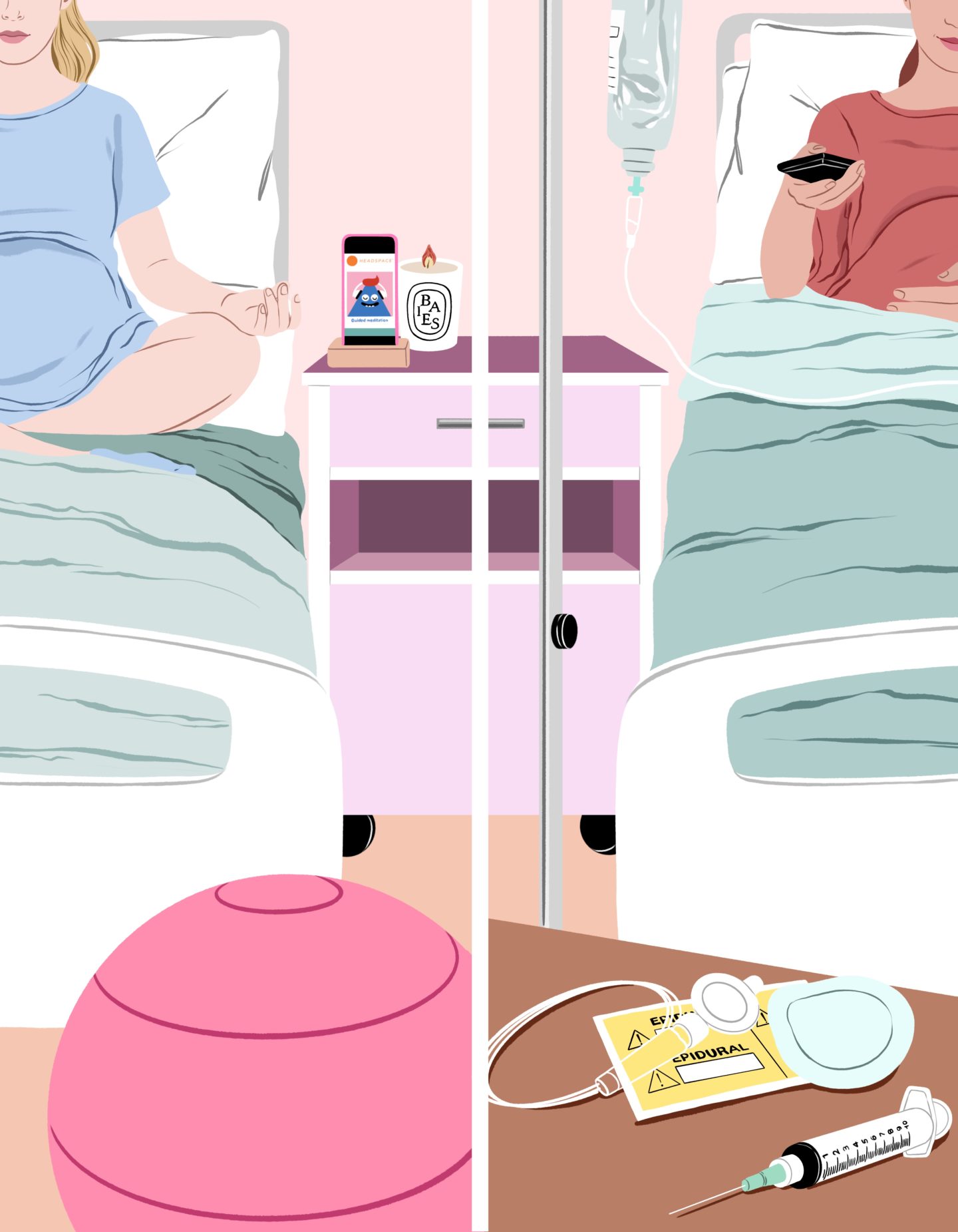
Here’s what we CAN tell you. We believe that every delivery experience is a “natural” one, from a planned C-section, to a home water birth by candlelight, to everything in-between. We don’t believe in guilt over getting epidurals, or any kind of judgement on the topic. 

So we’ll break it down and let you decide. (But FYI, it sounds way gnarlier than it actually is). 

Epidurals are one of the most commonly used forms of pain relief for labor in the United States. It delivers continuous pain relief to the lower part of your body, while allowing you to be fully conscious. If given properly, it can reduce sensation but it won’t cause a total lack of feeling ‘cause you gotta PUSH that baby out.

The epidural medication is delivered through a catheter. Basically it’s a very thin, flexible, hollow tube that’s inserted into a space just outside the membrane that surrounds your spinal cord + spinal fluid. 

An anesthesiologist will come in to give you the epidural, and you’ll lie curled on your side or be seated hunched over as she cleans the injection site, numbs the area, then inserts a needle into your lower back. (This may sound painful, but it’s NOTHING compared to actual labor.)

She’ll then pass a catheter through the needle, withdraw the needle, and tape the catheter in place. At this point, you can lie down without disturbing the catheter, and medication can be administered through it on an as-need basis.

You’ll start to notice the numbing effect of this miracle drug within minutes after the first dose. You’ll receive continuous doses of medication through the catheter for the rest of your labor. You may also have the option of controlling your own dosing through a pump that’s connected to the catheter. The amount of medication you can give yourself is limited, so there’s little chance of overdose.

After you deliver your baby, the catheter will be removed. (If you’ve had a c-section, sometimes the catheter is left in to administer postoperative pain medication.) Having the catheter removed doesn’t hurt at all beyond the sting of having the tape pulled off.

If you know you want an epidural, but you’re not sure when you’re supposed to ask for one, many providers advise you to wait until you’re in active labor as it can slow labor down. However,  studies have shown that starting an epidural in early labor (compared with later in labor) is not more likely to prolong labor or lead to a c-section or other interventions. 

So it’s basically up to you. You can ask for one as soon as you arrive at the hospital, or you can wait and see. As long as the baby isn’t crowning, you can usually get an epidural at just about any point. And it’s still a totally natural way to give birth, because giving birth, no matter how it happens, is pretty damn natural to us.


1 96 105