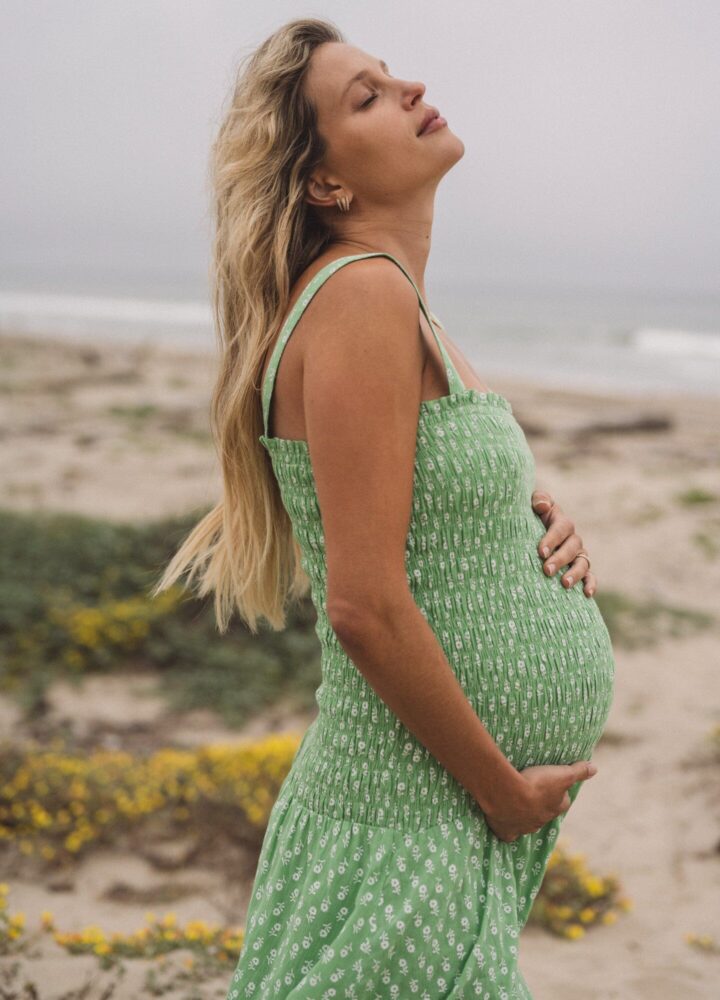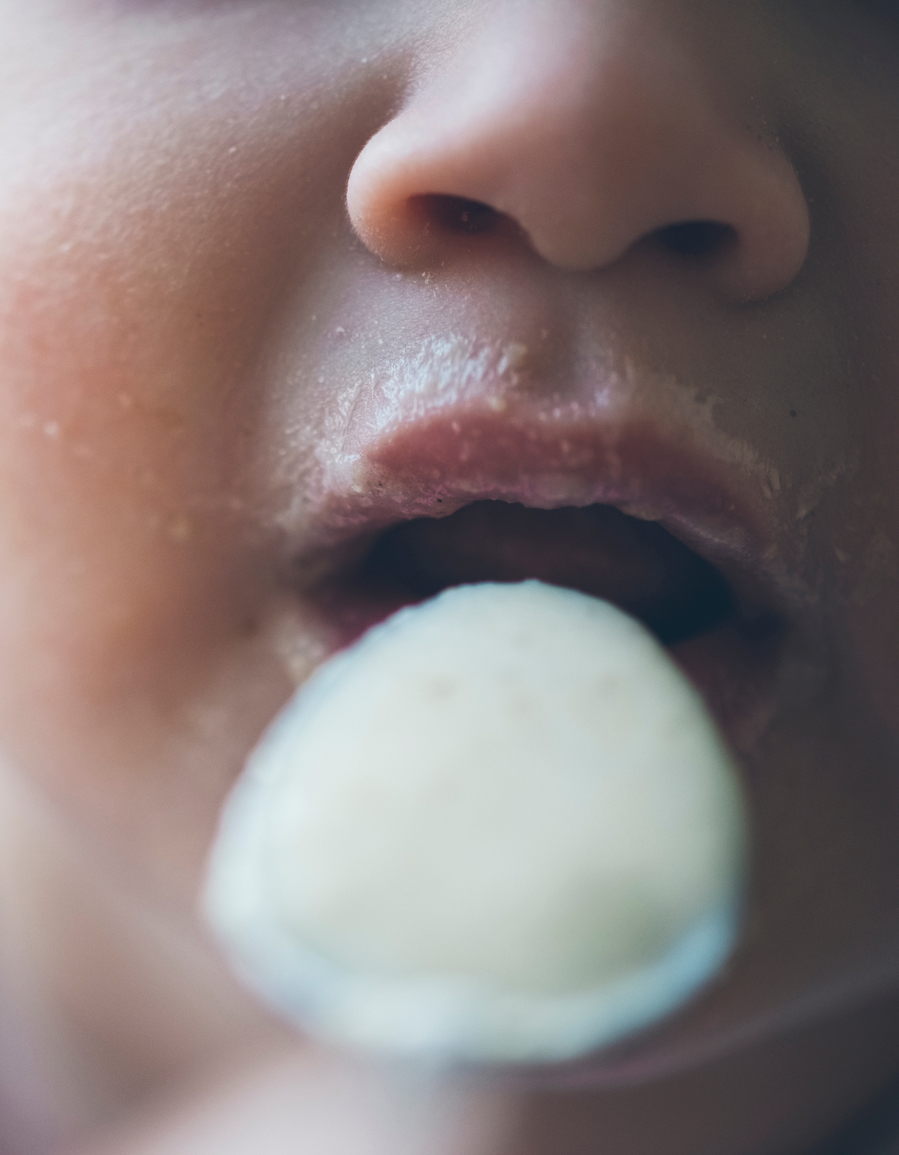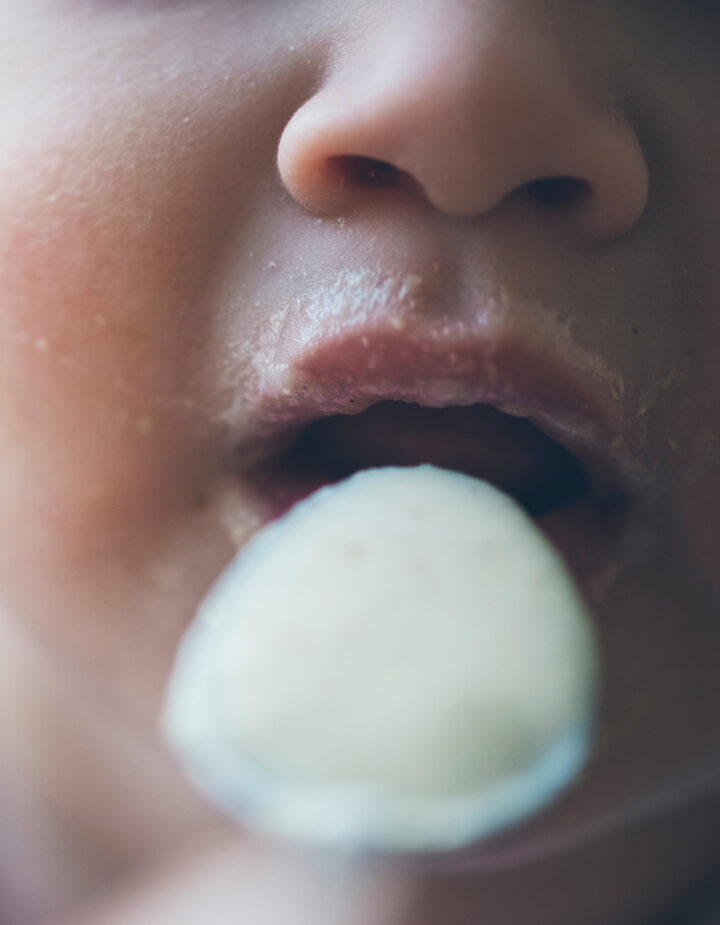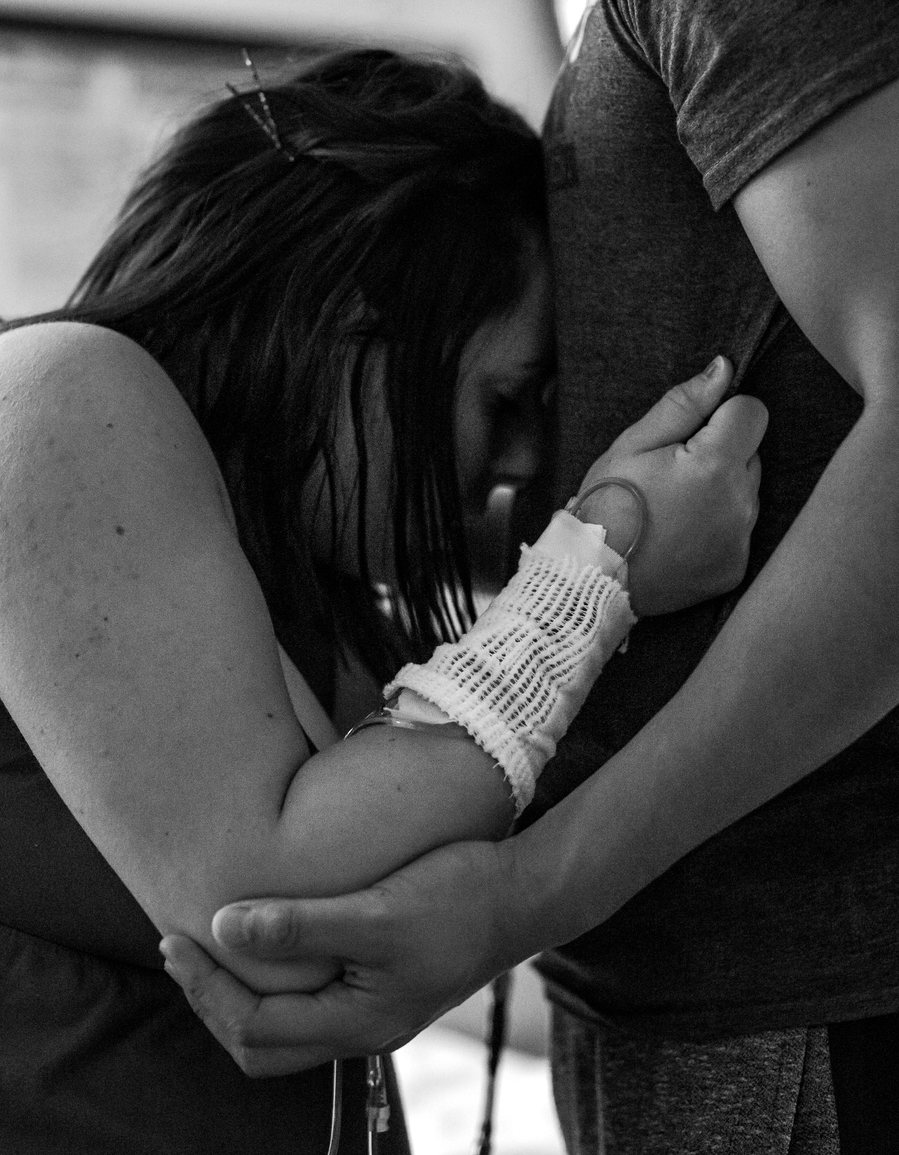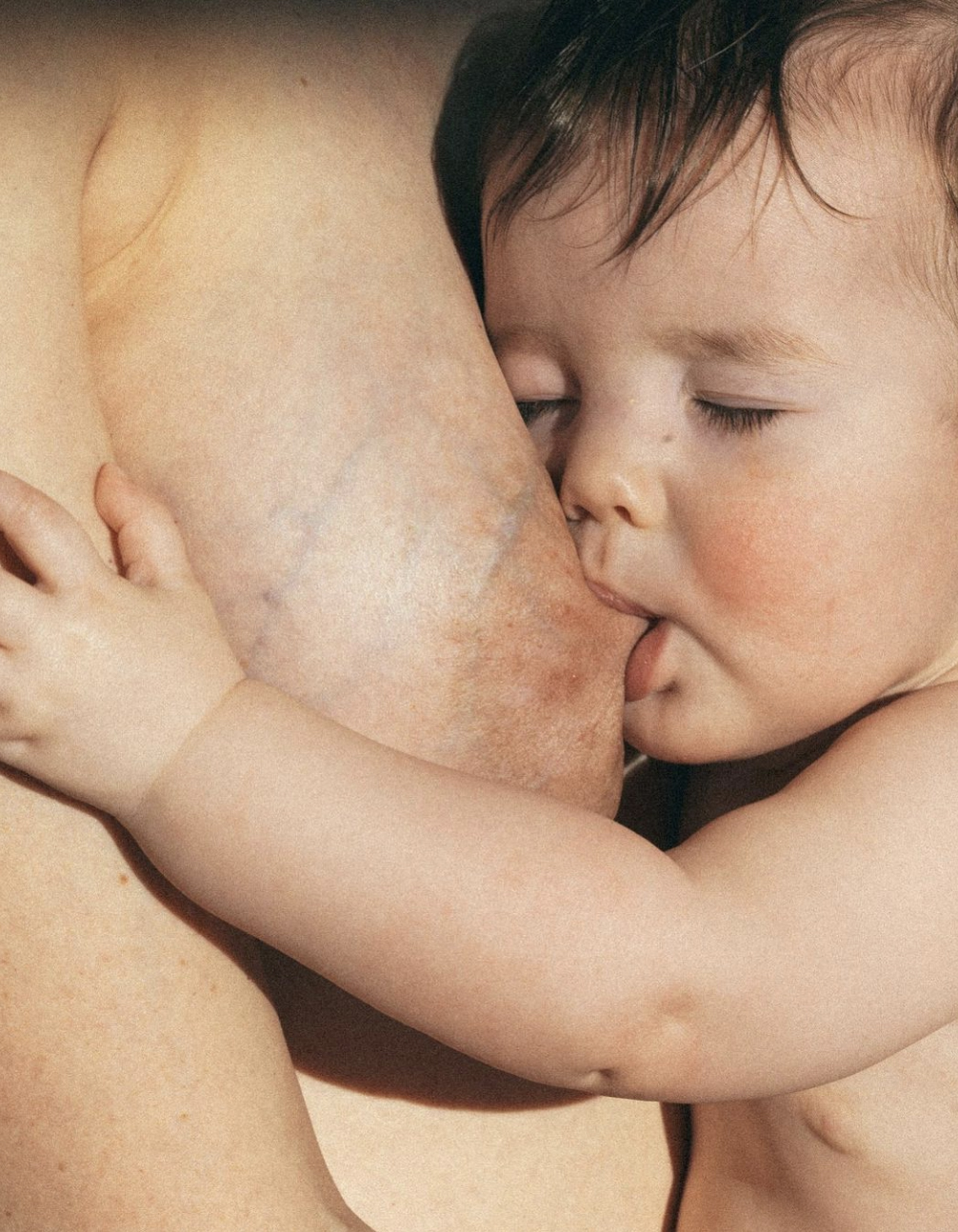
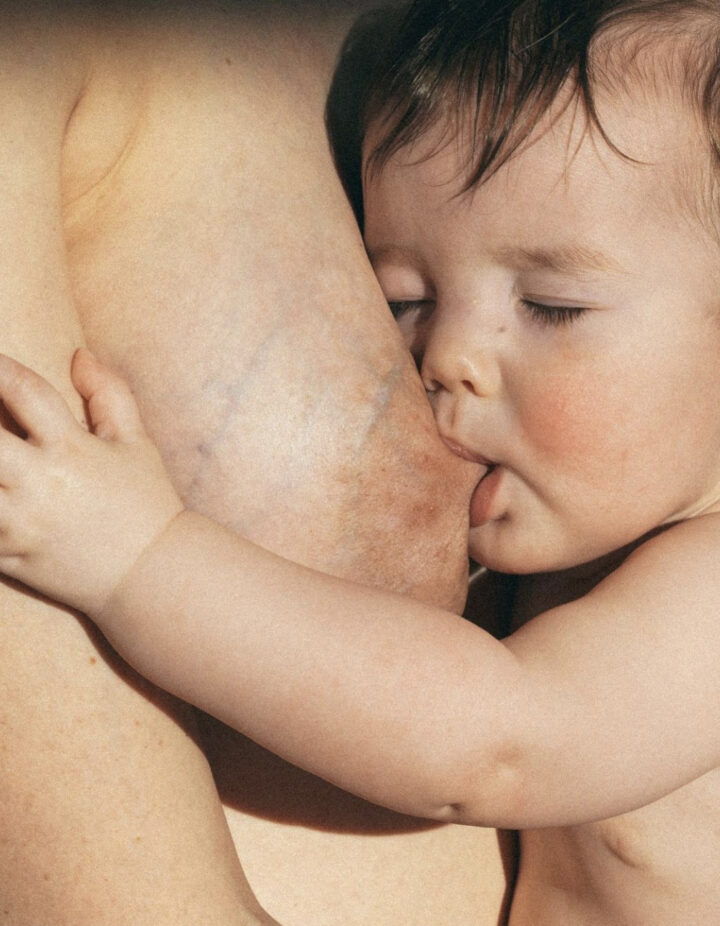
"I was shocked when they said I had to pump 10 to 12 times per day." One mom's roller-coaster breastfeeding journey.

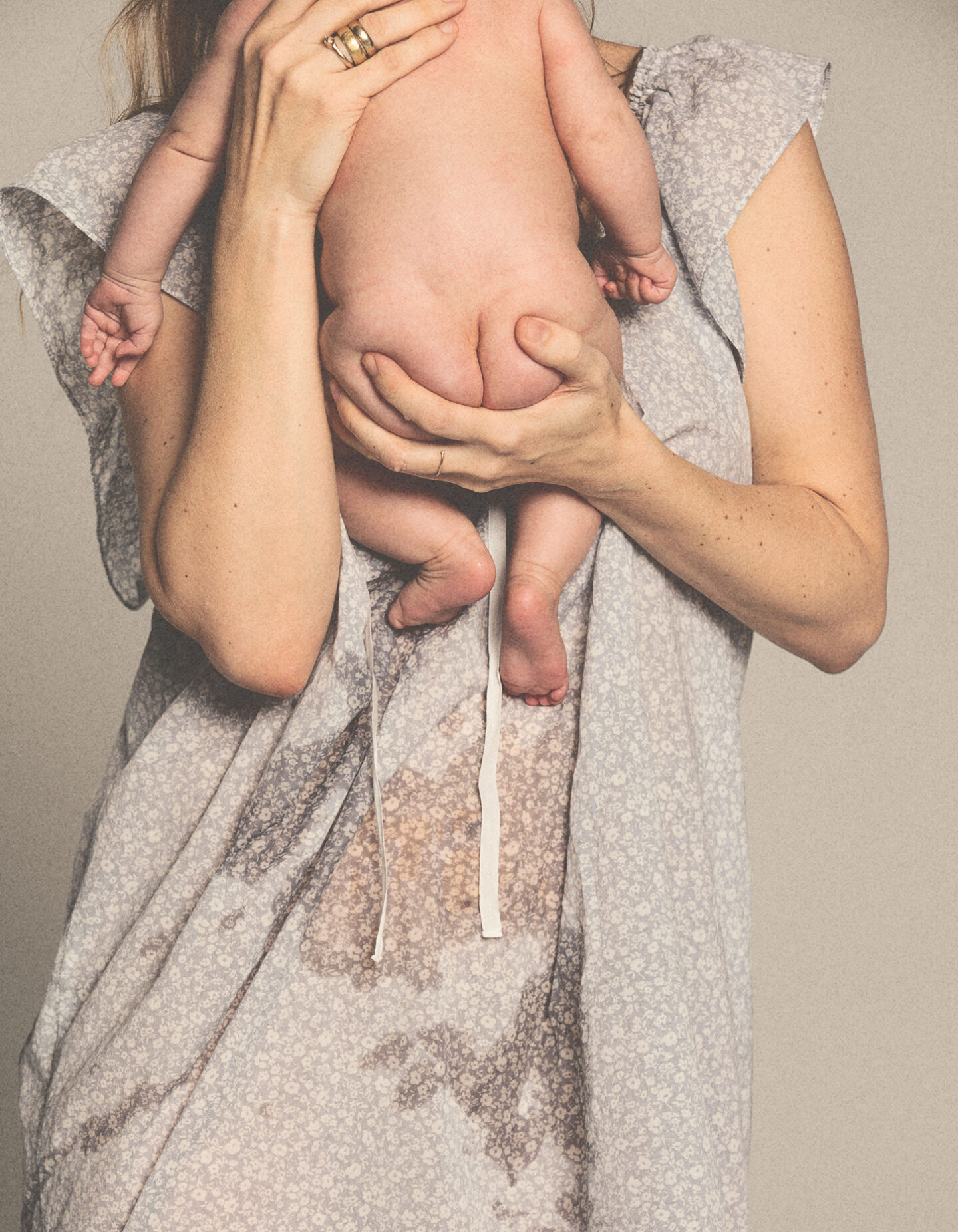
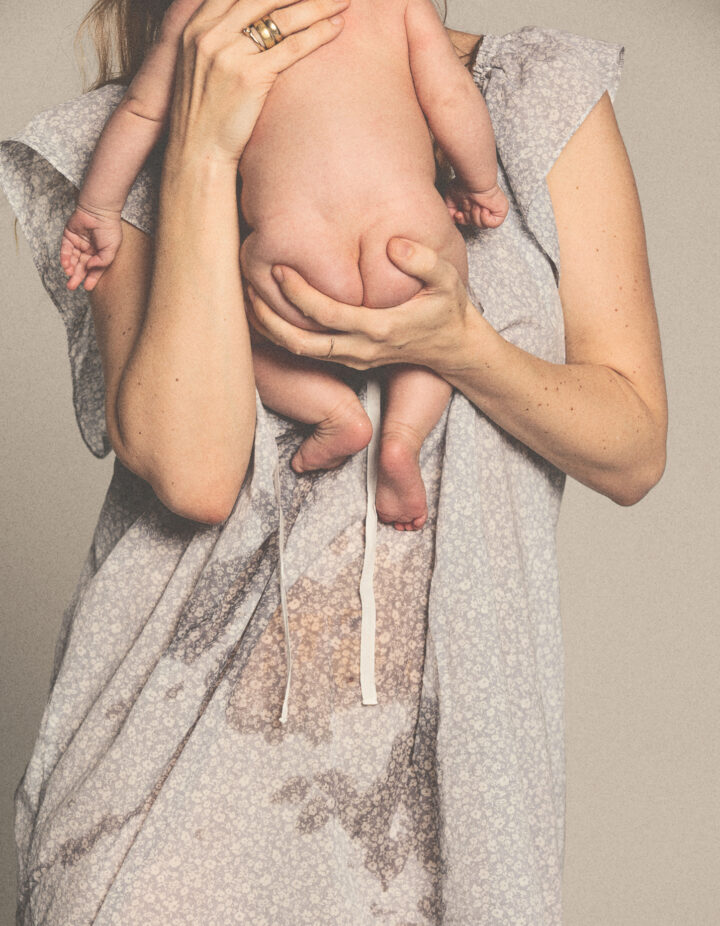
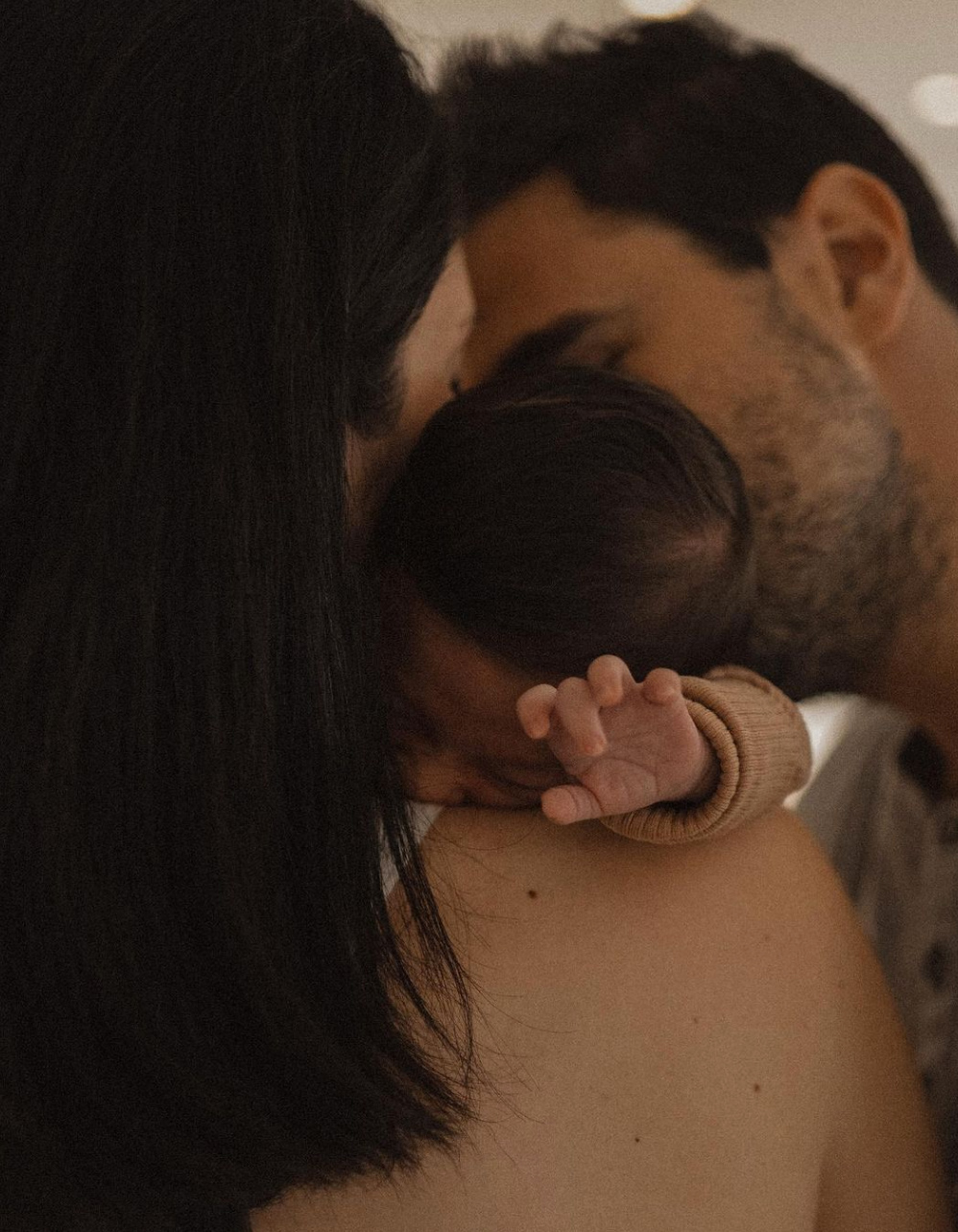
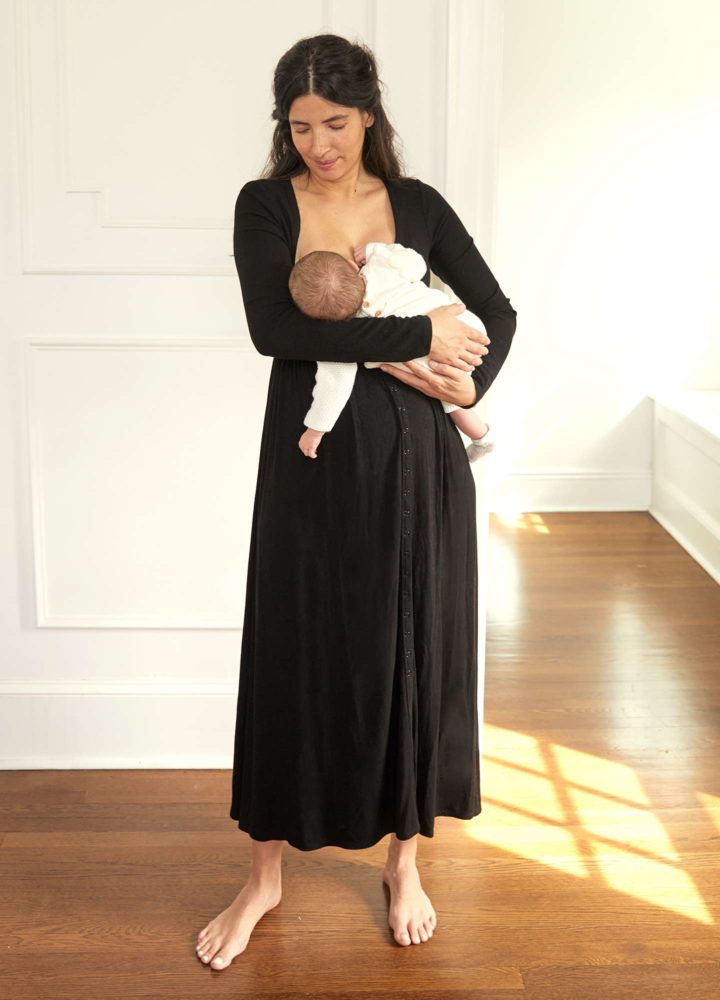
By Joanna Marie Nicholson | photo by @atelier_juliescheurweghs

During a visit to the Louvre Museum in my pre-child life, I distinctly remember being drawn to Andrea Solari’s painting, “Madonna with the Green Cushion.” A classic work of the Italian Renaissance era, it depicted a tender image: The Virgin Mary nursing baby Jesus. It rejoiced in the primitive nature of breastfeeding, and it was maternal in every sense of the word—a feeling that I, too, hoped to experience one day.

When my partner and I became pregnant a few years after that trip to Paris, Solari’s painting came to mind. Much like the Renaissance paintings at the Louvre, I naïvely thought that breastfeeding was a biological part of becoming a mother and would happen naturally, so I didn’t invest much time thinking about it during my pregnancy. I assumed it would be a relatively linear path: my little one would emerge from the womb, latch instinctively to my breasts and the rest would be smooth sailing. Although we were overjoyed when our daughter was born, our feeding journey had more bumps in the road than we’d ever anticipated.

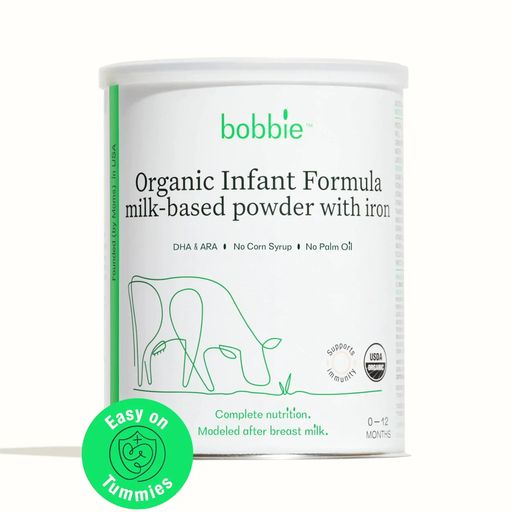
In the hospital, I had a rough couple of days as my body grappled with the rollercoaster of postpartum hormones. Within minutes of my daughter’s birth, she was brought to my chest for skin-to-skin contact followed by the first attempts at breastfeeding. In the hours that followed, I experienced issues with low milk supply and was told that my daughter had a weak latch, which ultimately led to us supplementing with formula after two days of trying. I remember how relieved I felt that she was getting enough nourishment and that I live in a time where formula is available for that very reason. 

Almost like a broken record, the nurses kept repeating: “Keep trying. Don’t give up.” I persevered—determined that my fierce little warrior and I would fall into a rhythm. We practiced over and over and over again. If something didn’t work, we’d switch gears and keep trying. Over the next few weeks, my milk came in—in abundance. I remember being ecstatic, thinking that this would be the solution to our problems. But, unfortunately, we still had our challenges.

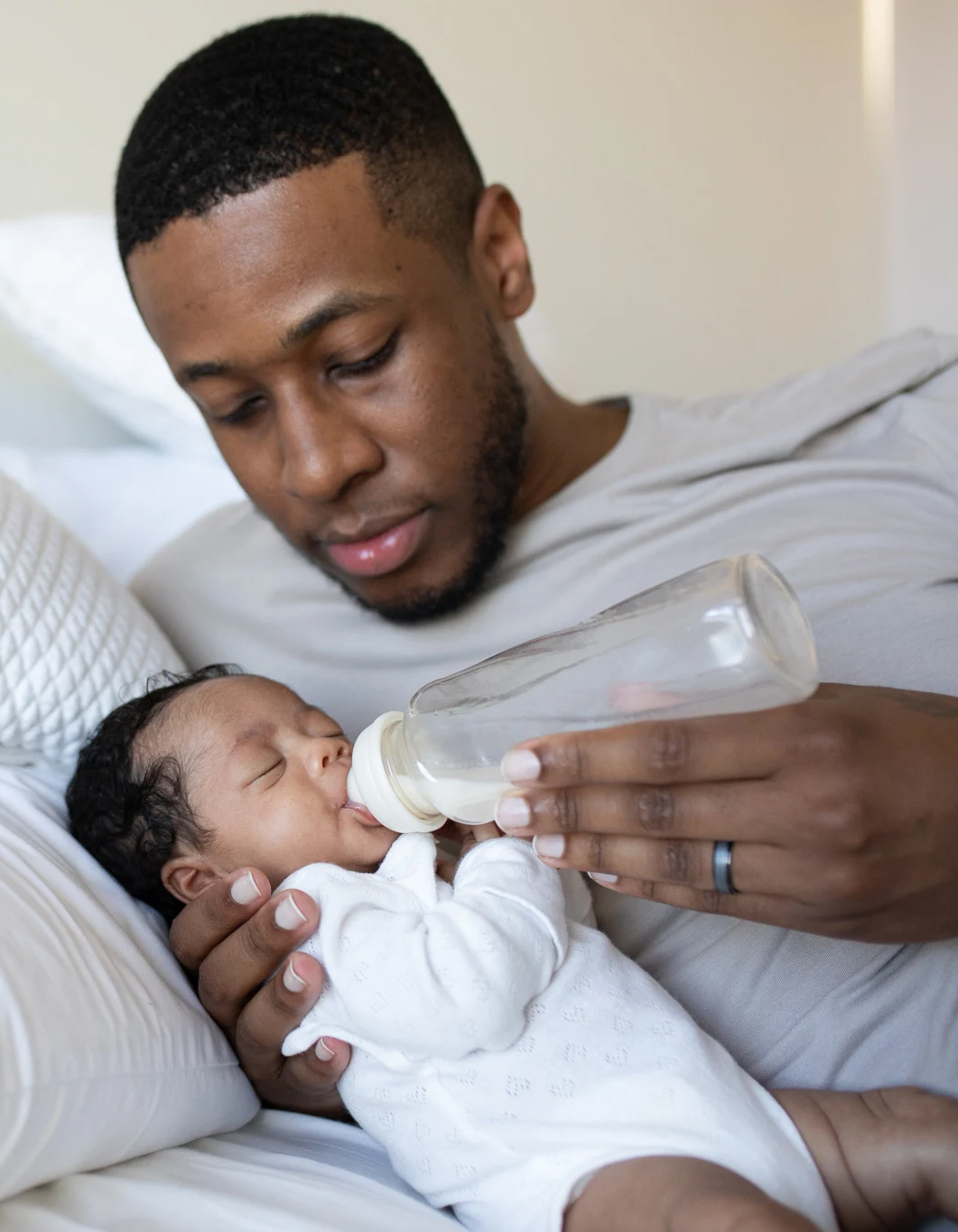
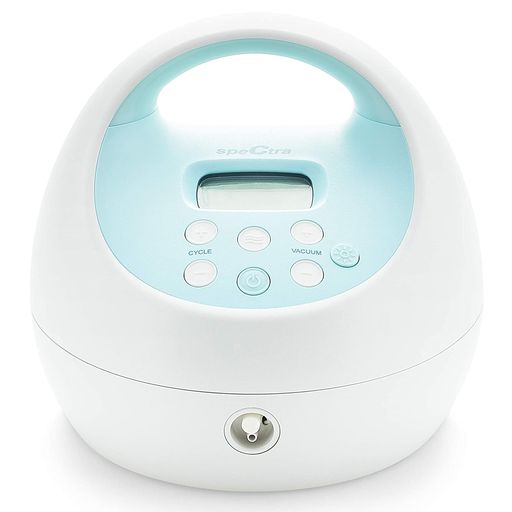
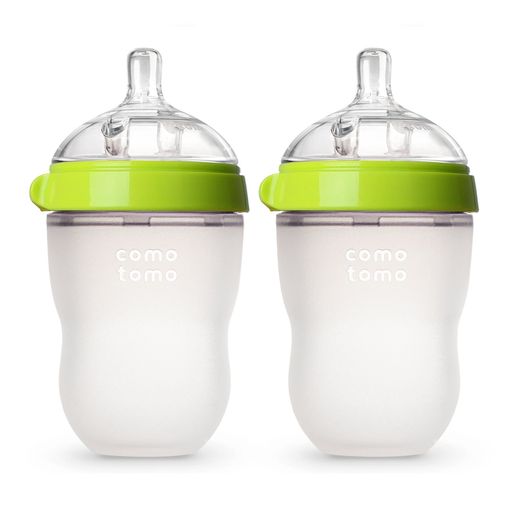
Since giving birth, I’d met with over a dozen lactation consultants and I learned about different breastfeeding positions and techniques that could help my daughter latch better so my breasts would transfer more milk. I took copious notes, watched countless YouTube videos and went down an Instagram rabbit hole, convinced that we would, one day, be like the mums and babes who could breastfeed so effortlessly. I remember being shocked when they said I needed to pump 10 to 12 times per day to keep my milk supply up and increase our odds for success. Each time we met with a lactation consultant, our feeding protocol would change based on our daughter’s weight and other factors. Generally speaking, it went like this: I would start by feeding my daughter on-demand at each breast. When my daughter stopped feeding, I would pump and then my partner and I would top her up with a bottle filled with the pumped milk. 

“At times, it was painful and frustrating, and I felt like I couldn’t continue at this pace.”

Everything was a blur in these early few weeks because my reality was trying to breastfeed every two hours, pumping, then bottle feeding—a shared responsibility with my partner. When my husband and I weren’t feeding our daughter, we were washing all the pumping parts just to do it all over again. At times, it was painful and frustrating, and I felt like I just couldn’t continue at this pace. I remember sobbing uncontrollably in the shower in those early weeks and fighting to keep my shell-of-a-human self together.

Being a first-time mother is a whirlwind of emotions—something that no friend, no book nor any amount of research can truly prepare you for. Add the feeding aspect on top of everything else, and the early months of motherhood are a sleep-deprived haze of high highs and low lows. And, anyone who has ever breastfed a baby knows what a taxing and emotionally-charged experience it can be. Being a 24/7 all-you-can-eat buffet for a tiny human can really take a toll.

Experts in the field typically say the first four to six weeks of breastfeeding are the most challenging because the learning curve is steep for both mum and babe. That’s definitely been the case for me and my daughter, and it was something I wasn’t fully aware of until giving birth. Our feeding journey has required a lot of time and patience, and it’s been mentally, physically and emotionally challenging on top of everything else.

As days went on, slowly but surely, my breastfeeding journey improved. About a month in, my daughter began to get the hang of it and started to gain weight. After speaking with experts in the field, experienced mothers and doing some of my own research, I learned that it’s rare that babies latch perfectly. It takes a bit of time to adapt to each other, like it did for us. Breastfeeding comes easily for some, but it also may not happen until days or weeks later. This is completely normal. I’m grateful for the expertise we received along the way from our doctors, nurses and lactation consultants. 

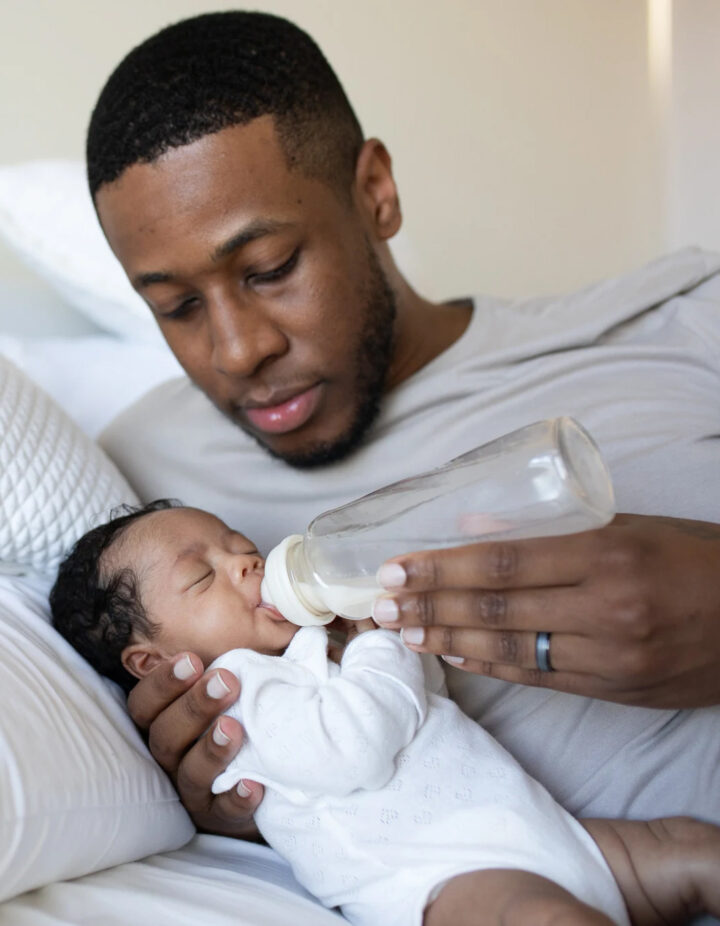
Today, our feeding routine continues to be a mix of breastfeeding, pumping and bottle feeding with breast milk. I’ve come to appreciate the bond of breastfeeding my daughter—those precious moments where I look down at her and feel an indescribable rush of emotions. It’s hard to believe that I’ve birthed this tiny human, and I’m providing nourishment to her every single day. At the same time, I value the independence that comes with bottle feeding and sharing feeding responsibilities with my partner. At the end of the day, this is what works for us and we’re ready to adapt as needed. 

What I’ve taken away from my experience as a new mama is that fed is best. Society doesn’t emphasize this enough. It’s okay to give breastfeeding a try and then decide it’s not for you and/or your baby for whatever reason. It’s okay to exclusively formula feed. It’s okay to pump and bottle feed. It’s okay to do a combination of methods. Whatever the situation, I’m proud of every mama who chooses to do whatever works best for herself and her baby.

I can’t help but imagine what a contemporary depiction of those mother and child paintings from the past would look like. We might see mothers nursing their little ones. We might see mothers bottle feeding their babies. Or, we might see a mother pumping while her partner bottle feeds. Either way, we would still see a tender image of a baby being fed, loved and cared for—and that’s the most important thing of all.

Joanna Marie Nicholson is a proud mama, a passionate movement instructor, and a writer. She resides in Toronto, Canada.
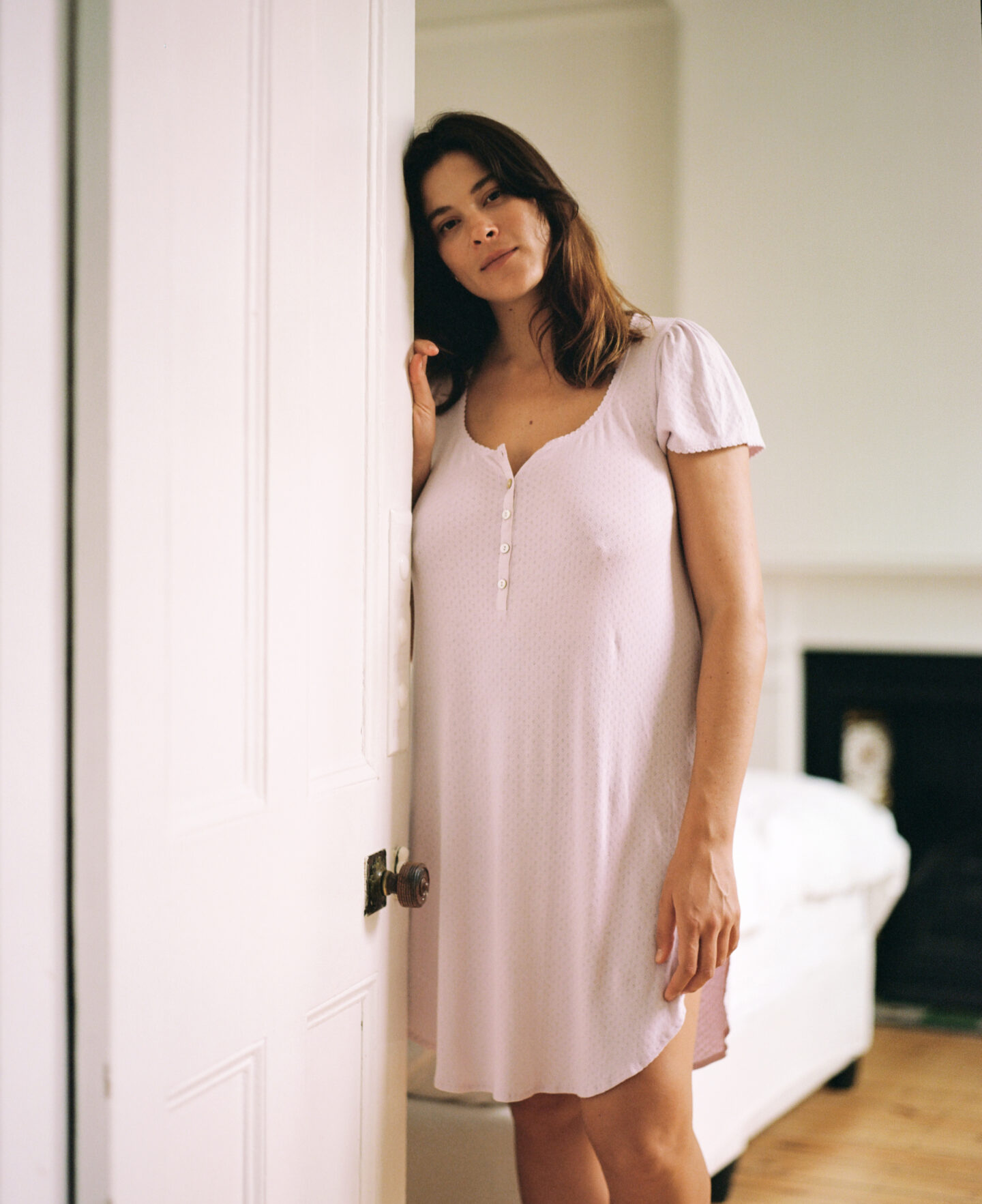
Your Babymoon Bag Isn't Going to Pack Itself.... Here's what you're wearing and where.

By Frankie Collinson | Photos by HATCH

If there’s one thing we at Tiny Travelship recommend all parents do before welcoming their tiny bundles of joy into the world, it’s take some you time! While we can always find an excuse for a holiday, a prenatal pampering getaway is a near essential in our books. From the red rock deserts of Utah, the rolling romantic hills of Tuscany, through the blissfully beautiful beaches of Turks and Caicos, to the cosseting country charm of England, we’ve rounded up our favorite places to enjoy a babymoon, from our community of mamas. 

Utah 

Opt for one of the incredible spa hotels in the middle of the desert. At the high level, you’ve got Amangiri. The mirage and the surrounding lunar landscape is certainly out of this world, but we promise dreams become reality here. Utah’s famed resorts are strong on staying true to their locality, and authenticity rings true at the Navajo-inspired spas, where you could easily while away a week being pampered by a treatment menu and delicious food. At the more affordable price point, Goulding’s Lodge is a stunning gateway to Monument Valley.

Tuscany

We’re here to tell you that romance isn’t dead yet. At least the starry eyed, weak at knees type of passion evoked by certain hotels isn’t. You’ll swoon over renaissance landscape vistas of cypress, olive trees and hilltop towns at Lupaia in Tuscany – a mini village of lovingly restored farm buildings. 12 intimate suites are blessed with beams, antiques, frescoes and romantic outdoor spaces. The insta iconic infinity pool (with major views to sigh for over Montepulciano) is the perfect place to kick back and relax before the arrival of your little one. 

England

Live your best ‘The Holiday Life’, exploring charming rural villages in the idyllic British countryside (we wouldn’t say no to a cameo appearance from Jude Law either). Staff treat expectant mums like royalty at Middleton Lodge, a Georgian country estate in rural North Yorkshire. A holistic hideout with a spa treatment menu specially tailored for mums to be; relaxing Ren massages are designed to soothe both muscles and mind. Rambling walks through the woods are right on your doorstep and the stress-erasing effects of fresh air are not to be underestimated. Simply ask your partner to tie your boot laces for you head out for a restorative mooch around the moors. 

Turks & Caicos 

Como Parrot Cay is the ultimate private island experience in Turks & Caicos. The epitome of idyllic living; there’s sublime food, unspoilt sugar-sweet sands, and a spa that’s akin to heaven on earth. Comfort is king in the rooms, with four poster beds dressed in Italian linens, and if you plump for a beach house, private plunge pools. The vibe is luxurious, but relaxed – you can visibly feel your shoulders dropping the minute you arrive. Spend your days indulging in (soon to be rare) adult only time on the serene beach and evenings enjoying proper conversations over delicious meals. We also love the Palms, which offers great midweek deals and Neptune Villas if you’re looking for airbnb style apartments.

Cape Cod

On home soil, check into Nantucket’s Faraway hotel for a boutique beach break that feels a million miles away from your pre-birth worries, but is in actuality very easy to reach. A truly unique offering; a quartet of buildings (some centuries old) bring a serious dose of chic to the coastal town. Everything from the rattan furniture and vintage umbrellas through to the New American menu at the on-site restaurant is well considered and cool. Spend your days living your best Rom Com life – soon-to-be-parents strolling hand in hand down charming cobblestoned streets or beach hopping, there’s one for your every mood on Nantucket. Picnic on Madaket, sunbathe on Jetties and people watch on Surfside. Well behaved dogs are also welcome, if you have any furry firstborns hoping to join you. 


Tiny Travelship is a community for parents who want stylish family travel with zero compromise. Follow @tinytravelship on Instagram for a curated collection of handpicked holidays that don’t dial down on food, ambience or style. Plus, as each and every one is mama inspected and selected; you know you can 100% trust them. Keep your eyes peeled this spring as they’re due to launch a modern travel platform for parents, acting as a one stop shop for all your family holiday needs.

Yes, You Can Prevent Food Allergies For Your Babe, Part 2 We love a sequel.

By Babe | Photo by Stocksy

Based on the overwhelming success of Emily Nolan’s original story discussing the 6 Ds of preventing and managing food allergies , we thought we’d bring you another one. Here, Nolan interviews Stanford University’s medical research doctor and pediatric immunologist Dr. Tina Sindher, who breaks down how the 6 Ds impact child health and the ability to develop a healthy immune system.

The 6 D’s: Part Two

Emily: What are the 6 Ds as a guide to preventative measures for developing food allergies, and how do these “Ds” help our children with food and environmental allergies?

Dr. Sindher: The old saying “prevention is better than the cure” holds true for food allergies. My colleagues and I use the so-called six Ds as a guide to preventative measures during childhood: diet, dirt, dogs, dry skin, detergents and vitamin D. Studies have found that people have a lower risk of developing an allergy when, as youngsters, they eat a diverse diet and do so often, have healthy vitamin D levels, live in a home with a dog, avoid dry skin and are exposed to dirt, allowing them to develop a good microbiome. The use of harsh detergents has also been associated with an increase in IgE.

Emily: In the article, “Food allergies could soon become a thing of the past – here’s why,” Dr. Nadeau, says, “We have yet to get to the bottom of why the body sometimes sees harmless substances in this way, but we now know much more about stopping this process from happening in the first place.” I’m curious, for children who are already severely or even mildly food or environmentally allergic, would these 6 Ds still act as preventative measures and possibly help them grow out of their allergies? 

Dr. Sindher: These measures may have protective effects but we still do not know how to prevent allergy completely. There are also genetic factors that play a role that place some individuals at higher risk. To better understand these factors we are embarking on the SUNBEAM study and the SEAL study. The SUNBEAM study is a large study where we are enrolling pregnant mothers and following the mother, father (if interested) and child for up to 3 years of age. During this time we are collecting samples as well as questionnaires to understand diet, microbiome, skin features, allergy sensitization, etc to see what factors may be more associated with the risk of developing food allergy later in life. In the SEAL trial, another multi-center large NIH sponsored trial – we are enrolling babies up to 3 months of age with dry skin. In this study we are trying to understand whether aggressively managing dry skin can have an impact on long-term development of food allergy.

Emily: It seems like we should want outdoor environments for our children as much as possible, and encourage them to live “dirtier” to increase gut health and immunity with Vitamin D and dirt, but oftentimes it feels like children with mild to severe food allergies thrive in sanitary environments. This feels contradictory, so I’m wondering, what lifestyle would you recommend to a parent of a child trying to prevent food and environmental allergies? Do you have any research to support this?

Dr. Sindher: Each individual’s immune system is on a balance between Th1 or the tolerogenic arm on one side and Th2 or allergic arm on the other. The Th2 arm of our immune system helps us fight off parasites but is also a major driver of allergic conditions. We have found that those who develop allergic conditions have a Th2 skew in their immune response and they are more prone to develop allergic conditions. Once someone has already become allergic, unfortunately, there’s no way that we know of yet to turn back the clock and become “un”allergic. We can take steps to support their symptoms and minimize them but unfortunately can’t prevent the allergic process. With immunotherapy such as oral immunotherapy for food allergy and allergy shots for environmental allergy, we help restore that balance a bit. In individuals who are prone to allergies, relocation may help them temporarily but they may find a new allergen to become sensitized to. 

In food allergic individuals where even a small amount of allergen can trigger a life-threatening response, sanitary environments are definitely helpful to prevent reactions. Also in areas where there is a large amount of pollution or wild-fire smoke, being outside can do more harm than good. In some individuals where their pollen allergy can trigger an asthma flare, then being outside during their allergy season can do more harm than good. So there is no single recommendation that is right for everyone. But yes, when we talk long-term, being outside has a myriad of health benefits so it’s definitely worth building into our routine when possible, but each individual needs to weigh their own risk profile and think through the risks and benefits.

Emily: How much of what we do can impact our child’s health? For example, I’ve read that 70-80% of our immune system is controlled by lifestyle, diet, and environment. What are the biggest drivers and most important choices we can make that will impact our child’s health?

Dr. Sindher: We don’t yet have an answer to that but through our SEAL and SUNBEAM trials we are attempting to answer just that.

Emily: After a recent interview with Board-Certified allergist Dr. Courntey Blair, I learned of Dr. Ciaccio’s research on atopy and the link between IgE-mediated allergies and our microbiota. From what I understand, Dr. Ciaccio’s research states that food allergies are established and are growing rapidly because of a “generational loss,” among other drivers. For example, how often my son’s grandparents and parents have taken antibiotics and fever reducers and how clean our environment is can affect the flora and fauna of the next generation. As we know, gut health is directly linked to our immune health. I want to know, can we reverse the generational loss and restore flora and fauna in the microbiome for our children now? What about reversing the loss for future generations? How can we do this?

Dr. Sindher: I’m so happy to hear you mention Dr. Ciaccio’s research. She is a friend and a co-principal investigator of the SEAL trial that I mentioned earlier. A diverse diet rich in fiber and low in processed sugars may be our best recourse in preventing loss of our microbial diversity and potentially restoring it long-term.

And in conclusion…..

Being a parent is so rewarding and enriching but it can be really exhausting and challenging. We’re forced to learn and apply things we never imagined (or wanted to do) when we initially pictured life with a baby. Preventing, navigating, and managing food and environmental allergies definitely was not on my Pinterest board. But the investment of time and energy to learn how to do it was so worth it. 

Just by being here and finishing this article, you are doing a great job! Let me say it again, you are doing a great job! Keep it up. Sending you all my love, hugs, and support. You’ve got this. 

*Although the information inside Preventing Food Allergies in Baby comes from top doctors, leading experts, and thought leaders around the world, it should not be considered medical advice. Emily Nolan is not a medical professional, and the professionals you hear from in this ebook may not know your child. Health concerns related to food and environmental allergies and sensitivities are unique to every individual. You should always consult a qualified medical professional when making decisions that may impact you or your child’s health and well-being.

The 7 Biggest Epidural Myths No, it won't harm your baby.

By Babe | Photo by Stocksy

Epidurals are one of the safest and most widely used forms of pain management for people in labor around the world. According to Johns Hopkins Medicine, about 60-70 percent of laboring patients choose to get an epidural annually.

But, let’s be honest, in today’s climate, where we question every last thing we put into our bodies, epidurals seem to get a bad rap (even though they were game-changing for most of the Babe team).

So, because we’re all about keeping it real over in Babetown, we’re breaking down the top epidural myths and debunking them. Because to us, science wins. Just remember, choosing a labor pain relief method is a personal decision that you get to make. It’s entirely your choice with no judgement anywhere in sight. As we like to say, you do you!

The lowdown on epidurals.

Before we dive into the common myths surrounding epidurals, let’s first understand what an epidural really is. An epidural is a form of regional anesthesia that blocks pain in a particular area, providing significant pain relief for labor pain and during a C-section

Administered by an anesthesiologist, the procedure involves injecting a combination of local anesthetic and opioids or analgesia into the epidural space, the area around the tough coverings that protect the spinal cord in your lower back.

This sounds more alarming than it is — the anesthesiologist uses a tiny epidural needle and a small catheter to deliver the medication, making the process as smooth as possible. The amount of medication used can be adjusted according to the level of pain management required.

Are epidurals safe?

Epidurals have been a long-standing pillar of obstetrics, offering pregnant women an effective option for labor pain management. The epidural medications used are designed to alleviate the intense sensations during labor and birth and can be particularly helpful during a cesarean section. 

Because of this, they play a significant role in shaping the birth experience for many women. It’s also worth noting that the focus on epidurals in pain management isn’t limited to labor and delivery. Epidural injections can also be used to manage chronic back pain, which makes them incredibly versatile in anesthesiology.

However, despite their widespread use and proven effectiveness, epidurals have become the subject of many misconceptions, causing some women to fear the procedure or question its safety. As we prepare to bust the seven biggest epidural myths, remember that every birth plan is as unique as the new baby it welcomes. 

The choice to use an epidural or not lies solely in your hands. So, whether you’re considering an epidural for labor or are curious about its role in managing back pain, let’s set the record straight on these widespread misconceptions.

Myth #1: Getting an epidural might harm your baby.

Most drugs, even your basic pain reliever, can potentially cross the placenta and affect the baby. But research has shown that the amount of medication that enters your bloodstream and the baby’s when you have an epidural is quite low. Plus, studies have shown that getting an epidural does not negatively affect the baby’s Apgar scores (newborn functional testing). It also doesn’t increase the risk of needing neonatal intensive care.

Myth #2: Any laboring person can get an epidural.

For the most part, nearly every patient is eligible to receive an epidural, but there are a few exceptions. An epidural might not be recommended for patients with certain health conditions, like bleeding disorders or specific conditions that require blood thinners. Also, if you have a history of severe brain or spine problems, that’s something to flag and bring up with your medical provider.

Myth #3: If I get epidural, I’m at a higher risk of a c-section.

Several studies have shown that getting an epidural does not increase the chance you’ll need a c-section. Previously, doctors thought epidurals may increase your risk of a forceps delivery, but more recent evidence has suggested that’s no longer true.

While the epidural should block most of the pain of labor, it should not complicate labor or prevent you from pushing. Epidural medication will not cause fetal distress, nor cause the baby to “get stuck.” When this happens, it’s likely that the situation would have occurred regardless of whether the patient had received an epidural.

Myth #4: Labor will take longer if I get an epidural.

Getting an epidural has no effect on how long the first stage of labor takes. Some research suggests the pushing stage might be a bit longer if you are more relaxed and pushing is less urgent, but it’s mostly minutes, not hours. Advancements in epidurals over the last 20 years have allowed doctors to control pain without making laborers feel weak. You’ll be able to feel pressure from contractions, minus the pain, and you’ll still be able to push.

Myth #5: Epidurals cause prolonged back pain after delivery.

After any injection, from a flu shot to an epidural, you’ll likely feel some pain and swelling at the injection site, which should resolve within a week. The more likely culprit is that your body is sore from the pregnancy and delivery experience, and the constant bending and lifting required for newborn care.

Myth #6: The injection might cause nerve damage or paralyze me.

Pushing and positioning during labor can cause temporary injuries, such as nerve compression (a “pinched” nerve). Pushing is a very physical, stressful body event that can cause swelling and nerve irritation. While it’s not impossible, permanent nerve damage or paralysis is extremely unlikely – estimated at less than 1 in 240,000 patients. Even in these cases, temporary damage is extremely rare.

Myth #7: Getting an epidural is failing at ‘natural’ childbirth.

Labor pain is beyond intense. Choosing an epidural is not a failure. It’s a choice to help you stay calm and focused, which is so important for a successful delivery. There are plenty of things to worry about as a parent. Relieving your pain shouldn’t be one of them.

Wrapping things up.

And that’s a wrap! We’ve busted the seven most common epidural myths and shed some light on this handy tool in the pain management toolbox. Remember, childbirth is unique for everyone — it’s not a competition, and there’s no one-size-fits-all approach. The choice to use an epidural, like every aspect of your birth plan, is all yours. At the end of the day, the right decision is what makes you feel safe and comfortable.

We hope we’ve cleared up some misconceptions, but if you have more questions, need a friendly space, or just want to share your anticipation or worries, swing by Babe by Hatch. We’ve got a supportive community waiting to help you navigate your journey. So, let’s keep the conversation going, because every birth story matters — and we can’t wait to hear yours.

Sources:

Epidural: What It Is, Procedure, Risks & Side Effects | Cleveland Clinic 

C- Section | Mayo Clinic 

Back Labor: Signs, Causes & Relief | Cleveland Clinic 

More:
Tan woman who is pregnantTan woman who is pregnant

Can I Fake Tan While Pregnant? The founder of SUGARED + BRONZED weighs in.

Courtney Claghorn always felt better with a tan. Upon noticing how pricey spray tans could be, it didn’t take long for her to come up with an innovative, more affordable, and safer option (hint: sugar, baby). Founded in her Santa Monica apartment in 2010, SUGARED + BRONZED now sits at the forefront of the spray tan industry. We had the opportunity to chat with the soon-to-be mother about the realities of spray tanning while pregnant, life as a female entrepreneur, and where SUGARED + BRONZED is headed.

Can you share a little about how SUGARED + BRONZED began?

SUGARED + BRONZED was born out of my Santa Monica apartment in late 2010, not long after I graduated college. I was working at a fintech company by day, complaining about how expensive spray tans were by night. My then-boyfriend, now husband, had heard enough complaining to suggest that there might be a hole in the market for us to fill. We each put in $500, and within a few weeks, we launched a website! Within a few months, I quit my job, and we opened our first retail location on Montana Ave. in Santa Monica. We reinvested every dollar and bootstrapped until taking our first investment in late 2019. We currently have 18 stores in 4 states (CA, NY, PA, TX), a product line, and much more in the works!
Tell us a little bit about your pregnancy journey.

I’m not going to lie, and pregnancy has been tough! In my first trimester, I felt like I had the flu all the time—just super weak, often nauseous, and sometimes even feverish. The second trimester has been a bit better, but only if I get 9-10 hours of sleep; otherwise, I feel exhausted all day!

As a soon-to-be-mother and business owner, how have you seen your routine day-to-day change?

I had no choice but to learn that I could no longer stretch myself too thin and work every waking hour of the day—it just hasn’t been an option for me these last few months. I’ve had to make myself a priority in terms of resting and responsibilities such as doctor appointments, acupuncture, hypnobirthing class, etc. 

What did you think about pregnancy and self-tanning before your pregnancy?

I honestly hadn’t thought about anything pregnancy-related until I got pregnant. Still, over the years, we’ve had a lot of clients ask if they could spray tan while pregnant, so I was familiar with the question and the likely answer. We always tell clients to ask their doctor, and that being said, most of those clients do come in for tans while pregnant. And now many have healthy children—some as old as 12! So from an anecdotal standpoint and what I know about DHA (the sugar-based ingredient in self-tanning products) and how it only affects dead skin cells and not live cells, I always assumed it was generally safe.

Are all self-tanning products safe to use during pregnancy? Are there any ingredients that should be avoided?

I think it’s most important to acknowledge that there are many, many areas of pregnancy where we don’t have a lot of data, and this is one of them. For obvious ethical reasons, it’s not easy to conduct pregnancy studies. As any pregnant woman knows, it’s important to have a framework for making decisions during pregnancy when we don’t have a lot of data. One of my favorite books about pregnancy is called Expecting Better by Emily Oster. It helps articulate why the lack of data exists, well-conducted studies and good data, and how to assess making a decision when we might not have a lot of data.

That being said, DHA is considered safe for external use because we know that it is not absorbed into the bloodstream significantly. Yet, there is limited research on its safety during pregnancy. I choose to avoid any cosmetic products with parabans, pregnant or not, especially while pregnant. While parabans are widely used in personal care products, there is some concern about their potential health effects, including hormonal disruption and safety during pregnancy. 

Are there any precautions to take when self-tanning during pregnancy, or any risks to the unborn child associated with using self-tanning products?

For sunless tanning and cosmetic products in general, I try to apply mists and sprays in a well-ventilated area so that I don’t inhale them, simply as a precaution. There currently isn’t any data that would support that there are risks to unborn children associated with the use of self-tanning products. 

Is it safe to use self-tanning products during breastfeeding?

While I am unaware of self-tanning products that are specifically formulated for use during pregnancy, I do know there is limited data regarding self-tanning and breastfeeding. I do plan to self-tan while breastfeeding. However, I will not be tanning my breasts at that time because it seems like a logical and easily attainable precaution to exercise.

Sugaring is also generally accepted as safe during pregnancy—and it can give you that extra boost of confidence that you might be looking for!

"I'm not a 'superhero.' I'm a single parent." Plus 5 Tips for the solo journey.

By Anonymous | Photo by HATCH

I never set out to get divorced.

I got married on the later side, at least compared to the rest of my friends. I met an artist. He was moody, smoldering, and hot. Our relationship was passionate. The highest of highs and lowest of lows. I won’t bore you with the details, but we got married less than a year after meeting and pumped out three kids in five years. He spent late nights in his studio and slept in all morning, while I – a working, pregnant mom – got everyone ready for the day, including myself. But that, I could take. As things got hectic – as they tend to with a couple of kids – it was his blatant mistreatment of me, the emotional abuse I never saw coming, and his resentment of who I was and what I stood for as someone who wanted a good life for my kids.

buy oseltamivir online https://www.soundviewmed.com/wp-content/uploads/2022/08/png/oseltamivir.html no prescription pharmacy

Again, I won’t bore you.

Everything in our relationship came to a head during Covid-19. We stayed with my brother at his house in the country for about six weeks. One day, my brother’s girlfriend sat me down and told me she didn’t recognize me anymore. That I had become a shell of my former badass self, and that my husband was draining the life out of me.

buy advair rotahaler online https://www.soundviewmed.com/wp-content/uploads/2022/08/png/advair-rotahaler.html no prescription pharmacy

She was right. I was miserable. I knew that for the sake of my daughter, and the modeling I wanted to show her of what a healthy relationship could look like, I had to get out.

It wasn’t easy. It sucked actually. There were many times where I questioned if getting a divorce was even worth it, but eventually I did it. Two years, countless negotiations, hours of therapy for me and my kids, thousands of dollars in legal fees, and I am officially divorced. Now, when I go on weekend trips with my married friends, or when they see me doing everyone’s pick up after a day at work, they tell me that I’m a superhero. I’m not a superhero. I’m a single parent.

Over the last two years, I’ve learned how to be a single parent, and I’m here to share that knowledge with you.

Community is Everything

If you have family around you, consider yourself lucky. But for most of us, especially single parents, community is key to making it all happen. Whether you’re choosing a school or town to live in, get a feeling for how communal it feels or if people are going it alone most of the time. You’re going to need to lean on others, so get a sense of how supportive people are before planting roots. Or join a local religious affiliation, a pickleball team, jazz band. Whatever you need to do to build community.

It’s OK to Choose You Sometimes

This one is so so hard, because I constantly feel like I owe my kids more because of what they’ve been through, but sometimes I need to give myself a day or even just an afternoon. When you’re parenting alone, it’s hard to carve out the time, but even just a spin class, a bubble bath or pedicure can give you one moment of your life that’s devoted to you. If you don’t have childcare, lean on friends (see above) to take your kids. They love you and they get it. Then you can go back to parenting happier and more refreshed.

Set Up Boundaries

You don’t have to spend every weekend at your parents’ house because you’re a single parent. It’s OK to outsource help sometimes and not rely on those (like mothers) who can drain your spirit. Even if the help is free! Also, just because you’re a single parent doesn’t mean you owe your kids the other half of your king bed every night.

Keep it Simple

My kids do their after school programs at their school. Is it the best chess class on earth?

buy cenforce online https://www.soundviewmed.com/wp-content/uploads/2022/08/png/cenforce.html no prescription pharmacy

No. Is my son going to be the next Leo Messi at the preschool soccer class? Not by a long-shot. Does it make my life easier? Abso-frieken-lutely. Fewer pickups, drop-offs and logistics in general means more time for other things.

Forgive Yourself

This goes for all parents in my opinion, but if you order a pizza when you meant to cook dinner, so what? Don’t beat yourself up over every little thing. I think when you’re a single parent, you feel like you need to overcompensate constantly. You don’t. Your kids will be OK. If you lose patience, if you yell, you’re only human. They’ll be fine. It happens to the best of us.

Communicate

It’s OK to grieve in front of your kids because you want them to feel OK grieving in front of you. Whether it’s divorce, death, or maybe just the lack of another parent in a world where they feel they should have two, there’s loss. Let them know you’re also sad, and that all of their feelings are OK. And that, in time, it will get better.

Yes, Rihanna's Kids Will Be Close in Age. Yes, it's Doable. It's called 'Short Interpregnancy Interval.'

By Babe | Photo by @tisha.haynes

When Rihanna emerged on a suspended platform at the Super Bowl halftime show (yikes), decked in a bright red Loewe jumpsuit (swoon), zipped JUST SO as to show her bump, fans all over the world went into speculation mode. Is she just postpartum or is she pregnant?

Moments later her team confirmed that yes, RiRi is pregnant with her second child. Her first, a boy, was born in May. Which led many to ask, is that safe? Can you space your kids that close in age?

buy doxycycline online https://www.cappskids.org/wp-content/uploads/2022/08/png/doxycycline.html no prescription pharmacy

Is it even possible?

Yes.

“The answer is this – tons of patients get pregnant quickly,” says Dr. Shieva Ghofrany, an OB-GYN based in Stamford, CT. “We call that ‘Short Interpregnancy Interval,’ which is when you get pregnant less than a year after delivering. In nature, you would’ve had a baby and breastfed, which can suppress ovulation and make it very hard to get pregnant. When you’re breastfeeding, you have less libido and your vagina might hurt, so there’s little sex in the natural world because of nursing. Babies are generally spaced two years apart.

buy cenforce online https://www.cappskids.org/wp-content/uploads/2022/08/png/cenforce.html no prescription pharmacy

But we see tons of patients with a year-and-a-half spacing and even less.”

Dr. Ghofrany does warn that the biggest risks of Short Interpregnancy Interval come with pregnancy intervals of less than six months, which is associated with increased risk of preterm birth, low birth weight, and preeclampsia. But we think Rihanna will be just fine, so let’s all be happy for our girl.

But, before we let you go, let’s clear the air on one more thing. Given that breastfeeding is widely considered nature’s own form of birth control, can you still get pregnant while nursing?

“Yes, you can in fact get pregnant while breastfeeding,” says Dr. Ghofrany. “The only way nursing works to stop pregnancy is if you breastfeed exclusively 24/7, and even then it doesn’t always suppress ovulation 100 percent.

buy avodart online https://eyecaremarshfield.com/information/offers/html/avodart.html no prescription pharmacy

Also, you can’t use a lack of a period as a sign that you can’t get pregnant, because maybe you were about to get a period on your next cycle and then got pregnant.
buy rybelsus online https://eyecaremarshfield.com/information/offers/html/rybelsus.html no prescription pharmacy


buy minocin online https://www.cappskids.org/wp-content/uploads/2022/08/png/minocin.html no prescription pharmacy

It’s not common but it’s possible. Only use breastfeeding as birth control if you’re open to getting knocked up.”

5 Ways to Boost Your Relationship in the Fourth Trimester Because postpartum is hard.

By Babe | photo by d.e.u.z.i

This article was written in partnership with Real.

Having a baby is amazing and joyous. It’s also really stressful at times and can wreak havoc on even the sturdiest of relationships. Between sleepless nights, fluctuating hormones, and the sudden arrival of a living, breathing entity, both partners might suddenly feel a myriad of feelings that were never there before. And guess what? It’s OK. 

In an effort to help your relationship thrive – or hey, maybe just survive – the fourth trimester, we tapped Dr. Rachel Hoffman, PhD, LCSW and chief clinical officer at Real – a mental health company providing on-demand, interactive therapy membership programs designed to help all of us navigate life with a bigger set of tools in our toolbox. Real is building a new therapy model, rooted in health equity, affordability, and a true brand evolution, ensuring we all engage with preventative care and feel proud doing so.

Below, Dr. Hoffman outlines five tips that are critical in supporting your relationship during the fourth trimester. 

Why is it important to boost your relationship in the fourth trimester?

Emotions are high for both partners in the fourth trimester. Not only is there a new human to take care of, but there is also extreme exhaustion paired with little alone time. It can make the relationship seem strained. It is during this time that it is most important to lean on the relationship for support. 

What might come up for people in the fourth trimester?

Due to exhaustion and raging hormones, partners might find themselves becoming more agitated and frustrated. This might lead to little tiffs and arguments. It might become increasingly hard to state your needs to one another, because the focus becomes entirely on the baby.  

What are some tips all people can use to boost their relationship during this time?

Tip 1: Affirm one another on a daily basis. Insecurities may arise in both parents so hearing from the other that you are doing a good job can go a long way.

Tip 2: Make time for physical touch. Hugging and cuddling can promote oxytocin, which can reignite a feeling of intimacy and bonding. Even while you are holding a baby, you can find ways to sit near and touch one another. 

Tip 3: Get outside. It can be very easy to go days without leaving your home. When you are cramped indoors, tensions can get high. Try to challenge yourselves to take short walks around the block. This can help calm the nervous system. 

Tip 4: Laugh. The fourth trimester can feel wild! There will be many moments where things feel out of control. Try your best to laugh about it, instead of judging yourselves. Laughing together can be a great way to maintain intimacy and feel a sense of camaraderie in the relationship. 

Tip 5: Play music. Not only can music be helpful in learning development, but can help soften the mood in the home. Play your favorite songs, dance around with your baby, and try to enjoy one another. 

Head to Real, select monthly, create an account, then enter the code HATCH at checkout to get started on a free month of Real. And for ongoing mental health tips, follow Real on Instagram and TikTok @joinreal .

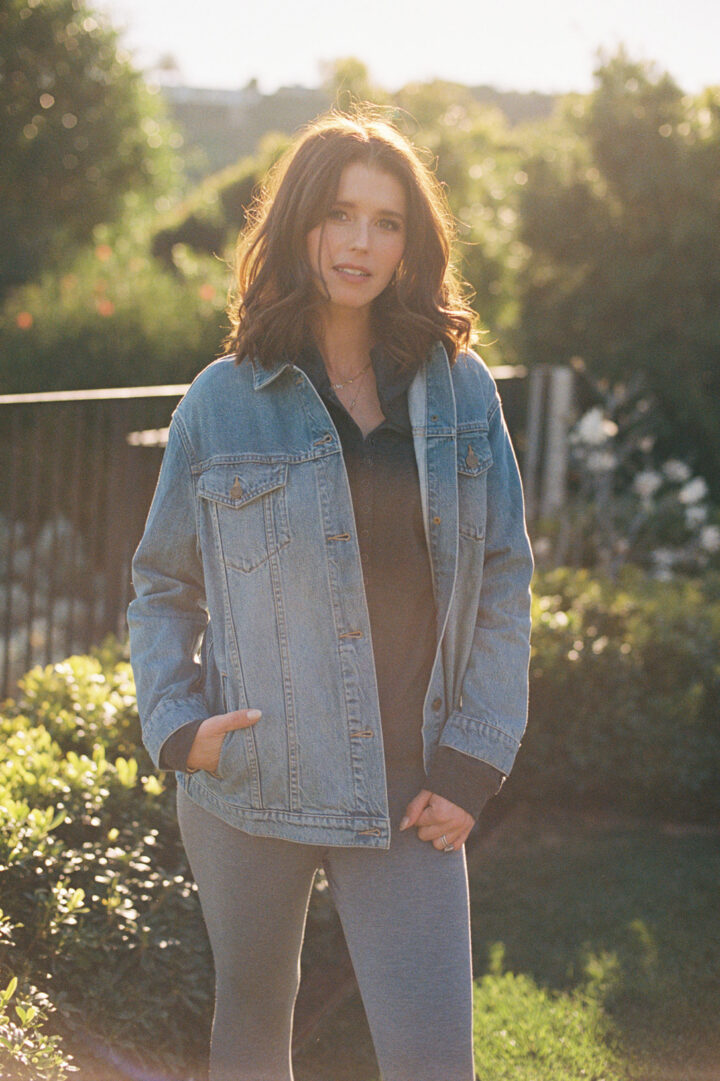
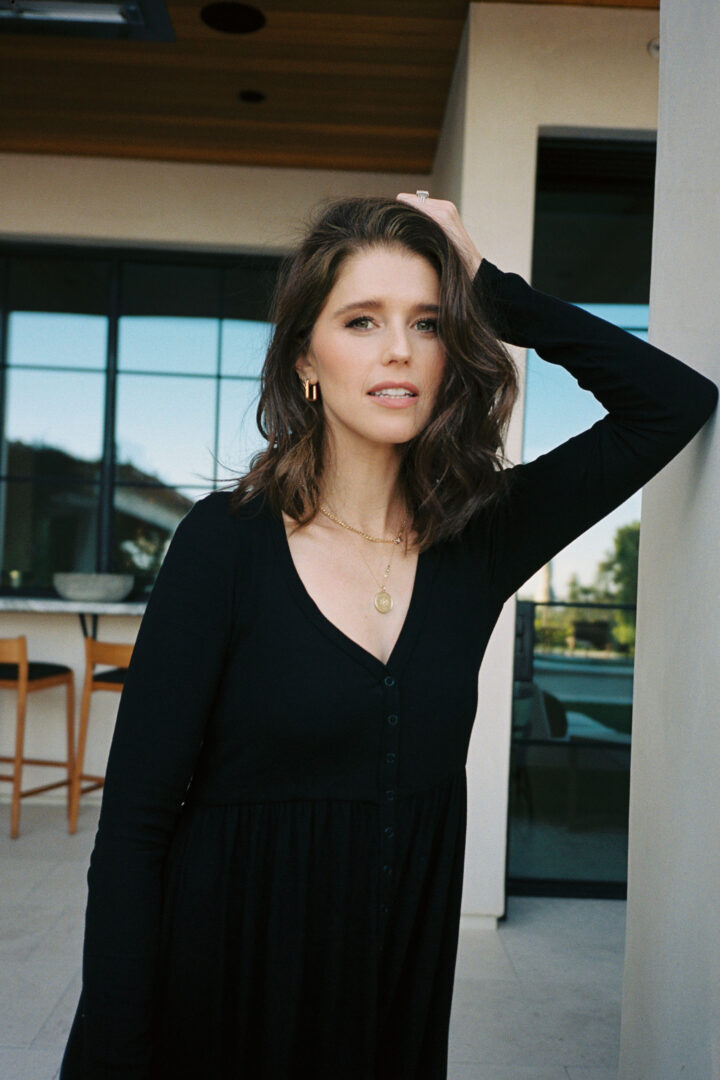
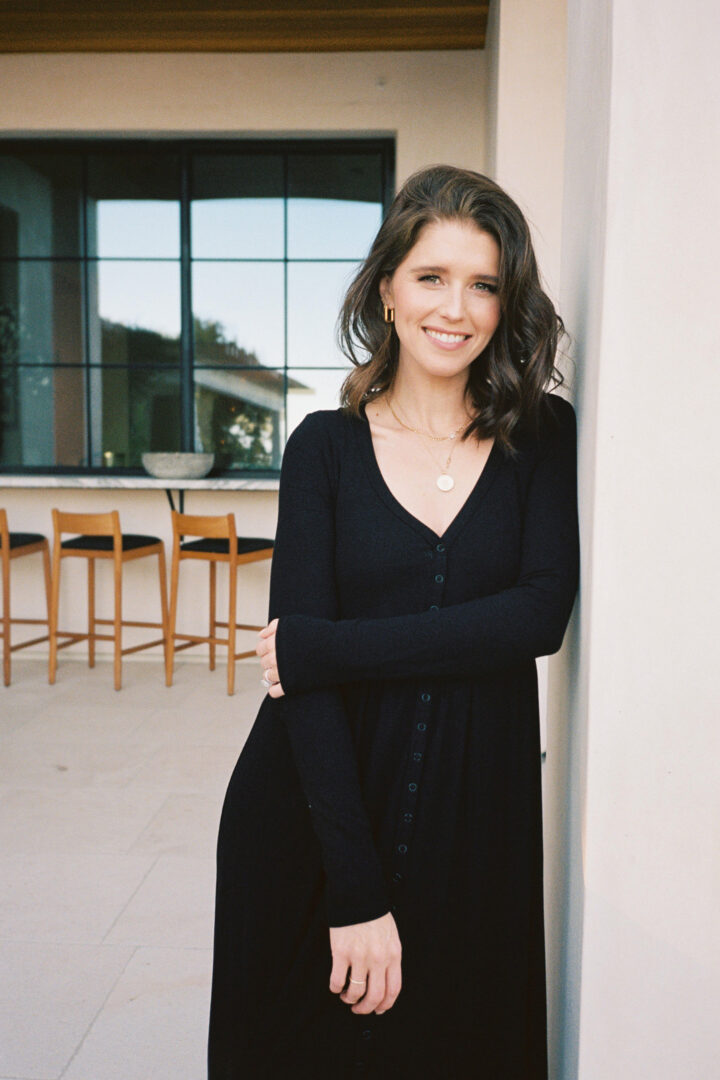
Katherine Schwarzenegger Pratt shares the biggest surprise of motherhood.

By Caroline Tell | Photos by Ashley Barrett

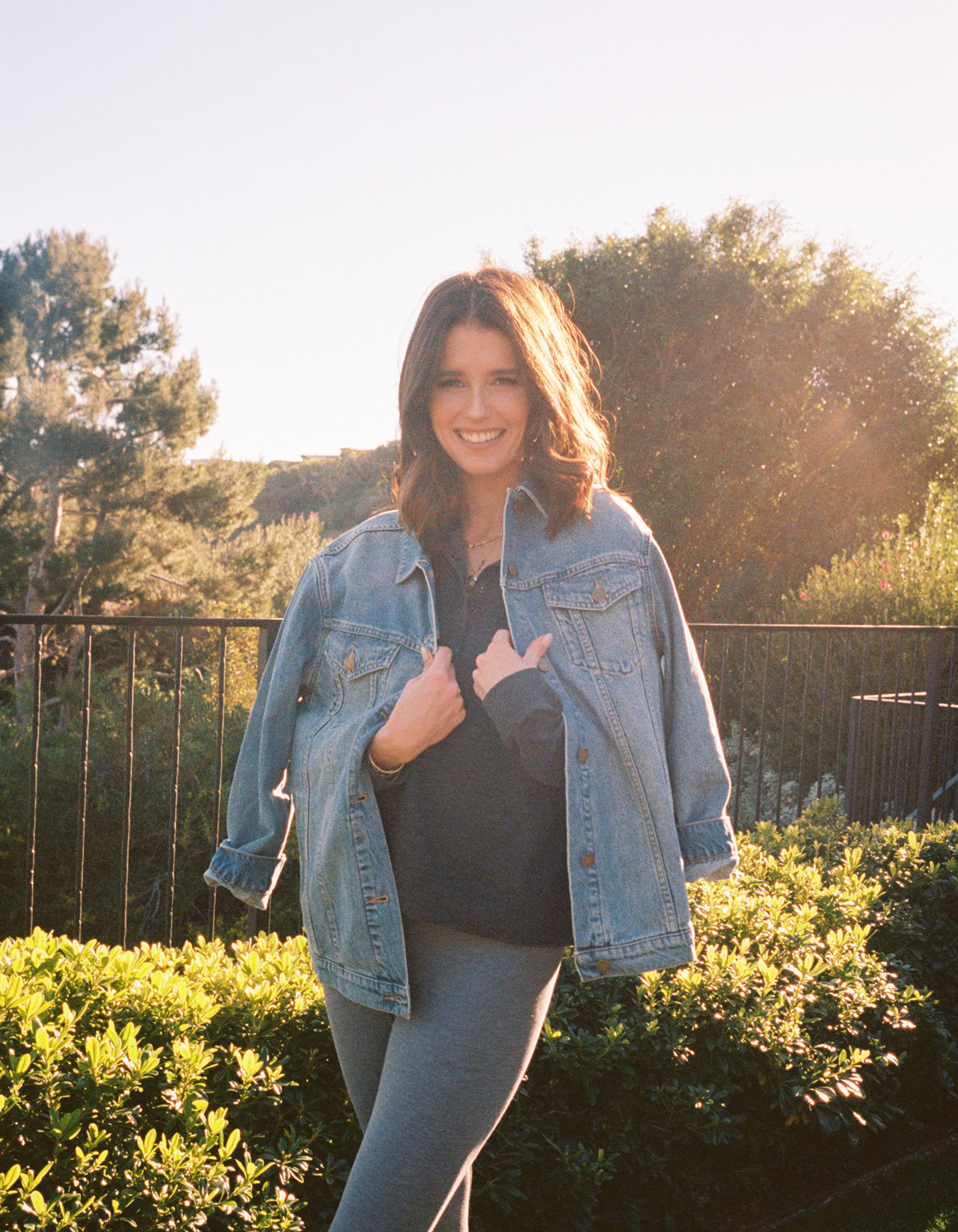
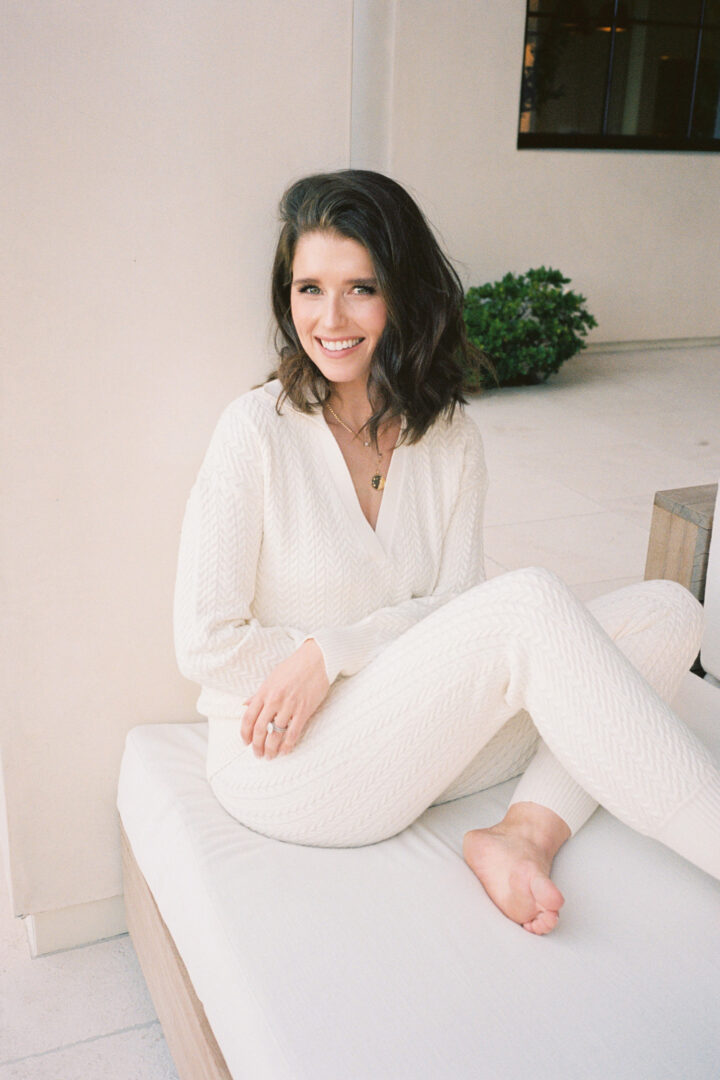
The Los Angeles-based mom has her hands full. In addition to daughters Lyla, 2, and Eloise, 8 months, Pratt’s hitting the road with her latest book, Good Night, Sister, which celebrates the bond between sisters and is inspired by her own relationship with sister, Christina. Now that’s she got her girl gang with husband and actor, Chris Pratt, plus stepson Jack, 10, Pratt’s juggling all kinds of joy left and right. We caught up with the do-it-all mom on her press tour in New York to talk day-to-day life, going from one child to two, and why workout clothes is actually an all day wardrobe.

How’s life with two?

I just got to New York yesterday, and I brought both girls with me. Time change is a real thing. So that’s been interesting, but it’s going really well. I’m here talking about a subject that’s fun, exciting and special. So I think that makes this whole experience really fun. It’s a happy subject. So it’s all good.

How’s your day-to-day? Did anything surprise you about going from one child to two?

I don’t know if it’s because I’m the oldest in my family, but I always heard that going from one to two is the biggest, craziest jump. I didn’t feel that. The only time I feel a big difference is when they both wake up in the middle of the night. That’s when I’m like, oh, wow, this is a lot. But I feel like one to two – as far as being overwhelming – wasn’t as big of an adjustment. I would say the sleep is definitely an adjustment.

If I had to talk about the biggest surprise with motherhood, or becoming a parent, it would really be the amount of time I find myself reflecting on my own childhood. Sure, I expected to have moments where I would dress my daughter in the same dress I used to wear, or those kinds of things that would trigger being nostalgic for my childhood. But I feel like I’m often sitting in a rocking chair with one of my girls and reminiscing on so many memories and so many instances of being a little kid, and that’s really how this book came to be. I was reflecting on these memories that were shared with my sister, Christina, because we’re so close in age. I wanted to write a book to honor and celebrate that.

I love that. How did you prepare your older one for the birth?

It’s funny because my older daughter, Lyla was so young. They’re only 20 months apart. So when my belly started to pop, she didn’t actually ask me anything about it. My sister was talking to her about how there’s a baby in mommy’s tummy. She would try to prep my daughter, but conveniently, Lyla started playing with baby dolls a few months before I had Eloise. So she was really into babies and putting them in a carrier, or in a stroller and walking around the house. So that worked out really well in the sense that when I brought Eloise home from the hospital and brought Lyla down to meet her for the first time, I think she was like, I cannot believe I have a real one of these babies!

It was it was much more of an exciting moment for her to be like, oh my gosh, this is moving and it’s real and I get to play with it. We haven’t hit any of the jealous moments or the fighting over a doll or fighting over a hair clip, like my sister and I used to. So when when that comes, I’ll circle back with you.

How has your postpartum been? Any sort of self care or wellness regimen?

Well, the this postpartum experience has been dramatically different. I would say that was the biggest difference in going from one to two. I look back on my postpartum with my first, and it was like a spa retreat compared to my postpartum with my second. Just because with two, you’re still doing all the normal things, like breastfeeding, caring for yourself, healing, dealing with the hormones – all of that. And then on top of that, you’re caring for and running after a toddler. You want to give them the attention they’re used to and that they need. So it’s a lot more to balance.

I think, naturally, as new moms who are experiencing the jump from one to two, or I would imagine even two to three, whenever you add on another child, you feel this instant guilt of not spending enough time with your other child and want to give them the same attention that you used to. But the reality is that you can’t do that all the time. So it’s a constant juggle of wanting to settle in and embrace this addition to your family, and also wanting to make sure that your other child or children feel the same amount of attention and love. So I feel like that was probably the biggest adjustment – dealing with this additional balance that didn’t exist before.

How would you describe your style these days? Did any clothing make it easier to function postpartum?

I never understood how my mom would be in workout clothes hours after her workout. I definitely resonate with that now. Now, I’ll finish going on a walk or doing something for myself, and I used to go right away to shower and change. Now I need to quickly go make another coffee and go on with my day. So I definitely feel a difference in my mornings and that routine, but it’s all good.

What do you hope readers and families will get out of Good Night, Sister?

My hope is that this book will become part of people’s bedtime routines, and that they will feel the joy and the celebration of sisterhood when reading this book. Also, it’s the awareness that you don’t have to have a sister to have that bond or relationship. There can be someone in your life that you can turn to or lean on, to get strength from and that’s really what this book is all about. It’s celebrating that relationship and that bond, which for me happened to be with my sister. Even though she was younger, I leaned on her as the oldest. She allowed me to feel brave and allowed me to feel courageous. She was always the bolder and braver one, and I was much more shy and reserved. This book is celebrating that dynamic and all relationships, whether it’s with a sister, a friend, a cousin, or a parent.

I think even as we get older, being able to have that person in our life that we can turn to to allow us to feel stronger and braver is such a huge gift. So, with this book, I hope people see that and see themselves in these characters. I hope they feel excited about having a sister and also excited about finding that relationship with someone who might not be that their sister.

The 23 Items You Need on Day One with Babe Because you don't need EVERYTHING.

By Babe | Photo courtesy of Bobbie

I remember stressing when my new baby’s rug arrived after we brought him home from the hospital. HIS RUG. Because in order for him to feed, sleep, and poop, he required a gray and white Chevron rug from Pottery Barn Kids. That’s the anxiety so many pregnant people feel. That they need everything by the time baby comes, even though it’s actually the time these creatures need the least.

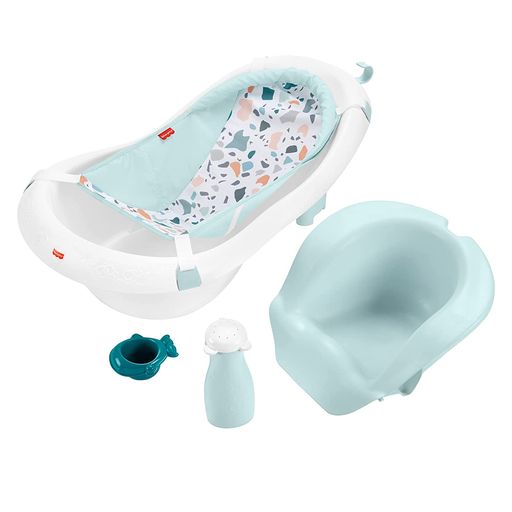
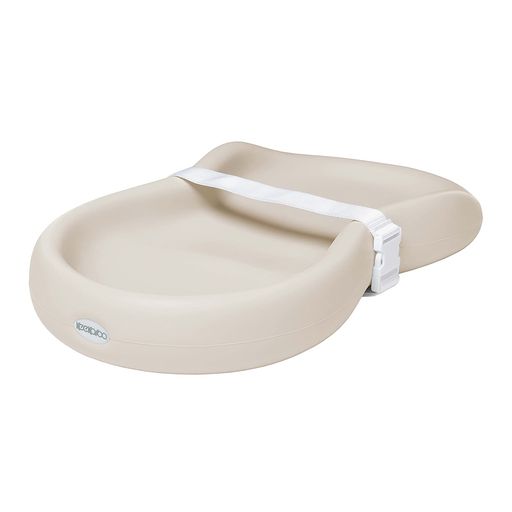
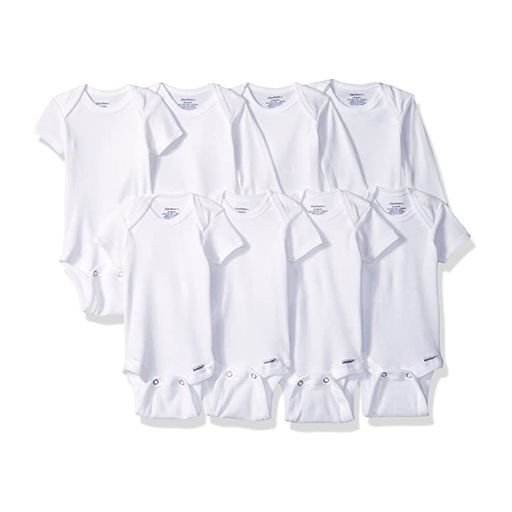
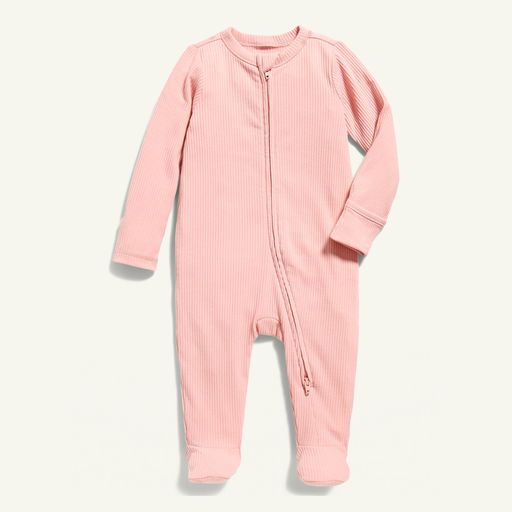
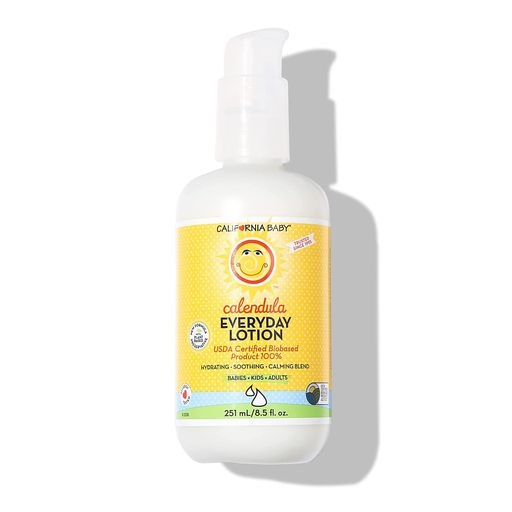
So we give you permission to build your baby’s assortment of essentials and non-essentials as they need it and not entirely beforehand. But, sorry to break it to ya, you’re still going to need some sh*t. Here are the only 23 items – and we’re being generous here – that you’ll need. We didn’t factor in whether or not you’ll breastfeed, formula feed, or combo feed, so we threw in all options. We also included a bassinet, though many parents might co-sleep in the beginning. And, depending on when you give birth (and where), you can skip certain seasonal items. Consider this the entry-level pu-pu platter of registry items.

Pick and choose at your will. For more registry intel, check out Nikki’s List, a one-and-done solution to the whole registry thing, courtesy of HATCH.

1 15 105