"I Feel Too Traumatized To Go Through Labor Again." Discover Birth Trauma Rewind.

By Babe | Photo by HATCH

Birth trauma can be hard to define. It can sneak up at the strangest of times, and it doesn’t look the same for everyone.

According to writer and birth trauma expert, Parijat Deshpande, Birth trauma is defined as “any experience that a birthing person has at the time of labor and delivery that feels unsafe or threatening and is encoded as such in the body.”

Deshpande goes on to say that when we’re unable to restore physiological safety after the moment of threat passes, the survival stress gets trapped inside the musculature, fascia, joints, and sensory systems where it can later manifest itself in various ways for weeks and even years following the experience.  

That’s where Rewind comes in. The ‘REWIND’ technique is a non-intrusive, safe and highly effective psychological method for de-traumatizing people, especially around birth. It’s performed once a person is in a state of deep relaxation and always with a trained emotional health provider.

Birth Trauma Rewind is comprised of three stages.

The first stage is deep relaxation. Once a patient is fully relaxed, they’re encouraged to bring their experience to the surface and then are calmed down again by being guided to recall or imagine a place where they feel totally safe. Then, their relaxed state is then deepened and they are asked to imagine that, in their special safe place, they can watch themselves watching the birth or traumatic event that is still affecting them. The “film” begins at a point before the trauma occurred and ends at a point at which the trauma is over and they feel safe again. Then, they are then asked, in their imagination, to float back into their body and experience themselves back in the event – they can do this part as many times as they need.

The technique is safe, quick and painless, and doesn’t require the person to discuss the event or analyze it, meaning that it prevents them from being re-traumatized which is something that can happen when the person keeps repeating their birth story.

Rewind doesn’t remove the memory. It simply lets the emotions around it be what you choose them to be – so you could say for example you want to be calm and at peace with your birth experienced. It also helps to gently reduce and calm dominating emotions that are triggered when recalling a memory.

Rewind Technique for birth trauma and loss therapy is for anyone who has experienced a difficult birth recently, or even many years in the past. It is also for those who would like another child but are too fearful of birth, and those who are pregnant but have fear over the birth of a previous child.

It can also used this technique for miscarriage and loss.

What's an Erotic Affirmation? Peep our 5 favorites for hotter sex.

By Foria | Photo by Stocksy

Foria was founded with a mission to bring more pleasure to more people with all-natural and organic formulas for your most intimate needs.

It’s 2023, and even though it’s already February, it’s still a great time to make a joyous, intentional commitment to choosing yourself and your pleasure. 

A revolution, not a resolution – affirming, not condemning. It’s about having more fun, and orgasms, and intimacy, and the physical and mental wellbeing that arises from having all the great sex you want. 

Here at Foria, we know that pleasure and connection lie at the heart of vibrant wellness. So we designed our Sex & Intimacy Collection to support hot sex – because it feels good, and it’s good for you.

So this year, consider decluttering some bedroom habits you may not even be aware of – that could get in the way of the pleasure, joy and fulfillment (and lots and lots of orgasms) you deserve. 

New Year, New You (In Bed)

These affirmations are a starting point! Try keeping a journal of the thoughts, feelings and ideas that arise when you consider your intimate patterns and how you express yourself sexually. You know yourself better than anyone when it comes to pleasure – and you’re in charge.

Affirmation one – I will communicate my needs and ask for what I want.

Even when I’m worried about being rejected, even when I’m nervous, even when I’m not sure how to express myself. And if I need a little time, space and patience to identify what I want and need? I’ll ask for that too!

Affirmation two – I will learn what I need to get to an enthusiastic “yes.”

During a sexual experience, I’ll check in with my body, my heart, and my mind. I’ll make sure I’m saying “yes” to physical intimacy that honors all the parts of me. If I’m not at that “yes” yet, I’ll share what I’d need to get there – or ask for something that would feel even better for me.

Affirmation three – I will commit to understanding my own pleasure via intimacy with myself.

I’ll actively build a relationship with my own pleasure through masturbation and loving self-touch. If my masturbation routine has become, well, routine, I’ll change it up – maybe with a new tool or toy, or with my own hands (and maybe an arousal oil) if tools and toys have become commonplace. 

Affirmation four – I will not endure!

I will no longer allow sex to continue if it’s painful, uncomfortable, boring, or if I’m just not enjoying myself. I’ll stop prioritizing my partner’s enjoyment at the expense of my own, because the habit of enduring can dampen my libido and put my own pleasure out of reach. And when in doubt, use more lube.

Affirmation five – I will explore the potential of fantasy.

Many people have one or more core themes that we always find erotic, but draw a blank when asked to name a specific fantasy. This may be because we take our turn-ons for granted, and it’s time to check in with them. I will ask my turn-ons to tell me a story, and let them take me on an adventure – for my pleasure, for my partner’s if I have one, and for the potential of transformative self-knowledge.

Any time is a good time for erotic affirmation. 

Valentine’s Day is fundamentally an arbitrary date, chosen by some ancient dudes a long time ago (we can’t even be bothered to look it up). Just because it’s a traditional time for personal change in Western culture, that doesn’t mean it’s the right time for you.

So if you need to drop a pin in it and come back to these tips on Memorial Day, or your birthday, or Arbor Day – do! It’s all about you, growing in pleasure on your own terms, no matter what the calendars (and the listicles!) say.

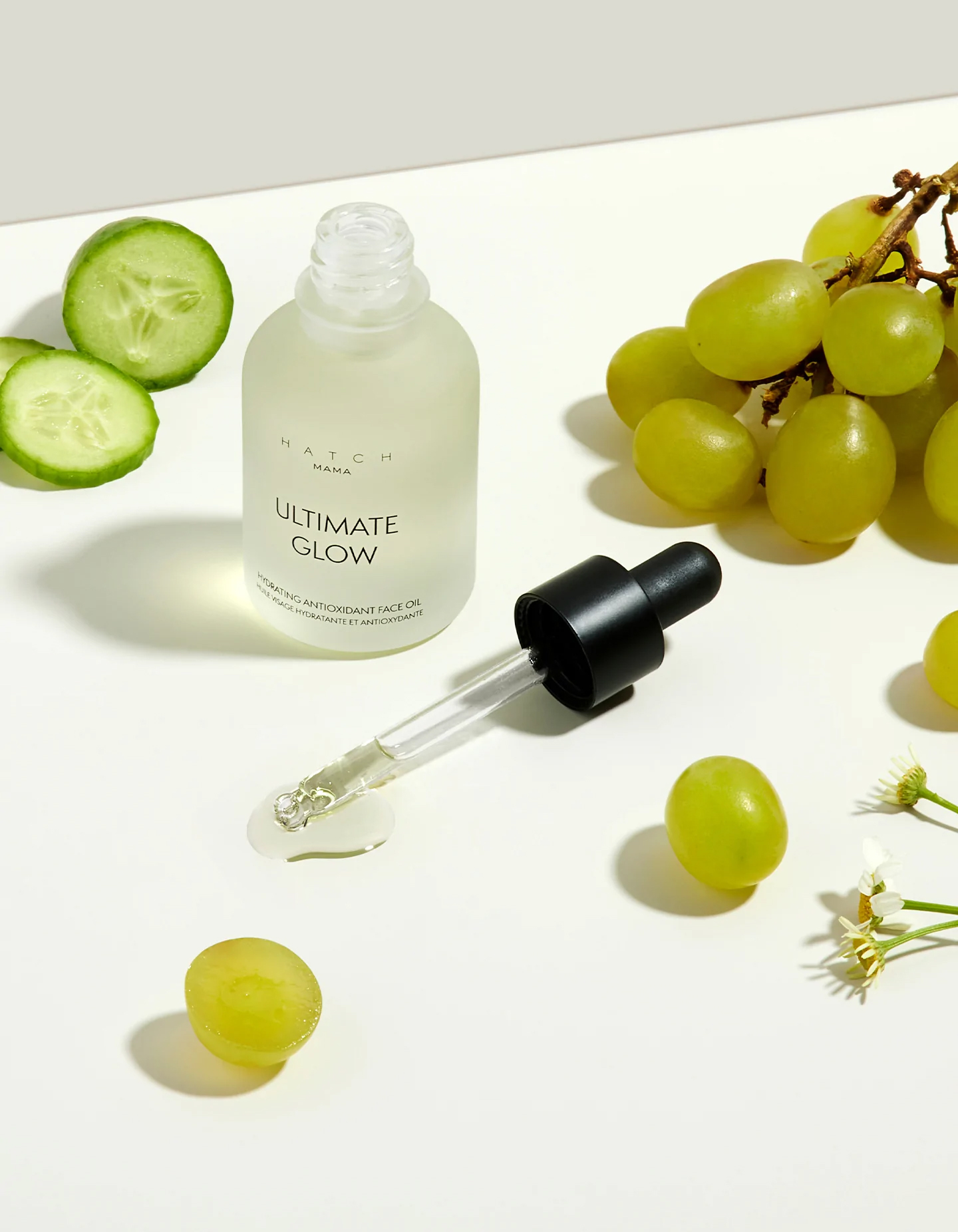
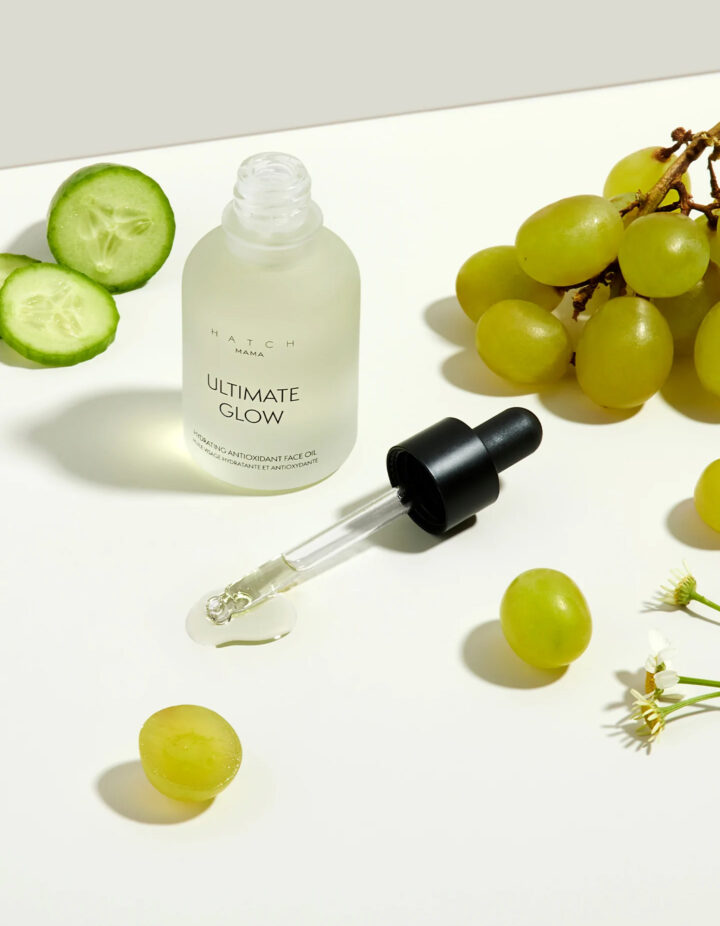
"This face oil has been a game-changer for my hormonal skin." Hello, Ultimate Glow.

By Babe | Photo by HATCH

“The second I got pregnant, my skin became ridiculously dry and sallow looking. Obviously I had to hit pause on my nightly retinoids for cell turnover, my salicylic acids for exfoliation, and all my hardcore formulations that kept me clear and glowing. I thought I was destined to look like sh*t for the rest of my pregnancy.

Then my beauty-obsessed bestie who had just given birth suggested I try this antioxident face oil by HATCH MAMA called Ultimate Glow. She said not only does it replenish and hydrate, but it delivers minerals, fatty acids and nutrients for calmer, more supple skin. I figured why not. I wasn’t convinced it would help, but I was pleasantly surprised when I woke the next morning looking like I had the “pregnancy glow” I kept hearing about. I even felt radiant. Ultimate Glow quickly became my prenatal go-to, and now, six months postpartum, it hasn’t moved from the VIP section of my beauty cabinet.”

– Emily B., Brooklyn, N.Y.

This Jacket Is The Ultimate Maternity Twofer It works under your coat on entirely on its own.

By Babe | Photo by HATCH

Sure, you can just wear your heavy parka for the rest of the winter. But these days, with nary a snowflake in sight, we’re all about rocking the very on-trend winter layering move, where we pair a lighter jacket beneath a heavier coat to reach optimum warmth without all the bulk. After all, when you’re 17 months pregnant, aren’t you bulky enough?

Take, for example, the Emi Quilted Bomber by HATCH. An updated play on the classic bomber jacket, this baby’s got cool cotton quilted detailing and side zippers that allow it to grow with you from month to month, but it’s streamlined enough to fit under a trench, pea coat, or that heavy coat you’ve barely touched this season. Best of all? Come springtime, you’re good to go with your new favorite warm weather jacket, and maybe even a baby, as well. Talk about a winning proposition.

Can I Have Sex With My Baby in the Room? And will I scar them for life?

By Babe | Illustration by Ana Hard

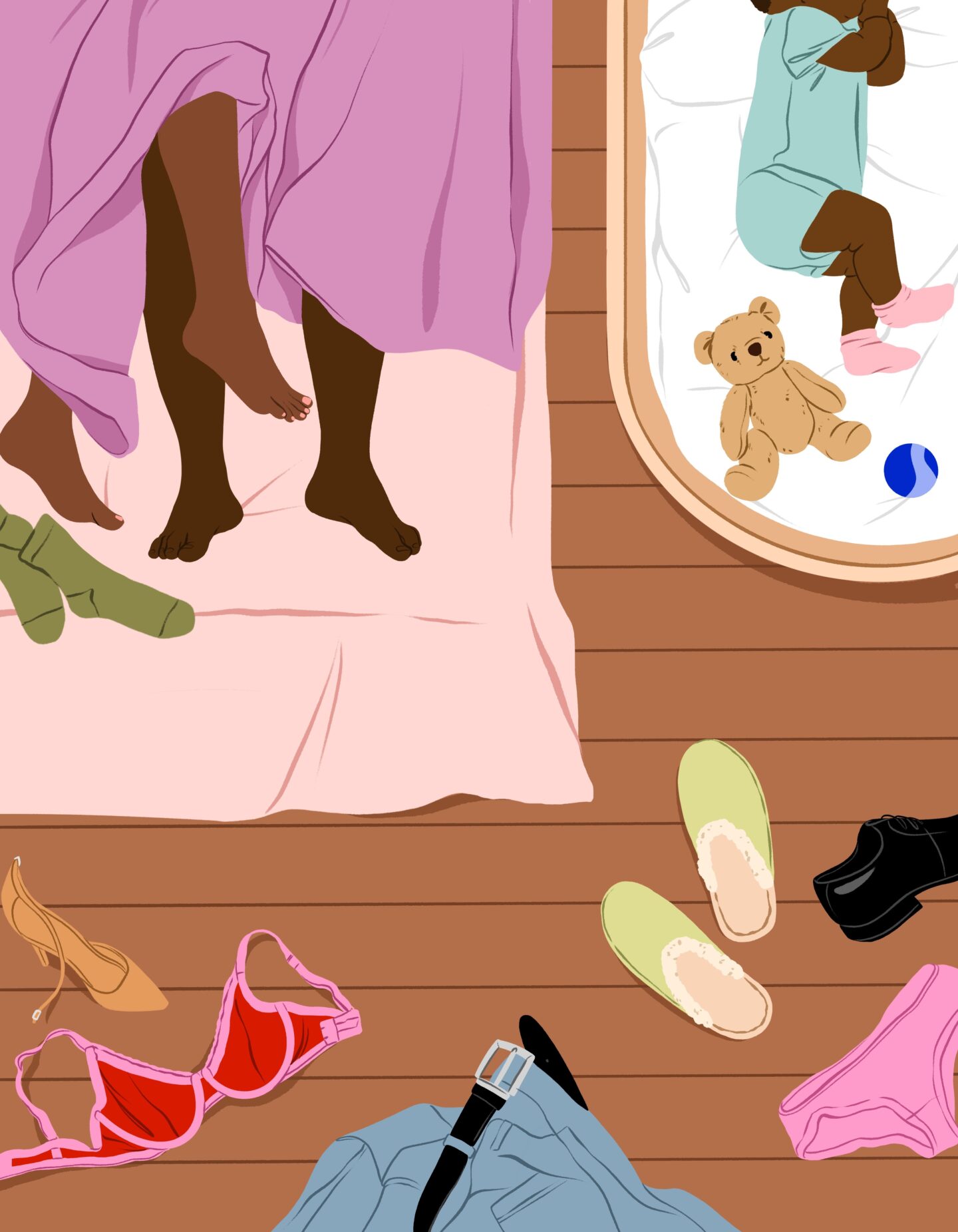
Whether you’re room sharing with your babe when they’re three months old or three years old, there will come a time when you ask the age-old question: can I have sex with my child in the room?

The straightforward answer is yes! Though, it does depend on a few things. (Namely, how light of a sleeper is your child, and how loud are you in the sack?!)

While we fully endorse the idea of getting a little freaky deaky with your infant within arms reach, it will depend a lot on your own comfort level, how you’ve adjusted your sleeping arrangements, and, like we said, how soundly your babe sleeps and how loud you and your partner can get. So is it fine to have sex with your child in the room?

buy tadalista online http://s838374115.onlinehome.us/wp-content/uploads/2022/08/png/tadalista.html no prescription pharmacy

Yes. Is it OK if you’re not comfortable with the idea? Also yes.

According to Parents.com, if the idea bothers you, try to be quiet and quick with it. Maybe put the Kama Sutra book down and forego the marathon reverse cowgirl move you were working on before you got pregnant.

buy stendra online https://www.scottsdaleweightloss.com/wp-content/uploads/2022/08/png/stendra.html no prescription pharmacy

Or, change up your location. Experiment with having sex in other places throughout your home (kitchen, bathroom, closet, etc.). Keep in mind that if you’re hesitant to have sex in front of your baby, you might have a hard time getting turned on.
buy lariam online http://s838374115.onlinehome.us/wp-content/uploads/2022/08/png/lariam.html no prescription pharmacy

You’ll be less likely to become aroused, lubricated, and DTF in general. Remember to be upfront with your partner about your hesitation. Remember that the better your communication is, the better your sex life will be.

But, let’s say you did decide to go for it, and your baby wakes up. Did you just scar them for life? Is your mind brimming with visions of your adult child in therapy discussing their intimacy issues?

buy bactroban online https://www.scottsdaleweightloss.com/wp-content/uploads/2022/08/png/bactroban.html no prescription pharmacy

Chill. First of all, newborns babies are not making memories. Researchers have found that young infants don’t start making lasting memories of events until they are well over a year old. While their first year of life is super crucial, your child won’t remember the specifics of it later in life.

Just remember, having sex with your partner in the room while your baby sleeps is totally normal. It’s healthy intimacy that will make you more relaxed and a better parent. But if you’re not comfortable, by all means don’t do it.

buy ivermectin online https://www.scottsdaleweightloss.com/wp-content/uploads/2022/08/png/ivermectin.html no prescription pharmacy

Try and figure out a new hookup spot, or move that baby out as soon as they start sleeping through the night. We hear the living room is great this time of year.

Styles to Bone In…

The Non-Sleep Trainer's Guide to Sleep Training You don't *have to let them cry it out.

By Ann Marks, founder of Full Feedings | Illustration by Ana Hard

Sleep is a basic human need, and yet it remains a controversial topic amongst parents. I believe most parents don’t believe sleep is possible without having to do some sort of “sleep training” or some form of “cry it out” and that these (false) beliefs are what prevent parents from getting the sleep they need to thrive in their lives, both personally and professional.

Over the last several years, I have helped thousands of families achieve consistent nighttime sleep for their little ones. During that time, I have also learned just how many of the accepted infant sleep “norms” aren’t actually normal at all…so I wanted to break down some common infant sleep myths, to help change the idea of what is possible with infant sleep, and get y’all some much needed sleep!

So, here we go:

5 Infant Sleep Myths

1. The only way to get your baby to sleep is to let them cry.

This is not even a little bit true. You NEVER have to let your baby cry to get them to sleep. I repeat, you NEVER have to let your baby cry to get them to sleep. Instead, if you work from birth (or whenever you choose to start) to age-appropriately meet your baby’s food and sleep needs fully, each and every day, they will stop waking at night because their needs are met during the day. Stay on top of meeting their ever changing needs and you keep your sleep, through “regressions” and through the many transitions we face as new parents in those early years.

2. Rocking your baby to sleep creates a “bad habit.”

No, thank you. Don’t let ANYONE tell you that holding and helping your baby will create a bad habit. Your baby is not waking at night because you helped them to sleep. They wake at night when their needs aren’t fully met. So helping your baby to sleep is something you should embrace, because (a) it’s wonderful and (b) it will ensure your baby is best able to follow their age-appropriate routine, which is one of the main ingredients in establishing and maintaining consistent nighttime sleep. So, when you help them, they stop waking at night and there is no “bad habit” to break, because they are happily sleeping! Sounds like a win/win to me!

3. Your baby needs to be able to self-soothe to sleep through the night.

So many parents think their baby “can’t connect sleep cycles” due to an inability to self-soothe. But, think about this…if your baby has ever slept longer than 45 minutes at a time, they CAN CONNECT SLEEP CYCLES and “self-soothe”. I believe babies struggle to consistently connect sleep cycles when their needs aren’t fully met during the daytime. If you want your baby to sleep all night, focus on meeting their age-appropriate needs fully during the daytime and they will easily connect sleep cycles for you ALL NIGHT LONG.

4. Solids will help your baby sleep longer.

This is my favorite myth to debunk, because it’s just simple math. Solids lack the caloric value needed to keep baby full and satiated (and sleeping). Solids typically fill your baby’s belly and often disrupt sleep by preventing you baby from drinking the milk they need to remain full and meet their needs. If you compare the solids your baby can likely consume (i.e. 1/2 of a sweet potato = approx. 28 calories) vs. the milk they can consume (i.e. 6oz of breastmilk/formula = approx. 120 calories) you can easily see why solids will not help your baby sleep longer. Hungry babies don’t sleep well, and solids can actually cause the sleep disruptions you are being told to use them for. Keep milk as your baby’s primary source of nutrition for the first year (and beyond) and you will keep your sleep.

5. Never wake a sleeping baby.

Has your mother (in-law) ever told you this? Well, I can tell you we always wake a sleeping baby. We need to consistently & age-appropriately limit your baby’s daytime sleep, so 12-hours of nighttime sleep are consistently possible. This is a biological function of how long your baby is physically capable of sleeping in a 24-hour period. Either you wake your baby during the day, or they will wake you at night. You pick!!!

Let me help change your mind about what is possible for your baby and your family. 

I created The Full Feedings Method to offer parents an alternative to traditional sleep training, with a “no cry-it-out” needs-based approach to infant sleep. The Full Feedings Method is a simple way of life that can be safely implemented from birth and helps parents achieve consistent nighttime sleep by 8 – 12 weeks old, without the “sleep training”. The method is focused on meeting your baby’s food and sleep needs fully, at each and every age, ensuring that your baby is fully fed, not overtired in any period, and not sleeping too much during the day.

When you consistently and age-appropriately manage those 3 infant sleep ingredients each day, the sleep naturally follows.As Dr. Matthew Walker says, “Sleep is a non-negotiable, biological necessity” and I believe it’s time we make infant sleep the “norm” and not the exception. If you want to learn how to prioritize sleep for your family, check out www.fullfeedings.com or @fullfeedings on Instagram, where I share daily tips to help families sleep better!

Styles Just Made For Sleep Training…

Smart Crib CradlewiseSmart Crib Cradlewise

Is an AI Crib Right For My Babe? Um, do you want to sleep?

By Babe | Photo Courtesy of Cradlewise

This article was written in partnership with Cradlewise.

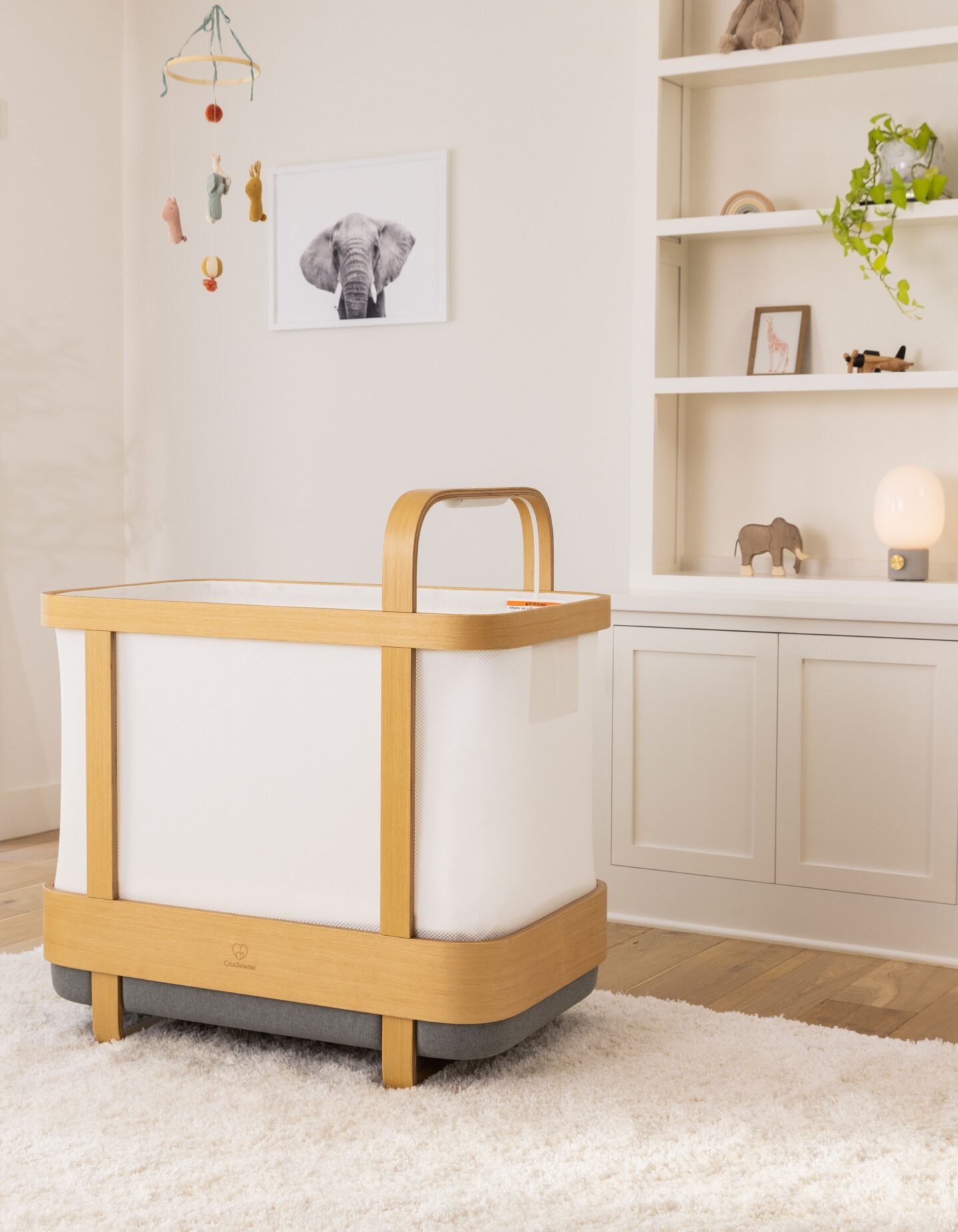
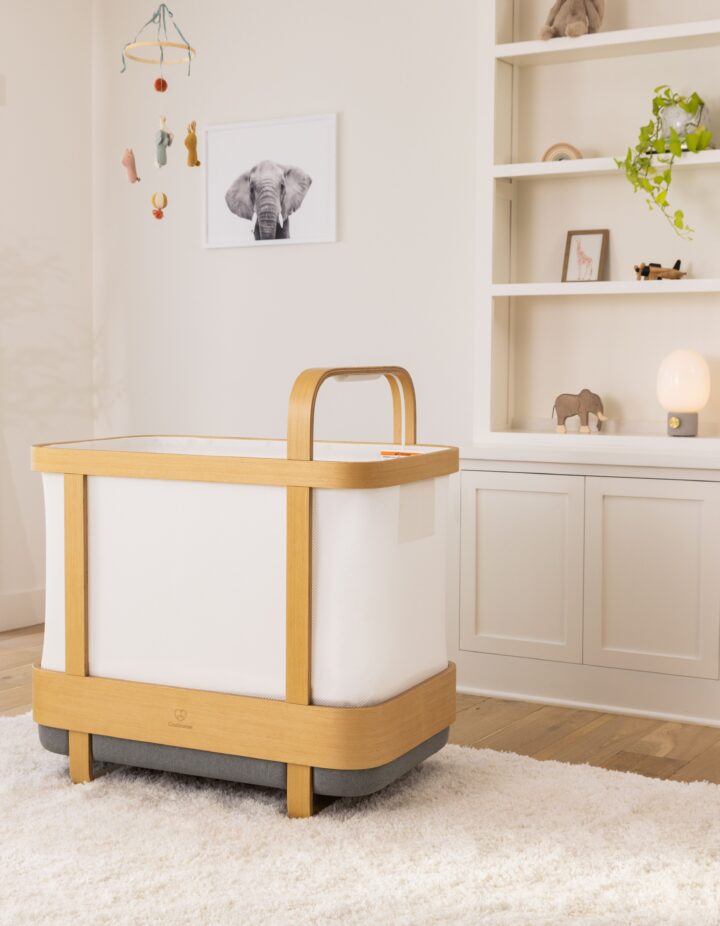
Cradlewise is a smart crib that uses AI to monitor and soothe babies and was created by a couple who saw the need for it after having their first child. It’s a connected, easy-to-use sleep support system with all the tools families need for a better night’s rest. It includes a smart bassinet that converts into a crib, auto-soothing bounce, Wi-Fi video monitor, in-app sleep insights, sound machine, and room temperature monitoring. The bouncing motion and minimalist approach to soothing were inspired by how parents naturally soothe their babies. The company researched baby sleep challenges by speaking with over 200 parents and a pediatric sleep specialist, and the crib was named one of Time’s 100 Best Inventions of 2020. It has been used for over a million hours of sleep.

Related: Nikki’s List: Registry Non-Negotiables

Here, we speak to the founders to get the 411 on what makes this crib the smartest one on the market.

Why create a new crib?

After their first child Anushka was born, founders Radhika and Bharath Patil saw an opportunity to engineer a solution for the most significant problem new parents face: Sleep. Not that this stat will surprise any mamas, but new parents lose an average of three hours of sleep every night in their baby’s first year. But when the baby sleeps well, the whole fam sleeps well. Thus, Cradlewise.

“Most baby monitors will notify you after your baby wakes up. That’s too late,” says Radhika Patil. “When my husband and I had our first baby, we ran over and rocked her every time she twitched. Why isn’t there a crib that can monitor for signs of waking?”

So, how does this thing work?

Image courtesy of Cradlewise

“Cradlewise is the only crib that can soothe babies before they start crying because intervening even just one minute sooner makes all the difference in safeguarding baby sleep.”

Here’s how the Cradlewise AI works:

  • Predictive phase: The built-in monitor arc uses 3D-image mapping technology to detect the baby’s early wake-up signs. The crib comes fitted with contactless sensors that we use to detect the baby’s breath rate and movements. It uses this information to determine which phase of awakening the baby is in the quiet, active, or cry phase.
  • Quiet phase: In this phase, the baby is still awake and taking in the environment. In this phase, the cradle responds with low bouncing and soothing music so that the wakeup does not escalate to the “cry phase.” Getting the baby back to sleep while it’s still in this first, quiet waking phase is the secret to sleeping better.
  • Active phase: In the active waking phase, the baby moves actively and is attentive to sounds and sights. At this stage, the cradle responds with a medium-level bouncing motion that gradually tapers off as the baby is soothed back to the quiet phase and finally sleeps.
  • Cry phase: Once a baby has reached this phase, they move a lot, may cry loudly, and don’t respond as quickly to soothing sounds and motion. In this phase, the crib will respond with a higher bounce, tapering back down to a gentle bounce as the baby grows calmer or alerting parents if the crying phase continues.
  • Processing: AI models act as interpreters to figure out what’s happening with the baby, building an understanding of their unique sleep patterns.
  • Responsive: Because there is no one-size-fits-all length of time it takes to soothe a baby, the cradle provides a custom, intuitive, dynamically learned response based on the individual baby’s needs. If the baby doesn’t respond to the cradle’s soothing by falling back asleep, Cradlewise will stop bouncing and alert the parent.
  • Adaptive: Sleep patterns change significantly from infancy through 24 months of age. Cradlewise adapts its soothing technique to match the baby’s developmental stage. Its personalized AI understands the sleep patterns of each baby and learns when its soothing functions are most effective. The crib’s algorithms are also regularly tuned based on data across babies to best detect wake-ups, constantly improving for more intelligent cry detection and parental alerts.

What sort of safety certifications does the Cradlewise Smart Crib have?

Imagery courtesy of Cradelwise

Cradlewise is U.S. Consumer Product Safety Commission tested, JPMA Certified, FCC Certified, screened for approximately 900 chemicals, and GREENGUARD Gold Certified.

“We spent four years perfecting the safety mechanisms and certifications for Cradlewise,” the founders say.” We’ve left no stone unturned when it comes to your baby’s health and wellness. We’ve done extensive testing, and the crib meets all U.S. Consumer Product Safety Commission standards for bassinets, non-full-size baby cribs/play yards, and crib mattresses.

How long can babe stay in this thing?

Cradlewise is the only smart bassinet and crib designed to grow with a baby from birth until the 24-month mark, with auto-soothing bounce available in both bassinet and crib mode.

Since the baby is on a flat surface moving up and down, there’s no need to fasten them to the bassinet, allowing parents to continue using Cradlewise long after their child transitions out of their swaddle.

Over time, the cradle learns and adapts to each child’s unique sleep patterns, forecasting sleep and wake-up times. And by bundling a smart bassinet, crib, Wi-Fi video monitor, sleep insights, and sound machine in one, Cradlewise offers expecting parents a connected, easy-to-use sleep support system with all the tools families need for a better night’s rest.

If only we could be as adaptive in our parenting style as Cradlewise…

Your Official 2023 Horoscope "It's a year of connection and nourishment to yourself, to your spirit, and with others."

By Sofia Adler | Illustration by Ana Hard

This is an astrological reading for the collective for 2023.

Based on what is happening in the skies, this is a year of connection, of nourishment not only to the self, but the spirit. This year is about doubling down on the fact that we need each other, that our connections, our community, is what makes the world go ’round. It’s what makes us feel the most alive. It’s what makes life worth living.

This year has a bit of a slow start. The real momentum of 2023 doesn’t kick into full gear until March. We ended 2022 with two retrogrades. Mars is in retrograde up until January 12, and we also ended 2022 with Mercury being in retrograde. So we start this new year in review. It’s not a year that is necessarily all guns blazing, full steam ahead at the start. This is a year when we think about connection and nourishment. 

It’s a year that shows us from day one that we can look back to look forward, that we don’t need to rush into something new. The new year from a calendar perspective is in the midst of Capricorn season. Capricorn season is about refinement, focus, slowing down, and turning inwards. If we take a nod from nature, it looks like everything is dead outside – depending on where you live. The trees are barren. The ground is frozen. The animals have gone into hibernation, but the truth is this season of Capricorn is when we’re planting our seeds and sowing our earth. So it’s aligned with nature and the universe to start a year off with a slower pace – to look back on what worked, to take stock of what didn’t, to celebrate all that you’ve accomplished, and then use that moving forward. So again, early 2023 starts off slow. Give yourself permission to rest, to nourish yourself, and to take care that the momentum will come.

So let’s fast forward to March. 

The first big date of the year is March 7, 2023. This is when Saturn is moving into Pisces. Saturn has been in Aquarius since December, 2020. So it is making its move from Aquarius into the watery, connective, empathetic sign of Pisces. For those of you who have Saturn in Pisces in your birth chart, you are coming into either your first, your second, or maybe even your third Saturn Return.

If you have Saturn in Virgo or Gemini, you will have a Saturn square this year.

If you have Saturn in Sagittarius, or in Gemini, you will have a Saturn square upcoming. If you have Saturn in Virgo, you will have a Saturn opposition. These mark big moments in life, big periods of change in life. It’s stepping into a new chapter of life. Going back to the collective Saturn, it’s moving into Pisces. Saturn is about stability. Saturn is quality control. When we are influenced by Saturn in our lives, there’s an energy of consolidation, doing less, setting boundaries, saying no, prioritizing decluttering, being very clear, and seeing the truth in things. Saturn tends to bring about an energy that faces us, forces us to say excuse me, to look at things that we haven’t seen before or that we didn’t want to see before.

For Saturn moving into Pisces, this speaks to a need or requirement from the stars to root into our emotions. Pisces is empathetic. Pisces is sensitive. Pisces is the mystic, the poet. There’s something here about getting grounded in your inner world, finding a connection to how you feel, no longer just driving forward nonstop. Instead, it’s taking a look at what’s happening internally for you. What is the state of your inner world? How can you be more compassionate? How can you commit to a spiritual practice? It doesn’t have to be woo-woo but what is a practice that connects you to something bigger? It’s much harder to do that when you’re moving guns blazing, full steam ahead. So this reflective energy at the start of 2023 is really setting us up.

There’s also a need for boundaries. What’s on my side of the street and what’s on your side of the street, but not at the sake of sacrificing connection. But instead, how do we solidify our bond with other people and in doing that, making sure we’re not taking on too much? We are being asked to connect to our soul. We are being asked to connect to how we feel.

Then, on March 23, good old Pluto, the planet of transformation, moves into Aquarius. This ends a 15 year run of Pluto in Capricorn. Pluto brings about destruction and that doesn’t have to be a bad thing. Pluto gives us the strength, the power to break down what is not working and how to rebuild it.

Moving into Aquarius suggests that there will be shifts and changes next year as it relates to technology, as it relates to how we understand the collective and that community. Aquarius is the sign of belonging, of being our own authentic and unique versions of ourselves, and yet being a part of something greater than us. Aquarius is the visionary, the futurist, the rebel. So this would suggest some sort of transformation or shift around humanity, like the way that we interact with one another. You can think of a Pluto activation as being like the caterpillar, the catharsis going into the cocoon, and diving deep on something. You know, navigating power and control dynamics, figuring things out – really rooting in and getting to the bottom of things.

And so with again, Pluto moving into Aquarius, it’s like, what’s working for us? How do we relate with one another? How do we see ourselves as a piece of a bigger community? You know, there’s been this radical transformation in how hard we work, the way that we work, what we’re expected to do for work, and what work looks like whether or not we go into the office. Those are all Pluto influences on these Capricorn themes of work and structure and foundations and money and power.

Then pushing forward to May 16, the next big juicy day in 2023. Mark this on your calendar. This is a big one. Jupiter, the planet of expansion, the planet that represents luck, opportunity growth, learning discovery, exploration, up leveling – Jupiter is set to expand everything that it touches. Jupiter will move out of Aries and into Taurus, where it will remain for a year.

Taurus is so nourishing. Taurus is so delicious. Taurus is about pleasure. Taurus is about taking care of ourselves, connecting to the body. It’s soothing, restorative, stabilizing, calming. Taurus likes to indulge. Taurus likes the finest wine, the coziest slippers, and Jupiter expands everything that it touches. So starting in May, what does it look like to take care of ourselves? What do you need? How can you infuse more pleasure into your life? Taurus is about grounding. Taurus is of the five senses of the body. You’re going to have to pay attention to what your body needs. The days of pushing yourself to the brink, of ignoring the signals of burnout or stress or anxiety are gone. There is a need to connect to your physical being. There is a need to nourish yourself, so this will be a very different shift. 

The other thing I want to note about Taurus is that Taurus also has to do with money. So there’s something to be said for when Jupiter moves into Taurus on May 16. It’ll be there holding great potential for it to be a very lucrative time. A very free flowing financial time. And again, there’s this receiving, this nourishment, what makes us feel good, and leaning into that when Jupiter moves into Taurus. The last thing I’ll say on Taurus, is that it also represents what we stand for, our values. So again, you know, leaning into what makes you you. What are the structures that make you feel solid and grounded in your being and in your body for 2023 and inviting you to lean into that.

And then on July 17, we have a nodal switch from Taurus and Scorpio into Aries and Libra. So the nodes which rule eclipses and astrology are going to be moving into the two signs Aries and Libra. They all have to do with relationships that have to do with the balance. Between me and you, it’s between the self and the other. How do we show up for ourselves? And how do we show up for the people in our lives? The nodes in astrology are very much on a collective soul level, on big collective transformations. So again, it’s about connection. Do they need to be shaken up? What opportunities are coming your way? There’s an unpretty, unpredictability to the nodes. That means that there’s infinite possibility. So again, I will reiterate, this is not a year for doing it on your own. This is a year for doing it together as one.

And then finally, the last big event of 2023 happens July 22. It extends until September 3, and then the end of 2023 is a bit more quiet. But we will have a Venus retrograde in Leo, starting on July 22, lasting until September 3. Venus goes retrograde the least of all the planets. Venus represents what we value, what we desire, what brings us pleasure, what brings us joy, what turns us on, where there’s an opportunity to spice things up. Where can we revise and review? Where can we deepen rather than plow forward on these themes of what turns us on, and what we desire, and what not makes us feel safe?

It’s an opportunity to really double down on things that fill you up, that light your soul on fire, that make your body tingle, that make you smile and smirk. Venus is going retrograde in Leo, the zodiac sign that has to do with creativity, self expression, pleasure, sex, kids, joy, being bold, being loud. So again, what do you desire as it pertains to stepping into your truest version of yourself? Your loudest version of yourself? Your most creative and self expressed and pleasure-filled?

These are the main big hits to keep in your mind and normalize, even if you don’t have the juicy details. You don’t have to remember them. The big thing to remember is 2023 is a year of connection and nourishment to yourself, to your spirit, and with others. 2023 is also the year where hustle and grind culture is officially over. Cancelled. 2023 is about normalizing the fact that working hard is not what makes life worth living. And success and leadership is not linked to disconnecting from our bodies and building stress or working so hard that we’re not able to live and enjoy our lives.

You can slow down to speed up.

You can slow down and be grounded in your principles, your worth, and what you stand for and get everything that you want and more.

That is the key to unlocking the abundance of 2023.
9 Benefits of Hand Expression Squeeze that milk out.

By Shelly Jacobs, IBCLC | Photo by Stocksy

Maybe it is just me, but I cannot not think of the Madonna song “express yourself” when anyone talks about hand expression!  Hand expression is the number one thing I teach the mamas I meet.  Not only is it smart to familiarize yourself with your breasts, but once you get the technique down, It can be extremely helpful for many reasons throughout your entire breastfeeding or pumping journey.  From the beginning when your milk is coming in, all the way to the end when you wean, and everything in between.

The bottom line is…to make more milk, you must remove more milk!  In this article, I will teach you exactly how to do this.

So, what exactly is Hand Expression??

Hand Expression is the technique of using your hands to manually express milk from your breasts.  It can be done in addition to breastfeeding or pumping, or on its own.  Hand Expression is an extremely useful skill for any breastfeeding mother!  Learning this skill gives mothers more control over their comfort and their ability to provide milk for their baby.  First, I’m gonna break down the technique, because it can be a bit tricky at the beginning. .  Then we will talk about when and how you will use this powerful natural tool as a breastfeeding or pumping mama.

Express yourself, let’s do it! 

Here’s how:

  • Before expressing, you can get in the shower or use a warm moist compress to help get milk flowing.  The shower is a great place in general for hand expression! 
  • Massage and become comfortable with your breasts
  • Make a C-shape with your hand, like you are holding a cup
  • Place your C-shaped hand around the base of the areola
  • Now, COMPRESS back to the chest, PRESS in and RELAX
  • Keep trying until you find the sweet spot and get a little droplet of colostrum out
  • Go back and forth about 10 times each, for a few minutes at a time

 PRESS, COMPRESS, RELAX

Here is a wonderful video from First Droplets which will show you how to Hand Express

Now let’s talk about the benefits of Hand Expression!

1. Prenatal Hand Expression

This is something you can start at 36/37 weeks with  healthy, low risk pregnancies.  Check with your health care provider to make sure you are okay to begin.

Did you know our bodies start producing colostrum around 16 weeks of pregnancy?? I often find that when I am meeting with women prenatally, they are shocked when I hand express droplets out of their breasts (again, I only do this after 36 weeks).  Totally normal!  I remember being slightly weirded out when I saw the crust on my nipples for the first time and found out it was colostrum.  It is also completely normal if you do not get much colostrum out during pregnancy; everyone is different, and after your baby is born, the volume should increase naturally.  

One of the most important things I teach mothers prenatally is how to prevent a “low milk supply”.  This is because the key to successful breastfeeding is making plenty of milk.  You can prevent a low supply by using hand expression to remove colostrum in those early and important hours after delivery.  I find it to be very helpful for mothers to get familiar with the technique before delivery.

2. Colostrum Harvesting

Prenatal colostrum harvesting is when the mother uses hand expression to collect colostrum from the breast during pregnancy (starting at 36 weeks) and freezes it for use after birth. The frozen colostrum is taken to the hospital and stored until it is required, where it can be defrosted and fed to the baby.  For step-by-step instructions on harvesting your colostrum and its benefits, check out this blog post. This is especially helpful for families who are expecting multiples, mothers with a low milk supply in the past, scheduled C-sections, and mothers who have Gestational Diabetes (see DAME study).

Please keep in mind, it is very common to get little to no colostrum out  during pregnancy.  So don’t worry if you do not have enough to collect!  The most important thing is that you get familiar with the technique of hand expression, as it can be a very valuable tool after delivery, which brings me to my next topic…

3. Hand Expression in the Early Hours after Delivery
The key to successful breastfeeding is making plenty of milk!  It is in the hours after delivery that your body is getting programmed to make more milk.  So the more colostrum you can remove, the more milk you will make in the long term.  The most important thing you can do to make more milk sooner is to remove colostrum from the breast early, frequently and effectively.  Even the first hour is important.  Begin removing milk in that first hour after delivery and then every 2-3 hours after that.  So, even If your baby doesn’t latch on perfectly –  and many babies don’t – you can easily hand express.  Hand expressing colostrum after delivery and feeding it to your baby in a spoon or a Colostrum Collector, can help prevent excessive weight loss and jaundice. 

The bottom line is…you want to know how to remove milk early, frequently and effectively, even if your baby doesn’t breastfeed perfectly in the first hour.  That is why it is good to develop hand expression skills before delivery.

Dr. Jane Morton (who I am lucky to call my Mother-in-law) created the website First Droplets, which provides wonderful short videos explaining the advantages of learning hand expression and using it in the early hours after delivery.

4. Engorgement

Hand expression is a simple, comforting way to relieve engorged breasts and make your breastfeeding journey more enjoyable.  It is especially helpful in those early days when your milk increases in volume, and your supply is still normalizing as your body adjusts to your baby’s needs.  Most women find that about 2-5 days after birth their colostrum transitions into mature milk.  This usually looks like a significant increase in volume and changes in composition.  

5. Hand Express to Soften the Breast and help Baby to Latch Better

If your breasts feel engorged, you may find it tricky for your baby to latch.  It can sometimes seem like they are trying to get their mouth around a watermelon!  Hand expression will help you soften the swollen or engorged area around the areola.  Express just enough to soften the area where their mouth will latch onto the breast.

6. Increase Your Milk Supply

The bottom line is…to Make more milk, you must remove more milk!  

Your hands can help you remove extra milk that the pump or baby won’t always get.  Our new video called “how to boost your Milk Supply’ shows exactly how to increase your supply by using your hands! 

As you will see in our video, it is a combination of hand expression, hands-on pumping and keeping close contact with your baby.  If you notice a dip in your supply, you can dedicate a week to hand expressing between feeding or pump sessions.  We recommend to briefly hand express 6 times a day.  This will increase the amount of milk you get out, signaling to your body to make more!

7. Hands-on Pumping 

Instead of relying alone on pump suction itself, it can help to also massage while pumping!

One study by Dr. Jane Morton found that mothers who used hands-on pumping got 40% more milk out.

Hands-on Pumping is a technique where you use your hands to massage and help pump milk from your breasts. It can be done in addition to breastfeeding or pumping, or on its own. 

  • Gently massage before you put your pump on, you can also apply a warm compress (this will get milk flowing) 
  • Use pumping bra so you can pump both breasts at a time
  • You will find your sweet spots as you go
  • Back and forth from each breast, several times
  • When milk stops spraying, remove pump and hand express
  • Hand expression after pumping can remove even more of that rich fatty milk that comes at the end…which sends a super powerful signal to your breasts to produce more milk

8. Hand Express Even After Pumping

Many mothers are surprised to see they can also hand express more out after they pump.  This is because your hands are capable of getting more than the pump!  The milk at the end, which is called the hind milk, can be too thick and creamy for a pump to remove.  Getting this fatty, rich milk out at the end sends a strong signal to your body to…you guessed it…make more milk!

9. Weaning

By this point, women are usually a pro at hand expression!  So to close the shop down, I suggest gradually cutting back milk expression.  Start by moving one feeding or pump session out at a time, and adjusting the spacing accordingly.  Wait a few days until your breasts feel okay and are not in pain, and then cut out another one.  As your body adjusts to making less milk, using hand expression to comfort will help a ton! 

Now you can see why I feel so strongly about learning hand expression while you are breastfeeding – from day one, and even before that.  It is such a convenient tool to help smooth over so many transitions throughout your breastfeeding journey – so I hope these tips help you!

Shelly Jacobs is an Internationally Board-Certified Lactation Consultant, and the co-founder of The Lolo Baby, a breastfeeding sling designed to give mamas breastfeeding freedom in the 4th trimester.  She is also part of the First Droplets team – an educational website created by her mother-in-law, Dr. Jane Morton, an internationally recognized expert in the field of human lactation.  Her passion for helping new moms sparked after she experienced complications with breastfeeding her first child, and was taught about the practical methods and simple techniques taught by Dr. Jane.  They began to collaborate, creating pathways for expectant and new mothers to protect their own breastfeeding experience and reduce the risk of complications, by focusing attention on the first hours after birth. 

Kimmi Chex The new mom sets a new back-to-work tone at the NFL.

By Caroline Tell | Photos by Ashley Barrett

The NFL on-air personality and journalist just gave birth to her first (a girl!) after a whirlwind romance with husband, Jason White. Now, the Los Angeles-based family is cozying up in that postpartum glow with six-week-old Wilhelmina Marie and navigating their new normal.

We sat down with Chex to talk pregnancy, her early delivery due to Wilhelmina’s intrauterine growth restriction, and plans for forging her own back-to-work path at the sports organization.

How’s it going? Deets??

We have an almost six-week-old. Her name is Wilhelmina and Marie’s her middle name. She is absolutely amazing. She decided to come a bit early, which is not a bad thing. It meant we got extra time and extra everything. She was born on December 11 with the most beautiful and easiest labor. She is so tiny and so sweet and so cuddly. We’re exhausted but in bliss, and could not be happier to finally have her here. Now the journey of parenthood can begin!

Did you know she’d be early?

At 25 weeks, my doctors told me that she was an IUGR baby – intrauterine growth restriction. I’d gone in for a normal doctor’s appointment, and they noticed that her stomach was growing smaller in comparison to the rest of her body. IUGR is somewhat common. But I found out that there are two different types. There’s a symmetrical and an asymmetrical one. Her’s was asymmetrical, meaning that it just impacted one little part of her body, not her overall body. So her little tummy was really tiny.

My doctors wanted to closely monitor me and her to figure out why that was. So from 25 weeks on, we knew there was a possibility of her arriving early. With her stomach being smaller, there was a question around is she getting enough nutrients in the womb? When my doctors felt as if she may thrive better outside, they would make the call. But she did great and continued to grow. I was on bedrest at 25 weeks. At 37 weeks, they decided they wanted to get her out and bring her earth side to us and start giving her lots of nutrients from her mama. So that’s what we did. I got induced right at 37 weeks.

How stressed were you about it?

It was stressful but we had and still have the most incredible care providers. I had a doctor who was a guardian angel. Our relationship never felt transactional. We had all of my appointments at home. So it was never in a hospital setting or office. It always felt like this holistic, natural process of checking on our baby. From there, once we knew that there were some complications, she gave me an incredible maternal fetal specialist who I saw through the remainder of pregnancy. He was the most non-alarmist, chill, happy doctor who constantly always told me like, Oh, she looks good, everything’s good. He was always so reassuring that we were on the right path.

How was the birth?

It was the most ideal, beautiful, incredible experience in the world. I think you hear these horror stories of induction, that they’re really tough. But my induction could not have been smoother. I checked in at the hospital at 11pm. And then she was born 24 hours later at 11:01pm. But the active labor was super quick. I pushed for six minutes – probably like six or seven pushes. So all in all, it was less than 10 minutes. She was born small, which we always knew, but perfectly healthy and didn’t need the NICU or any extra support. So that was always our biggest hope for her.

Tell me about your postpartum experience so far. How’s it going?

Postpartum has been good. I think because labor was so easy, my body bounced back immediately. And not “bounced back” like, Oh, I’m so skinny type of way, but as in I feel strong, I’m not in pain, I’m able to move around and engage with my baby around the house. We are lucky to be able to have help. So we have a newborn care specialist / professional nurse who’s living with us right now. We’re incredibly hands on and do everything ourselves. But she’s there as that extra support, and someone who can really help us during night feedings and diaper changes. She’s there to assist and keep company and reassure us. My husband is now back to work, so I never feel completely alone, or really overwhelmed with a newborn navigating all the things that daily life brings.

Postpartum diet?

In terms of diet, I don’t. I surrender to the craving as in what’s going to fuel my body. Exclusively breastfeeding has been really natural for me. But with that comes the constant need for food. So I’ve been intentional about fueling my body. So it’s not, I need to go on a diet or cut down. I don’t have this LA lifestyle like, let me bounce back and have this cute little body two seconds after having a baby. It’s just, what are the foods that are going to fuel me enough to be able to produce and give nourishment to my baby? Our nurse is from Trinidad, so we’ve done a lot of Caribbean food, like beans and rice and really delicious meats like curries, and stewed chicken, and vegetables. It’s incredible comfort food loaded with veggies and nutrients, and everything’s fresh.

You’re a public figure with a high level job. How will you integrate motherhood with work? What do the next few months look like for you?

Thankfully, the NFL was so incredible and accommodating. When we found out Wilhelmina had IUGR and I went on bed rest, there was never pressure about whether or not I was still working. It was, how can we support you and love you from afar? Let us know what you need. Of the female talent based in Los Angeles, I’m the only one who has a child now. I was unsure as to what that would look like professionally and if there would be a negative assumption of my ability, or how I would work when I was pregnant during football season. But the NFL has been above and beyond supportive.

As I start to think about returning to work, there’s anxiety because I’ve just had this uninterrupted time with her on maternity leave, and I’m going to continue to soak that up. But there’s a job waiting for me on the back-end. I’m going back at the end of February for the NFL Combine, which is when our scouts, general managers, team owners, and head coaches go to Indianapolis for a week, and the new prospects come do a week of workout and interviews. It’s a closed environment, but we have loads of shows, content, and interviews around the new faces of the NFL. When I told them I was pregnant, that was a date we circled on our calendars, because I wanted to be a part of these new guys telling their stories next season.

So I’m going to travel to Indianapolis for that week, but I’m bringing Wilhelmina, my husband, and my nurse so I can still keep up with breastfeeding and have that routine and that connection with her, especially knowing she’s on the smaller side.

Then in late April, the next step for the NFL world is the Draft. That’s where all these prospects get drafted to teams. I’ve hosted the Draft for the last two years, which is really fun, and it’s back in my hometown of Kansas City. Again, that’s going to be another opportunity for the whole family to pack up and come with me. From there, real football season will start late summer and that will be full steam ahead. My husband and I have to figure out what that’s going to look like. Is that one of our parents living here for a little bit? Is that a nanny? We’re still contemplating that process.

Do you feel like you’re setting a new pace for motherhood in the workplace at the NFL?

I feel there’s a new way for us to think through what motherhood looks like, for some of my colleagues who may be in this chapter soon. There are women I’ve had honest conversations with regarding motherhood. A lot of women have put parenting on the back burner, because they’ve waited to have their break on air. I was fortunate to get this national opportunity at a young age, so I worked my ass off. I didn’t feel like I had to pause my dream of becoming a mother to fulfill my career. It seemed like I was able to do both at the same time, and not have a negative repercussion for that. It’s a privilege, and not a lot of other women’s experience in the industry.

The most eye opening thing is that my job no longer defines me. I was so career driven, and was so heads down and I still very much am. I want to be a kick ass mom who works and who inspires her daughter. My purpose is now so much bigger, because truly, I want to do this for her, and I want to set this example for her. So it’s not an ego thing anymore. I want to do this with the pure intention of showing my daughter that the world is hers. She can break molds and break barriers on her own and become an example to others. So it’s been a new process for me and a different process for our organization. Thankfully, we have incredible leaders who have supported me through it.

“My job no longer defines me.”

With all the work you do in social justice, inclusion, and advocacy for Black and Brown women, now that you’re a mom, what does that mean to you?

My husband and I have really been so reflective ever since Wilhelmina was born. Even during pregnancy, we were humbly reflective on our privilege. Here we are, both people of color, and very unapologetic about that. We understand what Black maternal and fetal health looks like, and the statistics and the really scary numbers that exist, and we understand that we had been so privileged to be able to advocate for ourselves and have the resources. We very closely understood that this wasn’t everybody’s experience.

With that, we’ve constantly asked ourselves, what more can we do? How can we advocate for women and advocate for families of color? How can we help people who may not have the means financially to be able to have the resources that that we have? Our doctor was a Black woman, and we also happened to have a doula of color. We sought out those resources and never worried about that impacting our livelihood. So it’s been an interesting acknowledgement of our own privilege through pregnancy.

As parents, we want to dedicate ourselves to understanding the other resources that exist out there and exploring what resources are here in LA. We want to get involved and make a difference, because people have very scary stories. So it’s been really eye opening to be able to sit in that reflection, and understand that our experience was incredibly rare, but should never be rare.

1 16 105