Can I Drink A Little During Pregnancy? We. miss. booze.

By Babe | Photo by Stocksy

And now in today’s episode of “You Do You,” is one of the most common questions that pregnant women Google, debate and ask their OBGYN’s. “Can I have a drink during pregnancy?”

The straight-up, on-the-record answer is no. According to the American College of Obstetrics and Pregnancy, “Drinking alcohol during pregnancy is a leading cause of birth defects. Alcohol can harm a fetus throughout pregnancy. This includes the first few weeks before you know you are pregnant and during the last weeks of pregnancy when the fetal brain is maturing. Even moderate alcohol use during pregnancy can cause lifelong problems with a child’s learning and behavior. Any amount is risky for women who are pregnant or trying to become pregnant. All types of alcohol are harmful, including beer and wine.”

Got all that?

And before you go crying out, “But Gwyneth drank Guinness in London!!!” this POV is far from just a stateside trend. In 2016, the United Kingdom Department of Health changed its stance advising pregnant women to drink no more than one to two units of alcohol once or twice a week to recommending they abstain completely. Even in countries like France, lax attitudes toward maternal drinking have shifted during recent decades.

The reasoning behind these precautions is real. Alcohol is a teratogen, which harms human development. When a pregnant woman drinks, alcohol crosses the placenta and enters the fetus’s bloodstream. Because the fetus is still developing, alcohol is processed more slowly than it would be in an adult’s body, causing the alcohol levels to remain high and stay in the body longer.

Exposure to alcohol in utero can lead to miscarriage, stillbirth and a range of lifelong physical, behavioral and intellectual disabilities known as fetal alcohol spectrum disorders (FASDs). While some signs of FASD are more apparent, such as severe birth defects, other, subtler symptoms include behavioral and learning problems that might arise later in a child’s life.

A study funded by the National Institute on Alcohol Abuse and Alcoholism and published Feb. 6, 2018, in the Journal of the American Medical Association (JAMA), argues that FASD may be more common than previously believed. In the study, researchers tested roughly 6,000 first-graders in four unnamed communities across the country and interviewed many of their mothers about their drinking habits while pregnant. From the data collected, they estimated that 1.1 to 5 percent of children in the U.S. may be affected by FASD. Notably, less than 1 percent of the children identified with FASD in the study had been previously diagnosed.

However, Emily Oster, an author and economics professor at Brown University, sees things differently. In her book, Expecting Better: Why the Conventional Pregnancy Wisdom Is Wrong—and What You Really Need to Know, she breaks down data on confusing and controversial issues that many pregnant women face. Oster looked at roughly 200 studies on alcohol and pregnancy and concluded there wasn’t credible evidence that an occasional alcoholic beverage has any consequences.

So what’s the actual answer? A sip of champagne every now and then likely won’t harm your unborn fetus. But the best course of action is to check in with your healthcare provider for any and all questions related to pregnancy healthcare. We can’t say with any definitive answer what will happen, and likely neither can they. But if you’re stressing about it, then erring on the side of caution is always a winning proposition.

And in the meantime, have a mocktail, on us.

"Milestone Anxiety" is Real One mom's stepping out of the comparison trap.

By Emmy Marucci | Photo courtesy of Emmy Marucci

I didn’t want to write this because I didn’t want it to be a “thing.”But here’s the “thing.” It’s 10:00 pm, my son is asleep, and I finally have some time to myself. Here’s what I do with it. I scroll through the “What To Expect” app and  click on the “forum” section. It’s a dark, dangerous, wild and wildly-funny-at-times place where mothers of all kinds, ages, and experiences keep their secrets, or rather, they tell them. It’s where we  turn to strangers to ask the questions that keep our hearts churning and our minds running at night.  

Many of them sound a little bit like this:

My baby doesn’t do [fill in the blank] and their cousin of the same age is. 

My baby is [insert age] and everyone says they should be doing [fill in the blank] and they aren’t.

My baby isn’t doing [fill in the blank] and my doctor didn’t give me the time of day when I asked them about [insert worry].

Is anyone else’s kid doing [fill in the blank] or not doing [fill in the blank].

To no surprise at all, alot of these conversations, threads and late-night writings are related to something that I’ve researched and it actually has a name — it’s called “milestone anxiety.” 

What is milestone anxiety? It’s the concern we feel about our babies doing certain things “on time.” It’s those scary checkboxes in the parenting books. The ones that if you don’t check off right in time, might lead to some sort of diagnosis. The constant comparison with other children and the worry that your baby isn’t doing “enough.”

It’s the first step that hasn’t come yet. It’s the “they’re-not-rolling-over” yets. It’s the clapping that you do everyday in hopes that they’ll repeat it. ” It’s seeing a kid at the park running while yours is still holding onto things to stand. It’s things that might seem small. Mundane. But to us, to moms, they feel really big. 

Developmental milestones — rolling over, babbling, transitioning to solid food, mastering a pincer grasp —  are in every baby book and they cause a huge amount of anxiety in parents. Because, as parents we have an idea of what parenthood will look like, and what our children might accomplish. We prioritize wins over challenges. And when things start to get bumpy or our baby takes a left turn when they should have taken a right, we’re not met with much guidance. 

Here’s a thought I’m asking myself, and you might want to ask yourself  “are baby milestones an effective way to measure growth and the way we move about life?” If we look to science for the answer, we’ll find that no, babies arrive at development milestones at different times and in different orders. That’s why the word “milestone,” which connotes linear progress, is so unhelpful. People love the idea of a path. But typical developmental markers are intended to be used as a a direction to move towards, not a linear path. 

My milestone anxiety: words. The perfectly strung together words, or even the single word that I’m waiting for…”mama.” 

My son is 19 months and I’m totally consumed with him finding his voice. It’s my secret worry that might seem totally ridiculous to some. I’ve never had this worry be justified. By doctors, his neurologist, not even by his own father. But worries are never “justifiable,” are they? And do they have to be? My biggest worry since becoming a parent is to never hear perfectly strung-together words. That my son would be: “non-verbal.” 

In the search bar of the app, I write one word: “speech.” I wait for the results. I wait for someone who’s going through the same exact experience as I am. But after doing this for a few months, I’ll never find them. We are the only “us.” He is the only “him.”

But I think I have the answer to what I’m searching (what we’re searching) for. If we let go of the children we expect to have, the parents we planned to be, and the experiences other families are having (*or appear to be having) we can allow ourselves to become more present and joyful in what we already have. In the reality of our lives. We have to begin to love what is and not what could be.

If we let go of the children we expect to have….we can allow ourselves to become more present and joyful in what we already have.

It’s bedtime. We lay on the floor. The lights glow on the ceiling. I sing a song. I brush the hair out of his eyes. I whisper, “Tomorrow, what do you think? Will you say a couple of words for mama?” It stings in my gut. I did it again. I let it get in the way. I let the worry take over the joy of the moment. 

But then again, I’m a mom. And I’m trying my best. 


Here’s some tips from CanDo Kiddo, a platform that focuses on strength-based developmental progress — I’ve found a lot of solace in these words and hope you do too:

Growth

Development is never complete. Growing and learning are lifelong pursuits — for our children, ourselves and our families

Intuition

Information isn’t the sole antidote to anxiety. Peace relies on cultivating our innate wisdom, deep knowing and gut instincts

Intention

Circumstances may be outside our control but we alway have the power to choose how we think, feel and act in response

Diversity

Differences in bodies, brains, values, personal and cultural histories require us to let go of a narrow definition of “normal”

Emmy Marucci is a mother, published poet, writer and content-producer for all things in the baby space (Coterie, Oso & Me, Gooselings). Her book “tell me another story” explores grief, family and the importance of storytelling. She’s currently writing a children’s book with her husband, who is also a writer. For more stories follow her @emmymarucci. 

More:

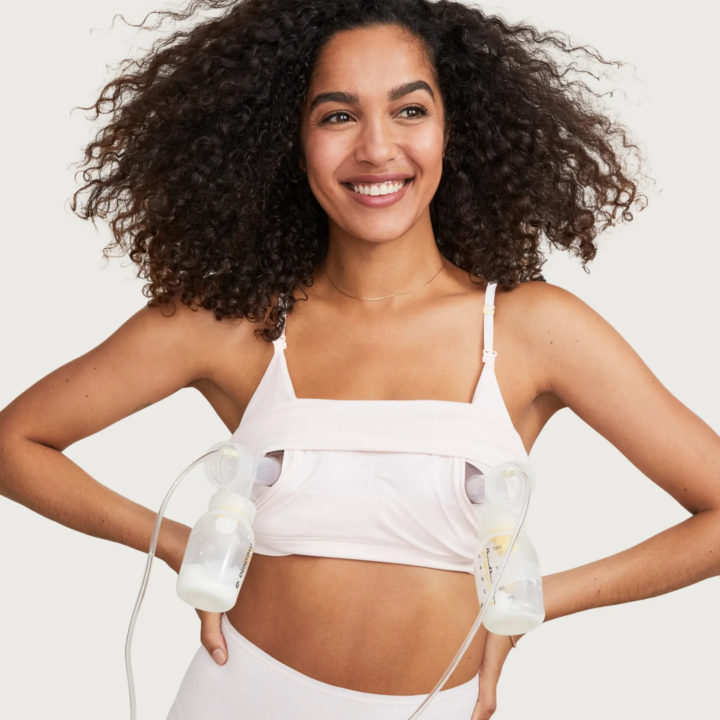
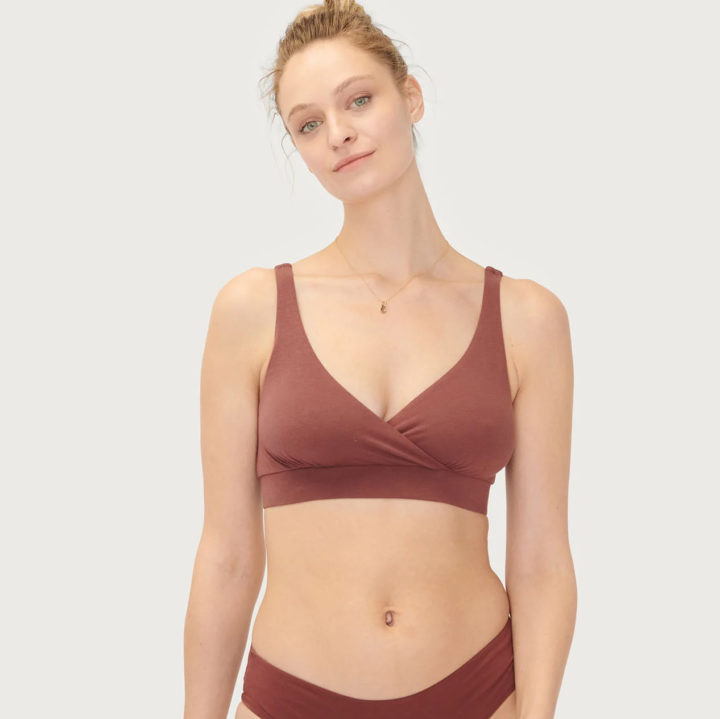
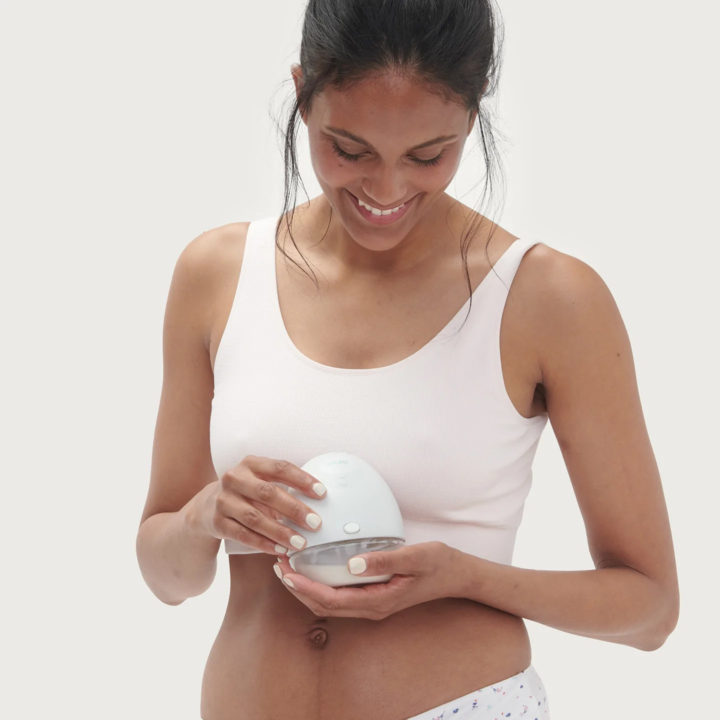
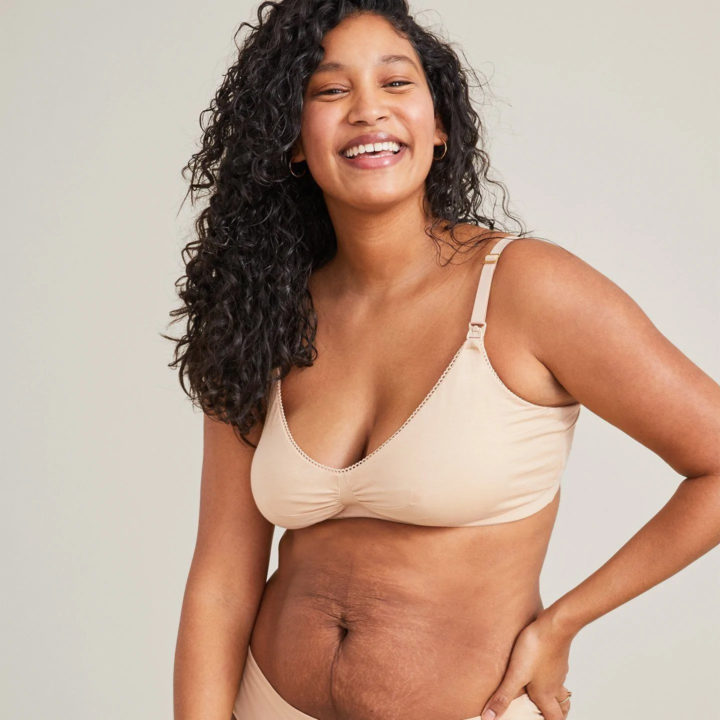
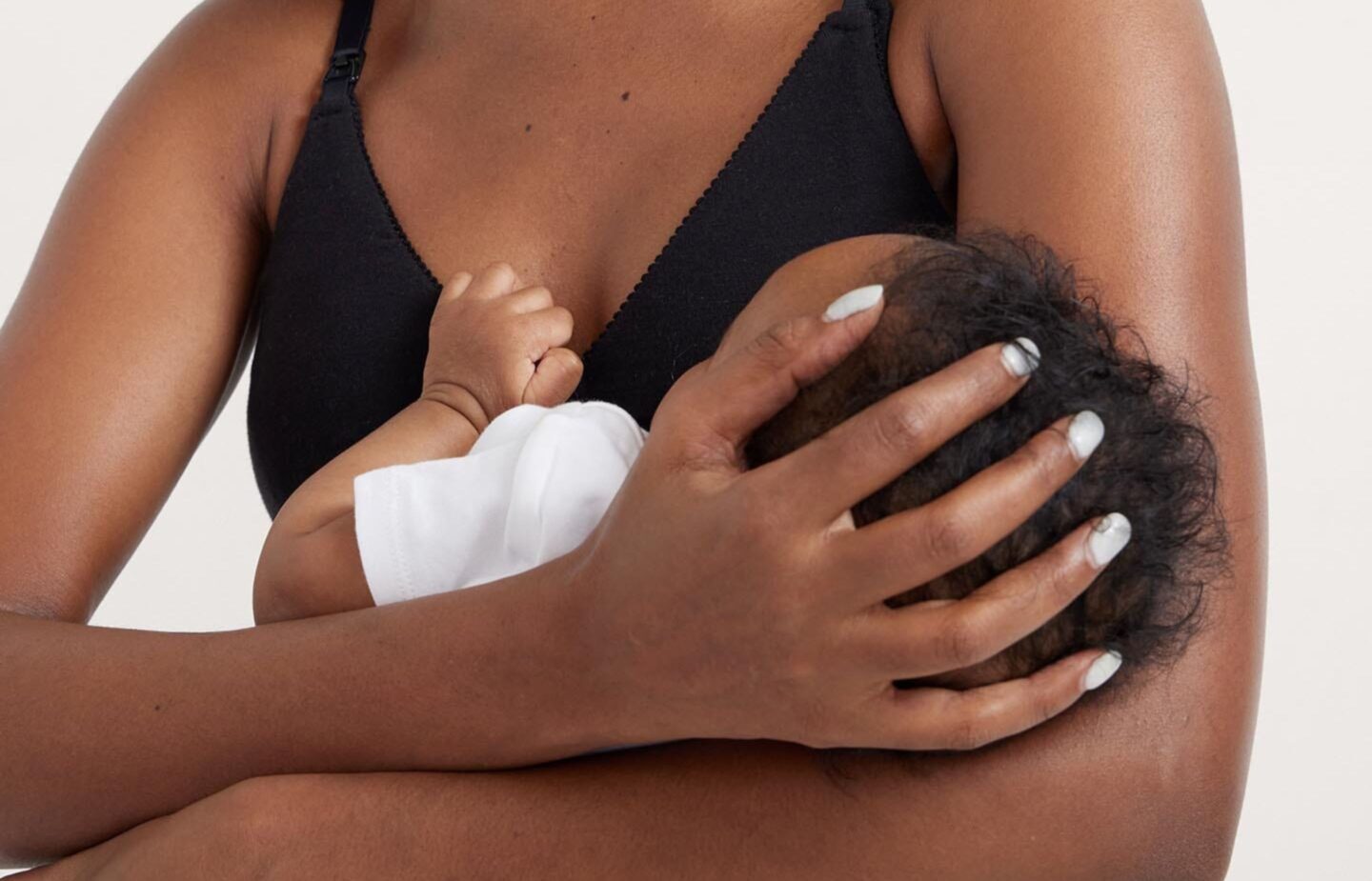
Your Nursing / Pumping Sitch Just Got a Whole Lot Better Peep. these. bras.

By Babe | Photos courtesy of HATCH

It doesn’t get better than our latest arsenal of 4th trimester, pumping and feeeding ’round the clock – trying-to-keep-it-together-but-my-boobs-are-killing-me bras that are the ideal solution to everything going down with you these days. Check ’em out below and find the one, or three, that’s perfect for your needs.

Just Say No...to your Kid The team at Cooper explains why.

By Mariel Benjamin, LCSW, Director of Groups at Cooper | Photo by Stocksy

Saying no often means having age and child appropriate limits. These types of limits provide children with a sense of safety, security and LOVE.

You’ve probably had a moment where you bent a rule or a limit because your child was just that adorable, that polite, that delicious. We all have. But, you’d probably also agree that the urge to make your child happy all of the time, with no demands on their behavior, doesn’t always end in rainbows. 

Here’s why.

Though they aren’t as much fun as giving cuddles, giving your child limits is a critically important part of your role as a parent. We know, based on over 60 years of attachment research, that part of what kids need to thrive are safe and reliable relationships. They need to know that no matter how far they wander, or how much they stray, they can return to their primary attachment figure (we’re looking at YOU), for safety and comfort. That’s the “secure base” that research demonstrates is necessary for things like confidence, academic achievement, executive functioning skills, and autonomy. Limits are a part of that equation, creating the guardrails that help to define boundaries for your children, as well as expectations from the outside world. 

Here’s what else they do.

1. Reasonable limits help children understand what behavior is acceptable.

Remember that your child was not born knowing how to behave, but is looking for you to teach them. Can you eat someone else’s birthday cake before they’ve had a piece? Throw your toys at the teacher? Go to bed whenever you want to? Limits help children to understand what behavior is OK, and what behavior is not.

2. Limits help your child to organize their behavior.

When we know what is expected of us, we can regulate our attention and behavior to meet that challenge. Having limits creates these necessary expectations for your child. Have you ever wondered why your child may be a delight all day at day-care or school, listening and following along, and then a holy terror when they get home? Well, one of the reasons (only one of many) is the self-regulation they are practicing to follow the expectations of their school environment. Having structure and routine – two different aspects of limits – can help children thrive in school settings.

3. Limits teach children about why we do what we do.

Why can’t we run in front of traffic? Why do we eat sitting up? Why should we pick up our garbage on the street? Through limits, you have the opportunity to teach your child why we behave a certain way or do certain activities. This grows their understanding of the world, and empowers them to connect their behavior with the impact it has on the world around them.

4. Limits communicate your values.

By emphasizing what we truly care about – being kind, taking care of others, trying again, etc. – we communicate to our children what matters to our family. My mom may let me be messy, but she wants me to tell the truth when I’ve made a mistake. Or, my grandmother insists that I always have dinner with her without my phone, but she doesn’t mind if I listen to music while I do homework. Do we have limits on other things, too? Sure, but our children come to understand the ones that mean the most to us. 

5. Limits keep our children safe.

Many of our limits reflect the world we live in, and the reality our children face – good or bad. In some neighborhoods, this may mean more limits around autonomy outside the home, or for some families more limits around behavior. Limits promote our children’s safety everyday in places like public settings (holding hands), schools (fire drills) and vehicles (seatbelts).

6. Limits create consistency between caregivers.

When a family agrees on limits, children feel safe in their environment. They know that their behavior will be met with the same response every time, and can therefore focus their energy on learning and growing.

7. Limits can support a balanced parenting style.

Research shows that an authoritative parenting style, one with firm, consistent limits balanced with love, patience, and warmth, has been linked with the strongest positive outcomes for children. Permissive parenting, that is the absence of limits, has been linked to negative outcomes for children, including lower social skills, self-esteem and academic achievement.

8. Limits can foster connection.

Being on the same page about what limits exist, and what clear expectations for behavior are, means that you can work alongside your child to achieve success. In this model, you and your child work to create and meet a reasonable limit (for example, curfew), instead of focusing on only one part of the equation.

9. Limits reflect who your child is.

When done thoughtfully, limits can honor who your child is (for example, earning extra privileges through good behavior). Making your child feel seen, heard and understood, is essential to their long term well-being and development. Offering limits that feel appropriate and recognize success is an important ingredient in making this possible.

Want more support around limit setting and parenthood? We’ve got you. Discover evidence based guidance that meets you where you are at Cooper.

Parenthood is complicated – Cooper’s goal is to help un-complicate the parts of parenthood that should be simpler. We are your online parenting homebase, carefully matching you with a group of kindred parents, and using research-backed expertise to guide you through your parenting journey.  

REFERENCES 

Baumrind, D. (1971). Current patterns of parental authority. Developmental Psychology Monographs, Part, 2(4), 1–103.

Diamond, A. (2013). Executive Functions. Annual Review of Psychology, 64, 135–168.

LeCuyer, E.A., & Swanson, D.P. (2017). A within-group analysis of African American mothers’ authoritarian attitudes, limit-setting and children’s self-regulation. Journal of Child and Family Studies, 26(3), 833–842.

Leijten, P., Gardner, F., Melendez-Torres, G.J., van Aar, J., Hutchings, J., Schulz, S., Knerr, W., Overbeek, G. (2019). What to teach parents to reduce disruptive child behavior: Two meta-analyses of parenting program components. Journal of the American Academy of Child & Adolescent Psychiatry.


Rinaldi, C. M., & Howe, N. (2012). Mothers’ and fathers’ parenting styles and associations with toddlers’ externalizing, internalizing, and adaptive behaviors. Early Childhood Research Quarterly, 27, 266–273.

WTF Is Parechovirus? Here's what to know.

By Babe | Photo by @moonancheeze

In cased you missed it, multiple states are reporting new cases of parechoviruses – a group of viruses that commonly infect infants and children. Babies under 3 months old — and especially those under 1 month — are more likely to experience severe illness, a recent CDC alert warns. They have not developed immunity to the virus, which can spread through contaminated surfaces or through the air.

The most recent case of parechovirus belongs to a subtype called A3, which is associated with more severe disease in newborns and infants, including neurological issues such as seizures or meningitis.

The CDC’s health alert also notifies doctors, nurses and public health departments to the fact that the virus has been circulating nationally since May and has sickened dozens of babies. The CDC is urging clinicians to consider it as a possible diagnosis for any babies with unexplained fever, seizures or sepsis-like symptoms.

According to the CDC, increased testing in recent years could give the appearance of an uptick in cases. But the Covid pandemic may also have temporarily halted exposure to parechoviruses, which likely started circulating again once restrictions peeled back, disease experts said.

“We noticed a few months ago reports starting to pop up throughout the country and now it appears that there’s widespread circulation of parechoviruses throughout the country,” Dr. Kevin Messacar, a pediatric infectious disease physician and researcher at Children’s Hospital Colorado and University of Colorado told NBC News.

“It’s not only that we are seeing the rare, severe cases that we have seen in the past,” he added. “We’re also seeing more parechovirus activity in general and earlier in the season than we typically would see.”

The CDC said people who have a parechovirus can transmit the virus through feces or respiratory droplets, even if they don’t have symptoms.

People can shed the virus from the upper respiratory tract for 1 to 3 weeks after infection, and from the gastrointestinal tract for up to 6 months after infection, the agency said.

Some research has found that PeV-A tends to circulate in the summer and fall, the CDC said. However, as with other viruses, the COVID-19 pandemic has disrupted the traditional seasonal patterns.

“Coming out of COVID, all the seasonalities [of these viruses] are upside down,” said Laham. “It might take one or two years before everything goes back to where it was before.”

Parechovirus symptoms can often include a rash on the hands and feet. Other symptoms are very similar to what one would experience with a common cold as well as fever, nausea, vomiting or diarrhea.

If you think your infant might be experiencing any symptoms of parechovirus, call your healthcare provider ASAP.

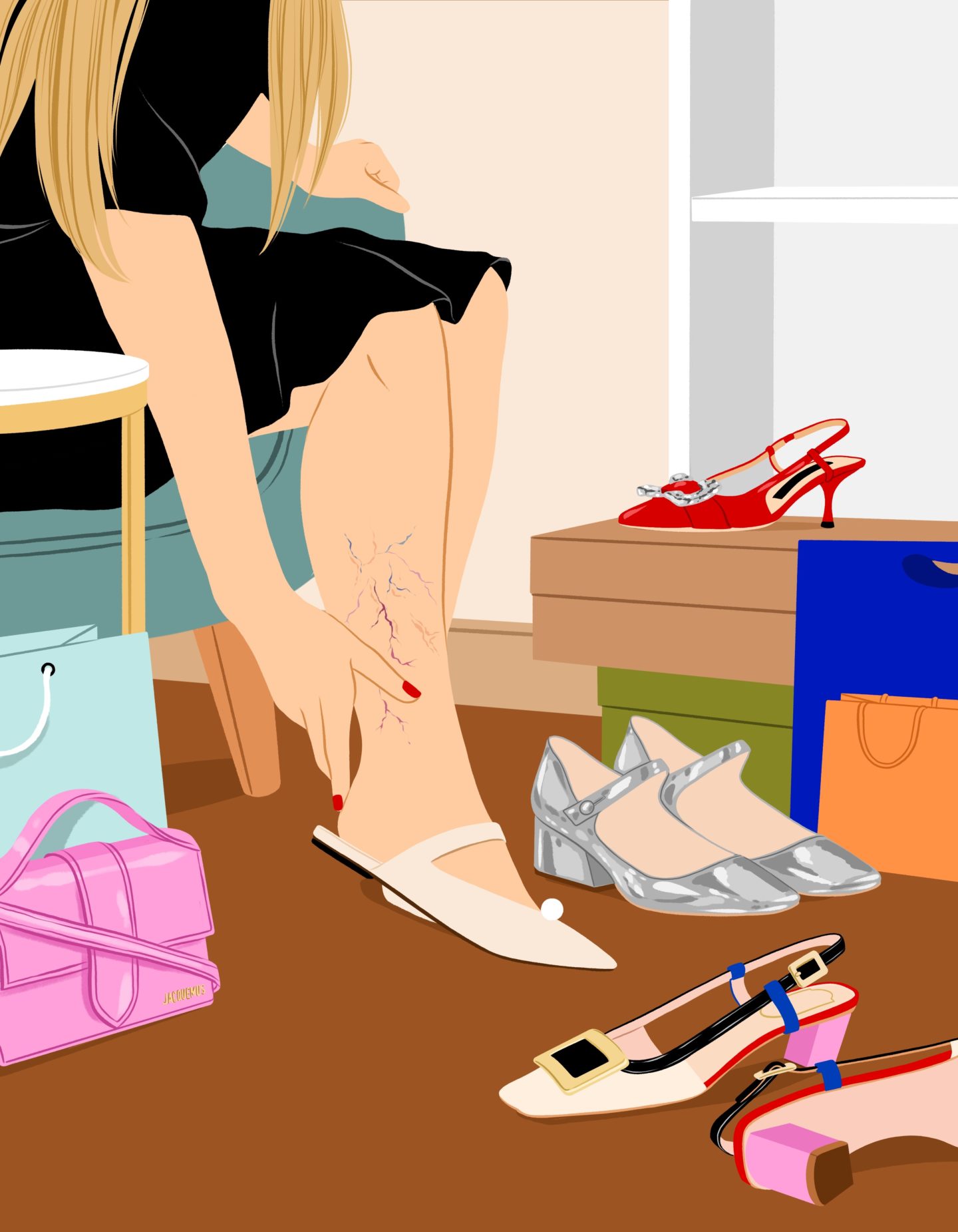
These Varicose Veins are not OK Because pregnancy.

By Babe | Illustration by Ana Hard

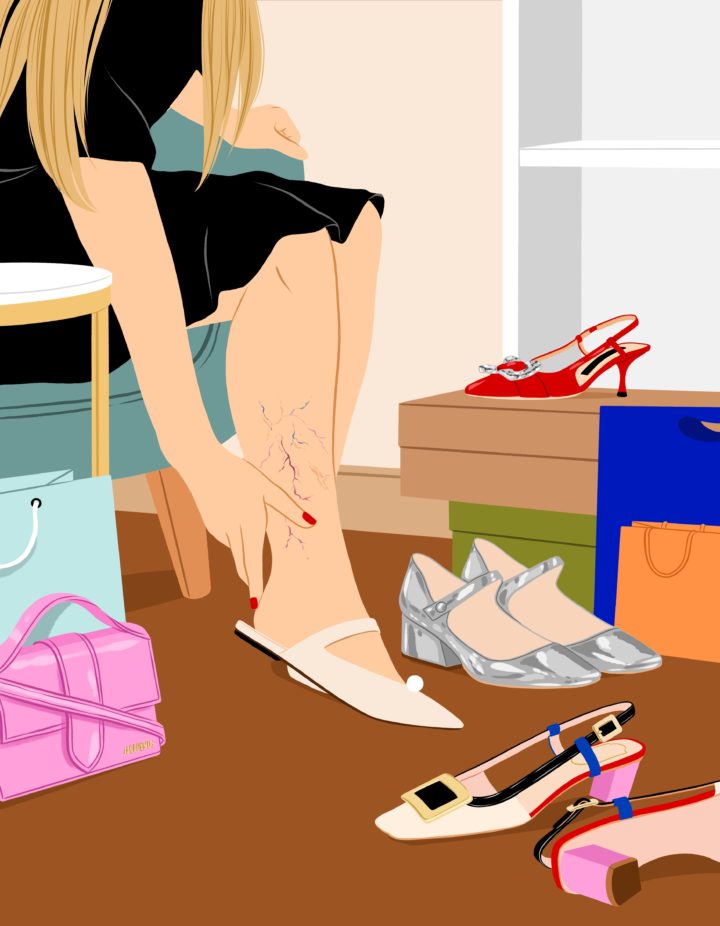
So you’re waddling around in your pregnancy, minding your own business, when you catch a glimpse of yourself in unflattering light (rude) or a mirror (ruder) and you notice these gnarly 3-d veins running up and down your legs. WTF?!?

Yep, sorry. We hate to tell ya, but varicose veins are exactly that – enlarged veins that you’ll often find in the legs, but can even reach up to your butt. They’re one of the more unfortunate side effects of pregnancy, right up there with hemorrhoids and constipation.

What Causes Varicose Veins During Pregnancy?

Ah, the great conundrum; as if the joyous cocktail of leg cramps, weight gain, and hormonal changes weren’t enough, you’re now dealing with these pesky varicose veins. Welcome to the party, mama!

As your body embarks on this fantastic journey of creating life, it really goes all in. Your blood volume takes a major leap upwards, and the blood flow from your legs to your pelvis slows down. This allows more blood for your growing baby but puts your lower body’s circulatory system in quite the pickle, leading to those enlarged, bluish showstoppers known as varicose veins.

Factor in the gravitational disadvantage and the weight of your growing baby bump, and it’s no surprise that your leg veins might be feeling a bit, shall we say, overwhelmed. More so, this fun doesn’t stop at the legs but can also pop up in the vulva or in the rectum as hemorrhoids. 

And those pesky hormones? You know, the ones that have you crying at puppy videos and laughing at infomercials? Those heightened levels of estrogen and progesterone are also softening up your vein walls, turning them into something resembling overcooked spaghetti — which isn’t ideal for containing blood under pressure.

But wait — there’s more. It turns out your left side gets the brunt of it. Why? Blame it on the big ol’ vein called the inferior vena cava, responsible for channeling blood from your lower body back to your heart. Your burgeoning uterus puts pressure on this large vein, particularly when you’re lying on your right side, leading to increased pressure in your leg veins.

So, that’s the mystery behind your expanding vascular map. Remember, your body’s doing an incredible job of growing a new life, and sometimes the side effects are, well, visually dramatic. But hey, it’s all part of the magical mystery tour of pregnancy!

How Can You Keep Your Vein Game Strong Post-Birth?

Breathe a sigh of relief, mama. Once your bundle of joy enters the world, those squiggly varicose veins often start to feel like yesterday’s news. But don’t just wait around for them to make their grand exit — here are a few strategies you can speed up the process and keep those veins in check. 

Get Your Wiggle On

A little bit of exercise can go a long way. Try to keep those legs moving, be it a short walk around the block, some ankle circles while you’re breastfeeding, or even shaking your booty during a baby dance-off. 

Anything that gets your calf muscles pumping can help boost blood flow and send those varicose veins packing. Just remember to consult your healthcare provider before starting any new exercise routine postpartum.

Show Those Legs Some Love

Elevate your legs when you can. It’s a simple trick that can help your blood flow in the right direction — i.e., away from those leg veins. So put your feet up, enjoy a cup of decaf, and let gravity do its thing.

Compression Stockings Still Rock

Don’t pack away those compression stockings just yet — they’re not only good during pregnancy but can also be handy afterward. They’ll squeeze your leg veins just right, helping to support blood flow and reducing the risk of blood clots. It’s a leg hug you didn’t know you needed.

Stay Hydrated and Fibered Up

Constipation can lead to extra pressure in your lower region, which doesn’t exactly help the varicose vein situation. So keep that water bottle handy and munch on fiber-rich foods. Your veins (and your rectum) will thank you!

Mind the Position

We know that lying down seems like a distant dream with a newborn around. But when you do get the chance, try to lie on your left side. Remember that large blood vessel, the inferior vena cava? You don’t want to put any unnecessary pressure on it. Plus, it’s a good excuse to catch some Zzz’s.

Give Those Legs a Cool Down

After all the baby wrangling, your legs could use some pampering. That’s where our Down, Girl Swell Relief comes in. With its gel-based cooling cream formula infused with a naturally derived ginger and mint blend, it’s like a spa day for your overworked limbs.

Just rub a generous dollop onto your legs for instant relief that won’t overstimulate your senses.

Rethink Your Wardrobe

Hear us out — we know you’ve been dreaming of ditching those maternity pants, but it might be time to break up with tight clothing and high heels for a bit. Restrictive clothing can hinder blood flow, and those sky-high heels can put extra strain on your calf muscles. 

So, for now, embrace flowy dresses, comfy leggings, and your favorite pair of flats. Chic, comfortable, and vein-friendly!

Avoid Prolonged Standing or Sitting

Playing statue might not be the best idea right now. Standing or sitting for long periods of time can make it harder for your blood to fight against gravity and flow back to the heart. So try to mix it up throughout the day. A little stretching here, a little walking there, and voila — you’re keeping your blood flow in check.

Love Your Body, Love Yourself

Our last (but definitely not least) tip is to be gentle with yourself, mama. Those veins are a sign of the remarkable work your body is doing. If you catch yourself feeling down about them, remember to practice some self-love.

Our Belly Oil is a great way to celebrate your body’s amazing transformation. It’s rich in plant-based ingredients that can help fade the appearance of stretch marks and leave your skin feeling silky smooth. Plus, its soothing calendula and sweet almond scent is the perfect way to wind down after a long day of motherhood. 

Wrapping Things Up

And there you have it, mama — the down and dirty on dealing with varicose veins during and after pregnancy. These veiny villains might make you feel like you’ve morphed into an unsightly road map, but let’s not forget that every twist, turn, and bump is a testament to the miraculous journey you’re on. You’re growing a whole new life, and that’s nothing short of phenomenal!

So, bear these tips in mind and arm yourself with a little patience and a whole lot of self-love. After all, these purple veins are temporary, but the incredible human you’re growing is forever. 

And when it comes to navigating the highway of pregnancy, remember that you’re never alone. We’re with you every step of the way, ready to offer advice, share experiences, and celebrate your victories, big and small.

For more insights, advice, and shared experiences that honor the beauty and realities of pregnant women, we invite you to visit Babe by HATCH. Empower your journey with knowledge and embrace the magic of motherhood.

Sources:

Varicose Veins During Pregnancy: Types, Causes & Treatment | Cleveland Clinic

Anatomy, Abdomen and Pelvis: Inferior Vena Cava – StatPearls | NCBI Bookshelf 

Fiber intake, constipation, and risk of varicose veins | PCM

Exercises After Pregnancy: 5 Exercises You Can Do at Home | ACOG 

Why Having a Doula is More Important than Ever By the team at Birthmatters.

By Jamarius Collins (Benji) | Photo by @angelickpicture

Like many parents, I wake up groggy, huffy, and disheveled. My hair is usually shaped in some ungodly form, and I’m half blinded by the light on my iPhone, shrilling its daily reminder to get up and get my day started.

Most days, like a lot of parents, I’m cooking, cleaning, washing, drying, picking up, dropping off, crying, yelling, apologizing, yelling again, cleaning boo-boos, preventing fires, putting out fires; in other words – The Works. However, I cannot begin to express how excited I am to hear my alarm during first week of August. I’m sure you’re wondering what in the world would have me waking every five minutes, right? 

The first week of August marks the beginning of the best week ever – World Breastfeeding Week! Guess what else! We get to celebrate Breastfeeding Awareness for the entire month! You’ve probably already guessed that my excitement for the month blossomed from my love of being a (former) breastfeeding mom. My love for breastfeeding grew when I became certified in Lactation Counseling and, even better, certified as a Community-Based Doula!

According to American Pregnancy, “The Doula is a professional trained in childbirth who provides emotional, physical, and educational support to a mother who is expecting, is experiencing labor, or has recently given birth. They aim to help women have a safe, memorable, and empowering birthing experience.”

As a Community-based doula, my work continues through emotional, physical, and educational support. I also provide hands-on assistance for lactating individuals if help and education are warranted. I take great pride in providing helpful information to my birthing persons.

Here are four amazingly simple reasons why having a community-based doula is more important than ever. 

1. Community-Based Doulas Advocate For You To Advocate For Yourself

An article by Evidence Based Birth says, “Advocacy is defined as supporting the birthing person in their right to make decisions about their own body and baby.”

We all know that pregnancy is a precious yet intricate process. As a birthing person, the experience can be exciting and daunting all at the same time. I can speak from experience. When I began going to my OBGYN visits regularly, I would often leave feeling overwhelmed with all of the information thrown at me in the short timeframe I was there. I was apprehensive about asking questions because I figured that, at some point during my pregnancy, the physician would explain things later on. They never did, not in a way that I thoroughly understood.

Had it not been for my Community-based doula and having a little knowledge of medical jargon, I’d probably look like a deer in headlights at every visit. She was careful to practice questions with me before office visits and educate me on medical terms I wasn’t familiar with. She was persistent in reassuring me, advocating for me, and reminding me that NO question involving my health and wellness was foolish. 

2. Community-Based Doulas Make Giving Birth A Little Easier & A Lot Less Scary 

It’s True! According to The Bump, “Birth coaches help facilitate an easier birth. Having one present at your birth can cut your laboring time by 50 percent. According to Mothering the Mother by Marshall Klaus, John Kennell, and Phyllis Klaus, studies have shown that the physiological effects of continuous support during labor reduce: chances of needing a c-section by 51%, length of labor by 25%, use of analgesia by 35%, Pitocin augmentation by 40%, epidural anesthesia use by 60%, and use of forceps and vacuum by 30%. Moms who work with doulas report greater satisfaction with childbirth, fewer incidences of postpartum depression, increased self-esteem, better mother-infant interaction, and improved breastfeeding success.” How awesome is that?!

3. Community-Based Doulas truly stand by “MY Body MY Rules!” 

It’s YOUR body, and the importance of making your birthing experience authentically yours is what we aim to achieve. We take special care in providing an experience that families will discuss for years. With the overturning of Roe v. Wade, the importance of protecting a birthing person and their experience is more critical than ever. The birthing space for any of our clients is sacred. Our ultimate focus is cultivating a culture of peace and serenity, relaxation, and safety. As a wise Community-based doula once said, “The doctor is the medical expert, but the birthing person is an expert on their own body!” 

4. Community-Based Doulas Are There For You Every Single Step Of The Way

Here is the most important takeaway. This moment is so very precious. It only happens once. “No matter what occurs, your Community-based doula will be there to support you every single step of the way.” Just read what Amazing Births & Beyond says, “…the birth of a child is a transformative, powerful, and impactful experience that only happens once. You may have multiple children, but you will only birth this child once. You wouldn’t be expected to plan, set up, decorate, and coordinate your own wedding all by yourself…think of your doula as your birth coordinator…and when the big day comes, they will remind you to breathe deeply and to think about the beautiful baby that will soon be in your arms.” There’s nothing more precious than that. 

 I’m preparing to snuggle up close to my iPhone-sized bullhorn on the eve of World Breastfeeding Week. I’m also prepared to continue supporting, educating, listening to, advocating, uplifting, and encouraging my expectant families. This Breastfeeding Awareness month, we will no longer whisper the word Doula in uncertainty. We’ll shout loud and proud that having a doula is now more important than ever.

Here's What You Need to Fly with a Baby Under One You got this.

By Danielle Halibey | Photo by Stocksy

Let’s all pour one out for the days when all we needed to worry about before a flight was sticking to TSA-approved luggage weight limits, grabbing the latest issues of Cosmo and PEOPLE, and having enough gum to get through the hellishness of lift-off and landing. Because once you have an actual baby as your carry-on, things get a lot more complicated — even shorter flights are up in the air when you have an infant in tow. 

Thankfully, we’ve talked to enough parents and survived our own airplane adventures with littles to tell you that it can be done. Check out these first-class commodities — from oversized changing mats and comfy sneaks to bitsy-sized snacks and sanity-preserving sensory toys — guaranteed to keep your first-time flyers all kinds of happy from the time you board to the time you disembark

Even a few relievers for mama, too, because those cravings for an in-flight cocktail come on awfully quick when babe starts melting down and you’re still taxiing down the tarmac. 

Because Going Through Security with Breastmilk is Traumatic We've got the stress-free tips.

By Babe | Photo courtesy of Motif Medical

What is it about traveling with breastmilk? OK, we get it. It’s a liquid (whatever that means in terms of our national security) and it’s often over three ounces (if we’re lucky). But nonetheless, we can’t get over WHY it’s always so traumatic for moms to roll with stashes of liquid gold.

Ahead of peak summer travel season, we hit up Ashley Georgakopoulos, Motif Medical’s Lactation Director / IBCLC to shed some light on how to travel with breastmilk stress-free.

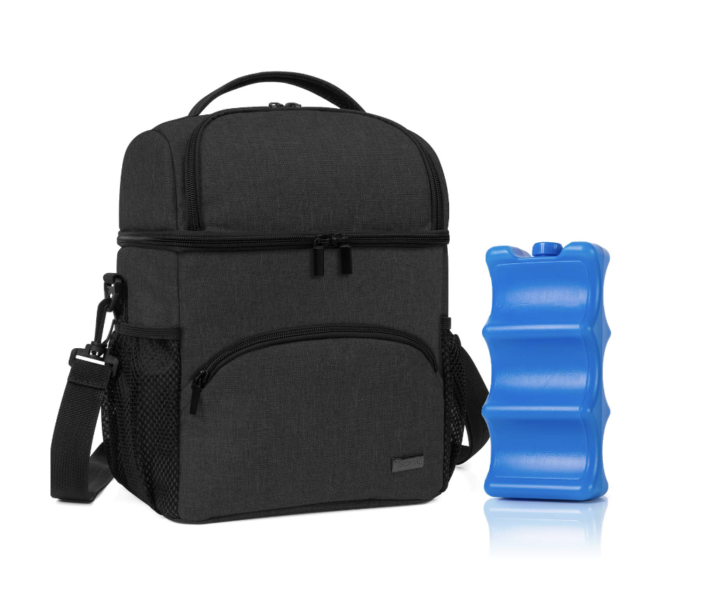
  • Before you go, make sure you have milk storage bags, a cooler with ice packs, and a separate carry bag for your pumping equipment and cooler. 
  • Your breast pump, accessories, and milk should not be counted as your luggage, as the equipment are medical devices and your milk a necessity. 
  • The 3-1-1 rule for liquids does not apply to milk, meaning you can have bags containing more than 3 oz each. However, they may be subject to screening, but that process is safe and does not affect the quality of the milk. 
  • Unless your flight and handling is longer than four hours, your milk is fine to be kept cool and not frozen. Fresh milk can be kept at room temperature for up to 4 hours, and the ice packs help to expand that time frame!
  • In the case where ice is needed, ask your flight attendant for their assistance. 

Ultimately, TSA lays out these guidelines and tips for traveling with breastmilk very clearly, so take a deep breath, keep these guidelines on hand, and ask for assistance if you meet any pushback through the screening and travel process. 

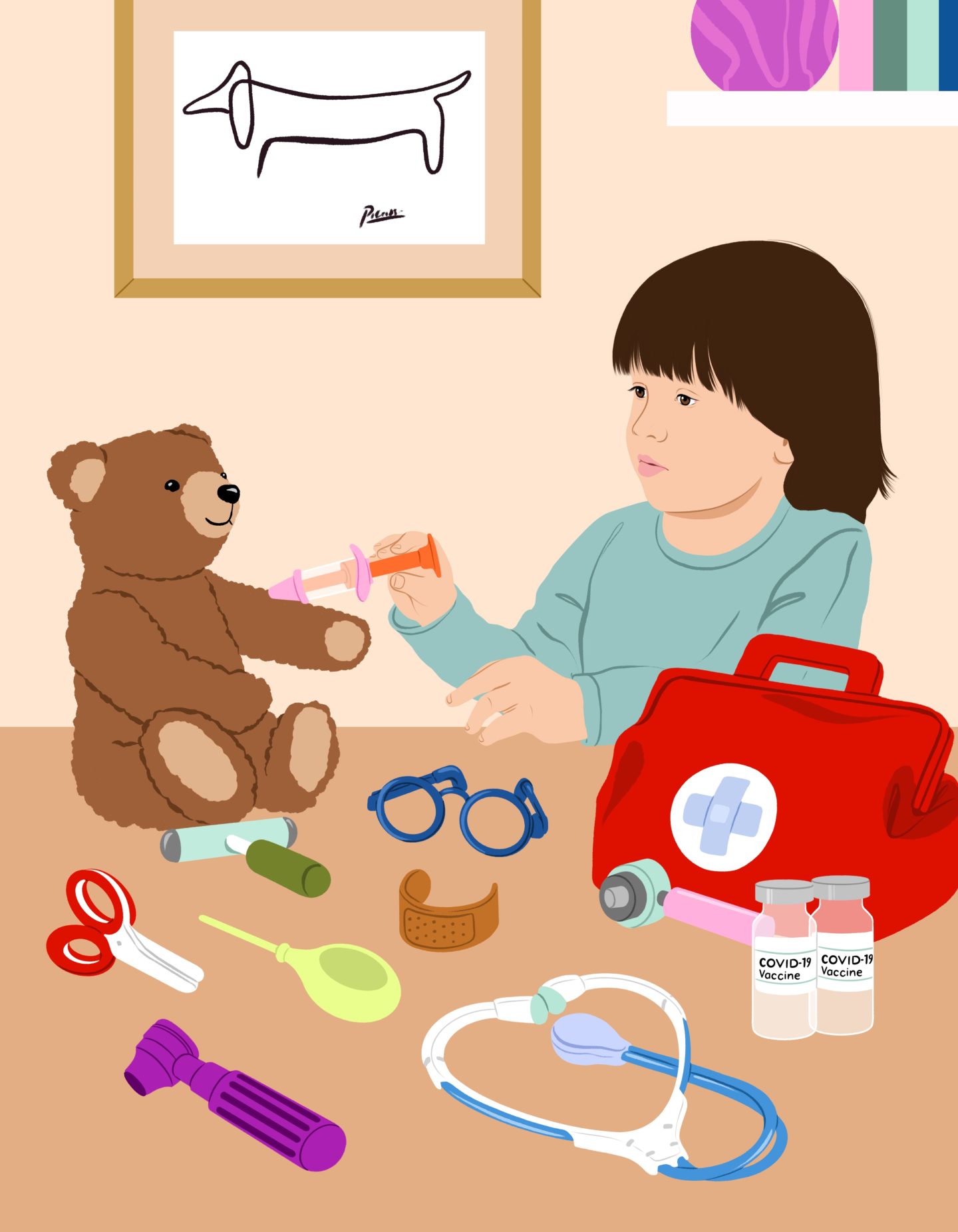
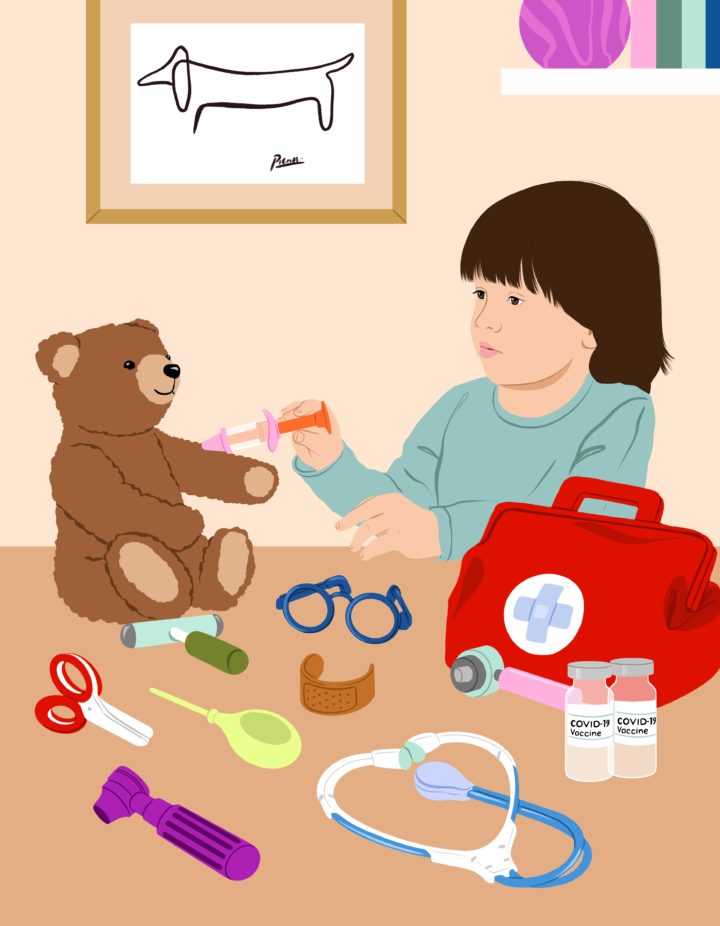
Are You Vaxxing Your Babes Against Covid-19? Two moms take on both sides.

By Babe | Illustration by Ana Hard

In our series The Debate, our community of real moms tackle the pros and cons around common parenting choices. The truth is, like so many decisions around child rearing, there is no right or wrong answer.  At HATCH, our job is to give voice to both sides of any debate, peppering real mom wisdom with the necessary facts so that you can make the best decision for you and your family.

Let’s just start out by saying that here at Babe, we are typically pro-science and pro-vaccines. We don’t pedal the Jenny McCarthy vision of infant care. Like the song goes, we are all about the shots shots shots shots shots…..

That said, COVID is not typical by any stretch and seeing that we are a safe space and non-judgement zone, when it comes to vaccinating your babies for Covid-19, let’s just say that whatever you decide, we get it. Here, we’re breaking down the conversation with one mama who is politely declining (though might change her mind as her baby gets older) and one mama who had been dreaming of the vaccine since we started scrubbing down our Amazon packages. Read up….

Not Gonna Vaxx 

Jenny S. 
Mama to Jackson, 20 months

So let me just start by saying I’m pro-vaccine. We have all the vaccines, so I’m not an anti-vaxxer by any means. I understand the importance of that. I also know that this new vaccine is a new science that hasn’t really been proven against the newest strain. It’s been studied, but we don’t know the ramifications of it yet. I think what doctors are saying and what my doctor said was that we know that the risk of COVID is worse than the vaccine. Fine. But, my son had COVID in January. So we know what those ramifications were for him. Why would I give him something else? I don’t know what those ramifications are for getting the vaccine, so why would I give him both? 

My other thing is that so many kids are not spreading it. Which by the way, if you get the vaccine, you can still spread it. So I don’t feel like I’m ruining society by not giving it to my son. He could still get it. Even if he gets the vaccine, he could still give it to somebody else. So I guess, what are the reasons to get it? What are the reasons to introduce him to something new that we don’t know a lot about?

My husband and I are fully on the same page. And we ask all the questions, we talk to other parents, we talk to our pediatrician. And the advice our pediatrician is telling us is that his practice is not requiring it but recommending it because the ramifications of COVID are greater than the ramifications of the vaccine. Now, if that’s the only reason to get it, that just isn’t enough for us right now. It’s not to say that I can’t change my mind in a couple months.

We’re also at a sweet spot. He’s 19 months old. So he’s not yet in school. That might also factor in one day, but right now he’s outside when he plays a lot. And we’re not doing school. So if I had to get it to dictate if we can do something, I would definitely reassess it. Like I said, we are vaccinated. I got a booster. But I do think we’re in a different moment  now with COVID. So we’re waiting a little bit.

I think if I had a three year old who was going to school or camp or with other kids a little bit older, I’d re-think. I also got the vaccine when I was breastfeeding. I just feel like we’re in an a specific period of time, where we can like wait a little bit. I just feel okay to wait. But again, like nothing’s set in stone. I think as as news develops, we will make different decisions.

TOTES Vaxxing

Mandy R.
Mama to Hudson, 4, and Charlie, 2.

So we have a 14 month old and a four-year-old. We are very conservative and have been really conservative with COVID. We haven’t been doing anything indoors. We took my older one out of his two’s program at the end of 2020 and he was home with us. We let our nanny go and it was just me and my husband, who both work full time and just cared for him. A few months into the pandemic, I got pregnant. I had my pandemic baby in April, 2021 and we still didn’t have childcare. Again, we were very conservative and nervous in the hospital. 

I should mention that my older son was born with one kidney, so he has chronic kidney disease. We had a very close friend of ours donate his kidney to his mom during the pandemic because she got COVID and it wiped out both of her kidneys. After hearing that story, how COVID can affect other organs, I freaked out. I was like, we are not going anywhere and kept it low-key.

Then it was summer and COVID numbers were low, but I had a newborn and a kid with preexisting conditions, which just wasn’t ideal for us. I was hoping a vaccine for kids would come along, but until it did, we were staying in this 2020 world. I’m a lawyer. I work in financial services at a hedge fund, so I’m not in a medical field, but I’m a strong believer in science and really all about it. I would do anything I can to protect my children, so obviously it wasn’t perfect by any means, but I wanted my older son to have some antibodies so that when he gets COVID, it won’t really affect his organs in a significant way. Also just generally speaking I’m one of the least trusting people on the planet, but I just really trusted the FDA to only approve a vaccine that’s safe for them. I feel that compared to other countries, the FDA is pretty conservative. For them to approve it, I had to put my trust in them and didn’t even think twice about it.

So they got vaccinated and it was amazing. It was literally thrilling to be there with other moms who were clearly very pro-vaccine and in the same boat as me. People were giddy. It was this really nice aura and almost like a relief. We were all experiencing it. For us, it helped give us the mentality that we needed to start living our lives. We very much needed it. We said once we get vaccinated, nothing else will be after this. It will take time to get used to, but we’ve started going indoors for playdates. As fall and winter approaches, we hope to eat indoors. I love Broadway shows and can’t wait to go see one. I’ll sit there with my mask on. I’ll have no issues. I will definitely go.

1 26 105