The Seven Best Sensory Objects for Babies from 0-6 Months Break out the bowls.

Are you stumped by the kinds of toys you should be giving your babe to get them engaged and excited? (and that gives you a break for five minutes?) While there’s no shortage of Amazon offerings, odds are if you peek into some closets and drawers around the house, the answers might lie waiting. “There’s no right or wrong way to play,” says Jennie Monness, mama of two and founder of Mo’ Mommies and Union Square Play. “For me, it comes down to what we want our children to get out of their play. Don’t we want them to be engaged rather than entertained? Do we want them to sit and watch when they play or immerse themselves in learning and fun?”

In a bid to curate the perfect go-to toy assortment, we asked Jennie to round up some easy play things you might have around the house, with the goal of raising curious, engaged babies. That means creating the right mix of toys and “non-toys” that encourage interactive and creative play. Peep her picks below.

The Ultimate Toy Guide for Babes Aged 0-6 Months, by Jennie Monness

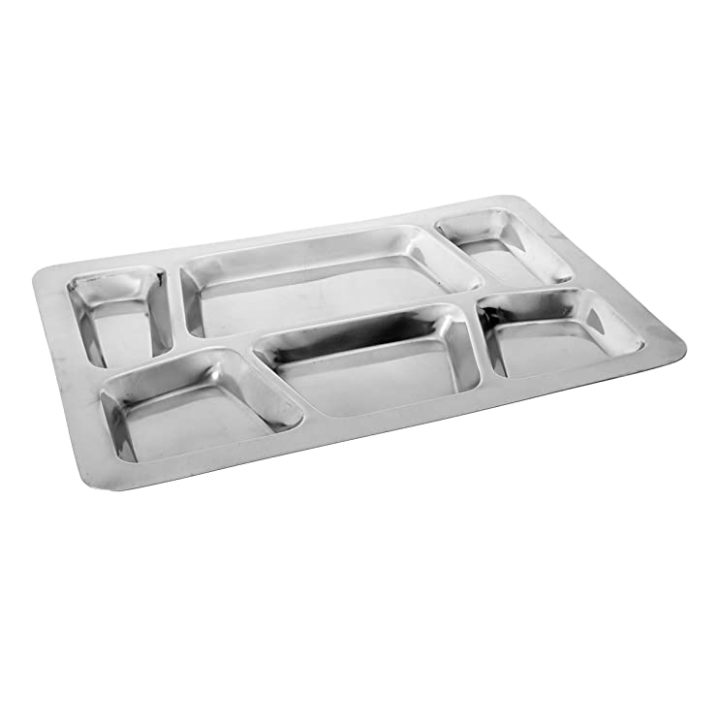
A Metal Tray or Bowl

“So random I know, but what babies love about this is that nothing else in their play nook is shiny and reflective like this. It’s sort of a mirror like but sort of not, it’s shiny, reflects light and cool and smooth to the touch. They may not interact with it much until they are comfortable on their bellies or able to grasp the bowl, but once they can, you’ll see the magic. Add in a metal kitchen utensil as long as you have no zoom calls for some noise making!”

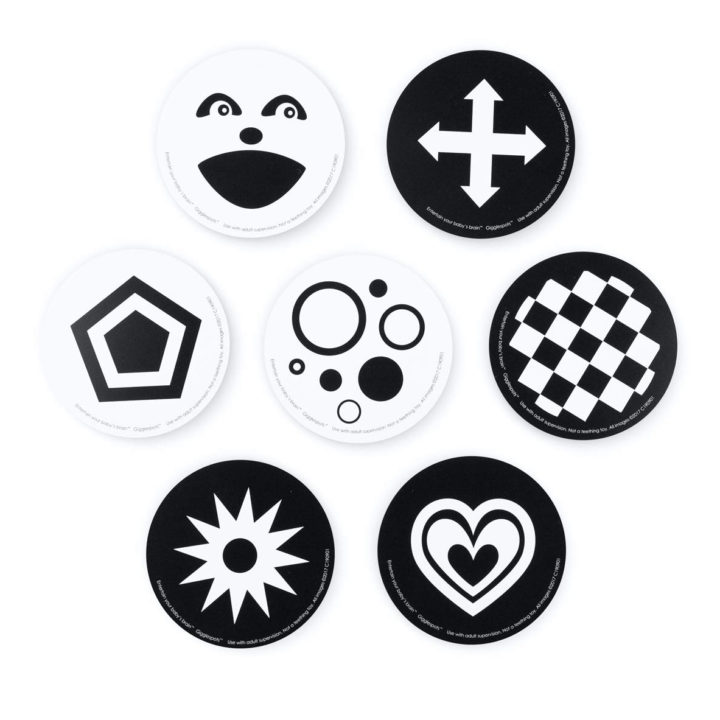
Giggle Spots

“What is so cool about these is that you can use them literally ANYWHERE. They come with tiny little velcro dots so that you can adhere the black and white photo on any surface. Some of my favorite spots are on the seat of the car where their car seat faces (i always feel bad they have to stare at the set and so this makes that more exciting) and on the wall by the changing table. Eventually your baby will love reaching and pulling them off the spot that they are adhered to and putting them back on.”

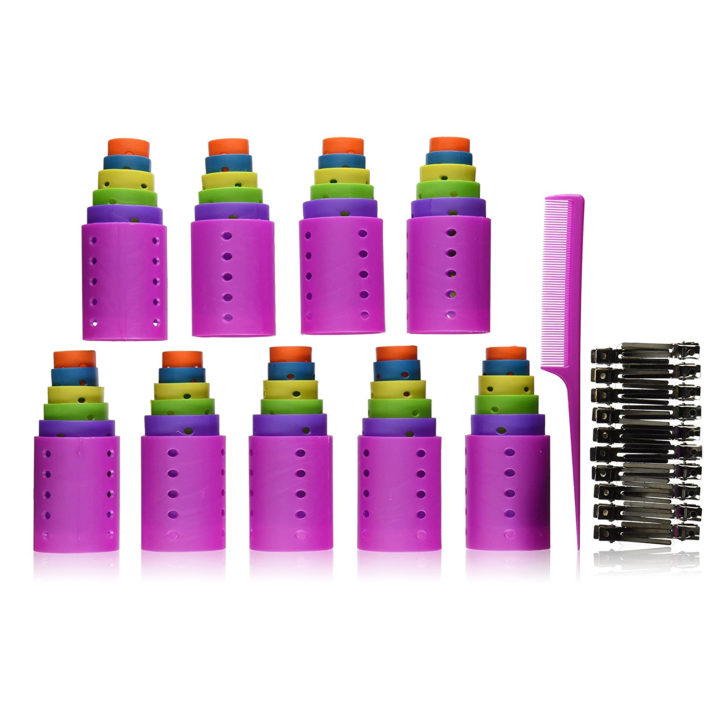
Hair Rollers

“My favorite toys are non toys, that’s because there’s something about real life objects that just intrigue babies more than soft plush toys. Everything is soft and plush but not everything rolls, has tiny holes in it and is easy to pick up and stick their tongue through. That’s what a hair roller does! A baby who can sit up will even try to nest them through one another seeing what fits and what doesn’t.”  

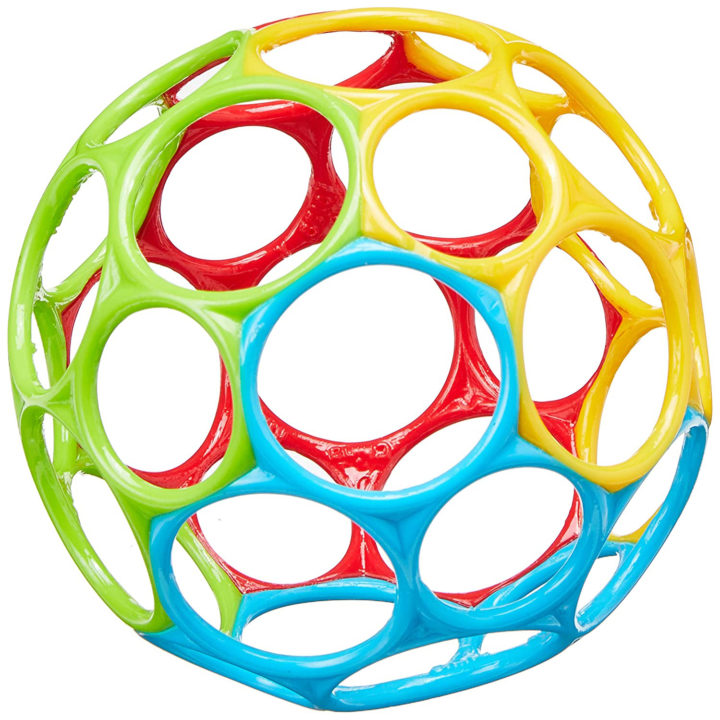
Oball

“This is one of the first toys I recommend introducing to a baby. It’s because its allows for an “Accidental grab” with all the holes in it. So even before a baby has developed the ability to intentionally grab an object, they can intertwine their fingers in this and hold it. Put a cloth napkin through it if the rolling away is frustrating for your baby who can’t crawl yet.” 

Water

“There’s something about water that intrigues and calms young children. If you add water to a bowl and put it in front of your infant, they’ll love splashing, dipping and swishing it. Even put some down on a baking tray while your baby is on their belly and watch as they smack the water.”

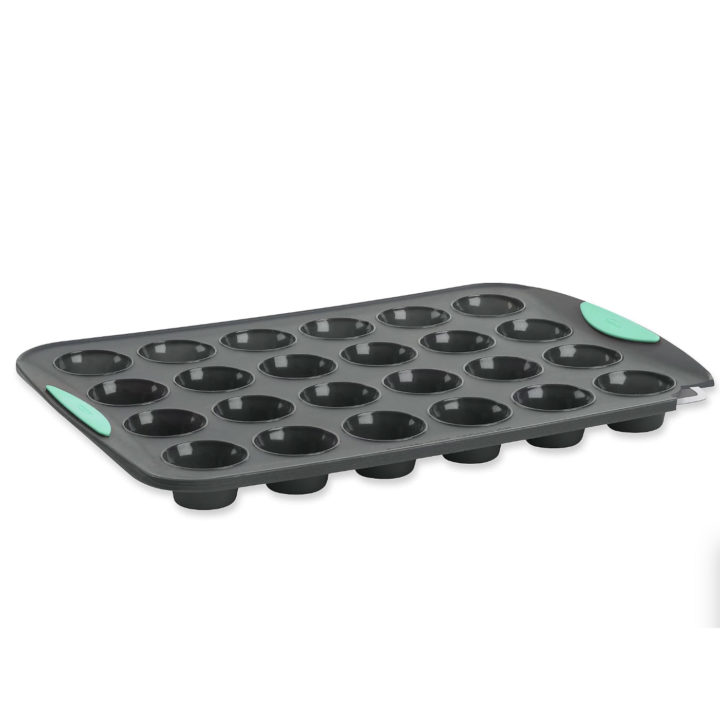
Silicone Cupcake Tray

“It’s like a tray of buttons! Babies love buttons and they’ll also love mouthing this. You can even sprinkle some water in each ‘button’ for exploring.” 

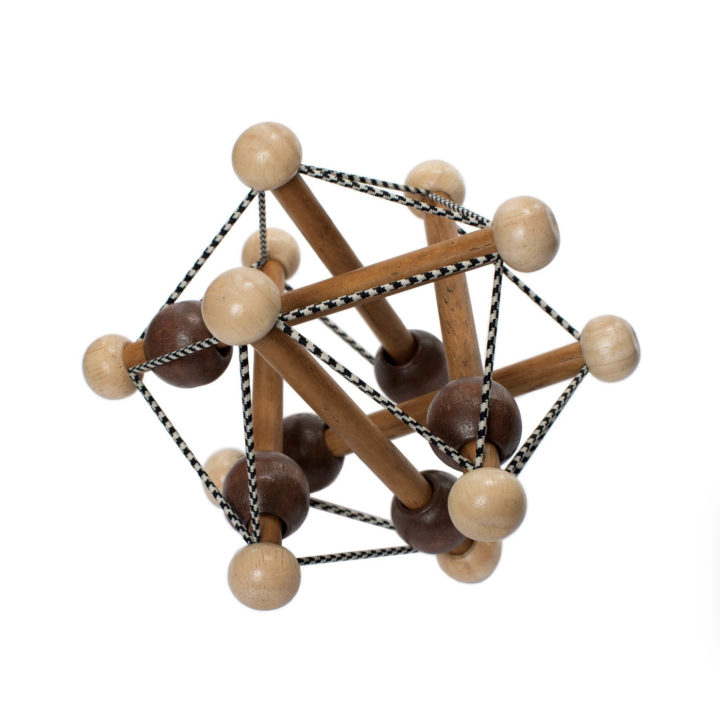
Skwish

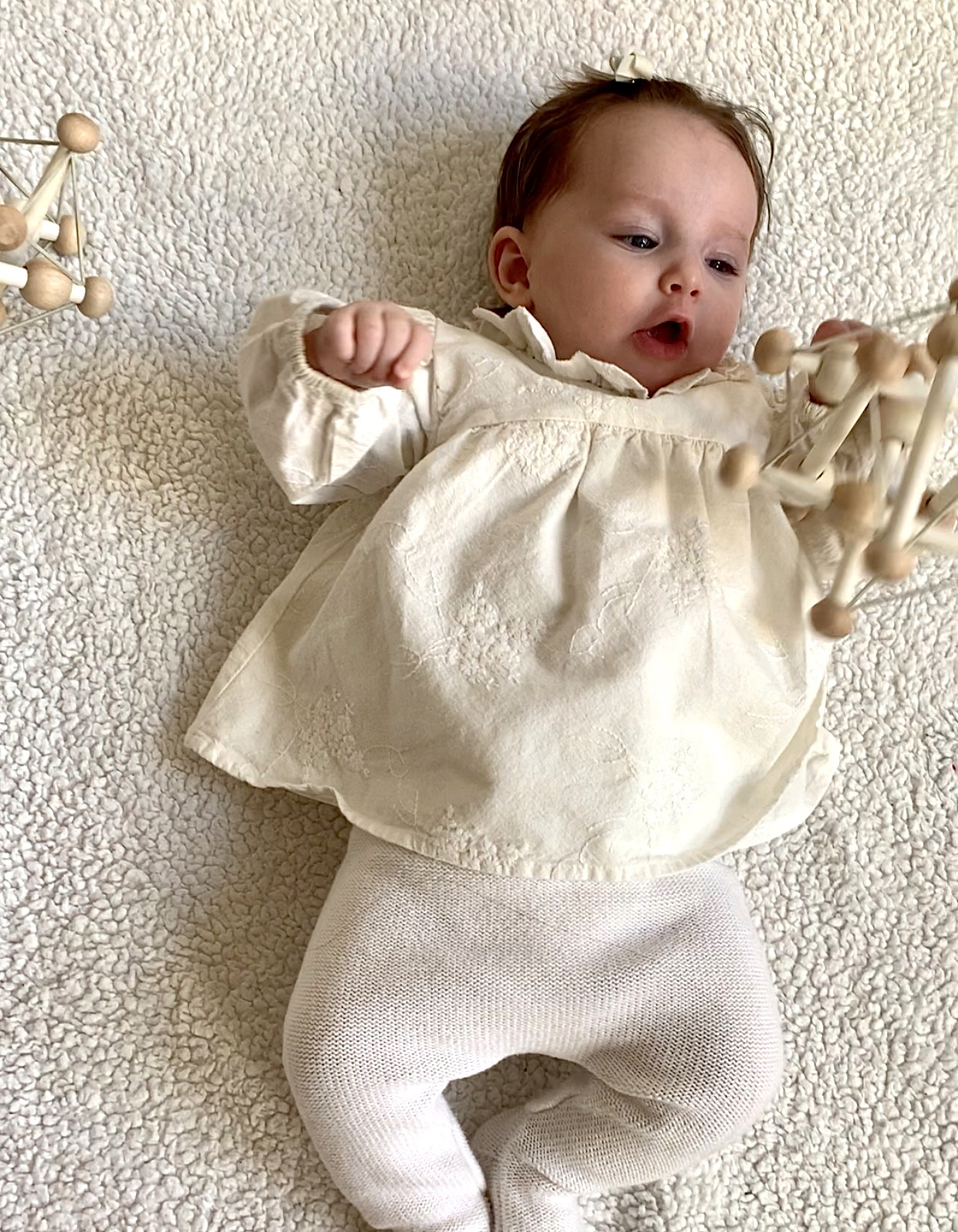
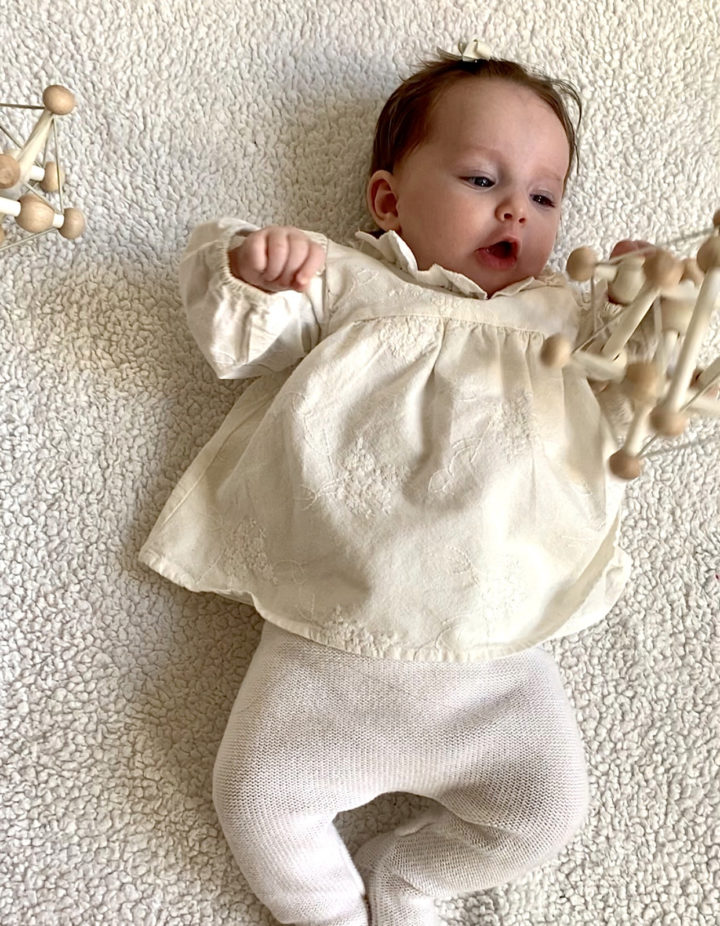
“Similar to the oball a baby can grasp and hold this more easily. It also makes the most lovely noise as the wood clangs against eachother. I also appreciate that the noise is visible unlike a rattle where a baby has no idea why or what is making noise, a baby can see that the wood beads sliding against one another is making noise (once they are old enough to notice this).”

“Sometimes you’re a mom already in your heart, and the rest of your body needs to catch up.” Emilia Bechrakis Serhant on IVF, and the book it inspired.

By Caroline Tell

You may know Emilia Bechrakis Serhant as the practical, intellectual foil to Million Dollar Listing star Ryan Serhant and his more-is-more zeal through the journey of New York real estate. But what you may not know is that Emilia has endured a journey of her own in conceiving her and Ryan’s toddler daughter, Zena. Like so many women before her, Emilia was given the frustrating diagnosis of “unexplained infertility” after trying to get pregnant for over two years, and, after undergoing IVF with one embryo, they eventually conceived and gave birth to their miracle baby in 2019. 

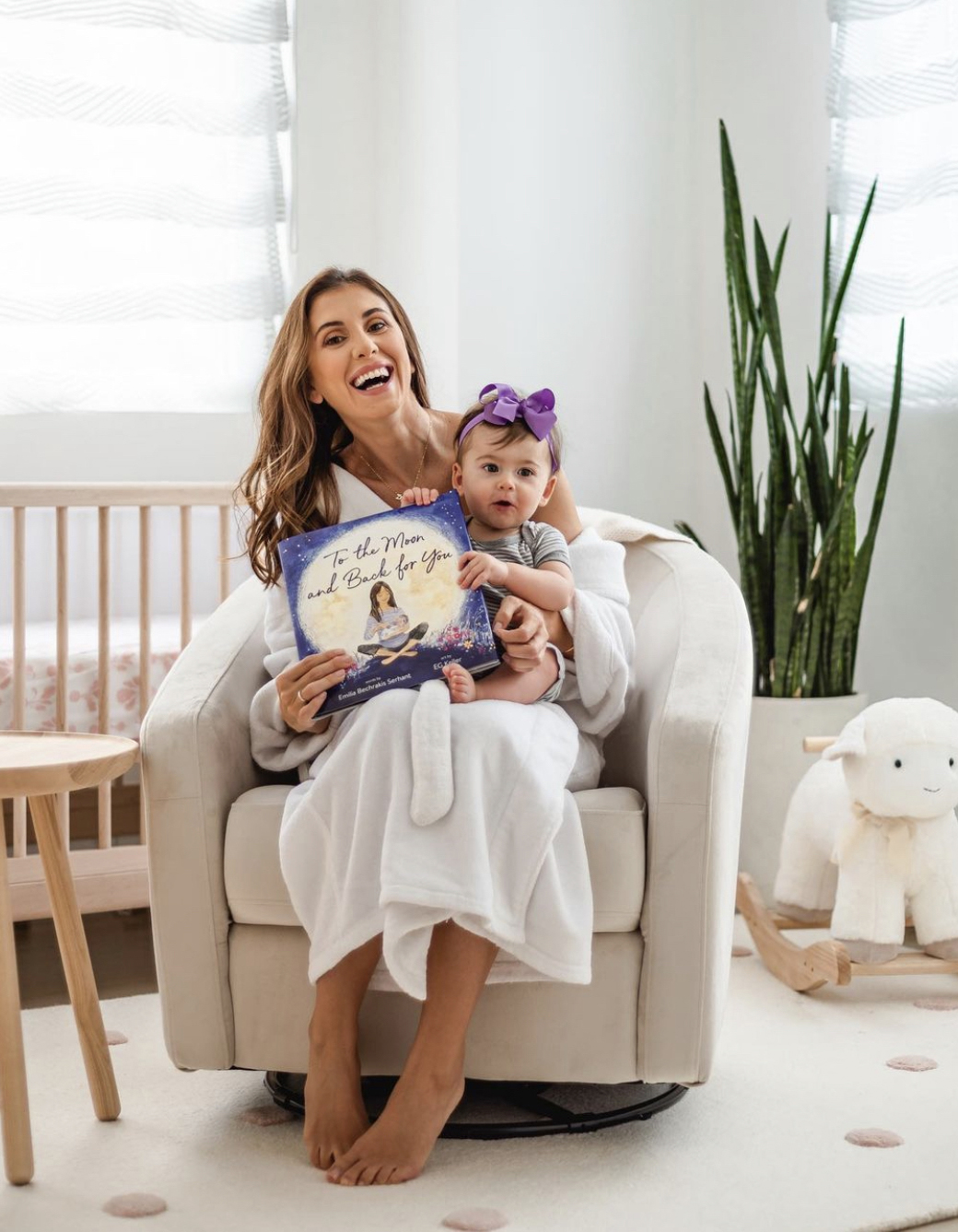
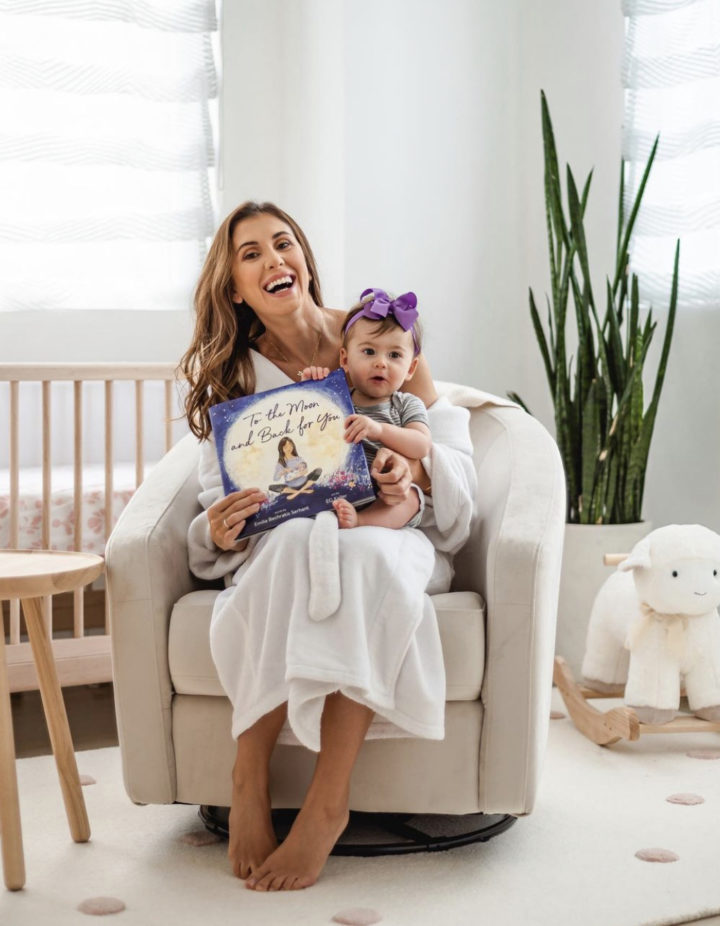
Now, Emilia is opening up about her experience with a new children’s book titled, To The Moon and Back For You, in which she pays tribute to her journey and to the hard road she traveled in conceiving her daughter. She hopes the book will help all kids – no matter how they came to be – understand how much they are loved, and for parents to feel a sense of pride in their paths to parenthood, no matter how many twists and turns it took. We sat down with Emilia to chat the pokes and prodding that came along with pregnancy, and why it only made her marriage – and role as mother – that much stronger.

Can you describe your journey through the world of IVF and to eventually conceiving your daughter?

My husband and I were trying for around two years to have a baby. In that first year, I was pretty relaxed about it. By the second year, it became, OK what are we doing to do about this? Obviously something was up. So we started the whole cycle of fertility doctors and figuring it out. In the beginning, it was more about why is this happening and less about what can I do? I didn’t know about fertility treatments. I didn’t realize I would end up needing it. I naively thought IVF was for older women or same sex couples. It wasn’t something a young girl needed to do. When the doctor couldn’t find  anything wrong with us, he said to try IUI and start fertility treatments, which didn’t work. So we switched fertility doctors, because when you don’t get pregnant, you blame the first doctor and think if I quit the first clinic, that’ll make a difference. Of course, I tried everything under the sun and anything I read short of hanging myself upside down.

We went to a new doctor who said, OK here’s your option: IVF. When we went down that route, I think I started out being very positive but I set expectations low. I had heard of other women trying multiple times without getting pregnant. I figured it won’t happen with my first try. But on our first try, we got only one embryo and she was my Zena, my miracle baby all the way. I’d look at her picture and think please stick. I prayed to everything. She was it. It was also very telling back then of her personality. She’s a stubborn child. She held on for dear life. I am forever grateful that she did and that I had the opportunity to go through IVF at a time in our lives where we could afford it. It’s a very big issue with IVF and treatments in general. It’s draining physically and emotionally but also financially. The timing was right for us.

How did the experience in trying to conceive affect your marriage at the time?

We lead a very fast paced life. We’re busy managing our careers and suddenly we had to manage prioritizing having a baby. We had to prioritize reconnecting and connecting in general and talking through it and how we felt about it. That was the struggle we had. It started to take a toll when it was not happening and they couldn’t explain why. But we never reached a point where we blamed each other. It was frustrating that I didn’t have an answer. So we were trying to figure it out and relatively privately. It was hard not having someone else to talk to about it with. It also became more frustrating when people would ask, “When are you having a baby?” Watching everyone around us having kids was most difficult. At that point when we went through IVF, it was all or nothing. Let’s either call it and figure out other ways to have a child, or let’s go all the way.

Many people don’t know how exhausting IVF really is. You see shots and the painful part of it, but what you don’t see is being monitored constantly. Going in at 6am constantly, or some crazy specific time to be tested. It is extremely draining. You’re poked and prodded all day long, every morning for months on end. That’s also very trying. It’s not just the physical aspect of injecting, but Ryan was right there for those appointments.

What’s one thing that surprised you about that journey?

I think the actual process of it. All the time that goes into it, all the money that goes into it. It’s almost a full time job. It was physically taxing on my body, and I felt that the hormones really affected my mental state. I couldn’t remember things. I’m a lawyer and I’m very detail oriented, and I was very surprised in the physical sense of how the hormones affected my brain and focus. It also humbled me in this crazy way, where I was suddenly so conscious and aware of my body, its limitations and its capabilities. I think I know and love my body now in a different way. The process taught me to love my body and what it’s capable of and that I must treat it well.

Hyperemesis Gravidarum
/hahy·per·em·uh·sis· grav·i·duh·ruhm/
Otherwise known as extreme morning sickness, hyperemesis gravidarum can sneak…

How did your pregnancy go, and did your experience with IVF impact how you felt during your pregnancy?

I was very shocked that IVF worked. It felt too good to be true. I had a very rough pregnancy. I was extremely sick the whole time, especially in the beginning.  We had multiple scares with Zena. In those nine months, I experienced more anxiety than in my entire life. I didn’t believe it until I saw her. I’m not sure if that’s the same for other mothers, but I couldn’t believe it. I looked into her eyes, I heard her cry, and when someone said, “She’s OK,” I exhaled and cried. Throughout pregnancy, I was bracing and holding on. IVF didn’t just stop with the transfer, it was the entire journey until she was born. 

What’s something so many women don’t know (and would benefit in knowing) about the IVF process?

You’re not broken. It’s a cliche but I 100% believe it. Nothing you did is your fault. You shouldn’t feel guilty for making life choices, where maybe you put family after career or after a life you wanted to experience. As women we need to stop beating ourselves up for choices we make and stop hating our bodies. It’s easier said than done. I definitely went through a phase where I was really hard on myself. I didn’t have control over my body. Unexplained infertility is happening more and more, especially for younger women. I want women to know to be gentle with themselves and be kind to themselves.

Also I don’t want to compare my journey to someone else’s. Everyone has a different journey, and everyone’s baby will come to them when they do and when it’s time. No matter which way it happens, that baby you wanted will come into your life. It’s very important for me that people know that. Sometimes you’re a mom already in your heart, head and soul, and you need to get the rest of your body to catch up. I hope in some way, whatever I say or share will help someone be kinder, gentler and allow themselves to go through the process.

You’re not broken. It’s a cliche but I 100% believe it. Nothing you did is your fault.

What inspired you to write To The Moon And Back For You?

I had these little words in my head and I’d jot them down in my phone throughout the pregnancy. I never thought it would become a kids book, and when Penguin Random House wanted to do a book inspired by IVF, I thought, OK I have an idea. And it wasn’t to teach about IVF. It’s more of a poetic book about a difficult journey to motherhood. And that there isn’t just one way to motherhood, but many things that can go wrong or right. It doesn’t matter how hard it was because at the end of the day, they were so extremely wanted. It was so worth the journey and you wouldn’t change a single thing because you wanted that child. No matter when and how they came into life, you wouldn’t change it.

What sort of conversation are you hoping to start?

I will get to the point where I’ll have a conversation with Zena about how she came into the world. And I want the first thing for her to know is how much I love her and how much she means to me, that I would have climbed the tallest mountains or braved the roughest seas to have her. I would still do it all over again. So it’s that moment to talk to your child about how they came into your life and how you came to be a family. There are so many ways you can have a child now. The first thing they should know is how much they are loved. And that however much you went through to have them, it doesn’t matter. You’d still do it all over again.

What do you hope people will get out of the book?

I hope it will give parents a minute to bond with their child and tell them they are the greatest joy in your life, that you’d go to the moon and back for them no matter what. I hope it gives parents a moment to feel proud of everything they did to have their child. It’s a kids book, but I wanted a way to memorialize this process.

How has being a mother changed you?

I’m a completely different person. Aside from being exhausted, I think motherhood has humbled me beyond belief. It instantly jolted into this state of, OMG this is why we’re here. Being a mom is my calling. It has transformed me into this very mindful person. I’m more mindful of everything around me. I view things through her eyes and I watch things through her process. It’s just made me way more alert and aware of everything. I’m also more compassionate, more understanding and calmer. It’s made me want to be a better woman. She makes me want to be a better woman. I want her to see me as a role model, and I’m way more thoughtful towards other women and understanding where they come from. 

What do you love most about being a mother?

That i get to watch this person have her own personality. She is part of me and Ryan genetically, but she’s her own person. There’s so much of her that’s just her and I would love for other women who don’t have a biological child to know that their child will have their own personality, and it’s such a beautiful, fulfilling part of being a mom. I thought I’d care, if she looked like me or acted like me, but she has her own personality. That’s my favorite part of being a mom, watching little human explore the world. 

Finally, a Formula for Mamas with a Mastectomy Meet Bobbie.

By Babe | Photos courtesy of Bobbie

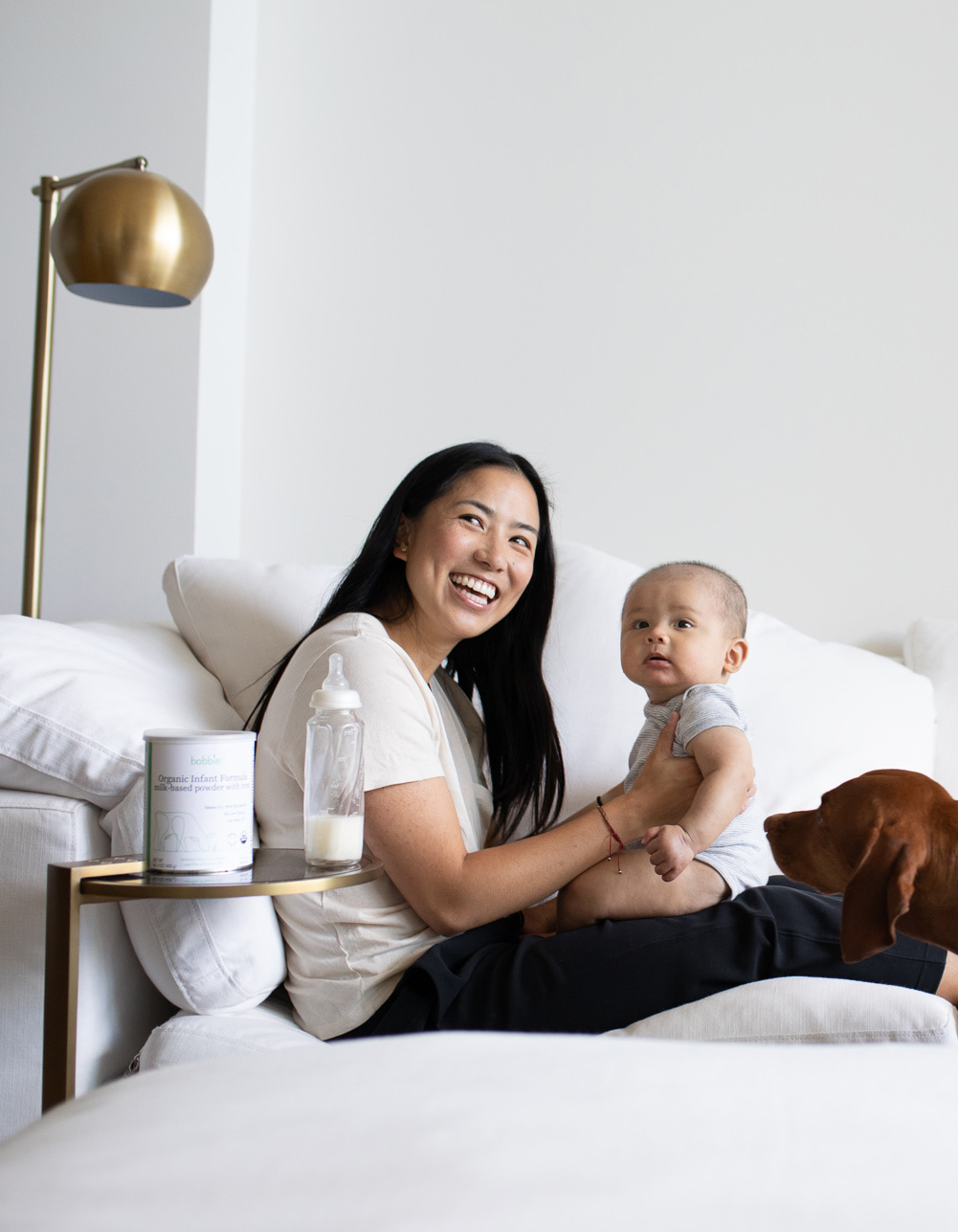
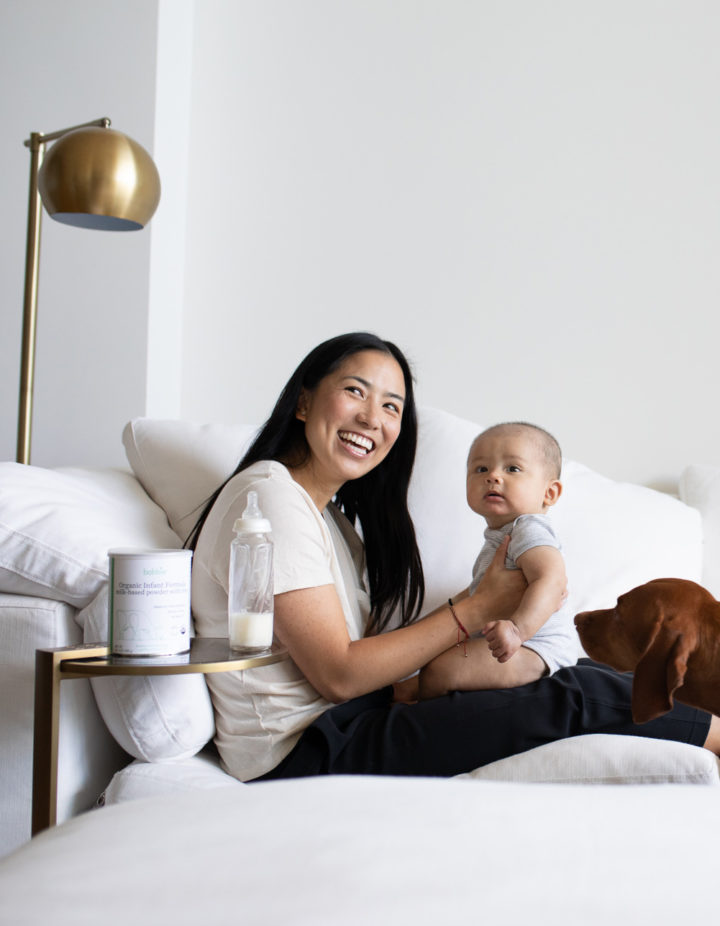
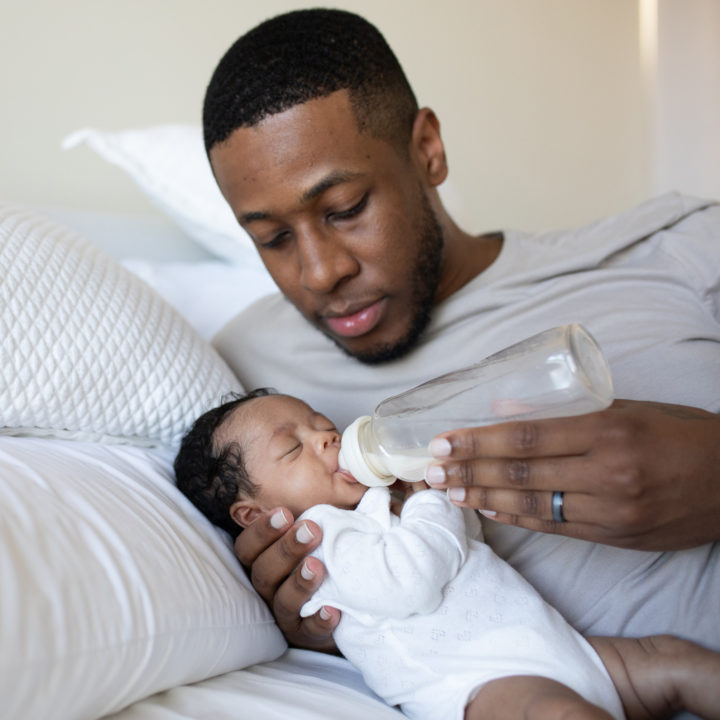
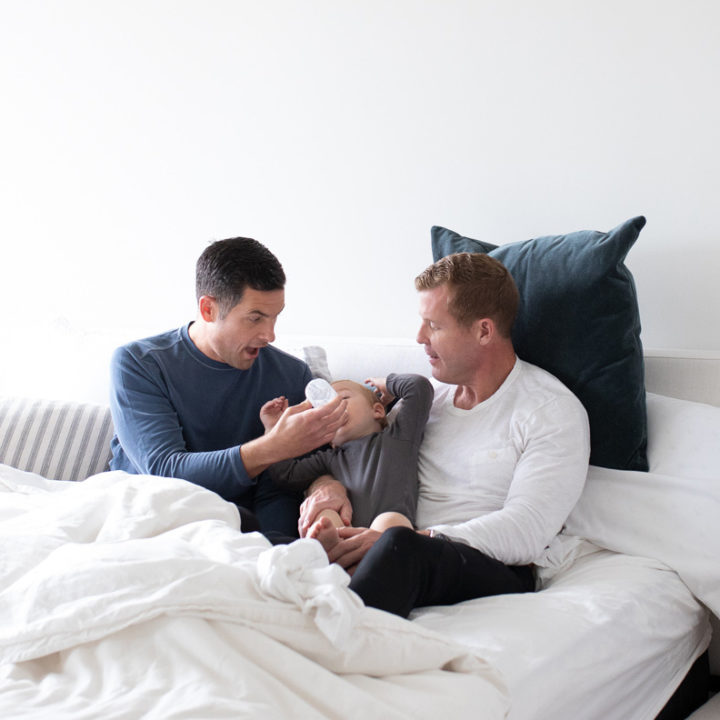
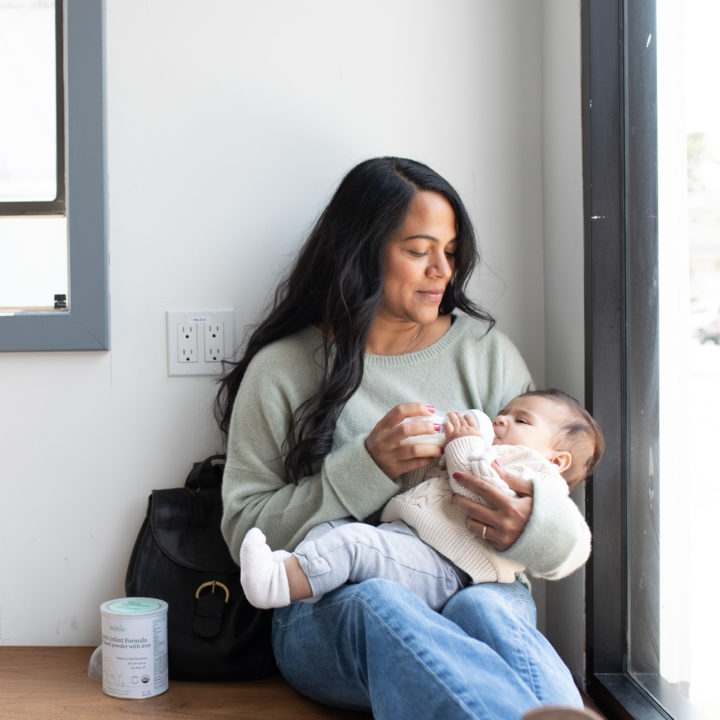
Did you know that new moms who’ve undergone a mastectomy can get a free breast pump (of ALL the things they could possibly need, SMH) but have zero access to donated breastmilk or formula? Obviously this policy needs to change and Bobbie, a new organic, European style formula is leading the charge. Founded by two women (obvs), Bobbie is a USDA organic, purposefully sourced infant formula with pasture-raised milk, 100% lactose (just like breastmilk), and DHA levels that meet the European Union’s intensely high standards. Bobbie mirrored its recipe after the simplicity of European formulas while also meeting all FDA requirements in the United States. What’s absent? There’s no palm oil, corn syrup, maltodextrin or fillers, or corn products, and no antibiotics used in cows, persistent pesticides, and GMOs.  

Now, Bobbie wants to give back by helping five mastectomy moms due in 2021 with a free year of formula (more deets here). “Right now in the U.S., new moms who have had a mastectomy as survivor or previvor can get a free breast pump and lactation support through The Affordable Care Act, but repeatedly get turned down when they ask for insurance coverage for formula or donor milk to feed their babies,” says Laura Modi, co-founder and chief executive officer of Bobbie. “The stigma against formula is so baked into the system with our ‘breast is best’ mantra that we have managed to overlook those without breasts. We’re hoping to bring awareness to this policy gap for moms who have undergone so much already.”

Bobbie’s waitlist is open and will be shipping by the holidays. Bottles up, ladies.

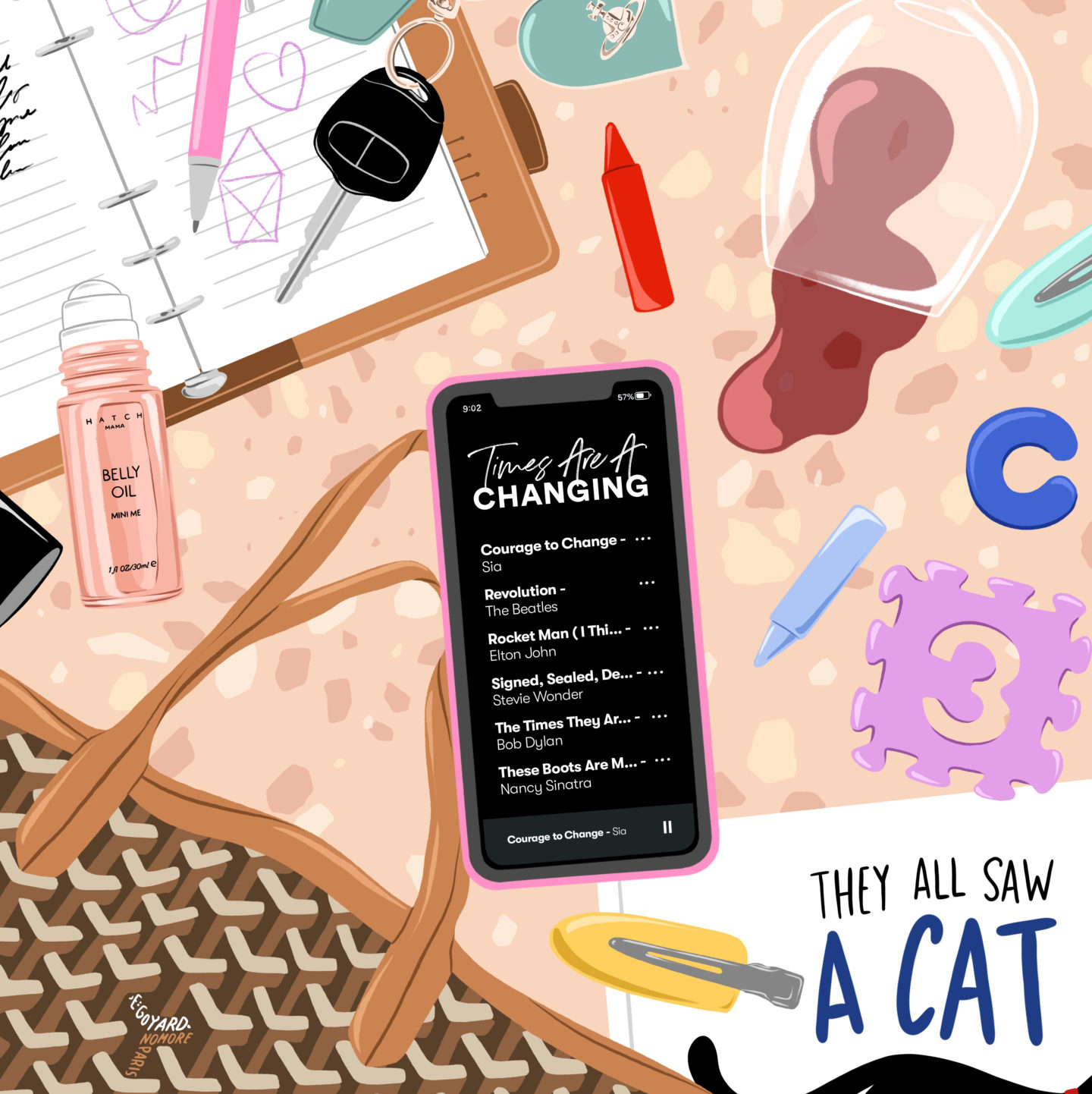
Times Are A Changin' Tunes to vote by.

By Babe | Illustration by Ana Hard

Entering the final few weeks, the homestretch if you will, before what’s likely to be the most important election of our lifetime (thus far), we’re turning up the tunes and getting Election Day ready.

Something Navy's Moms-To-Be On sharing the maternity experience.

By Ruthie Friedlander

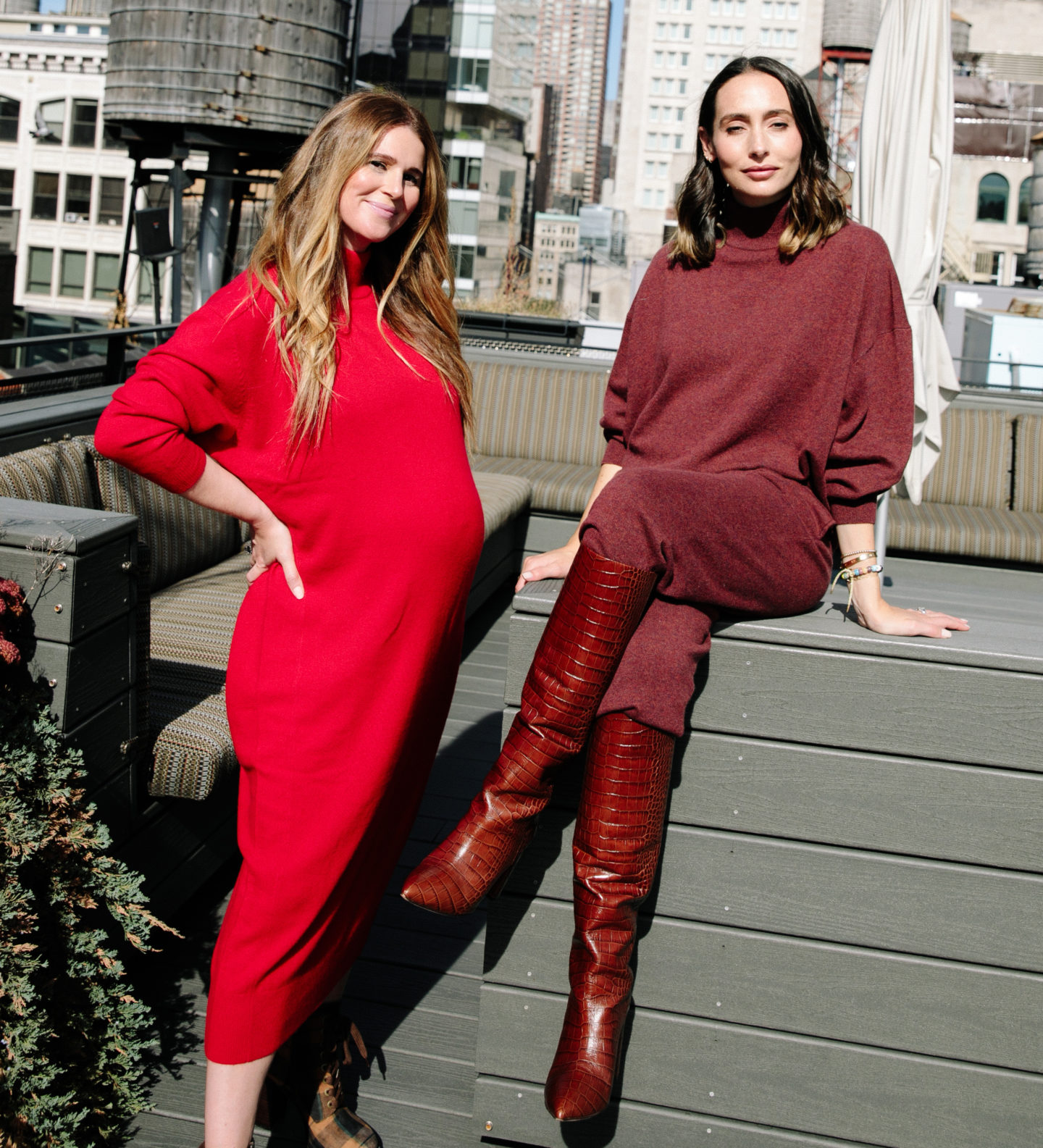
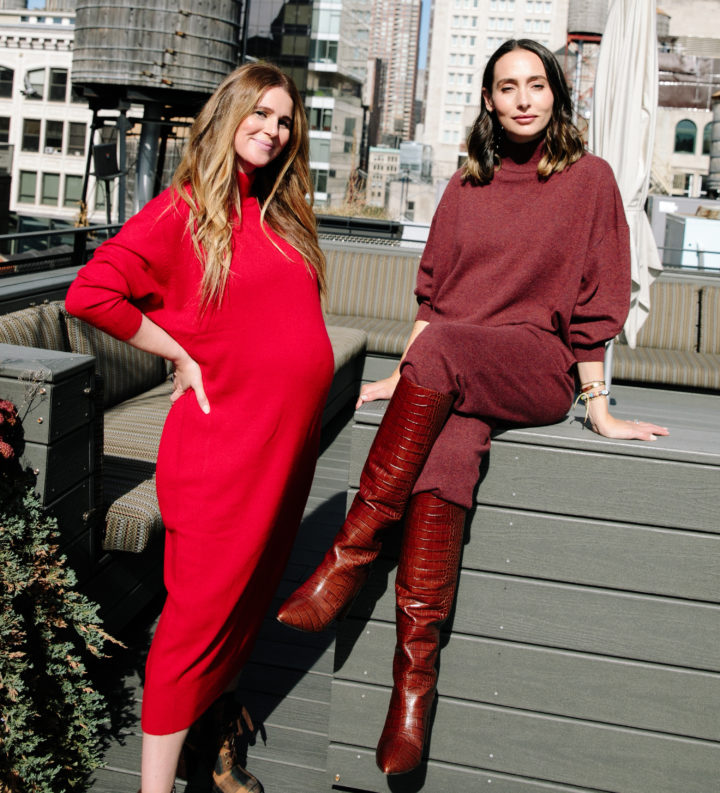
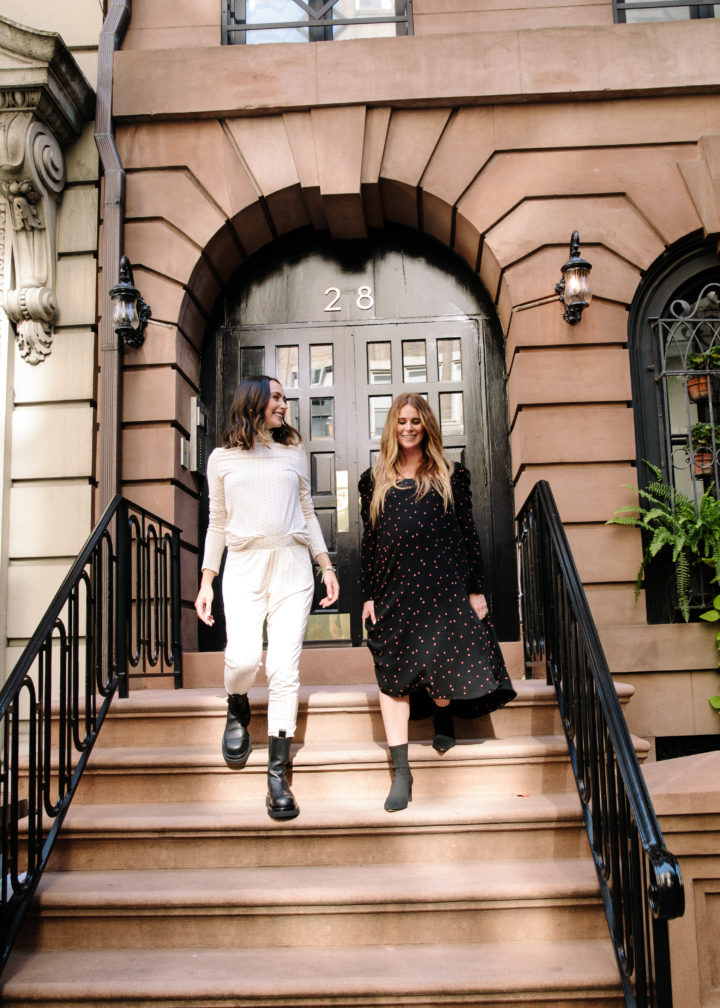
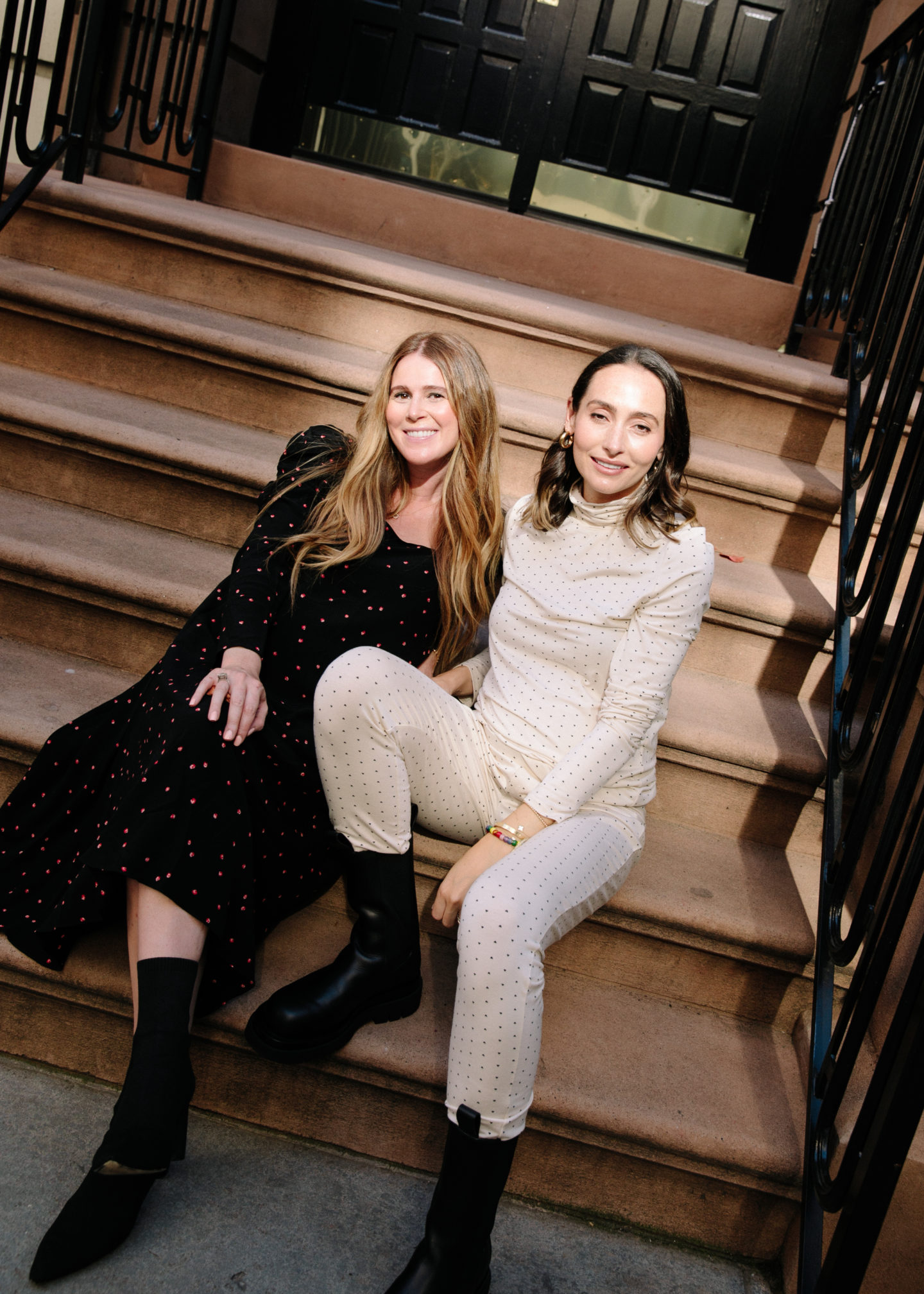
There must be something in the water at the Something Navy offices because everything’s coming up newborns. Having gone from one working mama on the team to five with two on the way, we recently caught up with teammates (and moms-to-be) Dana Putman and Tara Foley on working together and making babies.

As contributors to the brand’s magic, these ambitious women share their tips for pregnancy dressing, how they’re leaning on each other in more powerful ways than ever (hello ‘SN Mamas’ group text, aka a focus group at your finger-tips), and why sharing the maternity experience has made for a supremely supportive professional culture. 

I mean, expecting at the same time as our work-wives sounds like a dream. Where do we sign up? 

Path to pregnancy?

Tara: I tried conceiving naturally for 8 months. After 6 months of trying, I began seeing a fertility doctor (who was so incredible!). Testing showed my levels were relatively normal and so we trialed a few natural methods to increase my fertility. Then, just as we were considering IUI, we were blessed with a positive sign.

Dana: We found out we were pregnant naturally in April after a loss in January with our first pregnancy. At 12 weeks we went in for our NT scan, and were told the baby had stopped growing. Apparently, I had what they call a “missed miscarriage,” which means there were no warning signs or symptoms that anything was wrong. It was incredibly confusing and devastating. To this day, I still don’t understand why it happened or what went wrong. The doctors all told me it was just bad luck, and these things sometimes happen—which was probably the most frustrating thing to hear.

Gutted, we told almost no one. Looking back, I think it was because we were in shock for so long. Even now, I still have a hard time talking about it. Initially, I swore we wouldn’t try again for months, but when the doctor gave us the green light in March, we decided we’d go for it and see what happened.

Well, it worked! Fortunately I got pregnant, the very first month we tried! From the start, this pregnancy has felt so different. It took me a long time to trust my body and let go of my anxiety, which is natural when you’ve suffered a loss. I’m so grateful and will never take pregnancy for granted, it’s truly a miracle what we’re are capable of.

And, how has it been being pregnant through COVID?

Tara: I won’t lie, I’ve loved being pregnant during the pandemic because it’s given me all the reason in the world to stay home! I’m typically a very social person, and I imagine that lifestyle while pregnant, particularly during the first trimester, would have been super challenging. Plus, I was better able to keep the pregnancy a secret early-on. If we hadn’t been in quarantine and were in the office, I probably would have told my coworkers the day I found out. With that in mind, an obvious negative has been the daily fear associated with being a high-risk person during a pandemic and what Covid-19 could mean for my baby should (we) get sick.

Dana: Pregnancy has been the silver lining of the pandemic. My husband and I left NYC in March and stayed out at the beach in New Jersey through September. Therefore, I spent the bulk of pregnancy by the ocean with very little social interaction. In many ways slowing down was the best thing for me; it allowed me to really focus on being pregnant and taking care of myself with none of the traditional “fake drinking” at a party or wearing baggy clothes to hide a changing body early on. At the same time, we’ve taken all of the appropriate precautions with Covid-19 and have kept a tiny circle. It was a little disappointing to tell most of our family and friends we were expecting on FaceTime rather than in person, but that’s minor and we know how fortunate we are to be healthy and safe with everything going on in the world.

Being pregnant at the same time as your colleagues?

Tara: It’s been so special, and helpful! Working with women with shared experiences of maternity and motherhood make for an incredibly supportive professional culture. While I couldn’t wait to tell my colleagues the news that I was expecting, I know many women who work in less supportive environments often don’t feel as comfortable. It also means I have an insanely trustworthy focus group at my fingertips in the form of our ‘SN Mamas’ group text chain. I just started my baby registry, and before doing much research of my own, I sent 1 text and knew at least 20 must-have items in minutes.

Dana: In the last year we’ve gone from having one working mom on the team to having five, plus myself and Tara on the way. It’s been such a shift for our company culture in the best way. We share a lot of our personal experiences with our audience, and I think they love to see a group of young, ambitious women building a business together and having babies.

We have a group chat with the SN moms where we talk about everything from the best car seats to the best nipple balms. That chat gets crazy!  I feel like I have an army of women I can go to with any ridiculous question; it’s been super special to have this kind of support from coworkers. 

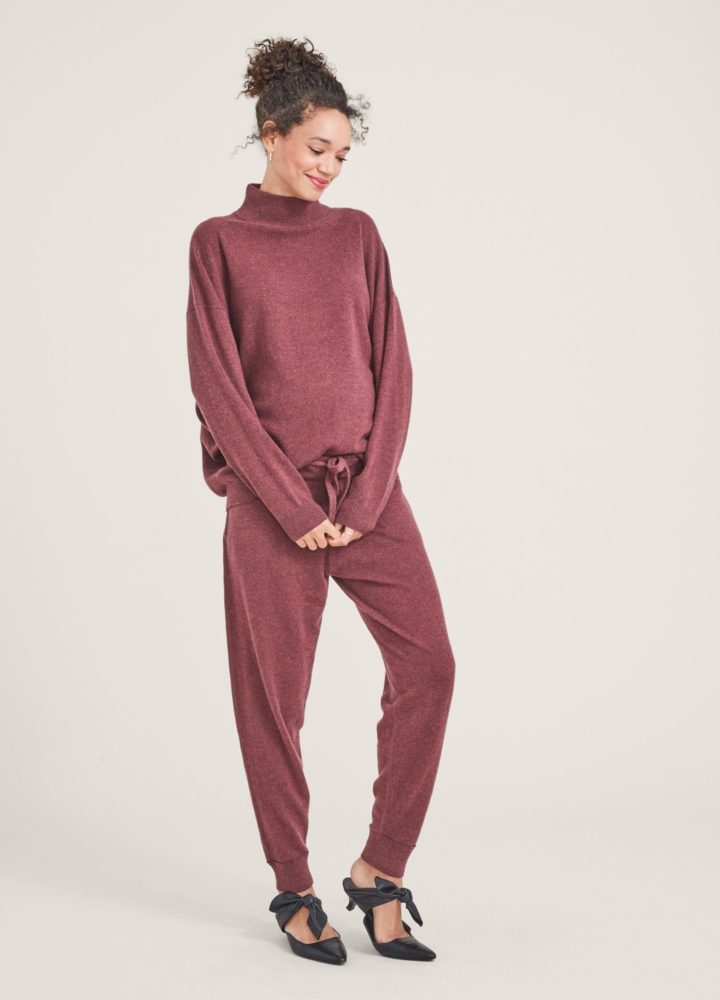
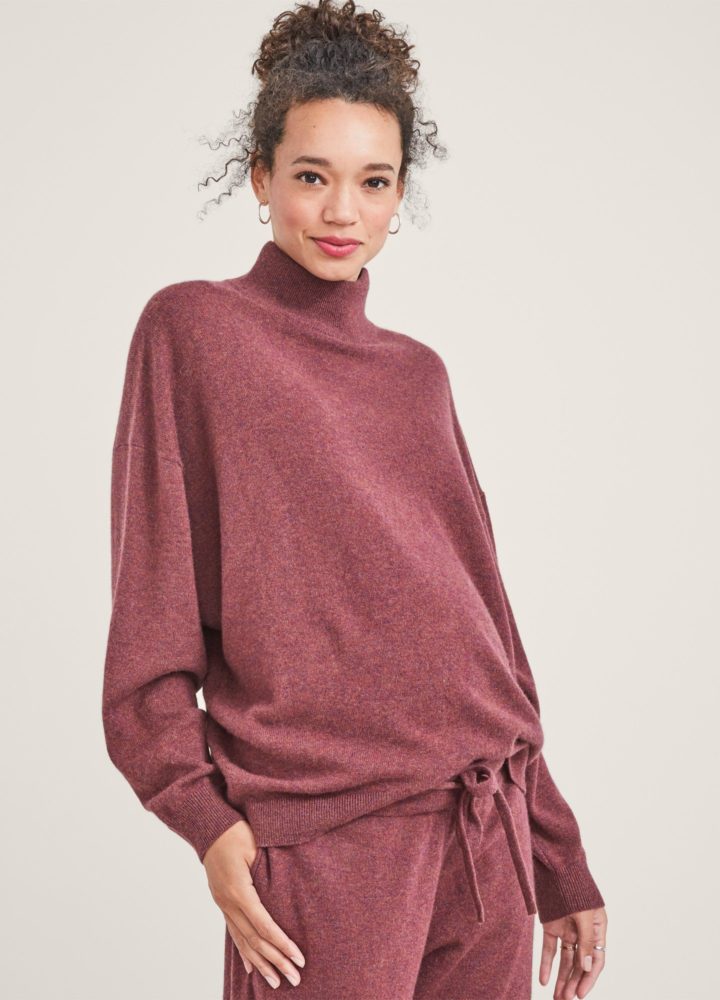
Tara in the Cashmere Jogger

Balancing maternity leave and becoming a working mother?

Tara: I pour so much of my energy into my career, and often I feel like I don’t have much mindshare left! Something Navy is a hard business to “turn off” from, and I’ll likely have to take it as it comes, although I’m excited to have some time to focus on the baby. Upon returning to work, I’m learning from other moms that somehow you become even more productive, and magically manage to do it all. 

Dana: I feel fortunate that Something Navy is a female-founded and female-forward company. I’m planning to take maternity leave, and my whole team is super supportive of that. We’re all very close, so honestly, I think the most challenging part will be having FOMO of everything going on at work while I’m out! I’m also really excited to return to work because I know being a working mom will push me and motivate me differently. I’ve always admired and been inspired by women like Arielle who can run a business while having a family, and I think in so many ways it will make me a better mom, a better wife, and a better employee to have both a career and a family that I care so much about. 

Listening to?

Tara: I love podcasts – mainly because of how insightful the conversations can be and to find out what other brands are advertising in audio! My favorite series include: Skimm’d From The Couch, The Daily, goop Podcast, The BOF Podcast, and How I Built This.

Dana: Because I’m not commuting to the office right now, my podcast consumption is embarrassingly low. Although I like to put on my headphones and listen to Mom Brain or The goop Podcast when I can’t sleep. 

And how are you taking care of yourself?

Tara: Relax, prenatal yoga, water, cookies, and carbs! Speaking of carbs, I’ve been pretty averse to vegetables most of my pregnancy, which is devastating as they used to be a favorite food. I take eight Greens Gummies daily to ensure I get my daily vegetable intake. Oh, and last but not least, Hatch Beauty products launching on SomethingNavy.com in a few days!

Dana: I’ve been ordering Sakara meals religiously. In the beginning, I had such a hard time eating vegetables and was super worried I wasn’t getting enough good nutrition, so this was an easy solution. I like to hack their meals, so I’ll use whatever they made as a base and then add protein or toast or something extra. It’s been such an easy way to feel good. 

Tara in the Quincy Jogger

Working out while pregnant?

Tara: I was consistent with working out over the first couple of months. Sadly I’m not prioritizing it the same way right now, less because I am growing in size and more because I’m bored by virtual workouts. If we could go to classes, I would be doing Exhale Barre and Soulcycle and exercising more. My best form of movement these days is typically a long walk, although I won’t discount the effectiveness of a quick 20-minute prenatal flow.

Dana: I used to be up at 6am and working out 5x a week! Now, between the pregnancy and the pandemic, I have totally shifted. Lately, I’ve had very little desire to exercise, which is so surprising to me and very unexpected. Instead of really pushing myself, I do easy prenatal yoga workouts via Peloton, and they’re super quick, usually 20 or 30 minutes. I also love Megan Roup’s prenatal videos on Sculpt Society. She’s such a good motivator!

Tips for pregnancy dressing?

Tara:

  • Pregnancy leggings! Honestly, everyone should wear maternity leggings.
  • Non-maternity dresses with a forgiving/elastic waist 
  • Use these 9 months as an excuse to invest in nice shoes, the baby deserves it!
  • Embrace ‘bodycon!’ I am typically never a bodycon girl, and generally favor more flowy and oversized, but form fitting clothing is definitely becoming on a pregnant woman.

Dana:

  • Dresses are your best friend. I’ve worn dresses almost exclusively for the last seven months and just feel most comfortable in them.
  • I also love the way leggings with a tank and cardigan flatter your bump. 
  • Find sneakers and low heels you love. High heels just feel extra unnecessary right now. 
  • Find pieces that will still flatter as your body grows. I love that the Hatch jumpusits are roomy so you can wear them with a belt early on and style them without one as your bump grows. 
  • Invest in great earrings! They make all the difference and they don’t change sizes.

Hope for your children and each other?

Tara: That they (and we) understand the value and importance of being present.  

Dana: So. Many. Things. But one thing I’ve been thinking about a lot is that I hope my son will grow up in a world where social media is used for good and that cancel culture and cyber bullying become a thing of the past. 

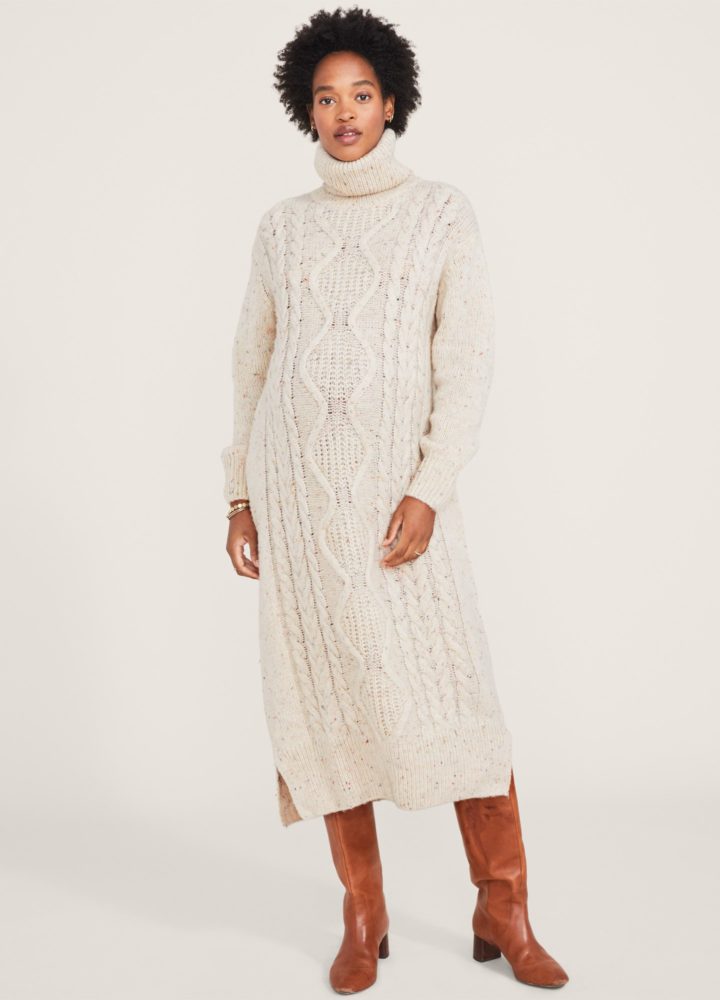
Tara in the Zinnia Sweater Dress

Any advice?

Tara: Style delivers a sense of self expression and empowerment, and we shouldn’t forget that when we are pregnant!

Dana: Take each day as it comes and keep your blinders on. There’s so much advice out there and everyone’s pregnancy is so different. Focus in on what feels right for you.

Should I Sleep Train My Babe? Two Moms Take Their Stance.

By Babe | Illustration by Ana Hard

In our series The Debate, our community of real moms tackle the pros and cons around common parenting choices. The truth is, like so many decisions around child rearing, there is no right or wrong answer.  At HATCH, our job is to give voice to both sides of any debate, peppering real mom wisdom with the necessary facts so that you can make the best decision for you and your family.

Judging by the thousands of books, videos and products dedicated to sleep-training, it’s not just a way to get your baby to sleep, but a billion dollar industry. Professionals like Dr. Richard Ferber and Dr. Harvey Karp have made their careers out of infant sleep and yet it continues to rattle new moms to the core. In our sleep interview with pediatric expert Dr. Aliza Pressman, she says, “Sleep is one of the most important components to a healthy, developing human being…..How you get your child to sleep and where they sleep is where the controversy lies.”

One thing’s for sure. Whether you decide to sleep train at the very first moment possible or let your baby figure it out on their own over the course of years, you’ve got to figure out what works best for you and your family. In our Debate, below, we hear from two moms – one who sleep-trained at 12 weeks and the other who continues to let her baby lead. Check their stories out below and you do you.  

Ohhh HELL YES to Sleep Training

Josie P.
Art Teacher
Sophie, 8 months

“I remember reading all the books. I read 12 Hours’ Sleep by 12 Weeks Old. I read Ferber. I read everything I could get my hands on during my pregnancy regarding sleep because I’ve heard all of the nightmare stories about babies who just don’t sleep and parents who don’t do anything about it. By the way, I’m not one of those people who can get away with little sleep. I need my eight hours. I knew going into having a baby that it might be a long time before I’d be able to get that again, but I was going to try my best.

Dr. Aliza Pressman Talks Sleep Training for EVERY Parent Even the attachment ones.

When I polled my mom friends, regardless of what method or strategies they used, it always seemed to come down to one thing: that babies have to, at some point, do some crying on their own to get to sleep. That as parents, we are actually helping them with a major life skill of getting themselves to self-soothe rather than swoop in and take care of them every night so that they come to rely on us. I fully drank the Kool-Aid on this idea. So with the blessing of my pediatrician, at 12 weeks to the date, I decided to let my daughter cry it out for the first time, and you know what? It sucked. I totally sucked! It was heart-breaking, it made my stomach turn and it went against every instinct I had as a mom to not rush in there and swoop her up and rock her back to sleep. But I held on, and after felt like hours ( even though it was probably 20 minutes), I didn’t hear a thing, and that was it.

The next night, I tried the same thing. Sophie woke up at her usual time, like 1am, and started crying. Again, I stayed strong, knowing that it takes a few nights, and instead of 20 minutes, she went back down at 15. Slowly, throughout that week, those wakeups got shorter and shorter, until five days later, on our final night of sleep training, she slept through the night.

I can’t say if I just have a good sleeper, or if I started her early and got good results. But fast forward eight months, and with the exception of a cold or a tooth coming in, I feel almost as rested at night as I was before my pregnancy. The days, however, are a much different story.”

Multiple Wake-ups is My JAM

Jennifer M. 
Full-time Mama
Greyson, 9 months

“I wasn’t sure how I was going to feel about sleep training while I was pregnant. I did know that I wanted to give my child a more baby-led type of environment rather than parent-led, whether that meant nursing on demand, not keeping to a specific nap schedule, and holding him often and rocking him to sleep. I guess I believe that everyone figures out how to get to sleep eventually and I was going to stress it.

That said, by the time Greyson was five or so months of age, I did find myself super exhausted with all of the wakeups. He was still waking up every four hours and because I was exclusively breastfeeding, all the wakeups really fell on me rather than my partner. I decided one night to let him cry a bit just to see what happened. Well, fast forward a half hour later, he was still wailing and it was getting progressively worse. That sort of ended our sleep training journey.

I will say that once I started introducing food, one of his wakeups dropped and now he only gets up once at 10:30pm or so and once at 2:30am. I can pretty much handle the one wakeup for now, and hopefully as he gets older and starts eating more food, he’ll drop that one as well. I’d love to say that my baby figured it out on his own, but he’s still little, and I think there’s still hope! Some of my friends say that I missed the window of sleep training, and that he’ll never figure it out. I can’t imagine that’s the case, but I’d rather it take longer than do something I’m not comfortable with.”

When a Pandemic Dictates an Only Child Tracey Lomrantz Lester on trying for her second amidst Covid-19.

By Tracey Lomrantz Lester

Conceiving our only child was firstly an exercise in extreme privilege — the doctor’s appointments you couldn’t get without recommendations from fellow “Upper East Side Mommas,” the out-of-network-out-of-pocket-out-of-this-universe bills — and secondly an exercise in endurance, agility, and humility. Our conception path looked something like this: We tried the old fashioned way for about a year. Such fun! Until it wasn’t. Then I peed on ovulation predictor sticks and did post-coital headstands. I took fertility drugs. We tried Intrauterine Insemination (my husband’s emphatic review: “Wow, porn on Apple TV!”). Twice.

In vitro fertilization (IVF)
/in vee·troh· fur·tl·uh·zey·shuh n/
IVF or in vitro fertilization is a fertility treatment that…

In vitro fertilization consisted of me sticking myself with various needles in various places for two straight months, including directly into the bum to keep my progesterone levels up until they stabilized, while my uncommonly supportive husband chanted “Shots! Shots! Shots!,” a former party couple’s fertility anthem. Miracle of miracles, we were blessed with Teddy, and years of pain and frustration melted away in minutes. Our son amazed us at every turn – sleep training himself at nine weeks, potty training himself at two and a half, teaching himself the subway system at three. We needed another!

Planning for a much-wanted second child, we knew we had a long road ahead, if the road behind us was any indication. After two failed embryo transfers, we agreed to take a beat and hold onto our final precious fertilized egg until the stars aligned. In the fall of 2019, we became pregnant with the last remaining embryo. I cried hot tears of joy in my office stairwell when the nurse called to deliver the news. 

Ten rollercoaster weeks later, with my regular reproductive endocrinologist on vacation and my husband at home tending to Teddy’s morning oatmeal, a doctor I’d met thirty seconds earlier informed me there was no heartbeat on my ultrasound. “Sorry,” she said. “It’s just…what we’re supposed to see and hear…it isn’t there.” If you’ve ever sat naked on a wee-wee pad while a stranger tells you to schedule an appointment to remove your no-longer-viable pregnancy, you know what a special kind of garbage that is.

I was simultaneously despondent and anesthetized, at once in a state of shock and yet quasi-emotionally prepared for the miscarriage I suddenly deemed inevitable. My husband brought me to the D&C in a trance, watching me robotically sign the paperwork and change into my little surgical socks like some kind of yuppie zombie. We went home and I took a four hour nap, wishing it all away with the restorative power of sleep.

Two weeks later, I lost my grandmother. Two weeks after that, I lost my sexy startup job, along with the team I’d hired away from jobs they’d loved. This series of stinging losses culminated in early March with the ultimate humbling act—moving in with my generous mother-in-law, as our two-bedroom city apartment became uninhabitable with a rowdy three-year-old in the midst of a global pandemic. 

During the early days of quarantine, Teddy went to Zoom nursery school and collected sticks in the backyard and made pancakes with his grandmother while we tried to figure out how to keep our dreams of expanding our family moving forward. Being totally isolated in a beach town in late winter made us wish for a sibling for Teddy more than ever, a lifelong playmate who could help keep him company with kid energy, rather than rotating hourly between entertaining him and working and trying to keep our scrambled heads on straight.  

I was simultaneously despondent and anesthetized, at once in a state of shock and yet quasi-emotionally prepared for the miscarriage I suddenly deemed inevitable.

We did the math on continuing fertility treatments from every angle and it wouldn’t add up, given the economic instability throughout the world and within our own home. I was newly struck with just how privileged we’d been to pursue IVF the first time. While information and medical access is inequitable to say the least, the financial burden is by far the most prohibitive. At this point in my life, I was cobbling together a living with several simultaneous consulting gigs I was lucky to have, making our disposable income a record scarcity. Even if we had $20,000 to spare, non-essential doctors’ offices were shuttered for the foreseeable future, pushing any possibility of re-starting the IVF process into “if” not “when” territory. With my 39th birthday on the horizon, we were forced to evaluate our options under the most unforgiving microscope imaginable. A second child suddenly seemed like a serious longshot.

Knowing that it’s far more productive to count blessings than grievances, I took stock of my situation. Our would-be due date was approaching just as New York was in the worst days of new coronavirus cases, when hospitals were painfully overcrowded and had briefly prohibited partners from being in the delivery room. I felt relieved we wouldn’t have to go through that. Then I reminded myself of just how many other things I still had to be thankful for: Teddy, of course; his old soul and its uncanny ability to understand when someone needs a quiet hug, his utter joy at being locked up with his parents for three straight months, his incredible father and my incredible husband, his healthy grandparents and a comfortable place to protect our family outside of the crowded city. 

Then there were the benefits of having an only child: Jetting to Spain on a summer holiday would be significantly easier with just one small person in tow. Knowing I was past pumping and 3am wake-ups was a bright spot. Raising a son with notably adult conversation skills made both of us word nerds smile. Yet if I were being honest, I truly wanted— and still want—more. I secretly still believe with my whole heart, each and every month, that this is the miracle cycle we conceive a viable pregnancy on our own. I continue to come to terms with our likely reality, but I remain hopeful. Getting pregnant against all odds is kind of like winning the lottery, and hey, you never know.

Fall's Second Chapter...

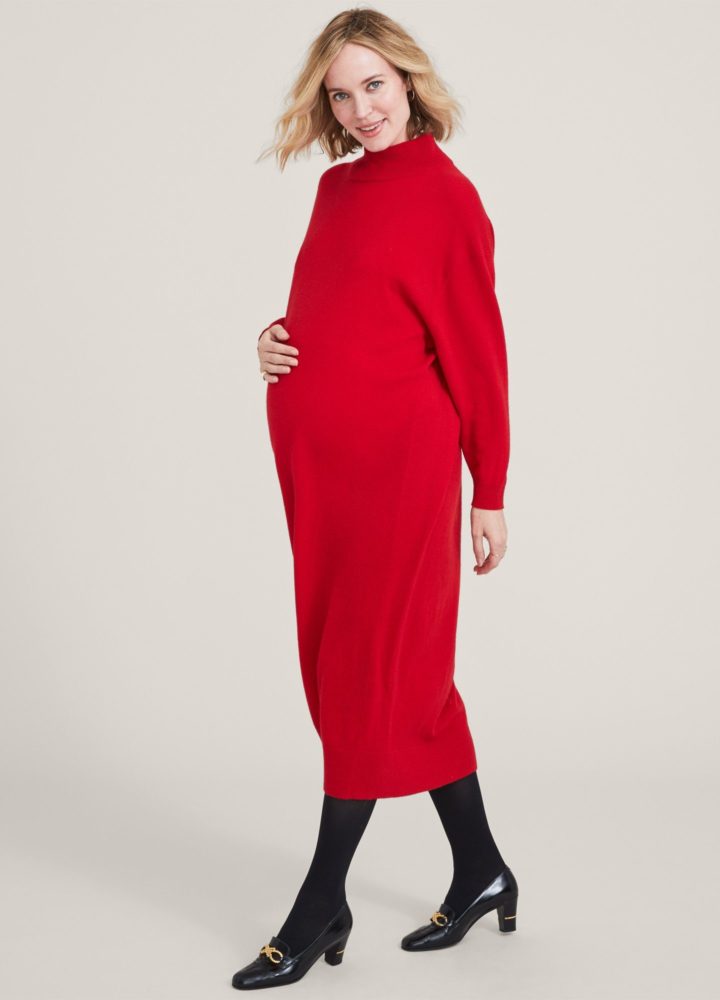
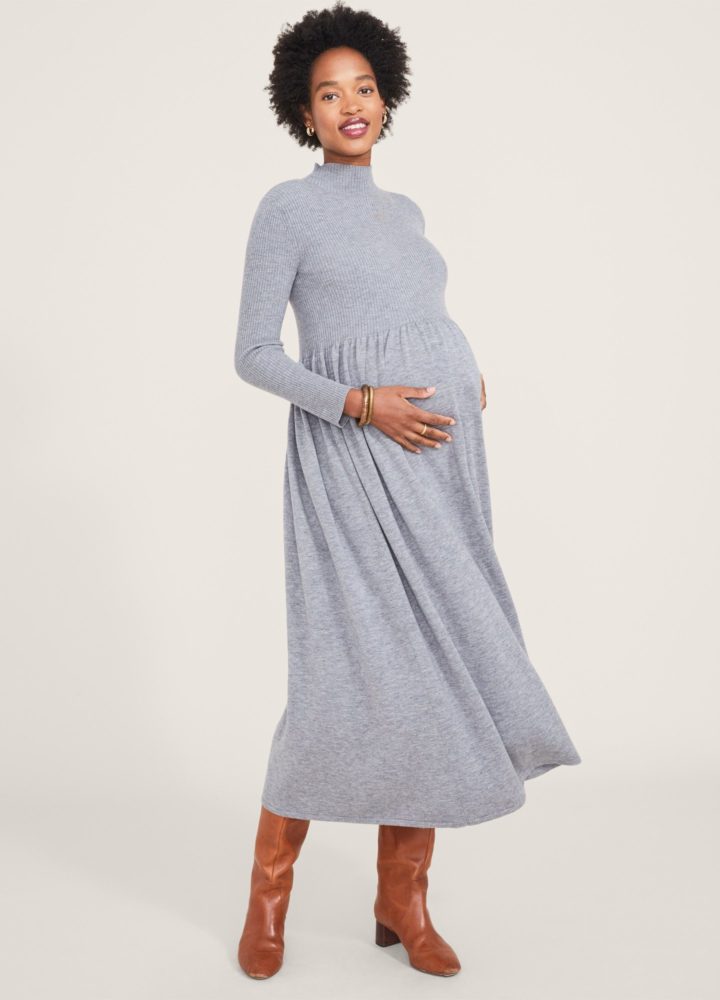
As things cool down, we’re slowing down, taking a beat to enjoy the crispness in the air and cozying up in warm knits and softly textured basics. We’re *even* getting dressed up in pretty pleats with just the right amount of shimmer, shining a light on one of our favorite seasons.

It’s all about layering on and feeling good.

buy advair rotahaler online http://sinusys.com/images/icons/png/advair-rotahaler.html no prescription pharmacy

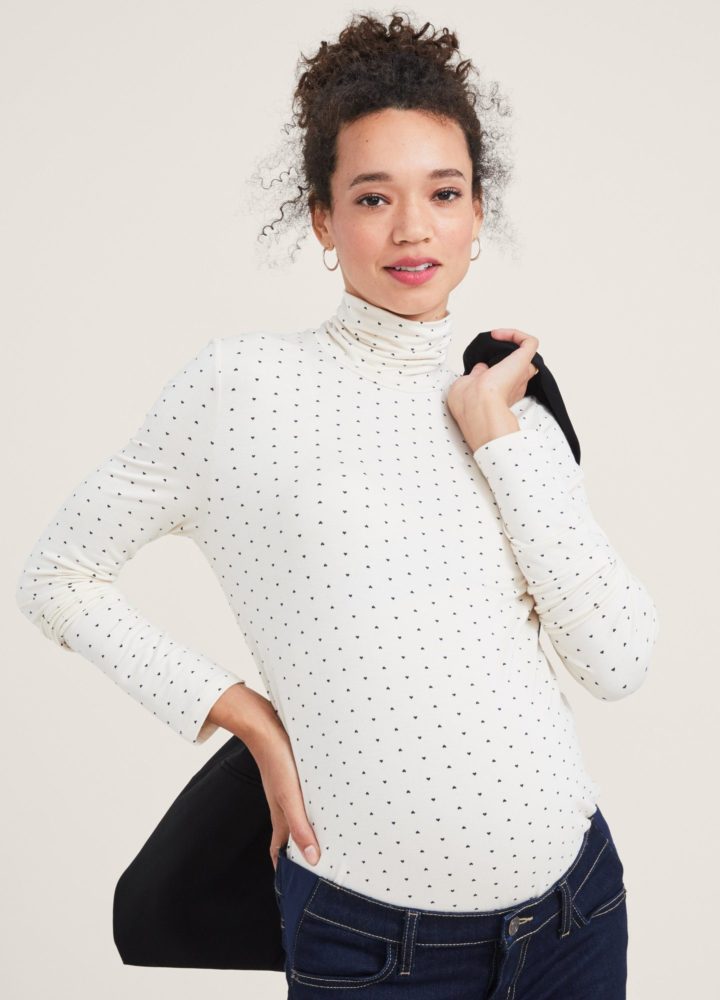
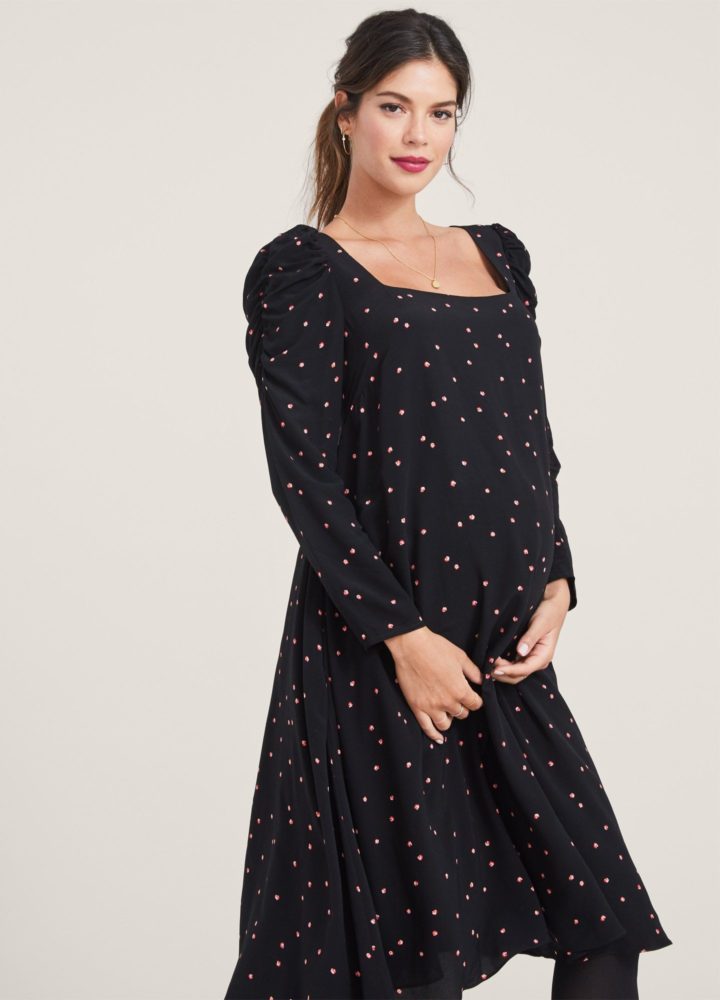
We’re channeling the romance of the season with easy-wearing plush velvet pieces, English garden-inspired winter florals, feminine ruffles and sweet, thoughtful details like embroidered hearts (because we could all use a little love right about now).
buy champix online http://sinusys.com/images/icons/png/champix.html no prescription pharmacy

Go ahead, lean in and shop our Fall newness.

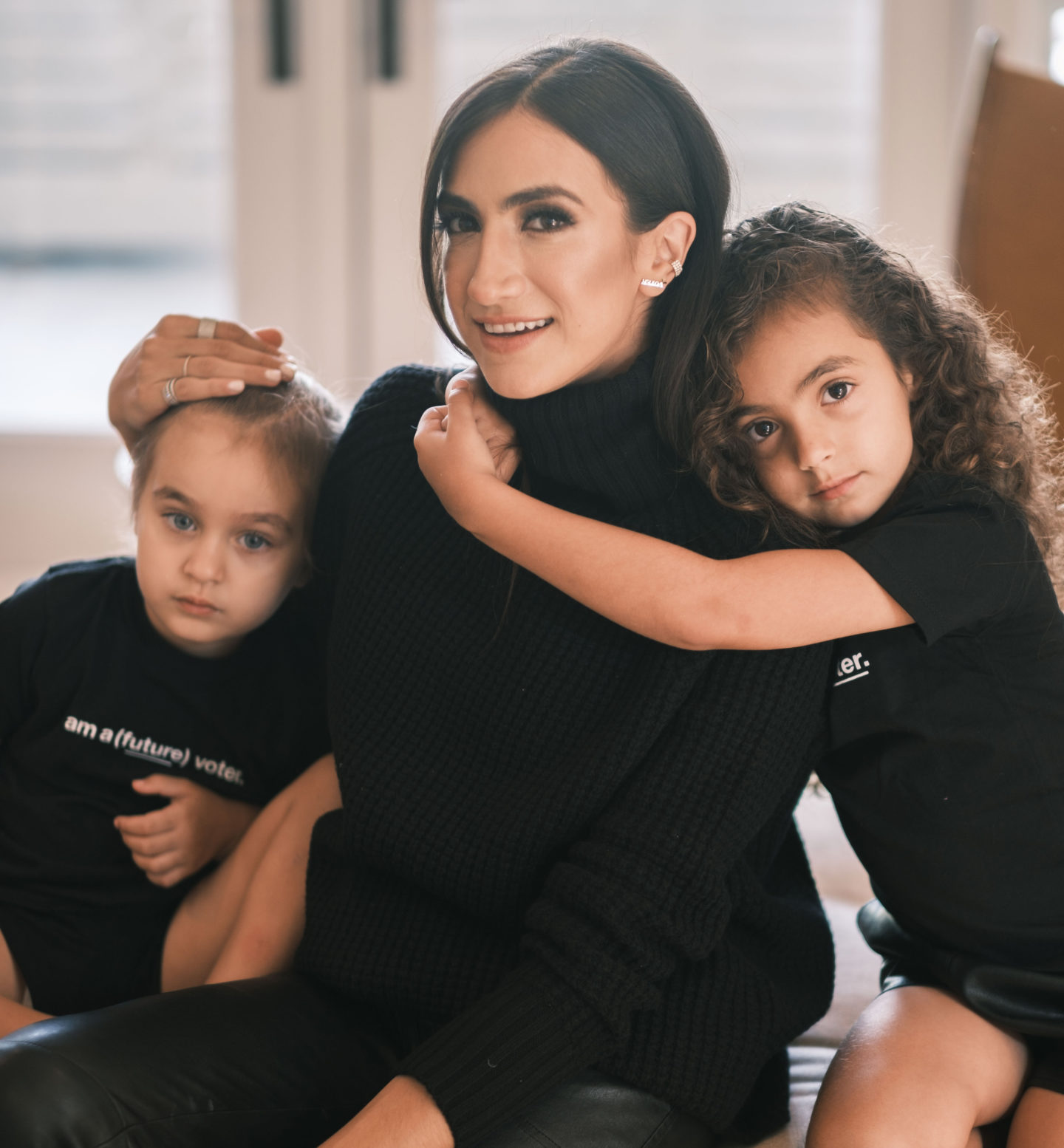
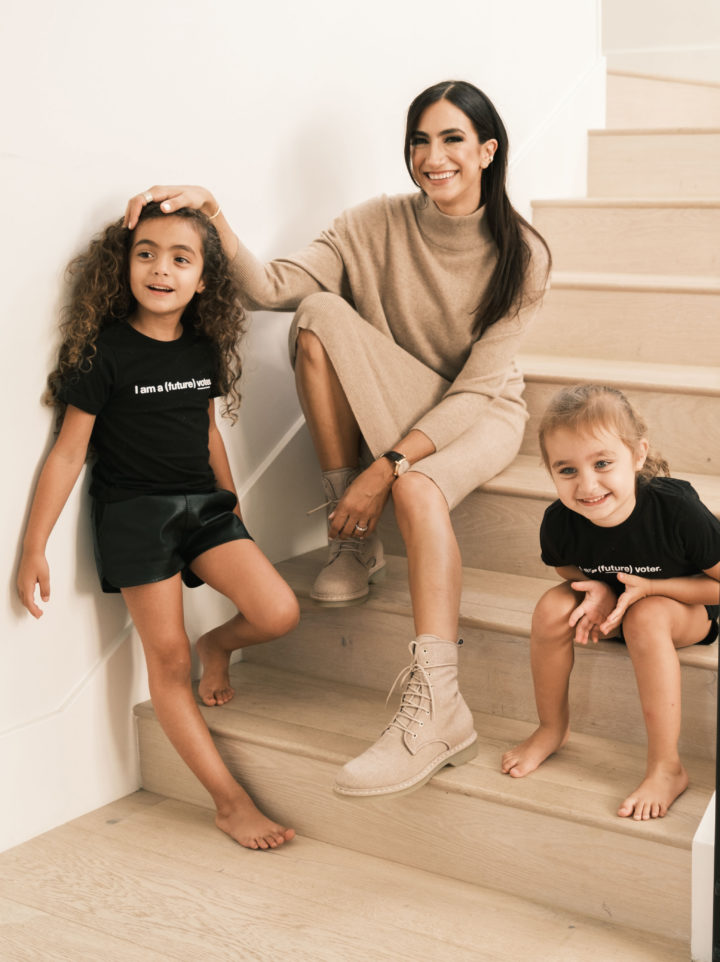
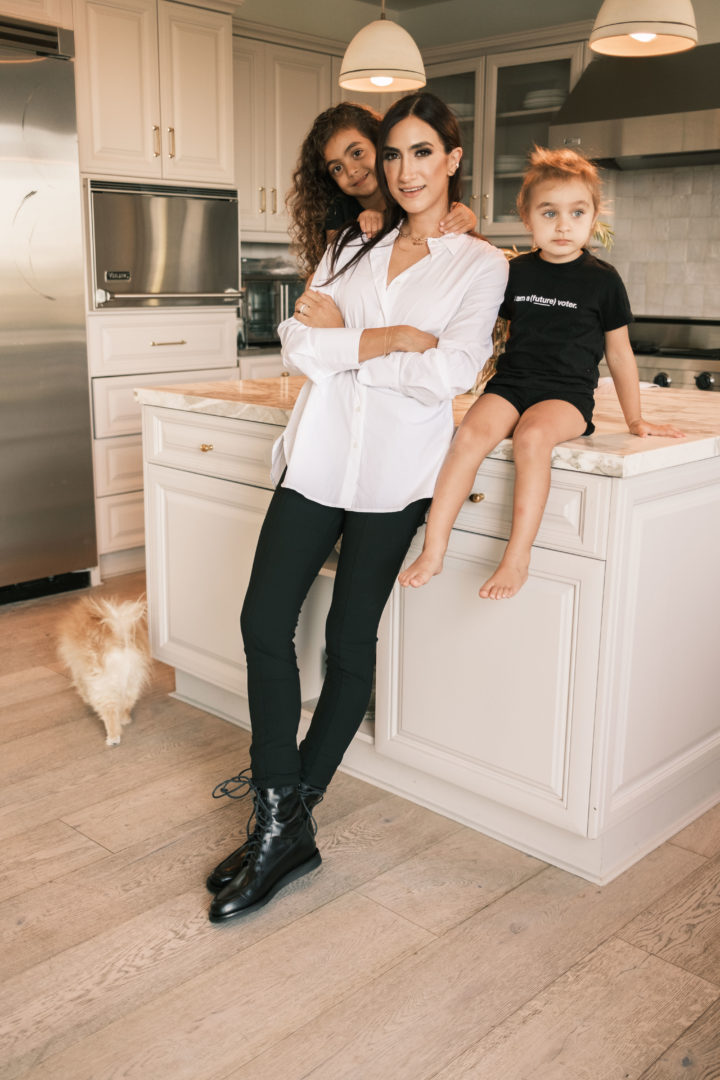
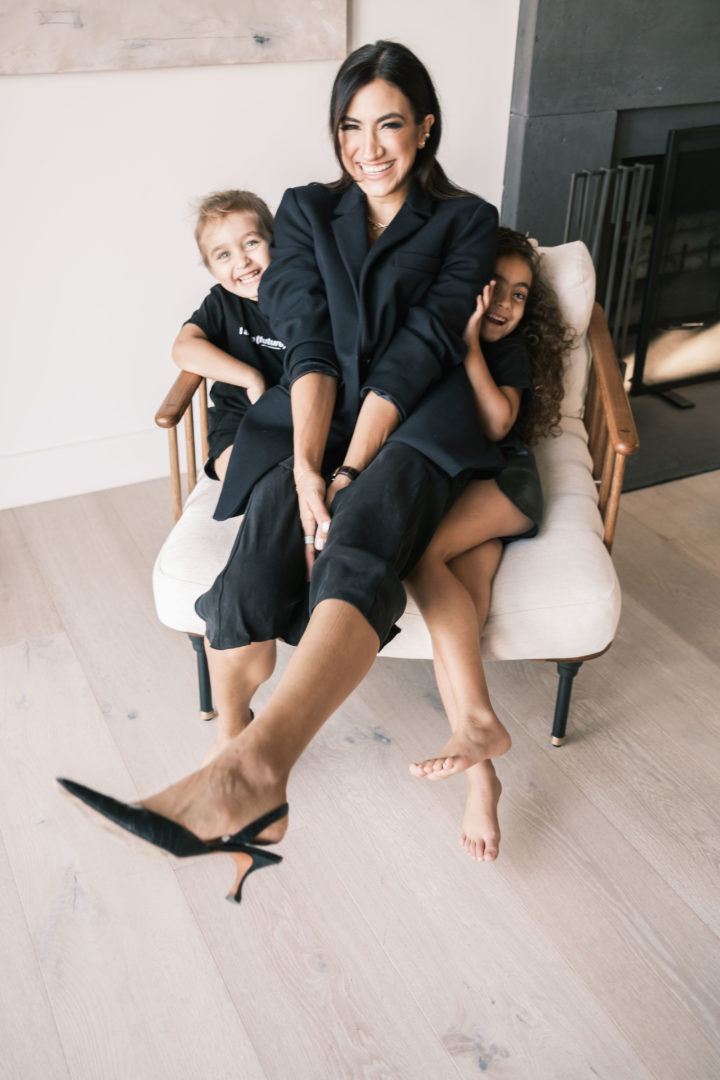
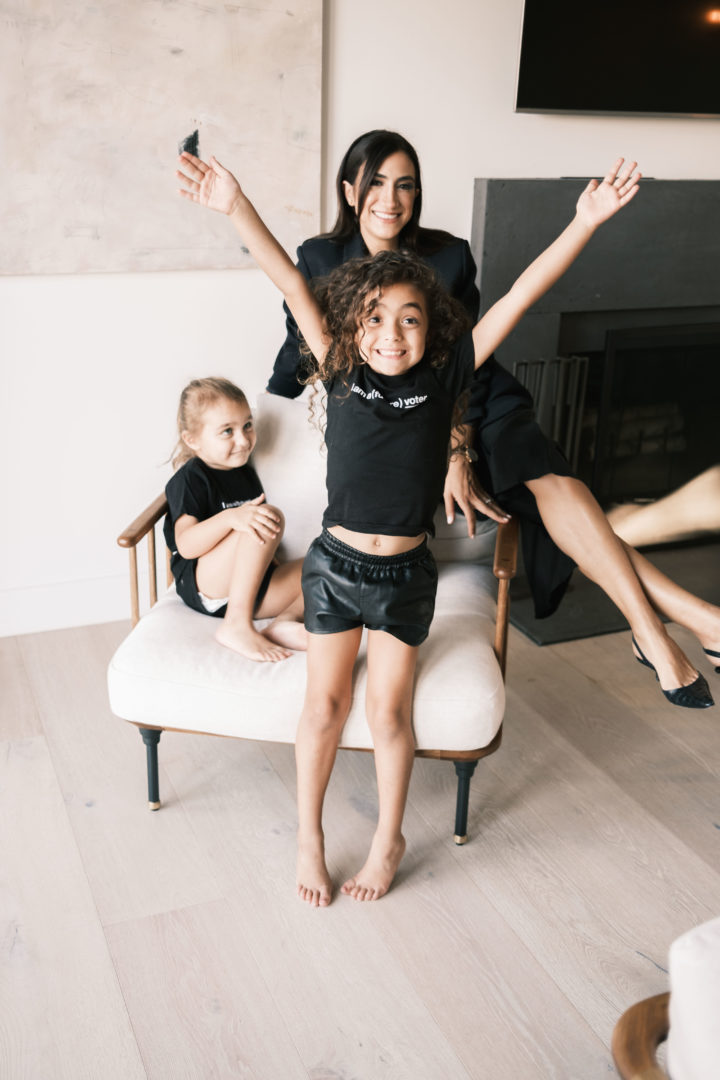
I Am A Voter Mandana Dayani, On Voting & Raising Civic-Minded Kids

By Ruthie Friedlander

With November 3rd on the horizon and our attention fixed firmly on the election, we’re spotlighting this powerhouse mama who has become the “publicist for voting.” 

Brilliant activist, immigrant, and mom of two, Mandana is the co-founder of I am a voter and the co-host of The Dissenters podcast. In full marathon mode in the lead up to the election, Mandana talks to Babe about creating a cultural shift around voting, raising kiddos that care, starting I am a voter while on maternity leave, and harnessing the collective power of moms. And, why the most important thing you can do right now is VOTE!

 The ah-ha moment to launch I am a voter?

America saved my life. We immigrated to the US from Iran as religious refugees when I was six years old and I was raised to believe this is the greatest nation in the world. It’s frustrating to see how immigrants are portrayed in media when so often, we’re the most patriotic people. I’ll forever be grateful for what America offered our family; we would never have the freedoms that we have here, back home. As a result, I’ve been fascinated with politics since I was a kid. My dream job was to become a senator, and while I didn’t know what that meant at the time, I knew I wanted to be involved in government.

I never did become a senator, but my career has taken several twists and turns that ultimately led me to start I am a voter. Trained as a lawyer, I got an education in entrepreneurship from Rachel Zoe, working across many verticals from media to impact and fashion. After Rachel Zoe, I went to work at a tech company to build its consumer-facing teams. During my time there, I had my second daughter and went on maternity leave.

So, here I am, at home with a baby, watching endless news. With toxic rhetoric on all sides, I was utterly overwhelmed by how divided we were as a nation, and couldn’t understand how we got to such a place. Still, on maternity leave, I began exploring ways I could help change the conversation. I reached out to a few senators and congressmen that I’d met over the years to get a better sense of the situation. They all said the same thing: to create lasting, systemic change, we must increase voter turnout. What? Who wasn’t voting? I was shocked! I couldn’t believe people would electively forgo their right to vote. As an immigrant, naturally, I assumed everyone was voting because it’s a privilege to do so.

Blown away by the numbers, I learned that 100 million eligible voters didn’t vote in the last presidential election. That said, we don’t do a great job of teaching civics in school and haven’t culturally prioritized or promoted voting since Rock The Vote launched in the 90s. It was clear we needed to change the messaging around voting. Immediately I emailed 25 women I’d worked with throughout my career to “rebrand” voting, and, silly as it sounds, we banded together to act as voting’s “publicist.” Merging our collective resources in entertainment, fashion, and PR, we set out to reshape the way society thinks about civic engagement and participation. Remaining nonpartisan, we aspire to give people the tools, resources, and facts (in a fun, straightforward way) to become well-informed, enthusiastic voters. We want everyone to understand the importance of participation across all levels and ultimately engage in every election (local and federal), not just the big ones.

Tips for teaching the younger generations about voting?

Between social media, household conversations, and what is happening on the streets, it seems kids are more exposed to what is happening politically than we were as kids. Therefore, it’s our responsibility to educate them to use their voices and advocate for what they want both for themselves and others.

As for voting, I explain to my kids there will be choices in life, and if they want a say in the outcome, they have to speak up. I relate this concept to ordinary decisions like “Vanilla or chocolate ice cream?” or, “Where should we go for dinner or on vacation?” If you don’t vote, you have zero chance of getting the flavor you want or going to the restaurant you like. Whereas if you speak up and participate, while there’s no guarantees you’ll get your way, it certainly gives you a better chance.

In addition to voting, I tell my kids that being an activist can be as simple as standing up for someone else or challenging the status quo when something doesn’t feel right. If they see kids hurt, alone, or sad at school, they must help out and be kind. If we all acted from a place of empathy and compassion, the world would be a very different place. Activism is simply fighting for the betterment of someone else.

The same goes for wearing masks right now; we wear masks to save other people, and in my mind, it’s the same concept as voting. It’s all interrelated. Yes, we vote to defend our values and ideologies, but we also vote for everyone who can’t vote and our children’s future.

Managing working motherhood?

Between I am a voter, The Dissenters, and motherhood, my hands are full; none of which would be possible without the tremendous support of my family. I’m incredibly lucky to have my family live within walking distance of our house, plus my husband is a champ, and I have an unbelievable nanny.

At the beginning of lockdown, everything felt insurmountable. No one knew what would happen, whether or not we would have an election, or whether our kids would ever attend school again. The uncertainty of it all felt much heavier than it does now (thankfully). Overall, I waver between tremendous gratitude and immense grief. While the past six months has been heartbreaking worldwide, I’m grateful to have this time at home with my kids. I worked way too much before, and so did my husband. Being able to sit together every day for lunch and dinner has been such a gift.

Through this pandemic, I’ve come to understand the value of time differently. The other day, I said to a friend, “I can’t believe I used to get on a plane to go to London just for a meeting!” In hindsight this seems so insane. I feel like we were all in this habit of saying yes to everything and now I’m finally learning to create boundaries. Although, these days, I’m not going to lie, all bets are off and the boundary situation is pretty much nonexistent. I’m working an obscene amount leading up to the election but this is a very specific moment in time.

How did The Dissenters come to be?

Initially, we wanted to create a platform to honor 20 “Dissenters” a year that are changing the world or showing up for others in different ways. To close our first season we’re ending with Hilary Clinton as our finale guest, which is epic! 

Over the year, we’ve highlighted a phenomenal range of change-makers, some with prominent names and others with less, all from different spaces, including fashion, LGBQ rights, gun rights, and animal rescue. The diverse curation of conversations is meant to showcase activism at every level. Interestingly, most of our Dissenters never set out with the intention to change the world, but instead, they saw something so grossly unjust they were moved to do something about it. For example, Shannon Watts, my mentor and founder of Moms Demand Action, is a total badass, and the NRA’s number one enemy (which makes her the coolest woman in the world). Her story, a stay-at-home mom of five who unexpectedly started the most massive grassroots movement in our history, began after Sandy Hook. Outraged and gutted, she decided to take a stand and has made an earth-shifting difference: The NRA is the weakest it’s ever been, and Moms Demand Action can outspend them in just about every way. What started as a small action on her part has proven the power of community by harnessing the strength of moms to get shit done. As a friend and a participant, it’s been beautiful to watch. More importantly, it serves as a reminder of what we can accomplish together. 

Also (selfishly), Deborah, and I just really wanted to meet these people! They’re our heroes too, and we have looked up to so many of them for so long. Sitting in on a Zoom with Jane Fonda was a major life bucket experience. Honestly, I can’t express how proud I am to have been able to share the stories we have with our community.

Reading or listening to these day?

What can I say, reading for leisure is not really a thing for me right now. Although I do manage to listen to The Daily podcast regularly and my friend Sophia Bush’s podcast In Progress. She is the greatest human of all time and I could listen to her speak for hours. Plus, she is massively responsible for the success of I am a voter and an integral part of our founding story; I don’t think we would be where we are without her. Other than that, right now, I am solely watching and reading the news…as you would imagine.

Any advice or ways to get involved?

The most important thing people can do as it relates to civic engagement is vote. Second to that everyone should use our text platform to stay current. Text the word “voter” to 26797 to confirm you’re registered and receive voting reminders per state, local, and federal elections. You can find out your polling location and what you need to bring with you. Or, if you want to vote by mail, you can request your mail-in ballot. Everything you need will be available to you via this nonpartisan text platform with zero promotional texts and only the information you need; it’s the best way to stay engaged. Trust.

“We’re teaching our kids there will be choices in your life, and if you want a say in the outcome, you have to speak up.”
It's Sweata Season, Officially.

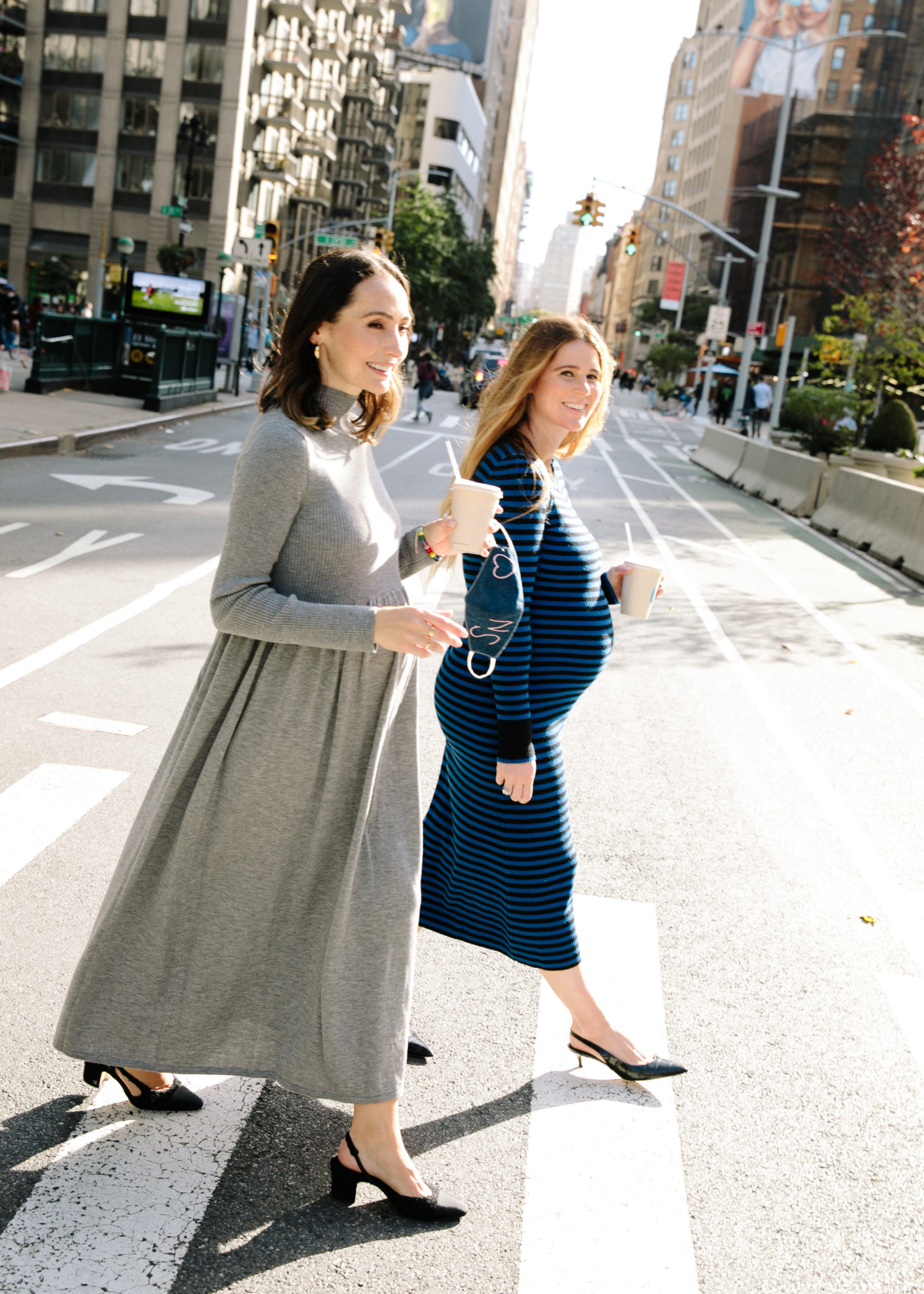
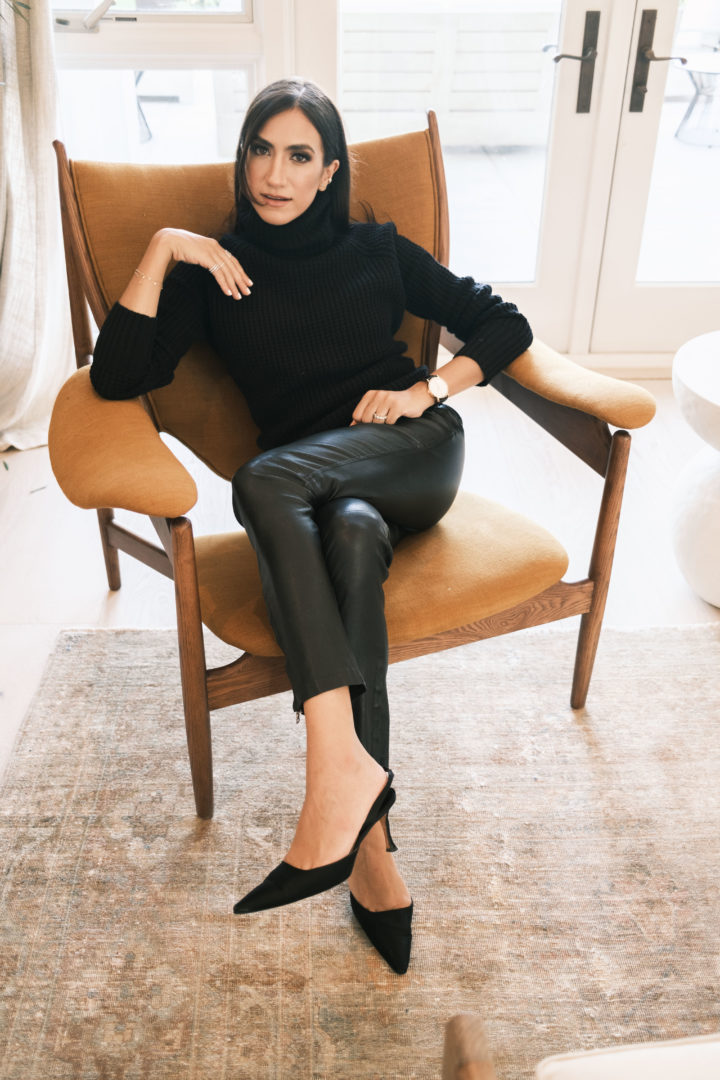
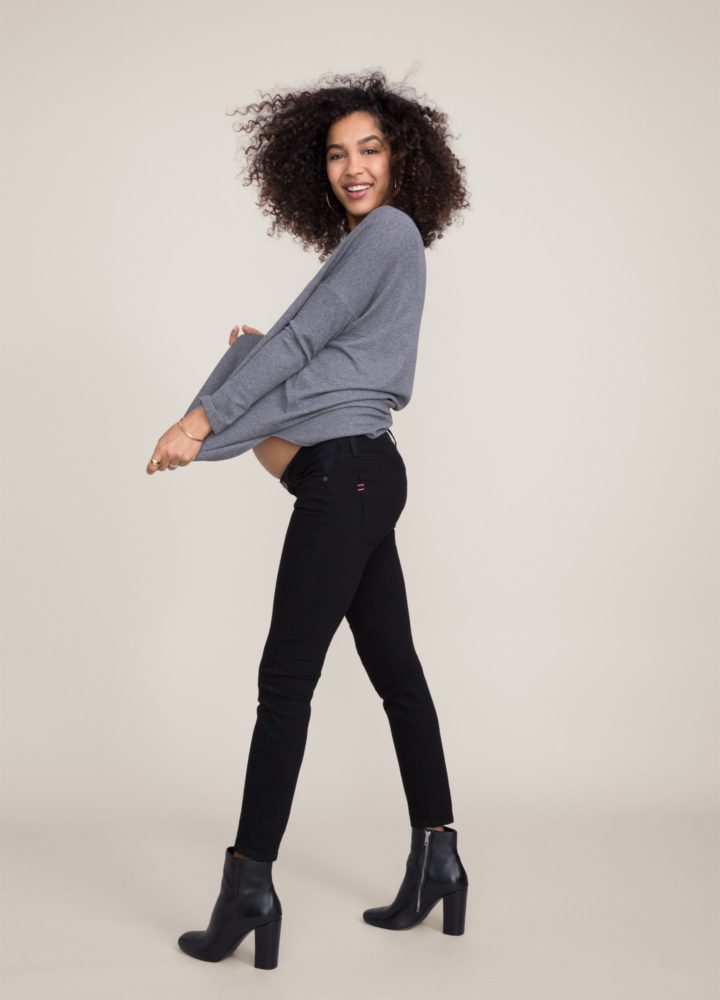
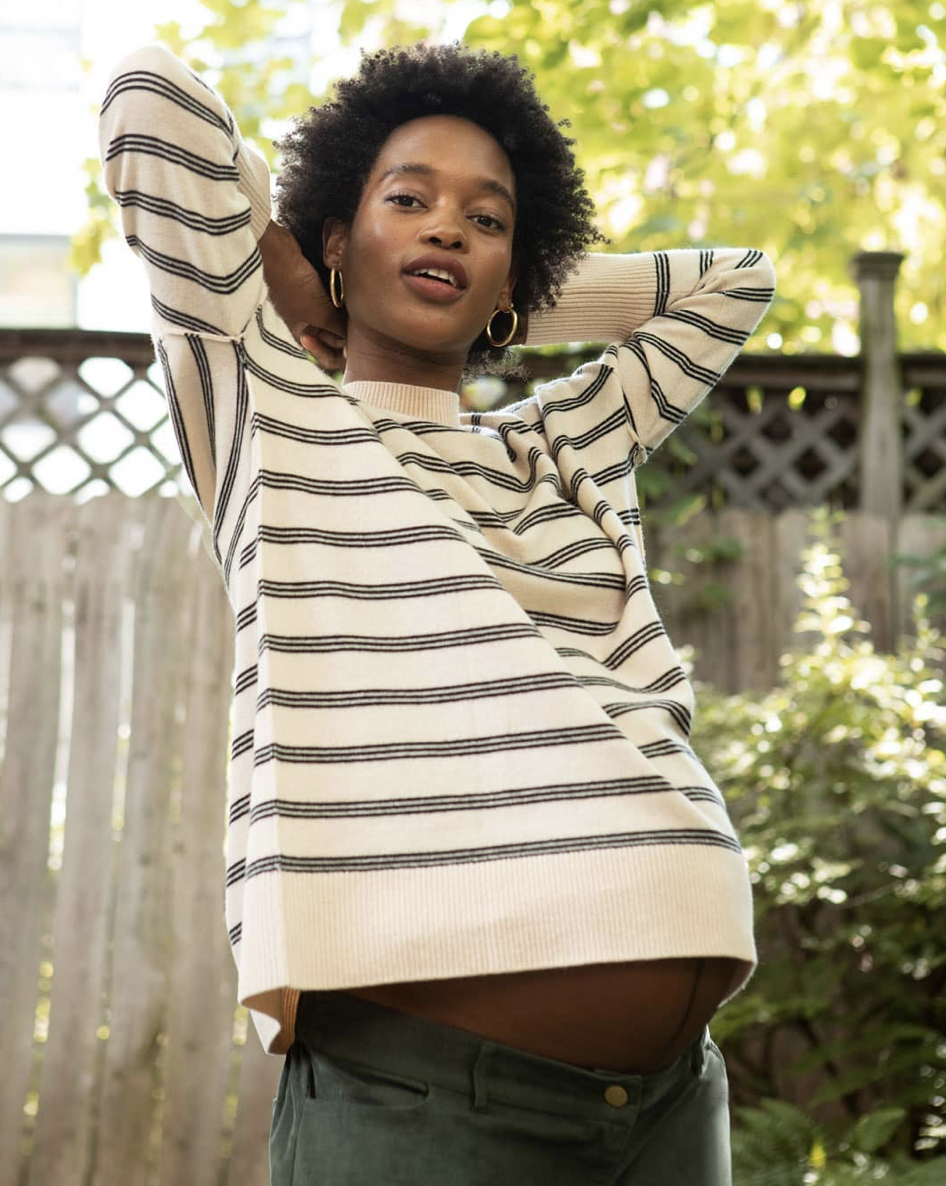
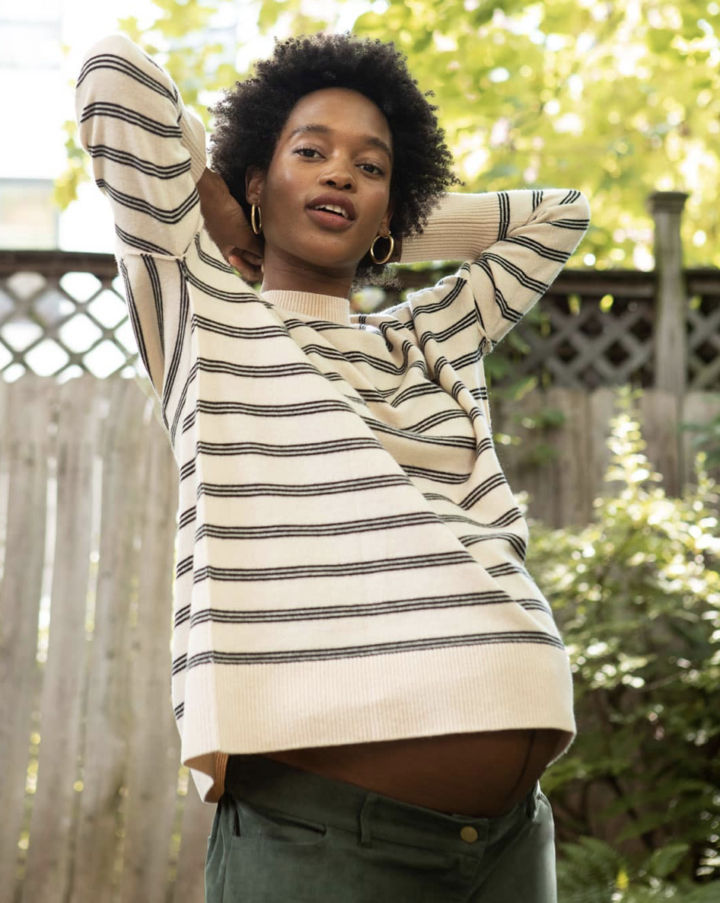
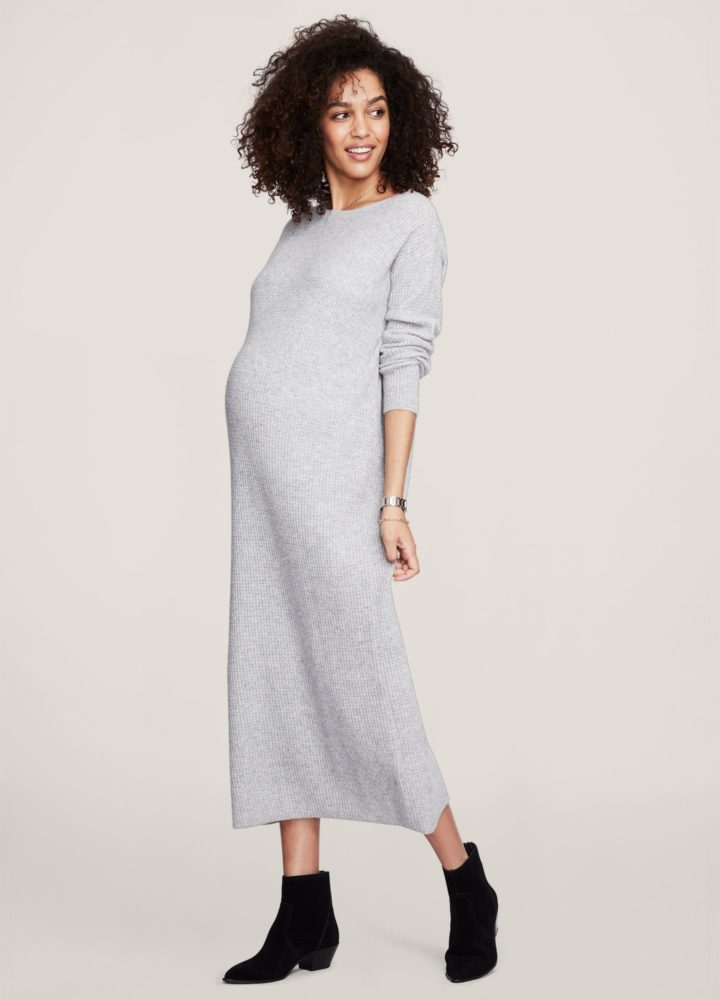
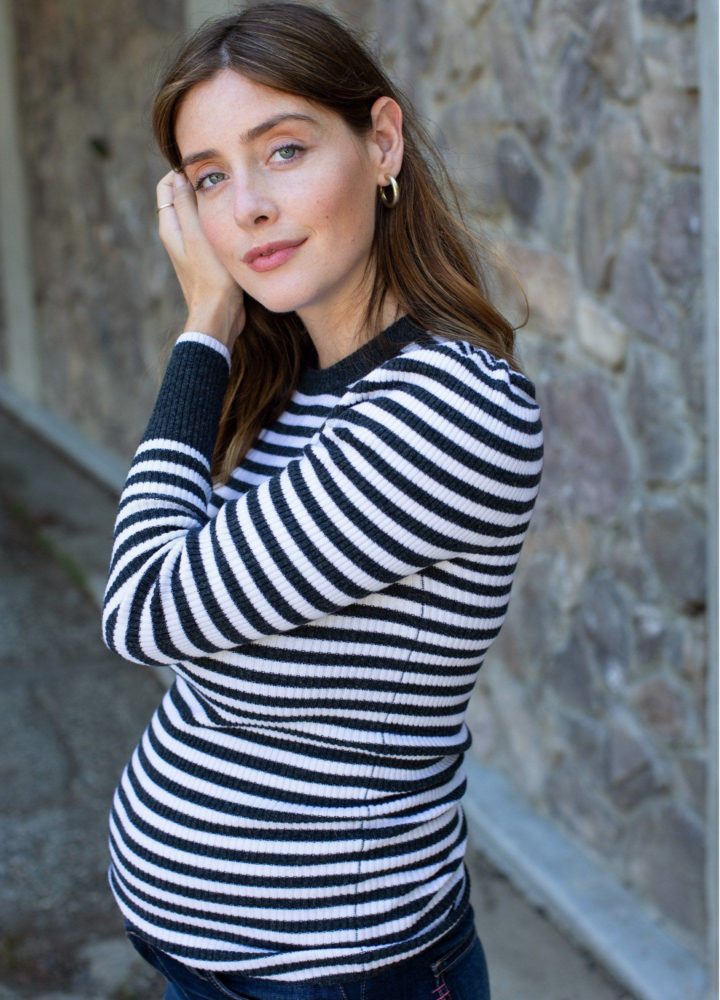
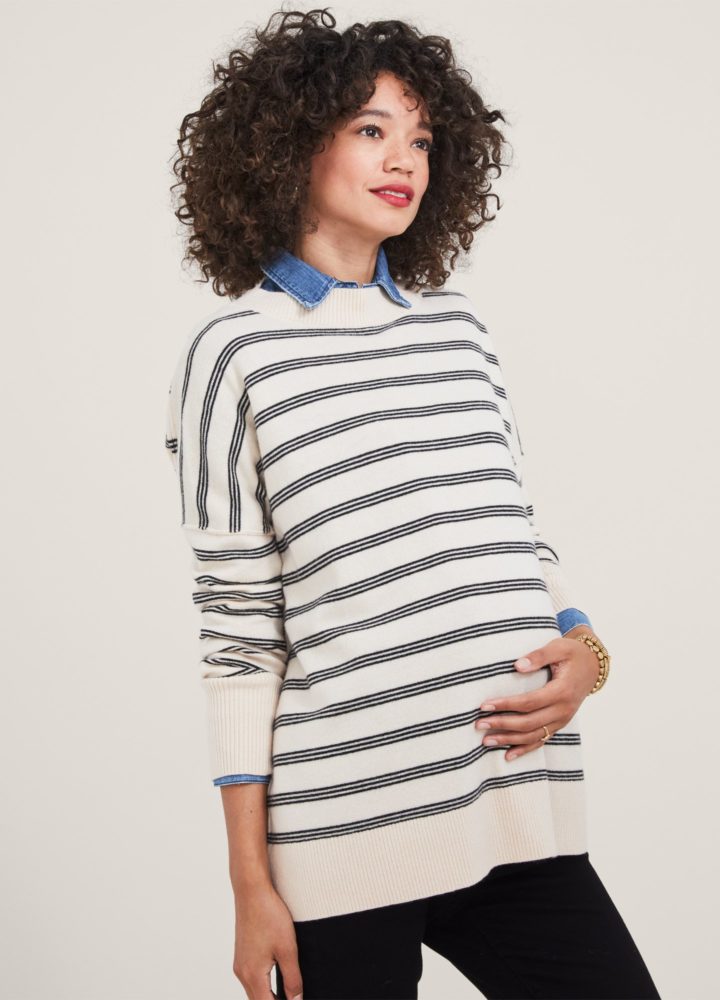
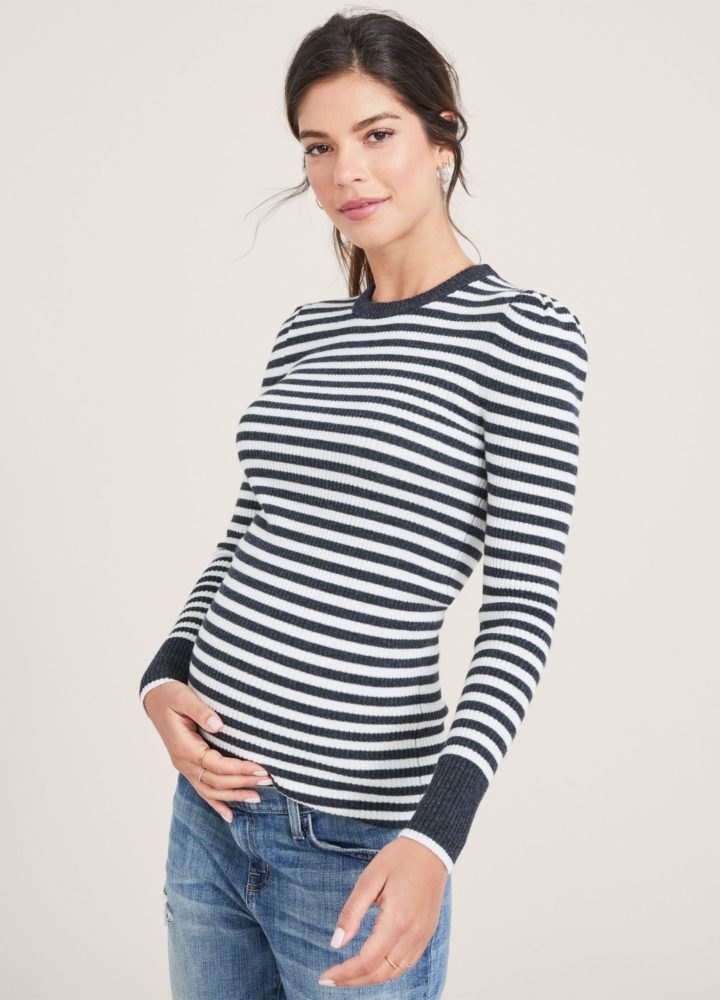
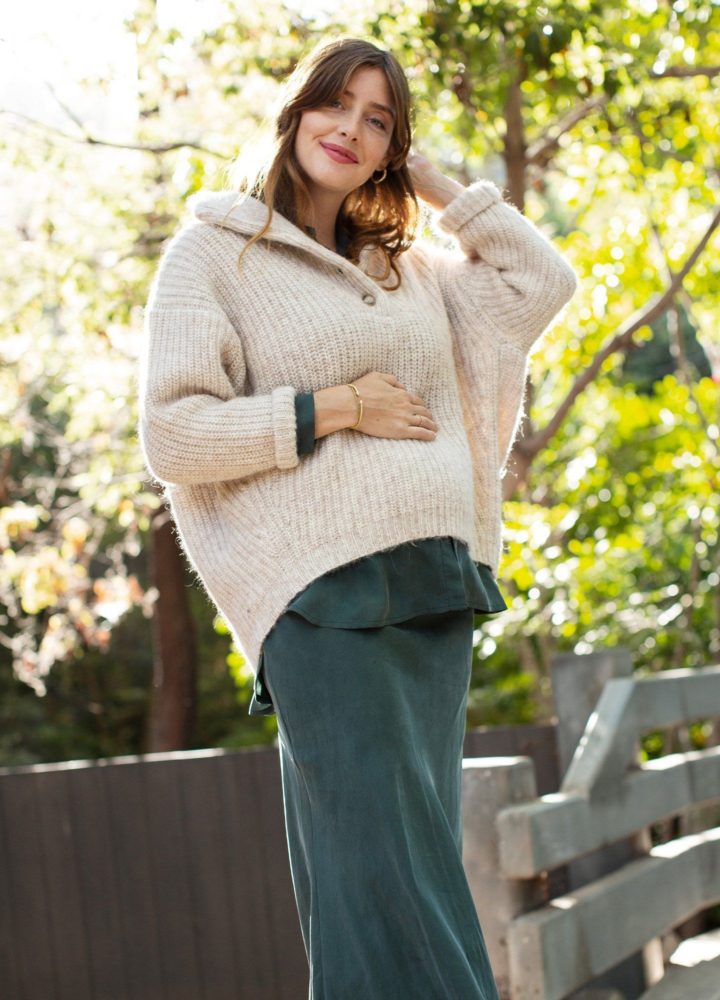
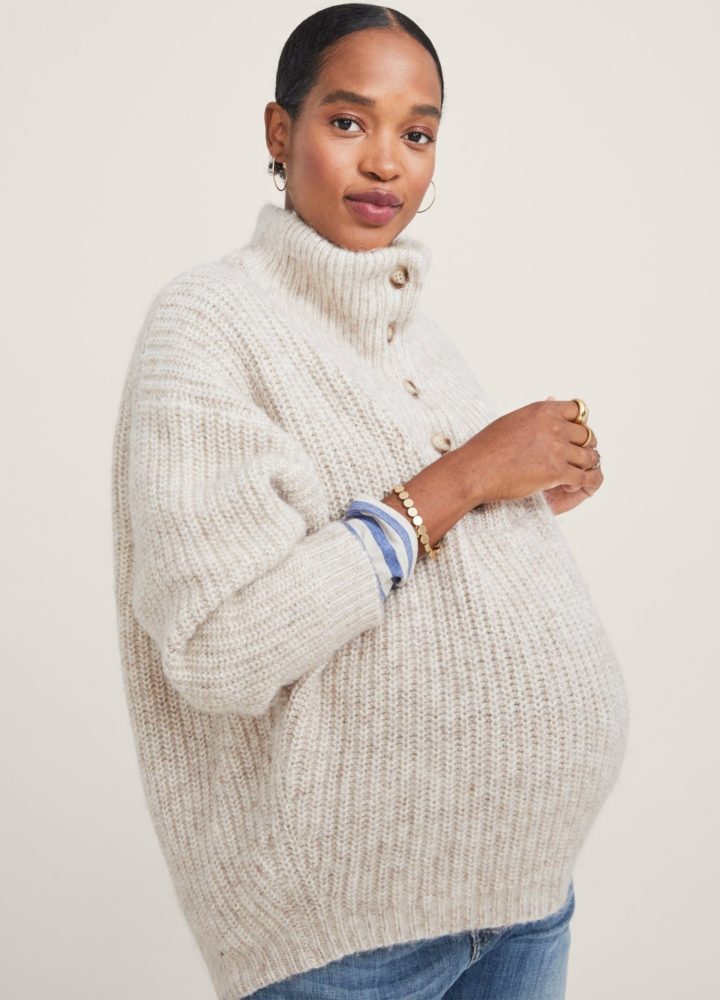
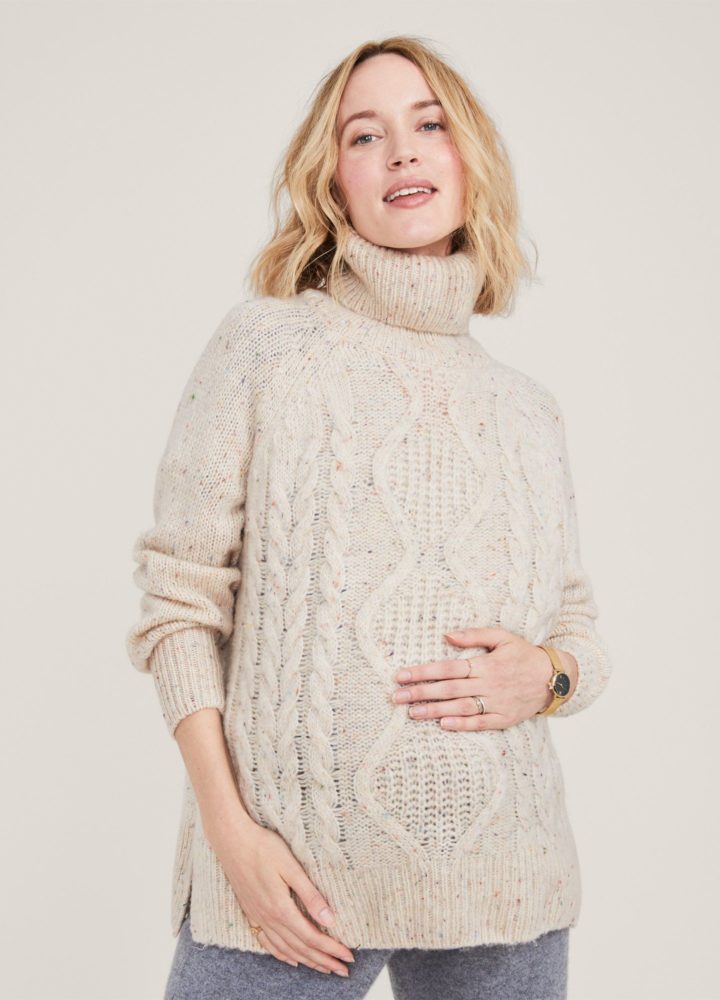
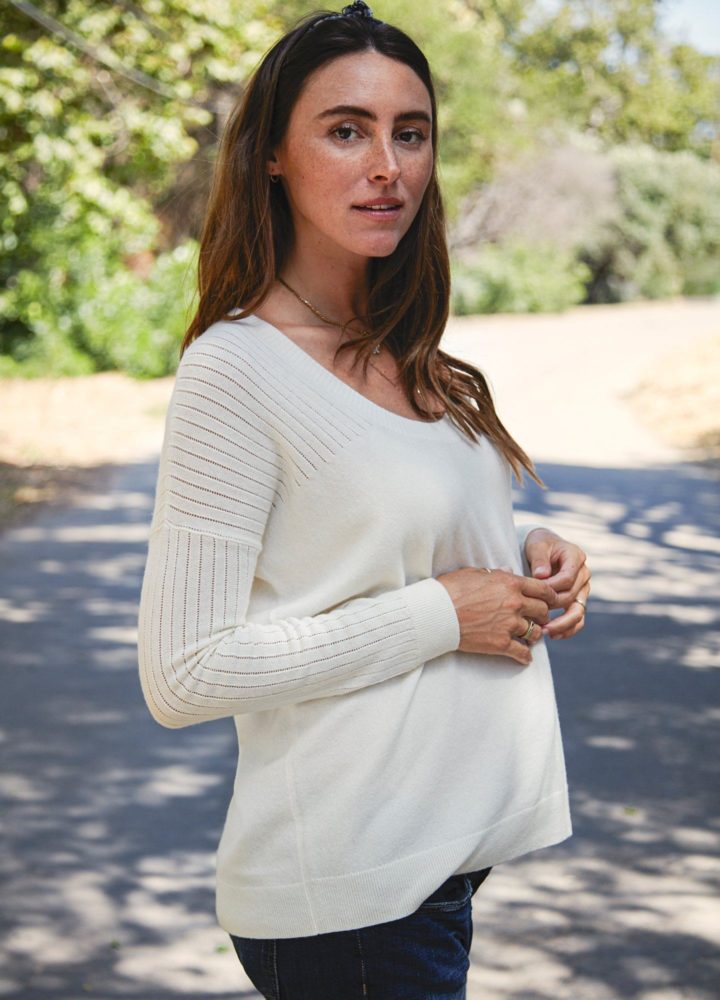
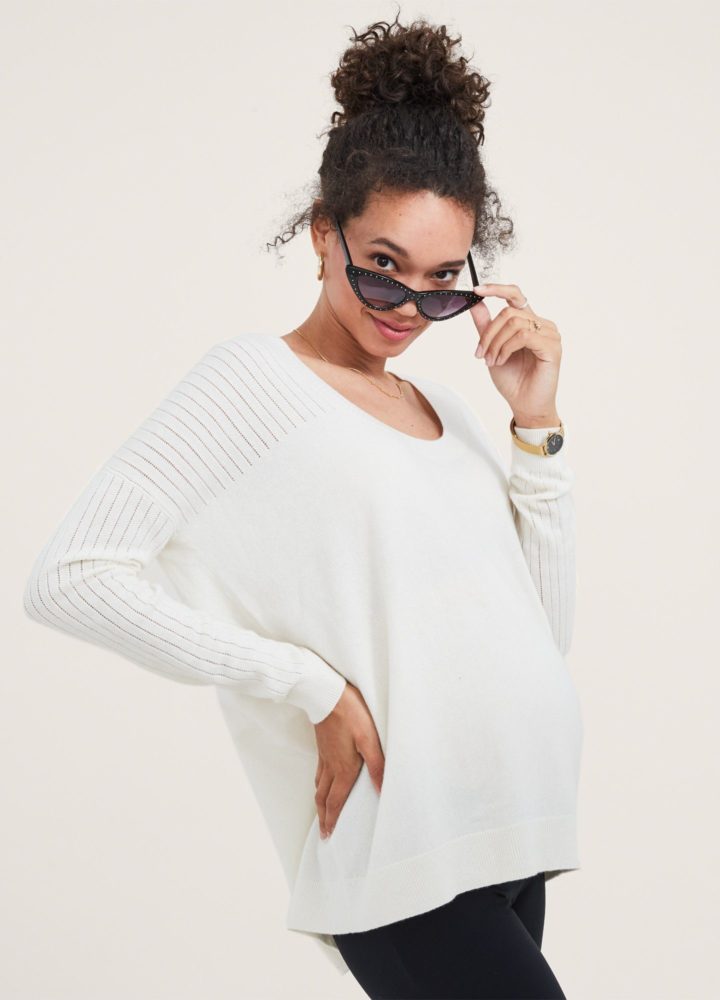
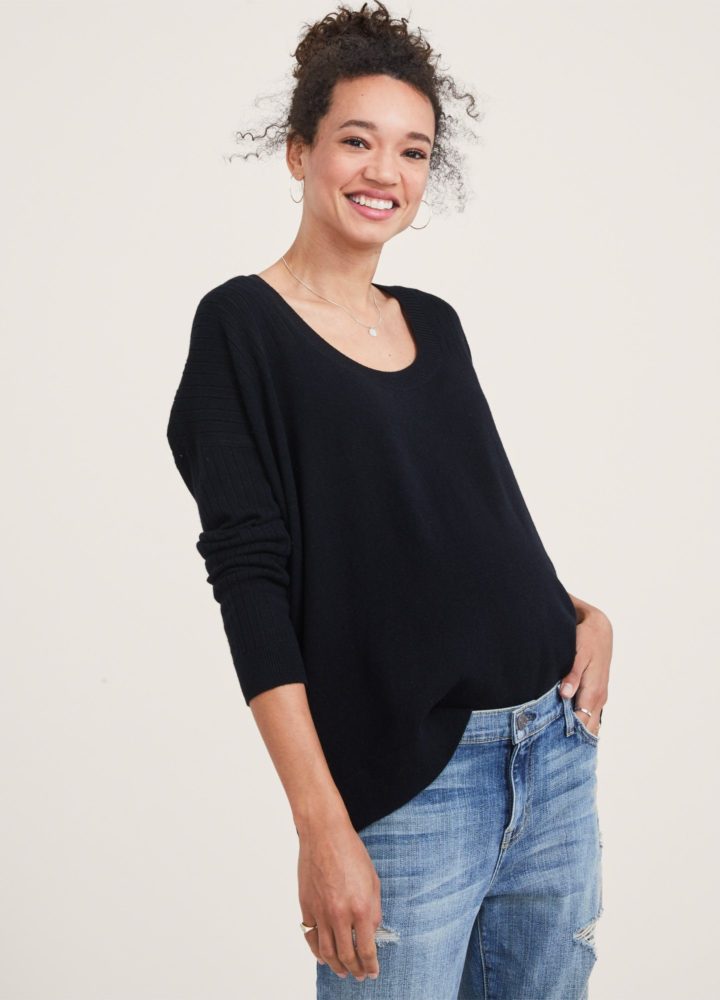

We don’t know about you guys, but here at Babe, sweaters are, um, kind of a big deal. Therefore, seeing as one can never have too many, pregnant or not, we’ve rounded up our go-tos. From stripe faves to cozy cuties, autumnal knits meant to be worn year after year, before, during, and after pregnancy. Get ready to layer up, mamas, it’s sweater season! 

Craving Waffles?

Yup, did someone say waffles?
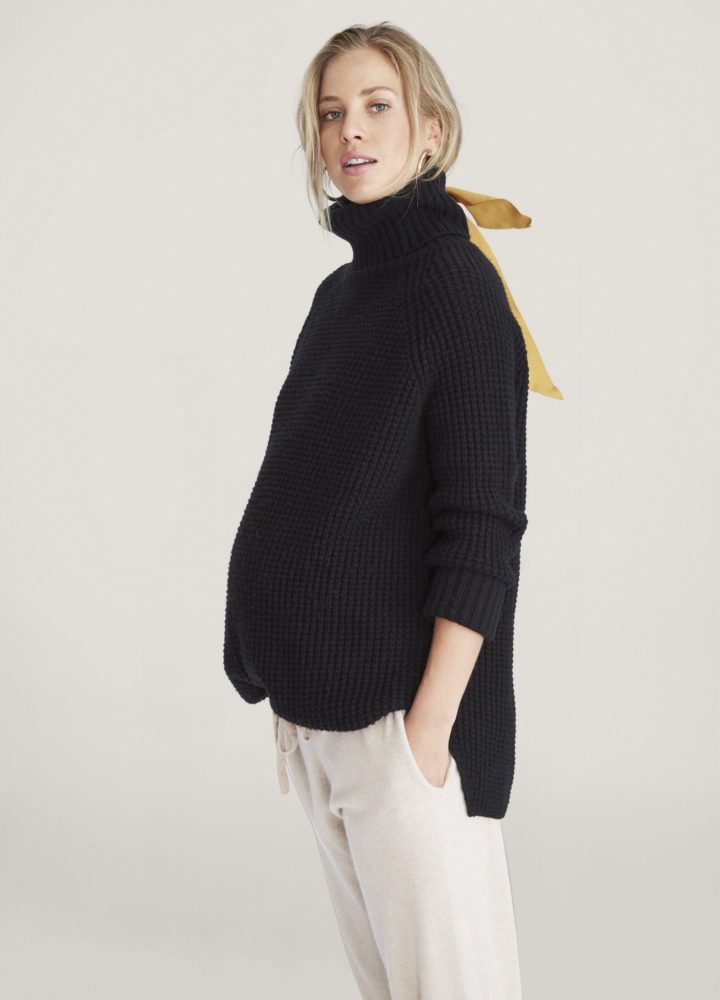
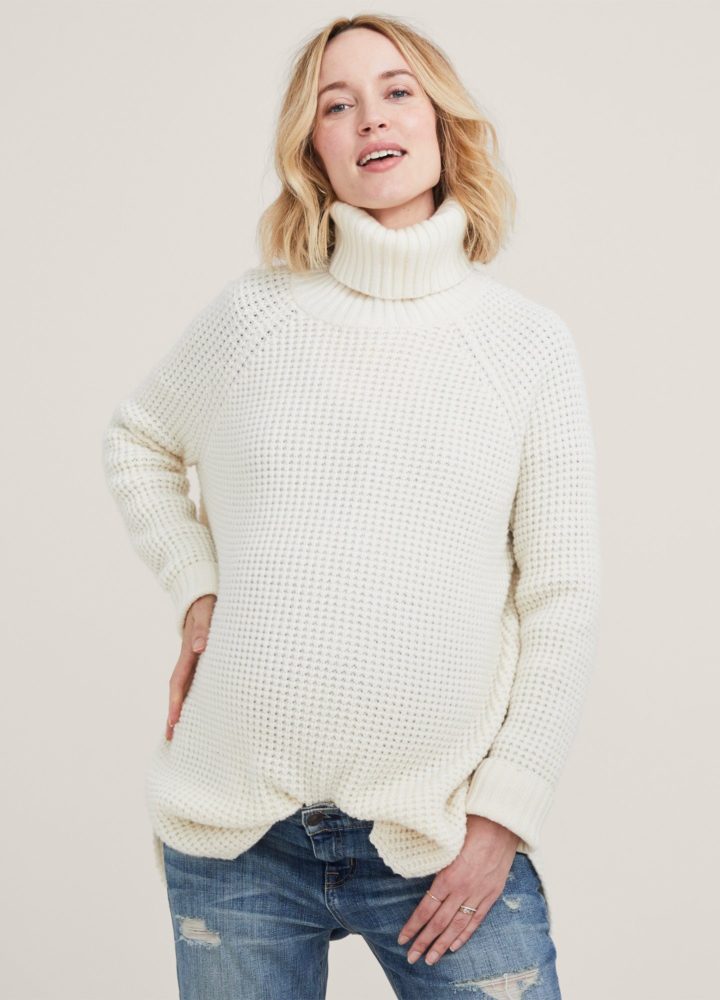
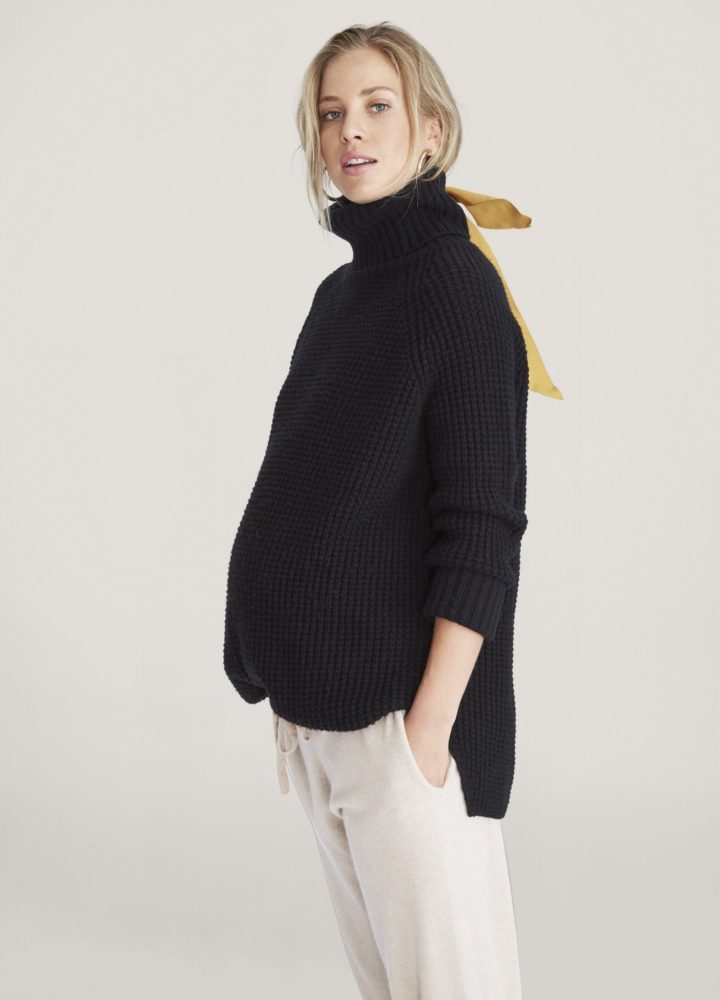
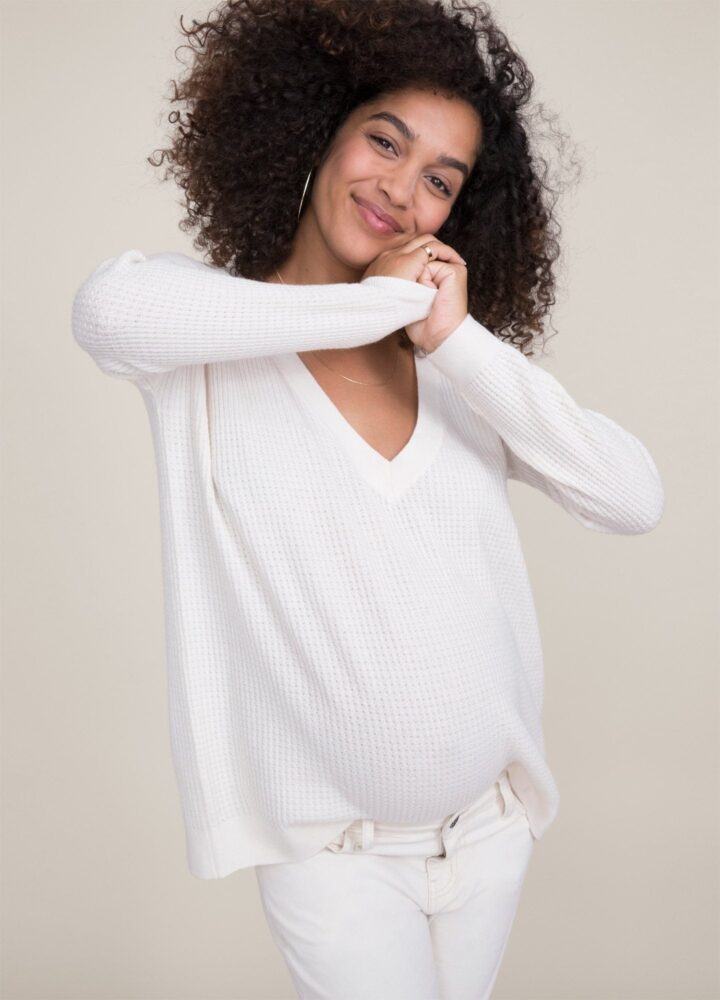
Seeing as we’ve never met a waffle anything that we didn’t love, be it for breakfast or to wear, there’s something innately cozy about both. So, get ready; this sweater is the ultimate Fall vibe.

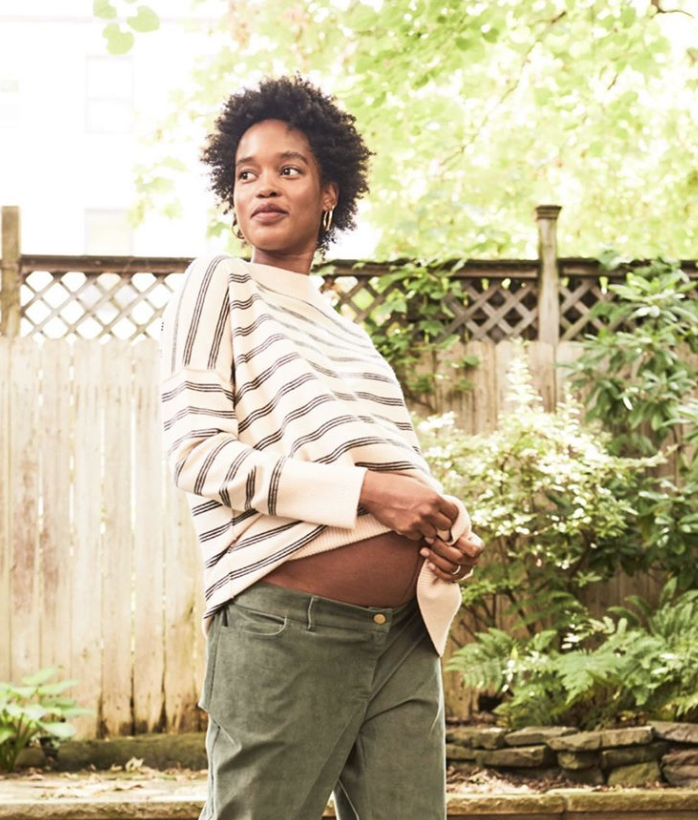
Love A Stripe

Classic. Cool. Always versatile, always stylish. Wear now, as fall turns to winter and your bump gets bigger, or later, post baby too.

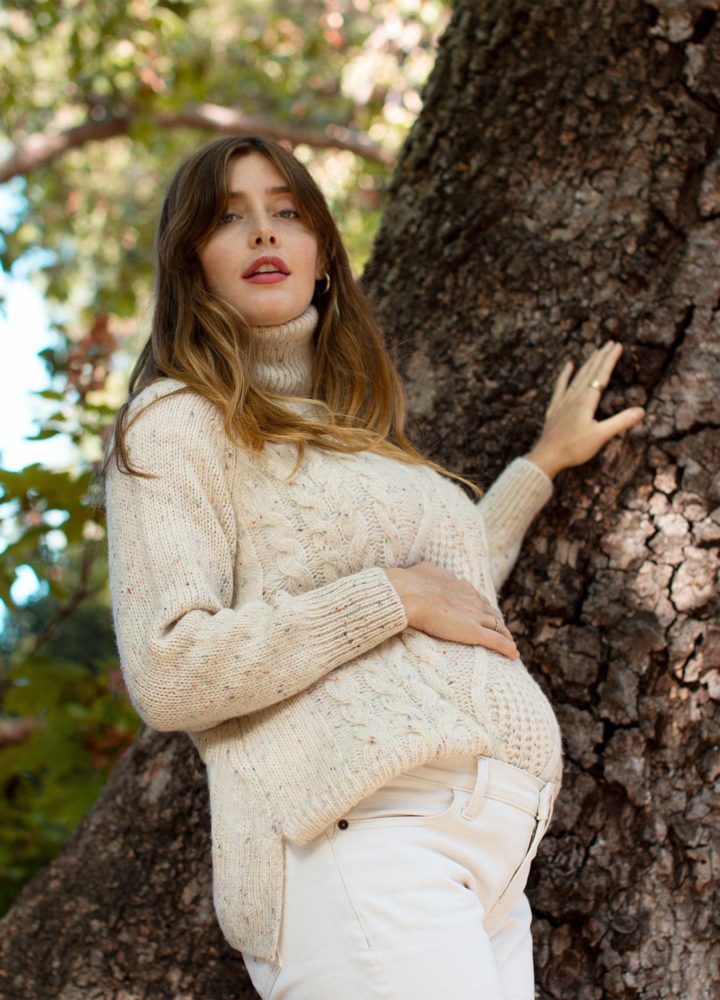
Chunky, Cozy, Cute

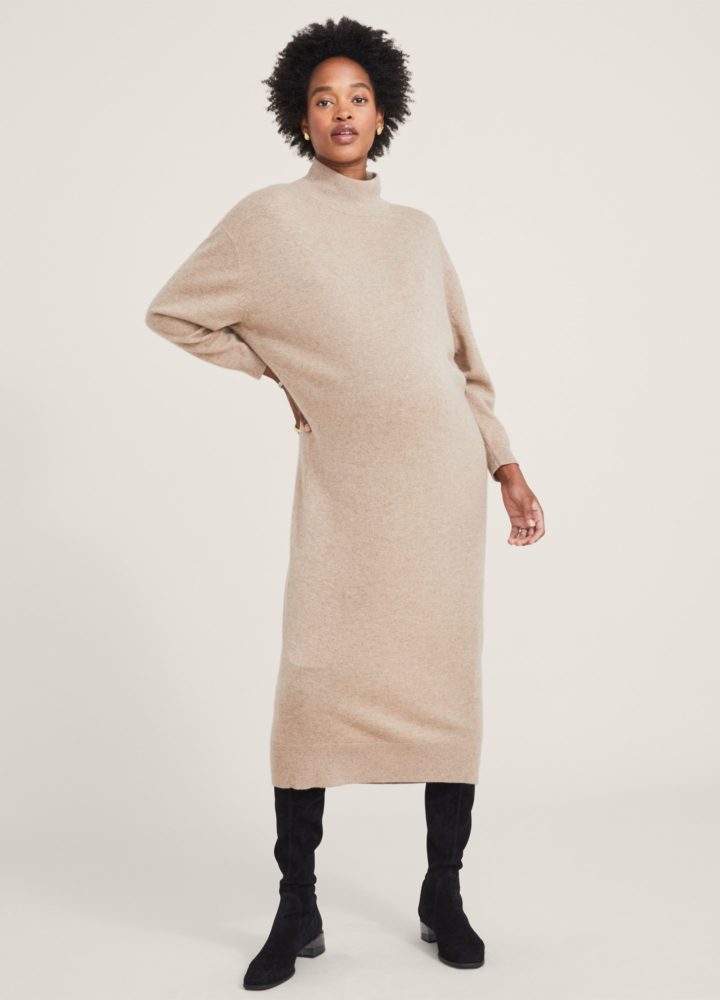
With a chill in the air, reach for lightweight (yes! lightweight!) textured chunky cable knits or cocoon shape heathered yarn sweaters perfect for Fall days out and about.

Layer Player

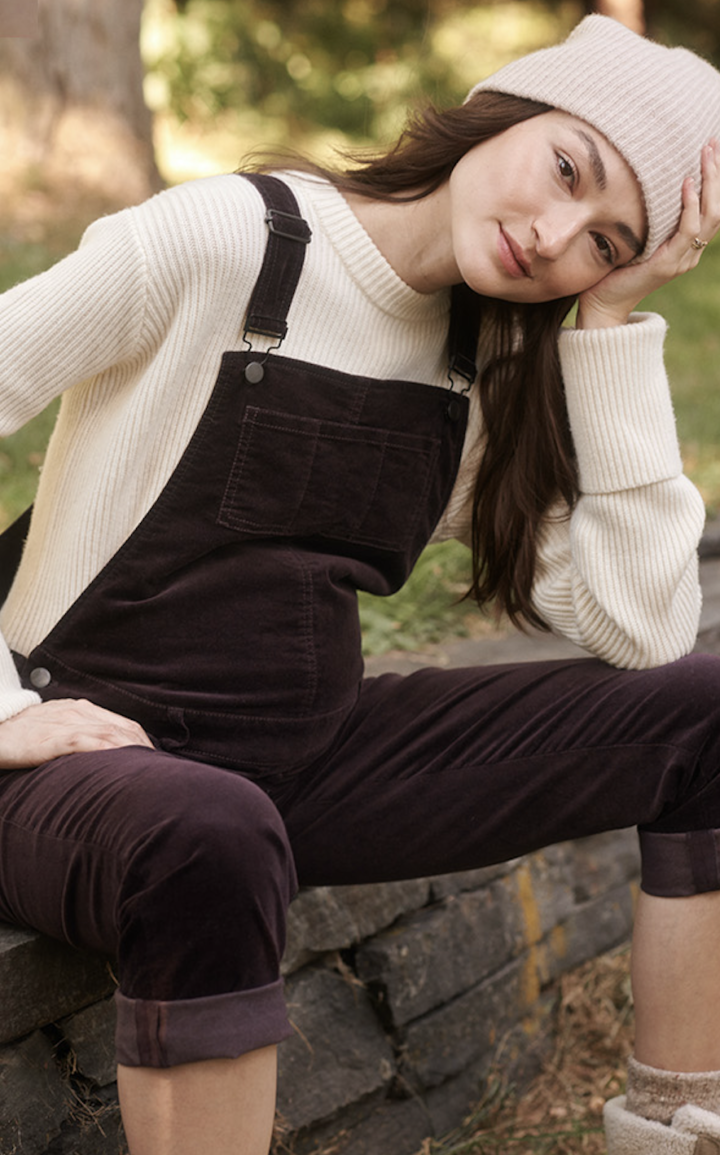
Going from outdoors, in? Layering is key to Fall dressing. Pair bump-flattering lightweight knits with denim or under overalls for a country mood.

1 69 105