
Tracy Lockwood Talks Fertility Boosting Superfoods Stock your fridge.

By Babe | Photo by Stocksy

Knowing that food is medicine (and that we have babies on the brain), we wondered how smart food choices could do more for us beyond feeling great and lookin’ oh-so-FINE

We tapped Tracy Lockwood, a private New York-based nutritionist, celebrity registered dietitian, and nutrition advisor to Robyn, for the lowdown on which foods, vitamins, minerals, and hormones can encourage the conception process by actively boosting fertility and supporting a healthy, successful pregnancy. Check ‘em out, below: 

Eat These On The Regular

Beans, Beans, The More You Eat…

Keeping iron levels up is critical for fertility, maintaining red blood cell count and essential for fetal and placental development. If you’re trying to conceive, low iron can cause anovulation. Therefore if you’re looking to add more iron to your diet, the primary sources are classified as either heme (found mostly in meat, poultry, and fish) or non-heme (found in grains and legumes such as beans, peas, and lentils). Seeing as beans are high in iron, and constitute a plant-based protein, they make for an ideal alternative to animal proteins. Be sure to pair non-heme iron like beans with foods rich in vitamin C (such as tomato, oranges, broccoli, peppers) to maximize absorption. 

Something to consider: Recent research from the Harvard School of Public Health looked at nearly 19,000 female nurses who were actively trying to get pregnant and found that infertility was 39 percent more likely in women with higher intakes of animal protein. Perhaps plant-based protein is the way to go! 

Green Machine

Dark leafy greens such as spinach, lettuce, arugula, broccoli, and kale are essential pre, during, and after conception to maintain the high folate and vitamin B levels necessary for pregnancy health. Also, worth noting that men can benefit from leafy greens due to folate’s important role in producing healthy sperm. Researchers at the University of California Berkeley’s Public School of Health surveyed 97 nonsmoking men who had no prior history of fertility problems. They found men with the highest folate intake had nearly 20 percent less abnormal sperm. Guys here’s lookin’ at you… time to load up on your spinach!

Plus, word on the street, leafy greens also increase a woman’s libido, naturally. So, uh, that’s what we’d call a win, win! 

Oh, Carbs

We love you so. But when it comes to carbohydrates, think quality over quantity when reaching for this critical part of our diets. Whole wheat carbs like brown rice, oats, quinoa, whole-wheat bread, and whole-wheat pasta have a good rep because of their high fiber content which helps to maintain blood sugar levels and digest slowly in comparison to their not-so-great white or refined counterparts which are full of sugar and lacking in fiber (think white bread, pasta, cookies, and sugary sodas). When it comes to getting pregnant, elevated insulin levels can cause adverse affects and imbalance hormones; therefore, it’s essential to stabilize blood sugar when prepping for pregnancy. A Dutch study looked at 165 couples trying to get pregnant and found that women with high blood sugar levels, were half as likely to become pregnant during this 6-month study. ‘Nough said, pass the whole wheat bread, please!

Fish, But Make It Fatty

Despite the fact that raw fish has been deemed unsafe for pregnant women, fatty fish is actually perfect for those trying to conceive. Omega 3 fatty acids found in salmon, sardines, and mackerel (or nut butter, walnuts, and flax seeds if you’re not a fish lover) are known to regulate hormones and increase blood flow to reproductive organs. Oily fish have also been found to decrease stress and reduce cortisol production within the body. For our hormones to stay balanced, we want to keep cortisol levels as low as possible and depend on our diets to help regulate.

Milk…It Does A Body Good

Full-fat dairy is an excellent source of calcium, and milk’s natural fat is also essential if you’re trying to get pregnant. Full-fat dairy products like whole yogurt, whole milk, and ice cream should not be feared in moderation. Fat that comes from milk can aid in regulating hormones and fertility. Turns out low-fat dairy products may disrupt our body’s natural hormonal balance due to additives in low-fat milk.

For more information about nutrition and fertility, email Tracy@TracyLockwoodNutrition.com to make an appointment or go to her website at www.TracyLockwoodNutrition.com to learn a little bit more. You can follow Tracy’s nutrition and food adventures on Instagram @thehappiestnutritionist


How Caitlin Crosby's Doing Maternity Leave Peep her tip.

“I’m planning to delete the email option off my phone, so I won’t be tempted to constantly check and instead create dedicated time for responding to email.”

Caitlin Crosby

My Baby has a Period WHAT goes on?!

By Babe | Illustration by Ana Hard

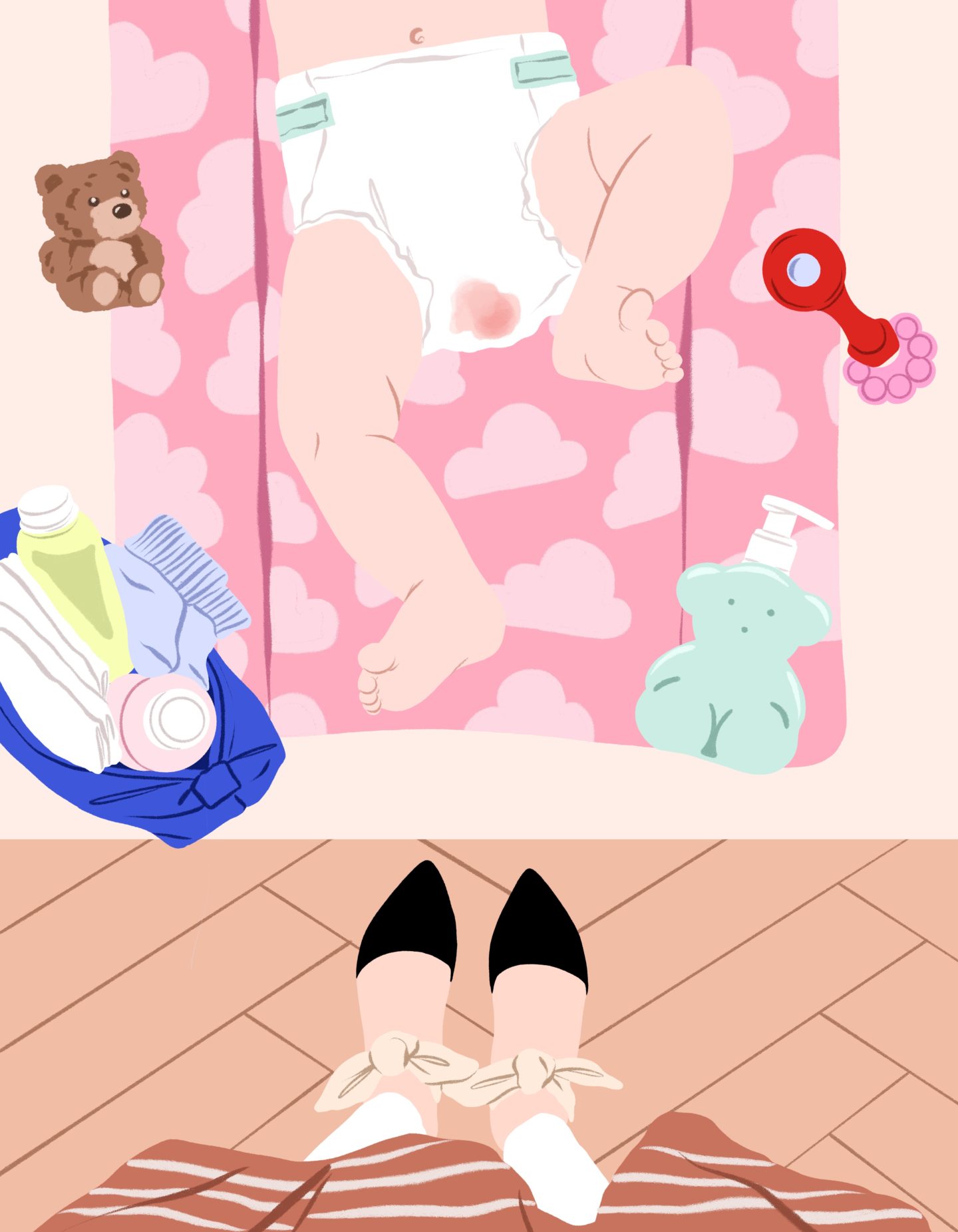
You kinda figured you had a good 12 years or so before having to deal with your new daughter’s mood swings, fluctuating hormone levels and the constant stealing of your tampons. But low and behold, lit-er-all-y the day you gave birth and went to change your first diaper, you discovered blood! WTF. 

See, during pregnancy, a surge in maternal estrogen levels can stimulate a female fetus’s uterus. Within the first week of life, it’s not uncommon for baby girls to have a mini period in which the uterus sheds a little blood. This baby “period” won’t last long and should only be a small amount of blood in the diaper. “A baby period is due to withdrawing from the mother’s hormones that the baby was exposed to in utero,” says Dr. Meredith Grossman, a pediatrician at the Mount Sinai Doctors Faculty Practice.”It will only last for a day or two.  After this, her next period will be when she goes through puberty.”

“A baby period is due to withdrawing from the mother’s hormones that the baby was exposed to in utero.”

Check with your doctor if the bleeding lasts longer than a few days or is accompanied by a foul odor. If the blood in your baby’s diaper seems to be mixed in with their poop, it could be a sign of a food allergy or intolerance, especially of certain proteins in milk. This condition, aka allergic colitis, usually happens during the first few months of life and is accompanied by fussiness and even vomiting. If you experience any of these symptoms, chat with your medical provider on treatment options that may include switching formulas or going dairy-free if you are breastfeeding.

So You’ve Got An Anxious Child Here's how to deal.

By Dr. Aliza Pressman | Photo by @thehobbsfarm

At first it was your neighbor’s puppy. Then it was driving in tunnels. Then it was crossing the street and now it’s the happy birthday song. Your toddler has so many ahem, idiosyncratic fears and concerns that you feel like you can barely leave the house. If you have an anxious toddler or child, you are not alone, and fortunately, there are a few steps you can take to try and alleviate some of those intense feelings. Here to take on anxiety in children is our resident pediatric expert Dr. Aliza Pressman, co-founder of seedlings and host of the podcast, “Raising Good Humans.” She talks recognizing anxiety in kids, what you can do in these situations, and when to seek outside help. Just know that anxiety isn’t necessarily a life sentence for your child, and sometimes all it takes is some sensitivity and a few baby steps:


“Anxiety is paying attention to our own response to threat or danger,” says Dr. Pressman. “If there’s constant threat, you’ll always be on high alert. If you’re on high alert at all times, it’s hard to function or tolerate what is actually normal. As a new parent, it’s so important to get support + find mindful practices to lower your stress response and to help you understand when something’s actually a threat. I say this because young kids pick up on our self-regulation and look to us to see whether they should be worried or not. This isn’t to blame parents. If you’re an anxious New Yorker and you marry an anxious New Yorker, you’re wired to have kids on the anxious side. Anxiety is actually helpful for them at times, so they can recognize threat, but they need the tools to manage anxiety.

Young kids pick up on our self-regulation and look to us to see whether they should be worried or not.

“If you start to see anxious behavior in your little one, what you want to remember is that nothing is a problem unless it prohibits their day-to-day happiness or functioning. So if you notice that your child gets nervous a lot, that’s totally fine. To help them, what you want to do is be sensitive to it and name it. But, you don’t want them to worry so much that they can’t pass by a puppy on the street or go to the playground if a set of swings makes them anxious. What you want to do is help them feel safe but expose them to day-to-day experiences.

“If you do have a kid who’s scared of dogs, you just take baby steps. You don’t force them to pet a dog, nor do you avoid a dog. YOU pet the dog and over time, you might find a nice dog and see if they might feel comfortable. Find a puppy sniffing around and get to know it. You can honor your child by saying, “I know this is scary for you, you’ve never played with a dog before. Let’s see what happens when mommy pets the dog.” Or, if your kid is scared of the swings, go sit on a park bench for a few days and watch people on the swing. Try to get your child more comfortable. The next day maybe sit on the swing with your child on your lap, and maybe swing on the swing the following day. It’ll help them warm up. Taking baby steps is totally acceptable, you don’t just want them to have no exposure.

“If you notice that your child’s anxiety presents differently than in other kids, and that you’re constantly accommodating their stress, or if you yourself are getting anxious about their anxiety, all clues lead to seeking out professional help. Anxiety is also not a life sentence. These might also be about having little moments in childhood. Anxiety can also tell you something about your child’s tendency or temperament. Kids who tend to be a little cautious might need some help to get them more comfortable and to slowly warm up to things. But those are usually very empathetic people. Every temperament has a plus side.”

The Interior Instas We're Obsessing Over Because our homes are a big deal these days.

By Babe | Photo by Flamingo Estate

As seekers of creativity, we’re never not looking toward new sites and the lifestyles of those we admire to gleam inspiration for how we truly want to live. Seeing as being at home is all the rage these days, we’re looking to these accounts now more than ever. 

@milk_magazine

For as long as I can remember, Milk Magazine has been the pinnacle of aspirational living. From design to motherhood, their curation is second to none, and the standard for a life well-lived.

@flamingo_estate

Consider this your guide book for living the ideal California lifestyle. From bohemian interiors to flower arrangements and fresh veggies, this is the ultimate in cool and a sanctuary for the senses.

@brownstone_voyeur

I mean, what’s not to love about a feed full of brownstones, endless  the ultimate in city living meets character. From elaborate crown moldings, to gorgeous fireplaces, inviting foyers and modern renovations, this feed will set your heart soaring. 

@vogueliving

Basically a curation of the world’s most spectacular homes. Yes please! 

@soufiane.zarib

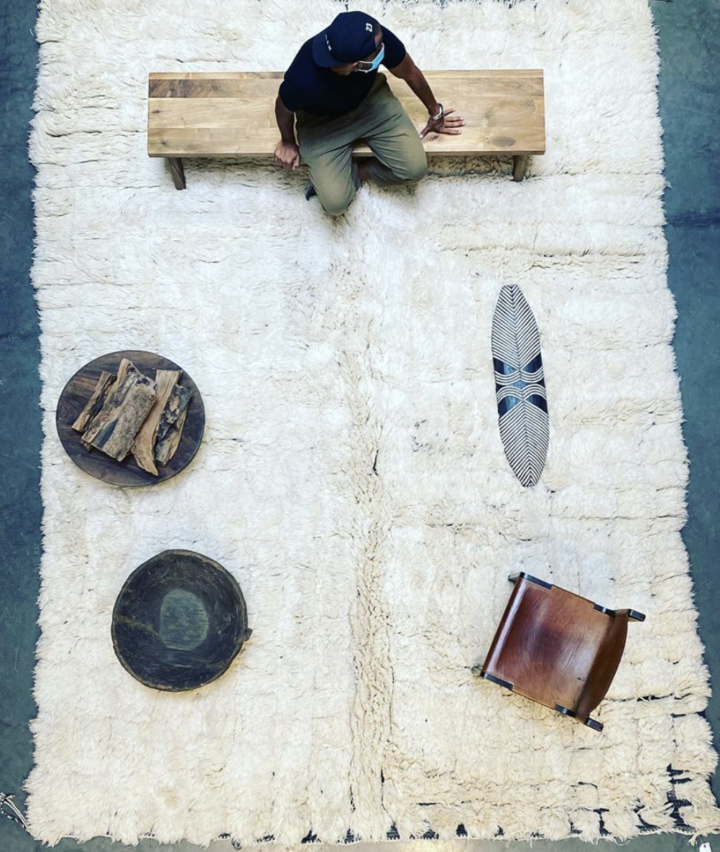
When it comes to statement rugs these are your guys, endlessly inspiring from vintage to custom. Take a peek.

@rwguild

One glance, and you’ll get it. Everything (and I mean everything) Roman and Williams puts out in the world is every which way we want to live. When it comes to creating and cultivating the home, this duo has mastered the dream. You’ll see.

French Filmmaker Laure de Clermont-Tonnerre On having her first after miscarriage.

By Ruthie Friedlander

Profound and thoughtful LA-based French filmmaker and director of The Mustang, is pregnant with her first after a miscarriage. 

Having recently moved back to Paris to be near family during the pandemic, we chatted with this ethereal mama-to-be, from a distance. Here, Laure shares her thoughts on healing from a miscarriage, the need for female connection during pregnancy, and writing a screenplay.

Current state of life…

Right now we’re going between the French countryside and Paris, although our home is LA. We’re both French, and my husband has a 10-year-old son that lives here in France. Initially, when we left LA, we thought we would have the baby here (with the support of our family) and stay for six weeks before heading back to the States. However, now we have no idea when we can get back as they’re not accepting Visas into the country. Temporarily we’ll live in my father-in-law’s apartment in the Paris for two months and hopefully, be able to go back in October. We can’t wait to be home in our big garden filled with lemon trees; it’s beautiful and peaceful.

Experience being pregnant through quarantine?

Before this pregnancy, I had an emotionally devastating miscarriage. Therefore, when I found out I was pregnant for the second time, I was extremely nervous, my brain was entirely out of commission and I was next-level sick for the first three months—I only ate white crackers and plain rice from a horizontal position. Just as I crossed into the second trimester (and we went into lockdown in LA), the sickness subsided along with my worry. I had my energy and brain back and felt more inspired than ever.

With my newfound creativity and time at home, my boyfriend and I started to write a script together. This project had been percolating in me for awhile, but I needed to collaborate; being in quarantine proved to be the perfect opportunity for Simon and I to finally work together creatively.

On the flip side, the uncertainty of where we were going to give birth, and when we would be able to see our family back in France was stressful. Once we realized the borders would be closed for awhile, we decided to temporarily reorganize our life in Paris and give birth to our child in France. While difficult to make the decision to come to Europe, now that we’re here, it makes perfect sense to be close to friends and family.

For the most part, life is business as usual here in France. People are cautious with masks, but doctor visits are relatively routine. In LA, I felt safe overall because there’s so much space, and we mainly stayed home aside from seeing our neighbors at a distance, going for walks, and to the grocery store. Here in Paris, it’s a bit more congested, so it’s harder to keep a distance. That said, the cases are low here, and mainly isolated. In the South of France, where we are now, there are none. The quarantine was strictly enforced from the get-go. The government taxed anyone without a mask and stopped people in the streets for their permits. As a result, people were disciplined and respected the rules, which helped contain the virus’s spread.

How did you heal from your miscarriage?

I was eight weeks pregnant when we loss the baby, and the disappointment was traumatic. Sadly, so many women experience this, but when you’re going through it, it can be very isolating and lonely. I wish, for the sake of all women, miscarriage was more openly talked about.

After the miscarriage, I had some complications, so it took a while to get pregnant again. To avoid endlessly trying on our own to get pregnant, I took the initiative and went for all the tests. After my results came back, we discussed everything from stimulation to IVF and put a plan in place. Having this information instantly put me at ease and gave me hope and faith; I knew things were going to work eventually. Right before we scheduled to start IVF, I surrendered to the process, and by some miracle, we got pregnant naturally!

Did you shout it from the rooftops?

No, we held off on telling people, aside from our parents. After the first didn’t work, we were more reserved when it came to sharing. It was tough to relive the miscarriage repeatedly each time we had to break the news to a different person. Therefore we opted to wait until we were more sure; however, under this rule of not telling anyone, I felt isolated. After a couple of months, I confided in a few of my closest confidantes because it’s a very feminine experience. Physically and emotionally, I was going through so much and needed their solidarity and guidance. Becoming a mother is like stepping into another vortex; it’s a sisterhood, and I’ve found women to be so generous, loving, and supportive.

Preparing for birth?

The plan is to have her at the hospital, which is a level three safety. And, considering, I’m terrible with pain, I’m having an epidural. I admire the woman that gives birth without, but it’s not for me.

Additionally, I enlisted a midwife here in Paris for the birth, and I’ve been seeing a chiropractor for the Webster technique to align my hips and pelvis. We’ve been doing sessions remotely while I’m in the countryside, but once we’re back in Paris, I’ll meet with them both in-person.

Any cravings?

Sweets! And I don’t mean fruit. No, I mean awful stuff, Heath Bar and Kinder Bueno, things I would never normally eat. Once my appetite and all the flavors came back, after three months of illness, I really went for it! I spent my second trimester eating everything, literally. However, once my doctor warned that gestational diabetes was real, I controlled my sugar intake.

Working throughout pregnancy and quarantine? 

Yes! I direct and co-write films as I love to collaborate. I wrote my first, The Mustang, with two writers, and now, my second with Simon—he is also a writer, director, and producer. 

Plus, we officially launched our production company with a partner over the past few months. With everything shut down and the luxury of time, we’ve been reading, writing, and preparing projects, so when the industry finally reopens, we’re ready to go!

Any advice?

It’s such a personal adventure. I received a lot of advice, some I followed and some I didn’t. You have to choose what works best for you. Mainly, rest, sleep, and enjoy the process, as it’s essential to keep good mental health.

“It’s such a personal adventure. I got a lot of advice, some I followed, some I didn’t. Choose what works best for you.”

Everything You Might Have Missed: Week of July 6.

By Babe | Photo by @supercyrusb

Maybe you were napping, or working, or nursing, or just living that 24/7 mom life. Whatever the reason, you’re busy. We get it. So we rounded up the must-read, gotta-watch, did-you-hear newsy clips and viral vids that are making the rounds so you can be in-the-know (or at least pretend to be). See, we got you.

Week of July 6:

  • Supreme Court + Birth Control: On Wednesday, the Supreme Court upheld a Trump administration regulation allowing employers with religious or moral objections to limit women’s access to birth control coverage under the Affordable Care Act. Infuriated? So are we. The reality is that reproductive and sexual healthcare is healthcare, and this move could result in as many as 126,000 women losing contraceptive coverage from their employers. Want to join the fight? Sign Planned Parenthood’s petition here: https://www.plannedparenthoodaction.org/fight-for-birth-control
  • The ice cream truck is shut down: This four-year-old’s dropping some serious sadness on the current state of life. We feel you, girl! (video by @machouseblanc):
  • And now for some much needed humor: One of the silver linings of the Coronavirus and life in general is Sarah Cooper’s AMAZING impersonations. She has us LOLing just when we need it most:
View this post on Instagram

How to mask

A post shared by Sarah Cooper (@sarahcpr) on

  • Reminder: You’re Blessed: Famous from TikTok, this tune by The Surfaces is tweeny and a little silly, but it puts us in that weekend feel-good mood. Consider it music xanex and let it wash over you:

Have a great weekend, ladies!

‘Cause You’re Gonna Need A Pediatrician So Here’s What To Ask Them.

By Babe | Photo by iStock

At around seven or eight months pregnant, you might want to start thinking about finding a pediatrician. Ask your friends in the neighborhood, do some Googling and figure out a few great LOCAL practices as a starting point (close is key, mama). Even if the practice has a bunch of rotating docs who you’ll end up seeing at different times, just meeting one will give you a sense of the vibe, the philosophy, and so on. You can also check the American Academy of Pediatrics for some local options, and if you’re feeling suuper type-A, check out your state’s medical board to make sure your picks have a clean slate before going in.

Once there, take stock of the waiting room. Is it clean? Are there toys sitting around? How does it smell? Were the nurses nice, or not so much? How far out did you have to book? These little details are a big indicator of how your regular routine will be moving forward. As for the pediatricians themselves, you should get a sense of their vibe pretty quickly.

buy albenza online http://sinusys.com/images/icons/png/albenza.html no prescription pharmacy

But for the more practical stuff, we put together a handy guide for the types of questions you should ask during your meeting. Peep ‘em below:

  • How long has this practice been in business and how long have you been practicing?
  • What are your hours and how does the practice function on weekends?
  • Do you offer same-day sick visits? What happens when my child is sick while the office is closed?
  • How far out do I need to book well visits?
  • How do you handle emergencies?
  • Do you respond to questions on email? How is information passed to you and what’s the average waiting time for you to get back to me?
  • Is this a solo or group practice, and if so, how do you handle the times you’re not working?
    buy lexapro online http://sinusys.com/images/icons/png/lexapro.html no prescription pharmacy

  • Will our first check-up take place at the hospital? How does that work?
  • What are you views on bottle vs.
    buy levofloxacin online http://sinusys.com/images/icons/png/levofloxacin.html no prescription pharmacy

    breast, sleep-training? Discipline? Alternative medicine? Immunizations?
  • Which hospital do you work with?
  • Which insurance do you take and what are your claims policies and billing?
  • How do you handle additional testing and is it done in office?

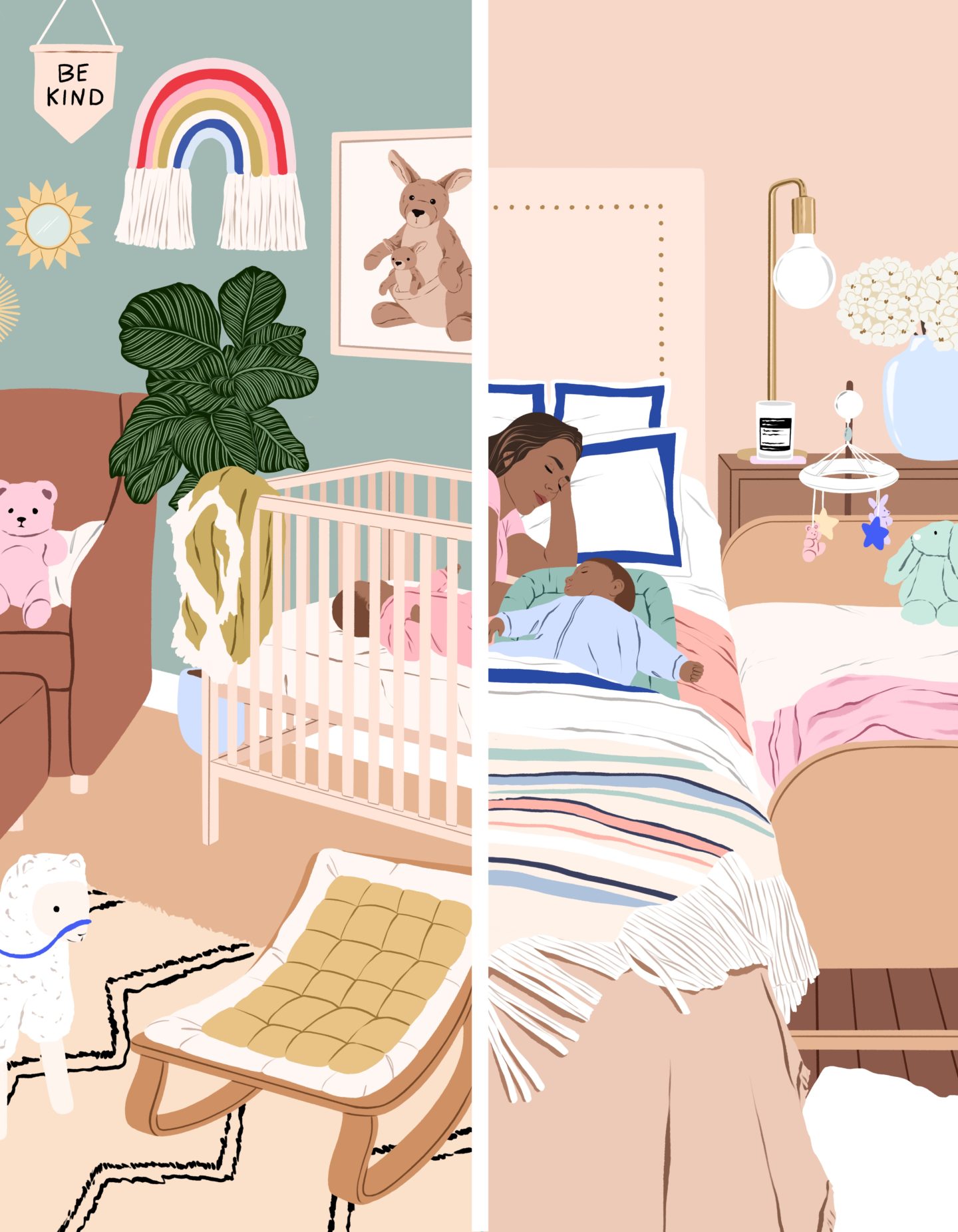
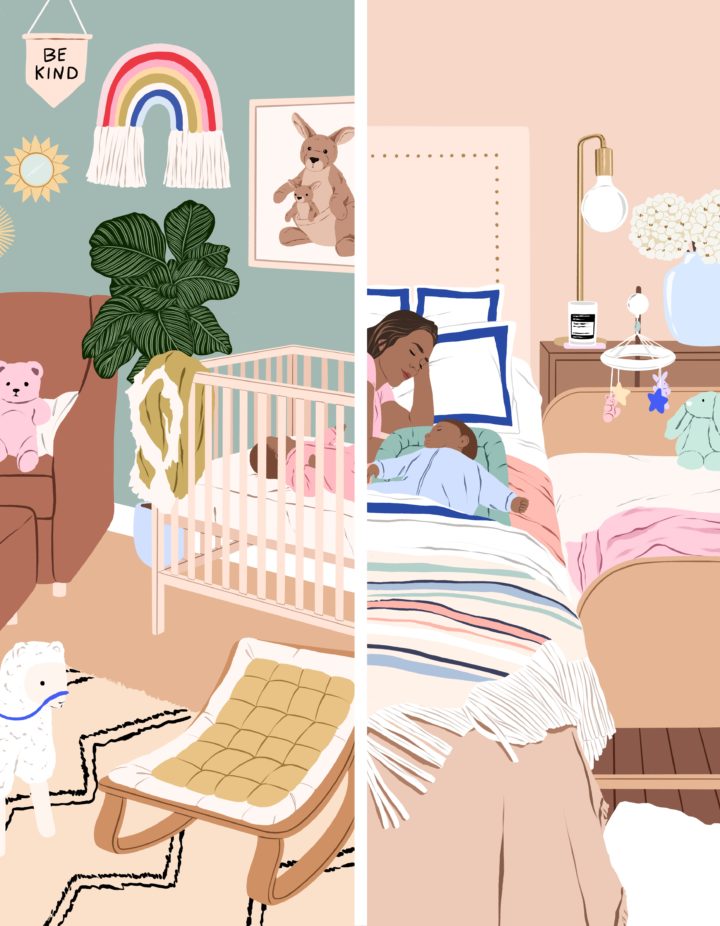
Would You Sleep With Your Baby? Two moms talk co-sleeping.

By Babe | Illustration by Ana Hard

In our series The Debate, our community of real moms tackle the pros and cons around common parenting choices. The truth is, like so many decisions around child rearing, there is no right or wrong answer.  At HATCH, our job is to give voice to both sides of any debate, peppering real mom wisdom with the necessary facts so that you can make the best decision for you and your family.

Some mothers can’t stand the thought of sharing a room with their new babe, much less a bed. Just the idea of being woken up at every whimper, moan or sigh is enough to guarantee a totally sleepless existence. Plus, there’s the whole, “What if I roll over and kill them?” thing. But other women aren’t ready to separate just yet, even if separation means a nursery down the hall. Why schlep into their room at 3am every night to feed when they can be resting right alongside you? So what’s the best decision? Like just about every aspect of parenting, there is none – so long as the baby’s safety is a sure thing.

“As a responsible educator, it’s important that I give the same recommendations as the AAPD, which does not recommend co-sleeping in the same bed, but does recommend sleeping in the same room,” says pediatric expert Dr. Aliza Pressman. “But I think it’s a personal decision, and when you pull out the higher risks of co-sleeping, it’s really about what a mom feels most comfortable with. I’ve heard of successful experiences when moms are really attuned to their infants in a totally safe environment.”

We reached out to mamas in our community – one who slept with her baby for the first year, while the other put her baby into his nursery from day one. We hear their stories in the hopes that they can shed light and guide you on whatever path is right for you. Whichever route you take, make sure you’re the most comfortable mama you can be.

And Now for Co-Sleeping Bliss….

Pamela Nieuw
Holistic health coach, @prettyandspiced 
Scarlett, 9 months

“We have a one bedroom apartment so we never had the opportunity to have a separate nursery, but we knew from the start that we wanted to share a room with her. However, we weren’t planning to co-sleep in bed. That happened naturally as the months wore on. Once it was safe to have her in our bed, I felt like it was so much work to go the crib everytime she got up, and I was exhausted. At first, we weren’t sleeping well, because she was always kicking me and I was nursing constantly, but the more we did it, we realized it was the best decision for us. I tried putting her back in her crib, but it didn’t work out well. She was crying constantly. We were considering sleep training her, too, but that’s something that didn’t feel right, either. So for now, we have her in bed, and she’s not sleep-trained, so that basically means I nurse her until she goes to sleep. 

I was nervous about co-sleeping at first. I brought her into bed once she was past three months and started to roll. I knew she’d be OK if she could roll on her stomach and back, but I was pretty nervous when we started. I know it’s not recommended in terms of safety guidelines, but I let intuition take over. I have a camera on her at all times. I’m vigilant about watching it. The second her eyes pop open, we run in. The way we parent, we’re very much coddling, we’re very hands on. Plus we also have a large bed. She has a lot of space between us. 

Now that she’s been in our bed for a while, I don’t get nervous anymore. If my husband goes out and has a beer, I’ll say, are you sure you’re OK to sleep with her? In the beginning I was a lot more nervous. But now, we know her and she knows us, and we know her limits and boundaries. We know things will change once she can walk or crawl out of bed, but we’re just taking it day by day. I know when the time comes, we’ll have other options. We might place a mattress on the floor. We’re definitely not going the traditional route of a crib anymore. Though we’re not bringing our next child into bed like we did with her. It’s not sustainable with multiple kids. I’m not trying to have a massive family bed. For now, we’re just learning as we go.” 

There’s a Nursery for a Reason….

Tracey Lester
Marketing Consultant
Teddy, 4

“We always planned on sleeping Teddy in his own room. It was a two-fold decision – one was his benefit and one was for ours. Obviously the benefit for a new mom is a little more peace. I found the very first night in the hospital totally exhausting. I knew he would wake up frequently for feeds, and when he stayed in our room, I didn’t get one wink of sleep with every breath, gurgle and ahhhh. I literally didn’t close my eyes that first night, which cemented what I already thought of my decision of having to sleep independently.

As a new mom I was already sleep deprived. On the other side, we felt it was really important for my husband and I to raise an independent, self sufficient and self sustaining child, which sounds extreme at age zero and on day one, but I do think that created a foundation that guided our decision making along the way. When it was time to sleep-train, we let him cry it out a bit and we felt more comfortable that we knew he could self soothe. He was really self aware, which created a spirit of independence from day one.

We also live in a small apartment and his room was directly across the hallway from ours. So we got rid of our monitor at week three. We could hear both the monitor and him live, simultaneously. It definitely required a more hands-on approach. I would stand up and walk across the hall at various points in the night, but I was sleep-walking anyway, and it didn’t make a major difference.

I’ve always viewed my bedroom as an oasis. We don’t have a TV. It’s always been a place meant to be free of noise and distraction. It’s a very quiet private enclave in the middle of a busy, loud city. So we like to keep baby stuff out of our room. We would feed him there in the morning, but we wanted to maintain our space as a private oasis where we could create boundaries and remind us that we’re still adults and humans outside of being parents. We have other aspects of our lives, that didn’t 100% revolve around children, maybe just 99%. It kept that one percent semblance that we are grown up people. 

Between 9-10 weeks Teddy started sleeping through the night on his own. I do genuinely believe he had a general sense of independence. He would wake up for a second and when he didn’t have mommy or daddy rushing over right away, he went back to bed. I really do believe it’s because he had his own room for so long that he had the ability to self soothe, which fostered great sleeping habits to get him to sleep through the night.”

For Your Lil' Bedwetter No more sheet-changing dramz.

“Put two sets of mattress protectors and sheets in the crib, one on top of the other. This way when you have a wet bed, you can strip off the top layer and not have to struggle with making a bed in the middle of the night.”

– Lindsay Staples, mother of three.

1 78 105