A few weeks ago we posted a meme about pain during breastfeeding. We weren’t quite prepared for the diversity of thought on the topic, and it became clear that we had touched a nerve. Obviously, we had to dig in.
Should breastfeeding hurt?
According to a study conducted by the FDA and CDC, over 75 percent of mothers experience breastfeeding pain within the first two weeks postpartum.
“Sore or tender nipples are common during the first few days or even weeks of breastfeeding but it should improve,” says Dr. Lena Farrar, an OBGYN based in New York. “Pain that is severe or continuous is a sign of a problem that should not be ignored.”
When you think about it, it kind of makes sense. Your breasts went from looking cute in a bathing suit and having nothing to do in life, when suddenly, there’s this creature suckling at them constantly and your nipples aren’t prepared. So yes, the beginning of the breastfeeding journey can lead to sore or cracked nipples, which generally resolve themselves over time.
However, if you’ve been nursing for a while, and you’re still experiencing pain, that’s when you’ll want to check in with a medical provider or lactation consultant.
According to breastfeeeding.support, the most common course of pain is nipple attachment. Without a deep mouthful of the surrounding breast tissue, and if the nipple isn’t far enough into the baby’s mouth, it will pinch the nipple between the tongue and the roof of baby’s mouth. That can cause pain.
Healthline states that nipple pain is indeed common during the early breastfeeding days, and again, it comes down to latch. As you work on perfecting your baby’s latch, you might feel some discomfort, but ongoing pain or skin damage is a sign that you need to seek help.
Also, just remember, your nipples should look the same before and after a feeding. If your nipples appear flattened like a pancake or drained of color after a feed, it’s a sign that there’s a problem with your baby’s latch.
So should breastfeeding hurt? Like most responses when it comes to early parenting – yes, and no. Initial discomfort and pain is totes normal in the beginning. If it continue to be painful, contact someone who can help.
"Systemic racism is a constant issue for Black birthing people." Meet three women creating safer birthing experiences for Black mothers.
By Babe | Photo Courtesy of Nathalie Walton
In honor of Black Maternal Health Week, we sat down with three Black mothers whose organizations are seeking to create equitable birthing experiences for Black and Brown women as well as access to unbiased, supportive healthcare.
Kimberly Seals Allers created Irth, a Yelp-like app where women can find prenatal, birthing, postpartum and pediatric reviews of care from other Black and Brown women. Maya Hardigan founded Mae, a pregnancy and postpartum platform tailored to Black womens’ needs. And, as chief executive officer of Expectful, a haven of holistic care for moms, Nathalie Walton is spreading the gospel of mindfulness and meditation to advance safe pregnancy outcomes.
Check out our conversation, below.
What do you think is the biggest issue plaguing Black Maternal Health right now?
Maya: An inherent lack of trust in the healthcare system, stemming from disparate care. Far too often, Black mothers are not listened to and our needs are not adequately addressed. This leads to a fragmented relationship with our caregiver – the person we should objectively trust and feel most comfortable relying on during this important life stage.
That mistrust exists in part because of a lack of resources that account for our lived experiences in care. Who we are matters, and solutions that offer whole-person care can reduce the fear and anxiety we often feel, and instead, lead to joyful, respectful, safe and best-in-class prenatal and postpartum experiences.
A number of recent studies that underscore what we have long understood: disparities in care, implicit bias, and sometimes explicit racism, directly impact the health outcomes and life spans of Black women and our babies. Higher mortality and morbidity, C-section rates and pre-term deliveries impact our individual health, our families, our broader communities and the long-term health of our children.
Nathalie: Systemic racism is a constant issue for most Black birthing people. Regardless of intellect, wealth, or social status, Black women aren’t taken as seriously – and that shows up beyond anecdotal trauma. It’s a statistical fact. Linda Villarosa wrote for The New York Times, “Education and income offer little protection. In fact, a black woman with an advanced degree is more likely to lose her baby than a white woman with less than an eighth-grade education.”
We hear and see this devastating feedback time and time again. Black women are undervalued. They are not monitored as carefully as white women are, and when they do present with symptoms, they are often dismissed.
Kimberly: The lack of transparency and community accountability for the quality of care of Black women and birthing people within hospital systems and not enough robust Black patient experience data to help hospitals improve in real-time. Despite the widespread academic documentation on the pervasiveness of racism and bias in medical care there has been an abject failure to create monitoring or accountability mechanisms. Taking an anti-bias training is the most “innovative” option out there for a problem that is complex yet deadly to Black people. Meanwhile, there is no evidence that anti-bias training works and no one ever checks in to see if patient experiences are actually improving after the training. We need more innovation, more accountability and more transparency to drive change.
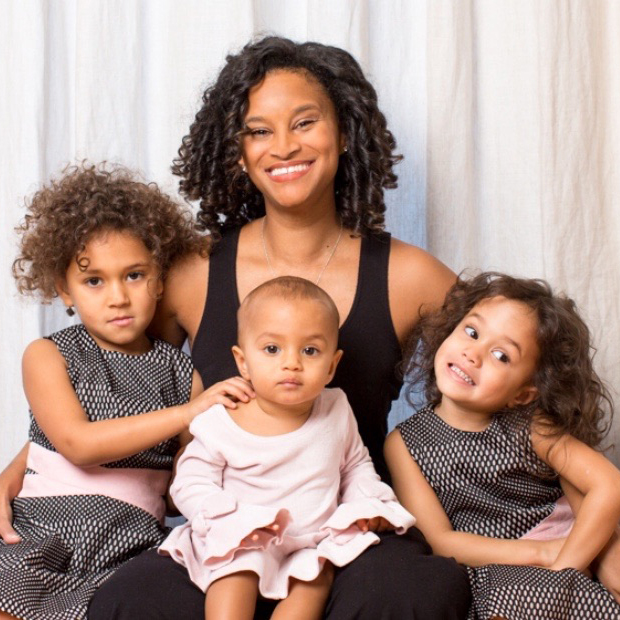
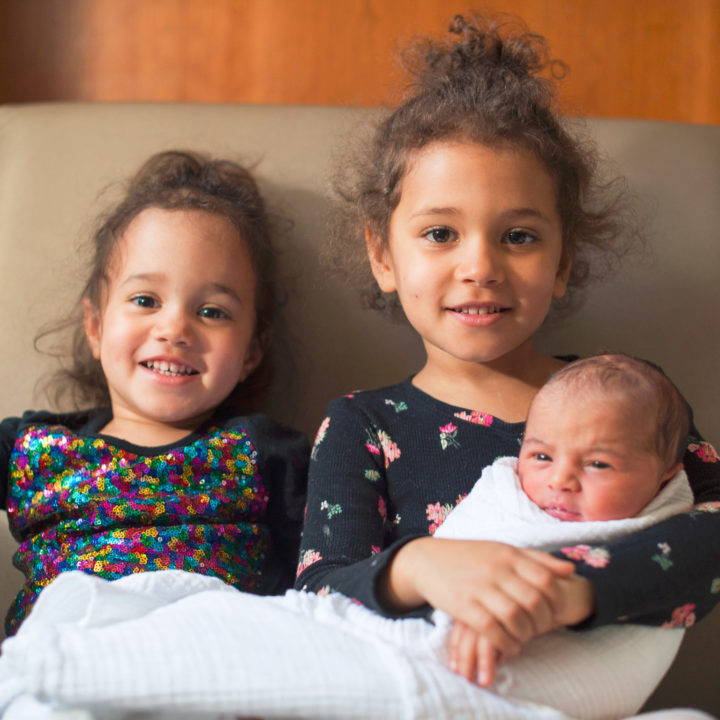
Maya Hardigan and her daughters
What can we do collectively to improve maternal health for Black women?
Kimberly: We can’t change what we can’t see. If we are not willing to see Black birthing people and hear them–via robust ongoing feedback mechanisms, not the annual 7-person focus group–then we can’t address the issue. Next, we need all hands on deck to address this issue, including working to make the systems that help improve birthing outcomes for Black women more accessible. Collectively we need to push to decriminalize midwives in every state, we need doulas who are paid a fair wage and we need for childbirth centers and out-of-hospital options. As a country that clamors for options (have you seen your cereal or spaghetti sauce aisle at the supermarket recently?) yet when it comes to options for birthing–all parents in this country are being denied options. Many of those options could help improve birthing outcomes for Black women.
Nathalie: We must listen to Black women and learn how to confront unconscious bias as a society. In my personal experience, I’ve had the best medical outcomes when doctors self-corrected for potential bias. In my postpartum experience, I’ve had lingering pain in my abdomen. Many doctors dismissed my pain, but the best doctors said that if I’m experiencing pain, it’s their duty to listen to me and rule out any potential illness. If more doctors, nurses, bosses, and friends can take proactive steps to correct bias, more Black women will have a chance to be heard and hopefully helped sooner.
Maya: Collectively, we need to advocate for equitable care. That means working to ensure Black women – regardless of location, education, or income – have access to the solutions that we know work. Access to community-led, person-centered pregnancy support, like that provided by doulas and midwives, pregnancy education, provider and facility choice, and flexible access to care, among other things, are what we all need to fight for to improve Black maternal health experiences and outcomes.
For those of us working to create solutions on the business side, I think it’s important to align with healthcare payers to collaboratively show that a more robust investment in minority health serves the system as well. Whether these are conversations with someone who believes health equity should be a right for all, or someone who is primarily driven by the bottom line, it is incumbent on us to make a strong, data-driven case that wrapping our most vulnerable mothers in the support they need will minimize avoidable poor outcomes and ultimately reduce clinical costs of care.
Collectively, we need to advocate for equitable care.
How do your respective organizations aim to elevate maternal care for Black women?
Maya: Mae aims to elevate maternal care for Black women with a novel solution that marries complete digital care with culturally competent, on-the-ground support. Our goal with Mae was to foster a space that, as Black expectant mothers, we did not have but desperately needed and wish we did have when we were pregnant – a place where we can find culturally relevant information, culturally competent support, community, resources and supplemental care.
Mae is addressing access gaps and bolstering the physical and emotional well-being of the women we serve through continuous engagement, risk assessment, early symptom awareness, and a community-led model of support.
Our model is B2B, working with health insurance companies, including Medicaid plans, and employers to offer Mae as a supplemental solution for Black mothers, and in doing so, we endeavor to be a resource that drives positive pregnancy experiences and outcomes.
Kimberly: Irth acknowledges what Black people have always known–we have to create tools to save ourselves. Irth (as in the word birth, but without the B for bias) is the first of its kind review and rating engine that puts the power in the hands of Black parents to inform and protect each other by sharing where we are getting good care at Ob/GYns, hospitals and pediatricians and we are not.
Irth accepts reviews from mothers, fathers and doulas to give our users a full range of perspectives on care. On the back end, Irth turns qualitative reviews into real-time data to teach hospitals, payers, and providers how to improve our care by centering our lived experience instead of waiting for another Black maternal death to analyze their processes. At Irth, we say, let’s learn from the living. We believe our front end mission to harness the consumer power of Black parents to drive transparency and accountability coupled with our robust repository of Black patient experience data in maternity and infant care can be a transformative contribution to Black maternal health outcomes.
Nathalie: Mindfulness is scientifically proven to improve pregnancy outcomes. I’m excited to share a study recently published in the Journal of Perinatology that examined the impact of a mindfulness practice on pumping NICU mothers. The participants in the study were given the Expectful app, and the results found that mothers who engaged in meditation with the app saw higher breastmilk production – averaging 7.5 more ounces per day, 100% increase in skin-to-skin contact, and reduced Edinburg postpartum depression scores.
Expectful is a low-cost, high accessibility tool for improving maternal health outcomes, and we aim to make Expectful available to everyone, including those in need. In honor of Black Maternal Health Week, we partnered with Johnson’s Baby to provide 700 free one-year subscriptions to Black mothers to represent the estimated 700 women who die each year in the U.S. from maternal health-related causes, the majority of which are Black women.
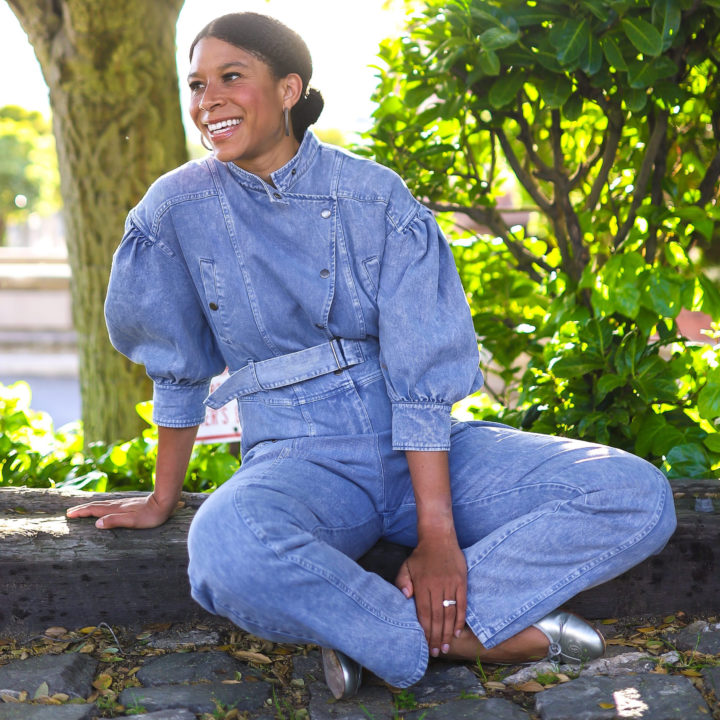
Nathalie Walton and her son
How did your pregnancy and delivery serve as a catalyst for igniting change?
Maya: The stories shared by family, friends, and even strangers, have all been a catalyst for my vision for Mae.
Kimberly: I created Irth because I wish I had it when I gave birth. At the time of my first child, I did a lot of research, read the media “Best of” lists and real alot of parenting blogs to get information on the “Best” place to give birth. I went to the same hospital and left feeling disrespected, unseen and traumatized. I literally fought to have my baby with me, when I read this was standard practice. I was breastfeeding and they gave my baby formula against my wishes and it seemed that everything that I read was standard, I had to fight for. And after having a C-section that I still can’t explain, I had little energy for the fight. But the reality is, at that time in my life
I was not yet married and I was completing graduate school so I was on student insurance. And I was treated like an unwed Black woman with basic insurance. It was a rude awakening that people are not being treated the same way even at the same place, and that who you are can impact the care and respect you receive.
Maya: I am a mom of three girls and I had three c-sections. Despite having done everything I knew to do to best prepare for my birthing experience, I was still faced with a risk I didn’t fully understand in the intense moment of delivery and ultimately. My husband and I took birthing classes, I had a birth plan, we got to know every OB in my practice and I shared the experience I desired, but during delivery, when crucial decisions had to be made, I felt I had little control.
I reflect on my experience and am grateful to have come out safely and delivered a healthy baby girl. I know what I went through pales in comparison to what so many other Black women and families experience – but it also wasn’t the experience I so desperately wanted or deserved. The deeper I get into my work with Mae, the more I can appreciate the potential benefits of having supplemental support and advocacy throughout the birth and postpartum period, and particularly during labor, which is such a vulnerable time, even for the most prepared mama. So yes, my own experience plus the experiences of my entire community inform every move we make as we continue to grow Mae into the space we hope will best address the specific needs of women like us.
Nathalie: During pregnancy, the decline in my physical health correlated with a decline in my mental health, and I was terribly stressed and anxious about my baby’s life. Like so many other Black women, my pregnancy and delivery became a life-or-death situation.
Doctors and scientists have studied the benefits of meditation on pregnant women and they have shown that it can help moms-to-be throughout pregnancy and especially at birth. I discovered the Expectful app in my third trimester and began meditating heavily. Within a week of beginning meditation, my NST and doppler tests stabilized, and I unexpectedly made it to term—a checkpoint my doctors never thought I would hit. As a Black woman who faced unfavorable odds, I was grateful to find a tool as accessible as meditation, and since experiencing the lifesaving effects firsthand, it has become my mission to promote awareness around the power of mindfulness in pregnancy outcomes- particularly in underserved communities.
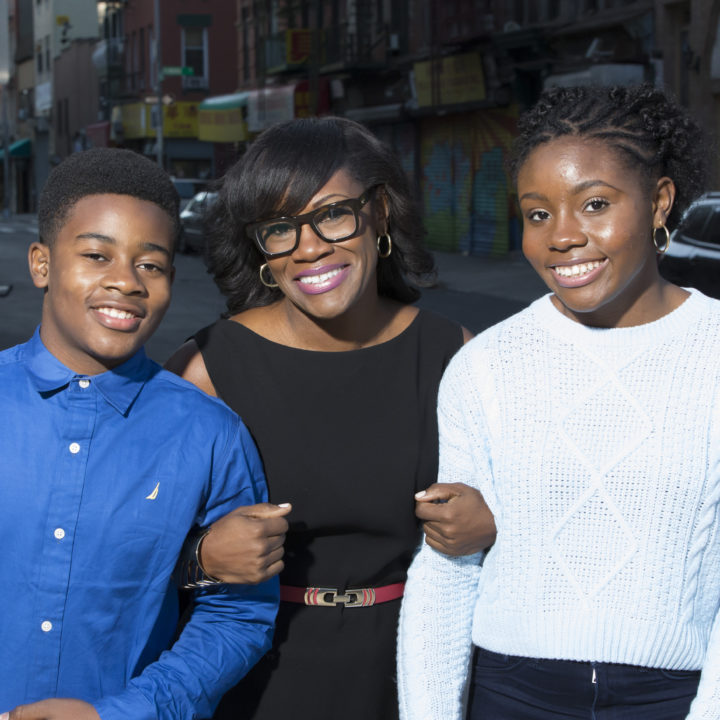
Kimberly Seals Allers and her children
What do you hope the future of Black Maternal Health looks like?
Maya: I think it’s two-fold – I have hopes for the women we serve and I have hopes for the industry that serves them.
For expectant women, I hope that they have broad choices in their care and that those choices are respected. I hope they are informed and surrounded by resources that address and speak to the complexity of needs we have as Black women, and that the totality of our experiences are acknowledged and considered in our care. I hope that best in class maternal healthcare becomes the expectation, not the exception, for women who look like me.
For those who serve Black mothers, I hope to see a robust and continuous investment in the development of a diverse workforce of Black birthing experts. Whether it be OBs, midwives, doulas, lactation consultants, maternal mental health providers or other, I hope there are more providers of color to meet the needs of the increasing number of Black women who seek cultural alignment in their maternal healthcare.
Nathalie: I hope that every Black woman can thrive in pregnancy and motherhood. I hope our country can find ways to reduce implicit bias, and I hope that more women and doctors can embrace evidence-based holistic wellness practices that improve birth outcomes.
Kimberly: Joyful and equitable. Black women deserve to not just survive childbirth, they deserve to thrive. This is our birthright.
A Comprehensive Mother's Day Gift Guide We're kinda the experts...
Are you searching for the perfect gift for the busy mom who simply can’t escape the inevitable question, “So, uh, what do you want for Mother’s Day this year?” Look no further as we present to you our ultimate Mother’s Day Gift Guide for 2023.
Expertly crafted to cater to all types of moms, our guide showcases delightful treats for the glam mom, tech-savvy products for the busy mama, and snug essentials for the homebody.
Don’t worry, we haven’t forgotten about the mamas-to-be!
We’ve got a unique selection of thoughtful gifts tailored just for you, available right here. Discover the best Mother’s Day gift ideas, and show your appreciation with a memorable and heartfelt present.
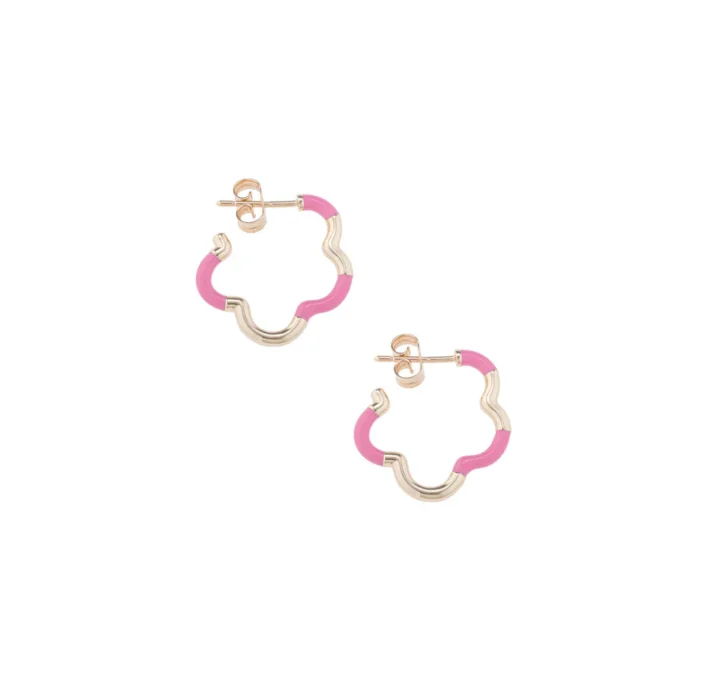
Statement-Making Earrings These playful, pink-accented hoop earrings make an ideal Mother’s Day gift, offering a stylish twist on a classic design that’s perfect for adding a pop of color to any outfit. Their unique, curvy silhouette and chic aesthetic make them a treasured addition to any mom’s jewelry collection. Just make sure your babe’s tiny hands don’t get too grabby! Bea Bongiasca B Mini Pink Gold Earrings, $735; musexmuse.com
The Holds-All Solution Not only does this stylish pouch feature a sleek design with gold accents and a heat-resistant lining to keep your most precious beauty products safe, but its innovative technology ensures that everything inside stays cool, even on the hottest days. Perfect for the mama who loves beauty and style, the Monaco bag combines fashion with functionality. OTM Monaco Pouch, $145; otmcollection.com
The Much-Needed Break Spice up your Mother’s Day with the Eva Hands-Free Vibrator, a fan-favorite since its Dame debut. This discreet, wearable clitoral stimulator stays put during intimate moments. The Eva Hands-Free Vibrator is a must-have upgrade for anyone seeking to elevate their pleasure game. Which you, mama, most certainly deserve. Dame Eva Vibrator, $135; sage-sound.com
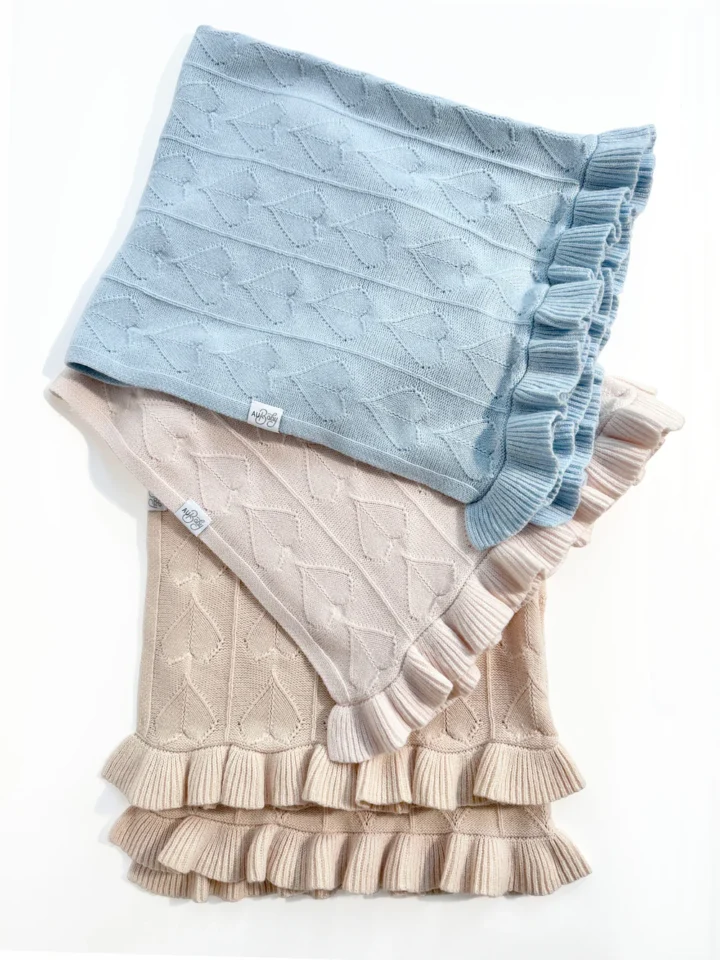
The Coziest Wrap your little one in luxury this Mother’s Day with AU Baby’s Cable Heart Blanket. Perfectly plush with organic cashmere and merino, it’s hypoallergenic, eco-friendly, and stylish enough to be passed down through generations—just like mom’s best advice! Au Baby Little Love Blanket, $160; aubabyshop.com
The First Trimester Starter Kit We’ve combined all-time favorites into delightful gift sets that are sure to impress and cater to every mama’s needs. While nothing can fully prepare for the first trimester, our First Tri kit offers a helping hand. This thoughtfully curated box is packed with specially-selected items designed to pamper and care for mamas-to-be as they navigate early motherhood. The First Trimester Starter Kit, $78; HATCHCollection.com
NEEN Beauty This product offers a super shiny finish without the stickiness and is packed with nourishing oils like avocado and jojoba, ensuring lips stay hydrated. Plus, it’s made with sustainability in mind, featuring eco-friendly packaging with a glass vial and a wooden cap. The fact that NEEN is a mom-owned brand adds a special touch (PLUS, it’s named BOSS!), making this gloss a thoughtful and chic gift that supports another mother’s entrepreneurial spirit. Perfect for moms who appreciate beauty products that combine style with substance! Pretty Shady in Beam, $27; weareneen.com
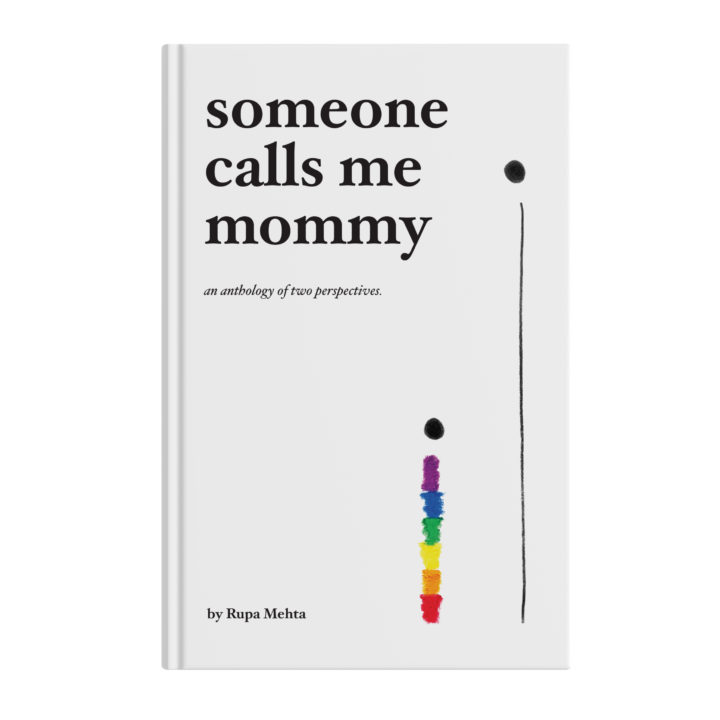
Someone Calls Me Mommy Written & illustrated by Rupa Mehta, this anthology of poems comes from the perspectives of a mother and her child and is an absolute must-have for every mama’s bookshelf. Someone Calls Me Mommy, $22; me-mommy.com
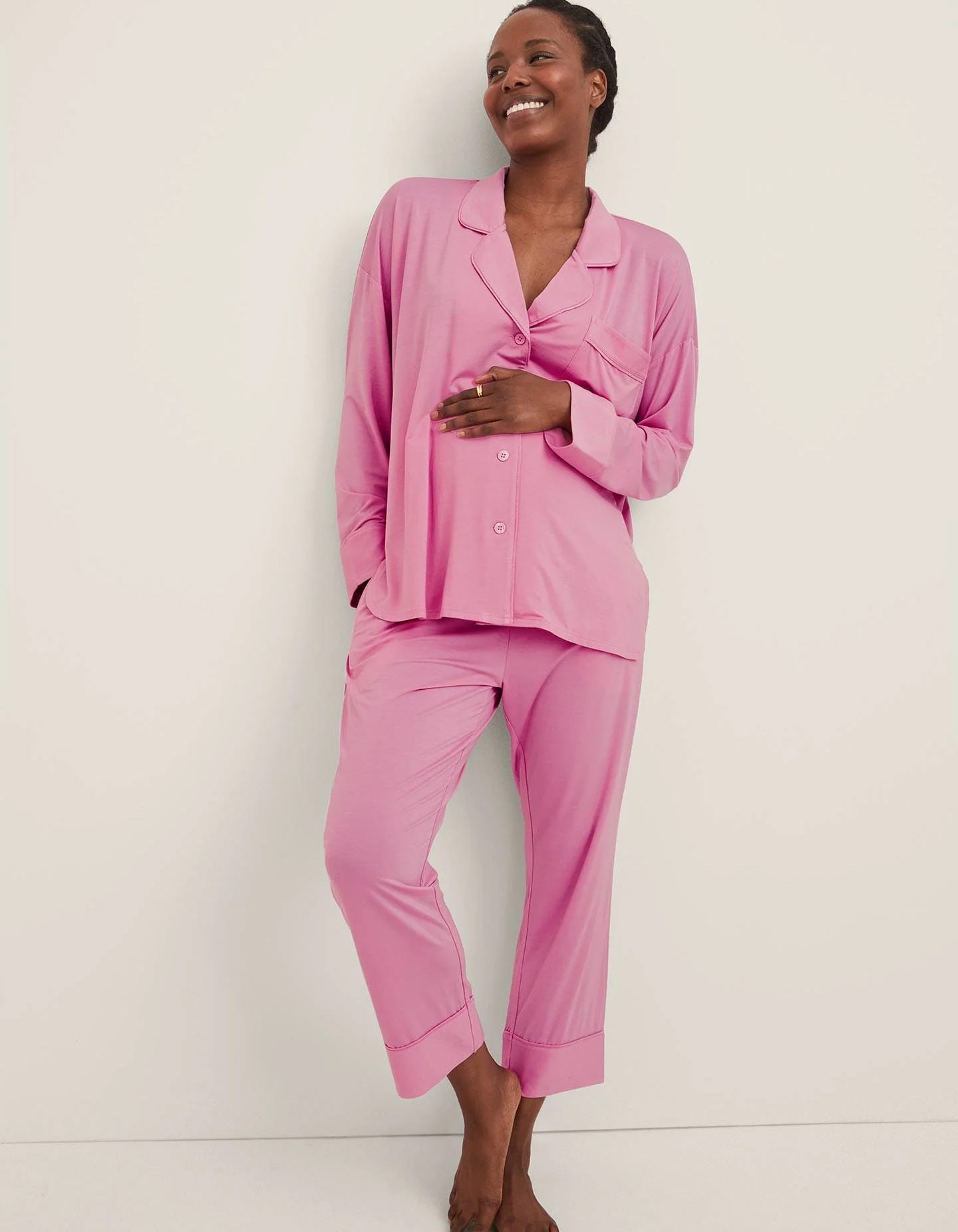
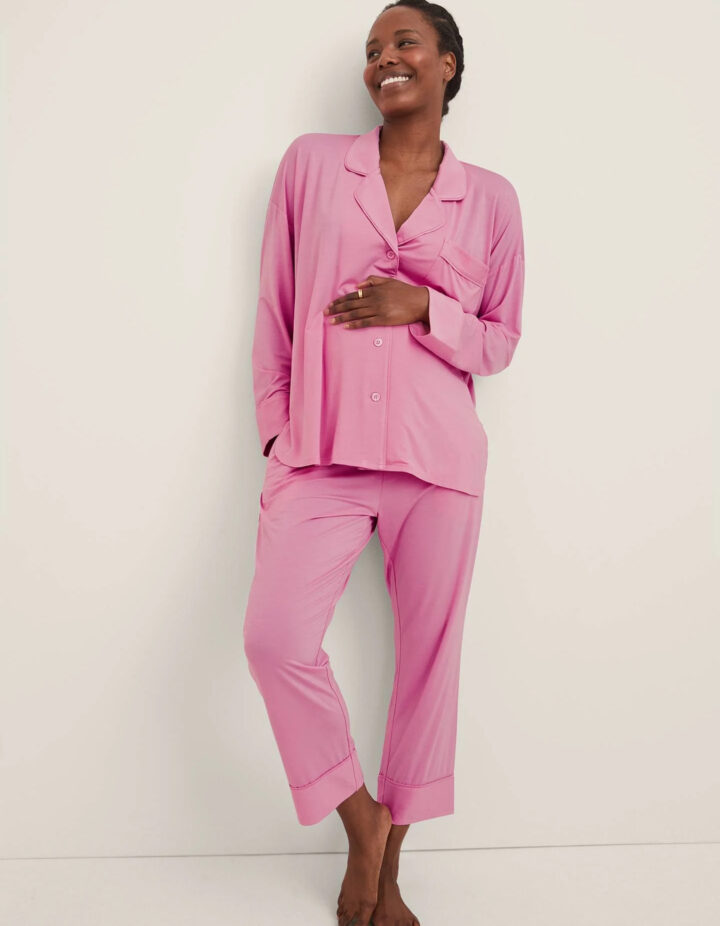
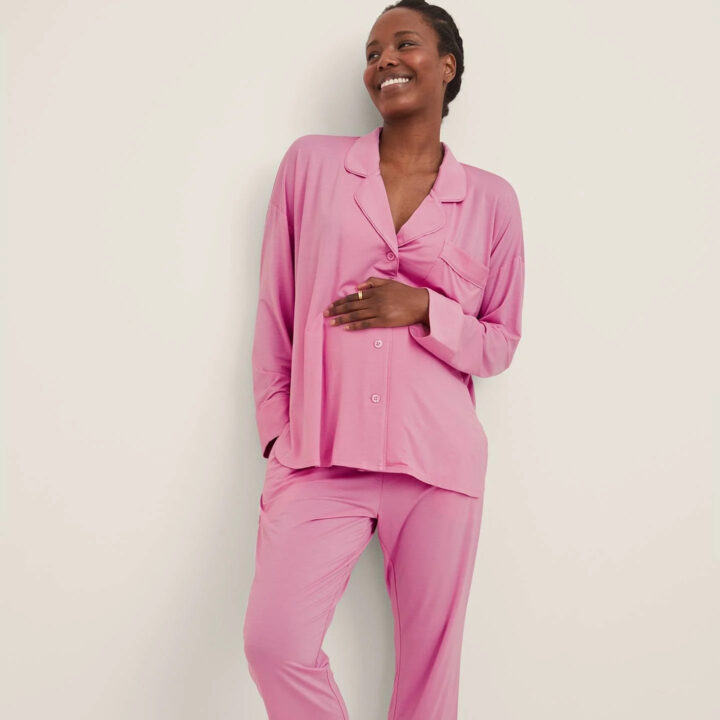
The Ultra Soft Jersey Pj Set Treat your mama (or yourself) to the ultimate comfort with our dreamy PJ set, perfect for those well-deserved moments of relaxation. Crafted from buttery soft, stretchy jersey, these PJs are designed to accommodate your needs before, during, and after pregnancy. With a relaxed fit, nursing-friendly access, and a versatile waistband that sits comfortably over or under the belly, this loungewear allows for 24/7 coziness. The Ultra Soft Jersey Pj Set, $178; hatchcollection.com
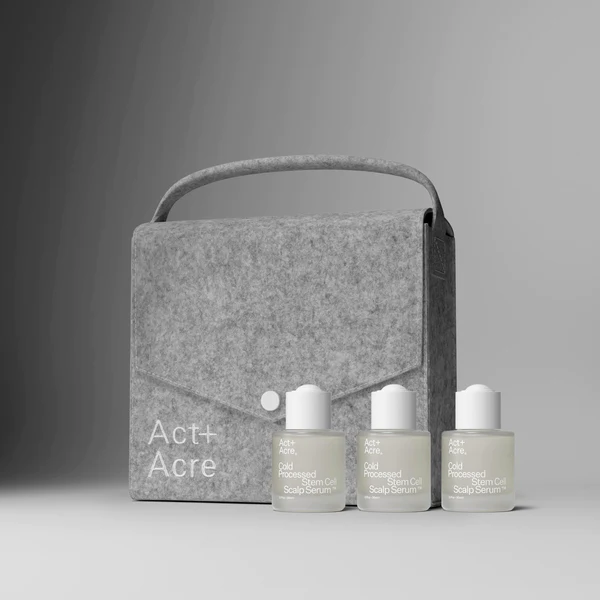
The Hair Reset . Enriched with apple stem cells, this serum promotes a healthier scalp and thicker, fuller hair by hydrating and balancing the scalp’s environment. With its ability to support hair follicle health and decrease shedding, it’s an ideal choice for new moms experiencing changes in hair density and volume due to postpartum hair loss. This product offers a scientific approach to hair care, maintaining moisture and protecting against oxidative damage which often exacerbates hair thinning. Plus, it’s formulated without harmful chemicals, making it a safe and effective solution for nurturing both scalp and hair health. Act + Acre Stem Cell Scalp Serum – 3 Pack, $108; actandacre.com
The Ultimate Mother's Day Registry Guide Because, any day now...
Just because you haven’t quite gone into labor yet does not mean you should be left out of the Mother’s Day Gift Guide conversation. We here at Babe by HATCH believe moms should be gifted year-round and throughout all stages of their journey.
Here, shop our baby registry must-haves that are great to buy for the expecting mama (or add to cart for yourself).
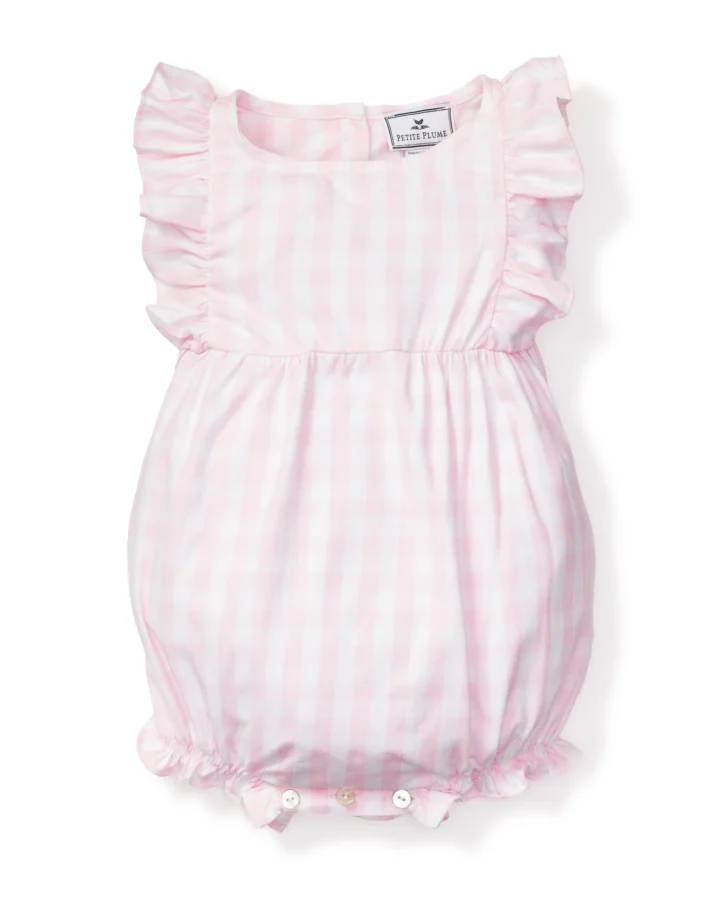
Petite Plume Yes, you can get a matching set for mama, too. Petite Plume Baby’s Twill Ruffled Romper in Pink Gingham, $48; petiteplume.com
Doona Gift the Doona Infant Car Seat this Mother’s Day and watch mom transform it from a car seat to a stroller faster than baby can say “Goo-goo!” Perfect for the mom who juggles more than just diapers, this all-in-one travel system is a game-changer for on-the-go parenting. Doona Baby Car Seat & Travel Stroller, $550; buybuybaby.com
Artipoppe Long gone are the days when mama needs to sacrifice her sense of style for comfort and safety when it comes to babywearing. Case in point: Artipoppe’s amazing and artistic Zeitgeist Baby Carrier, shown here in a print as dreamy as your babe. Artipoppe Zeitgeist Baby Carrier, $355; shop.artipoppe.com
Nurture& Built for compact spaces, this glider is a mama-must-have. Nurture& $599; nurtureand.com
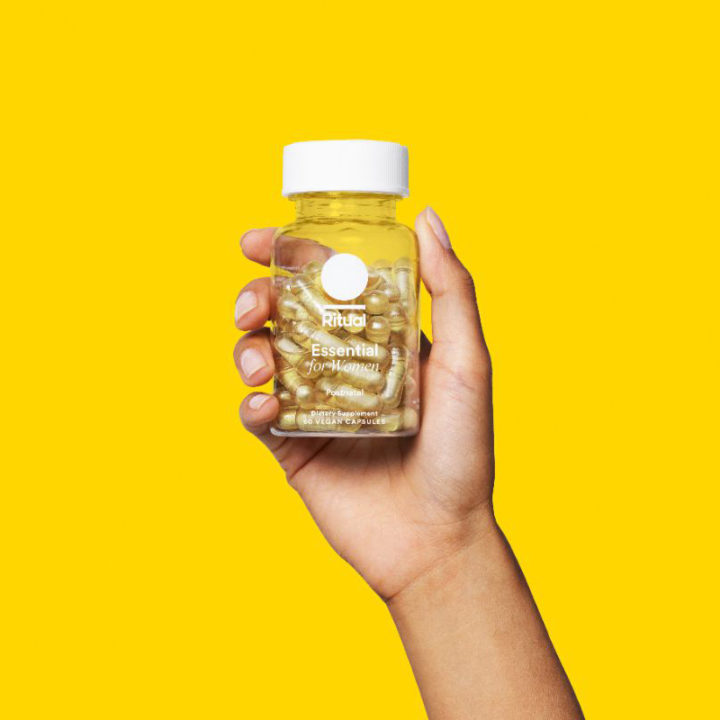
Ritual Think of your postnatal vitamin as the “after-party” of your prenatal supplement. And is there anyone cooler to party with postpartum than something that has key nutrients PLUS added support for lactation? We think not. Ritual Postnatal Multivitamin, $21; ritual.com
The Snoo Give the registry gift of science. And by that, we mean specifically sleep science. Fact: Most SNOO babies sleep 9 hours or more by 2-3 months! Snoo Small Bassinet, $1595; happiestbaby.com
The Sill This mama-founded plant company promises to deliver happiness to your home. And for those days when you simply cannot get outside, bring the outdoors in a monthly houseplant subscription box. The Sill Classic Plant Subscription, $55/Month; thesill.com
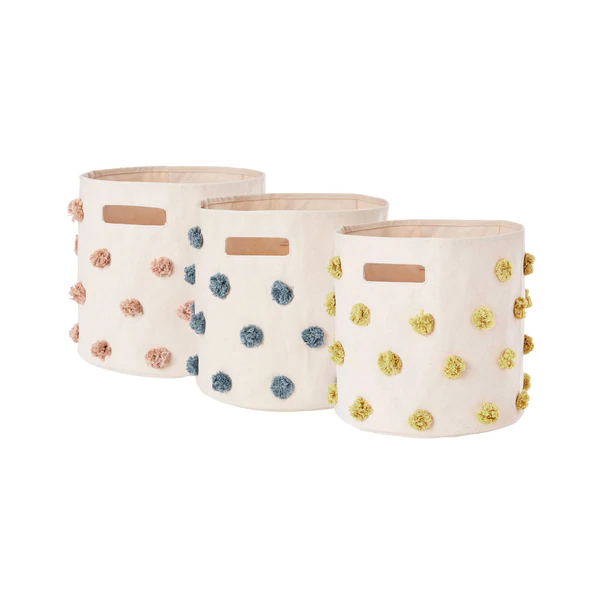
Pehr Close your eyes and imagine an organization system as cute as it is functional. Open your eyes. Meet Pehr’s beloved Pom Pom storage sets. Any questions? Pehr Your Own Pom Pom Bin Pack, $95; pehr.com
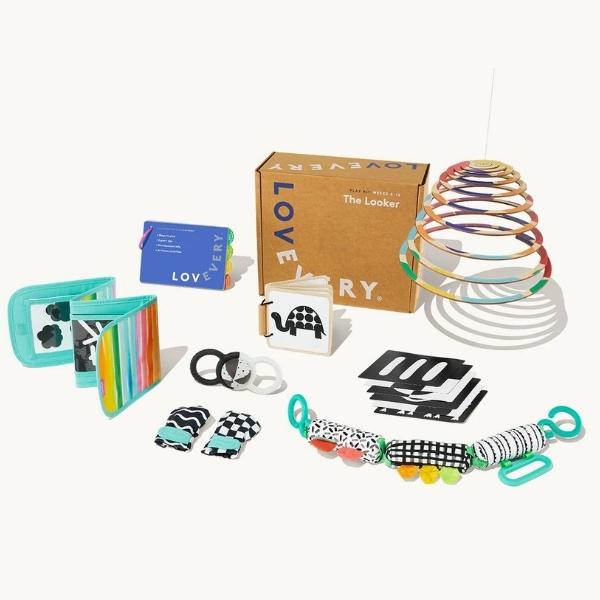
Lovevery We keep buying registry gifts on Lovevery because their toys are designed by experts to help your child develop a brain. You will keep buying registry gifts on Lovevery because they occupy your babe’s attention for an entire episode of Real Housewives. Lovevery The Looker Play Kit, $80, lovevery.com
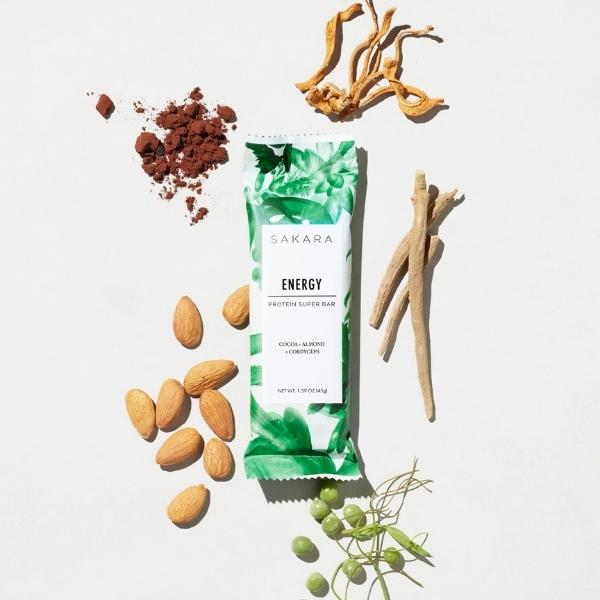
Sakara A new baby means a new level of energy needed. Invest in something delicious, nutritious, and functional. Filled with antioxidants, Sakara’s Energy Protein Super Bar supports stamina by increasing the production of ATP, the molecule that powers the body’s energetic function. Sakara Energy Protein Super Bar, $78/monthly subscription; sakara.com
The Bras You Need to Survive the 4th Trimester Your boobs will thank you.
By Babe | Photos courtesy of HATCH
The 4th trimester can be a real doozy on your boobs and your bod. Between the nonstop feeding, the endless pumping, the sores, the cracks, the pain, the SIZE ….need we go on?
So we’re here to help you arm yourself with an arsenal of bras that will save you when nothing else will. We’re talking nursing clasps, pumping slits, tender loving fabrics that will coddle your gals when they’re swollen AF – bras so soft (yet supportive) that you can literally wear them 24/7, because you likely will. Ladies, meet the bra wardrobe you need to survive the 4th trimester.
The Essential Nursing & Pumping Bra has a seamless design in a finely ribbed, body-hugging modal blend that grows with you without losing its shape. We added a nursing clasp, adjustable straps, a pull-down design made for easy feeds, plus a front fabric overlap that opens to discreet slits for pumping. Even better? It’s Oeko-Tex certified (aka, free of harmful chemicals).
Meet the Skin To Skin Bra: it’s (almost) as good as being naked and so comfortable you can sleep in it (our testers did!). With a flattering ballet neckline, this wireless wonder is nursing-friendly (thanks to an elastic band at the top), hardware-free, so it’s safe for mama and babe.
The Seamless Skin To Skin Bra is stretchable, seamless, grow-with-you goodness: in a finely ribbed, body-hugging modal blend with more compression than our Skin to Skin Bra so it can hold a wireless breast pump for hands-free ease. It’s also nursing-friendly, hardware-free, and Oeko-Tex certified.
The Dream Feed Nursing & Sleep Bra is a wireless and hardware-free (read: crazy comfy) with a crossover front for easy pull-down-and-nurse capability in a soft, breathable, stretchable cotton/spandex blend it’s so comfy you can sleep (and nurse) in it.
What Is Being a Mom in 2022? It's anxiety, joy and everything else.
By Caroline Tell | Photo by Valeria Harris
We talk a lot about the “before times.” Before, we didn’t wash our hands 20 times a day. Before, masks were relegated to hospital O.R.s. Before, the word Zoom meant to look at something closely. A lot’s changed in the last two years, and now that we’re in the “after times” (or as close as we’ll ever be to whatever that means), we’d be remiss not to explore what being a mother now, in 2022, looks and feels like.
“It’s more anxiety-inducing, yet there’s an odd level of peace to it,” says Nicole Whitford, a stay at home mom of two in New York. “It’s like we made it through the shit and we’re on the other side. We know we can get through a lot.
Seven more days at home with our kids? Cool. And, unlike our parents, we know what 24/7 parenting really feels like, but we also know we can handle it. Sure, our therapy bills might be through the roof, but there’s a collective “we got this” energy that didn’t exist a year ago. In this post Covid landscape, we’re on the path. We’re evolving.
“There’s a certain comfort that comes with being able to grow from what we’ve collectively experienced,” says Lital Stein, a graphic designer based in Brooklyn. “But I do wonder what trauma I still carry with me as a mom.”
At Babe, we’ve never been the types to dwell. We like to consider ourselves light, fun! We pour that second glass of wine at the playdate. We let them stay up late to watch questionably appropriate movies. (Hey, it was the 80’s!) We try not to overthink anything when it comes to parenting. But, as the dust starts to settle around Covid-19, some of us are left wondering how to move forward and shed the past – how to reconnect with that “before times” mom, if she still exists.
“I think for some moms, rediscovering that side of us will be easier than for other moms,” says Janice Song, a psychotherapist based in New Jersey. “For many women, they have to do the work to get back to that feeling they remember and enjoy.”
So what’s being a mom in 2022 really about? It’s about being OK with however you’re doing and wherever you’re at right now. It’s also about celebrating this moment and all the moments that come after. It’s celebrating the little and big things, like those late night group chats that give you life, or the people who’ve helped you through. Maybe it’s about celebrating how far you’ve come over the last two years, with the fear, the hope, the unbridled joy – all of it.
So, as we mark the beginning of Mother’s Month (sure, it’s a thing), we’re celebrating all of the things. We’re celebrating community by opening up our Babe DM’s to show you what’s keeping us inspired, and the Mom Memes that made us laugh all year. We’re celebrating the style, the fashion, and the gifts we hope to get (but probably won’t) on Mother’s Day.
Roma Patel is Making It Work One superfood protein at a time.
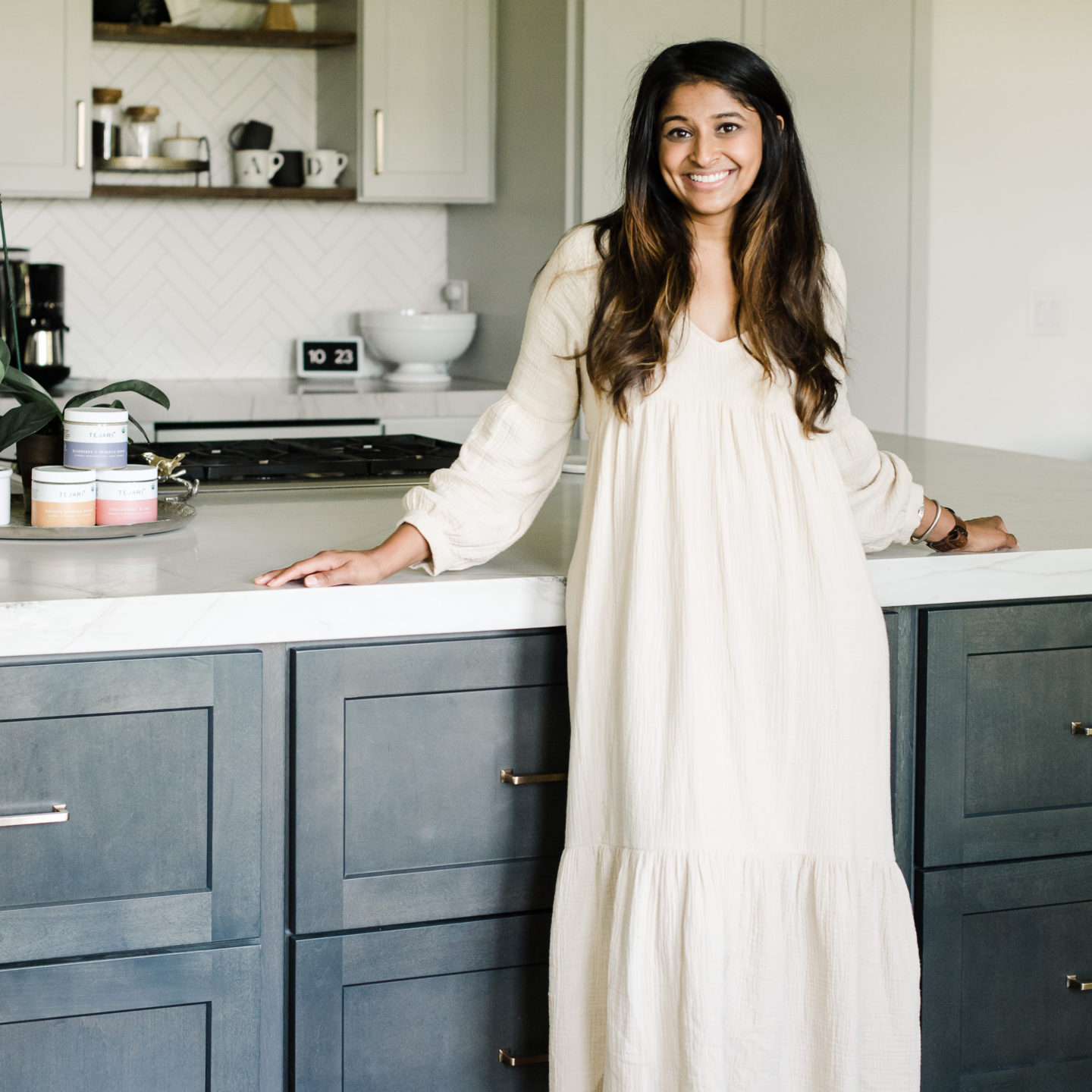
Meet Roma Patel.
Roma founded Tejari out of a need for healthier on-the-go foods for her growing family. As a working mother of two young boys, she finds herself constantly moving between work meetings, swim classes, more work meetings, and bedtime. Oh, and somehow meals have to fit in there! After years of working in the corporate world for companies like Coca-Cola and NBC Universal, Roma saw a clear need for a better, on-the-go protein blend that was good for the planet and harnessed sustainable materials.
Thus ushered in Tejari, a clean, organic protein powder with no added sugar or preservatives. Roma worked with food scientists and nutritionists to develop the superfood protein blends, which can be used in smoothies, sprinkled on yogurt or pancakes, and mixed into baked items like banana bread. The blends contain real dehydrated fruits and vegetables and superfoods like cinnamon and turmeric – all organic and absent common allergens, gums, and other unnecessary additives.
Here, she walks us through a day in her life.
Heather Carraway Photography | Atlanta Baby & Family Photographer
5am: Before the rest of my family wakes up, I start the day with warm lemon water and 30 minutes to myself without any technology. This allows me to breathe deeply and feel centered before the day begins. Within this time, I also create my to-do list, which helps me prioritize daily needs and review school calendars.
5:30am – 6:30am: When I lived in Florida, I hired the most amazing personal trainer. Once I moved to Atlanta, I couldn’t imagine my life without her—so, we now work together digitally two times per week. When I’m not with my trainer, I hop on my Pelton three times per week and spend plenty of time outdoors during the weekend with the boys. Saturday morning hikes and Sunday afternoon bike rides are a staple in my household!
6:30am – 8:30am: This is what I like to call ‘beautiful chaos.’ As soon as my boys wake up, I can always expect the morning routine to be filled with at least one tantrum. Once we get past that, we sip on some smoothies (like these!)—one batch for me and my husband, and one for the kids. We’ll usually pair them with a side item like eggs, oatmeal or 4-ingredient banana oatmeal cookies (you have to try this recipe—you can thank me later!). On Sundays, we focus this time on meal prep and meal planning with the kids, which makes them feel involved. It’s a great educational moment to talk about fruits, veggies and protein!
8:30am: Time for school! We have two school drop-offs, so my husband and I divide and conquer. After that, we take our dog for a walk around the neighborhood or to a nearby park.
9 am: The work day begins. As a small business owner, I wear many hats, so it’s essential for me to prioritize my day. I usually have most of my meetings in the morning or use this time to catch up on emails. Next, I block off two hours to fulfill any Tejari orders that have come through (Yep, I’m still the one who packs the boxes!). I try to include personalized notes when I can, and you can always find me listening to some John Mayer while I’m packing. This can be the most fulfilling, yet demanding part of the day. It’s such a treat to see orders come through—especially from returning customers!
12 pm: Lunch time. Usually, I’ll make a quick salad and whip up a simple Tejari yogurt bowl on the side, complete with fresh fruit and granola—like this one! I also like to break away and take our dog on a walk for 30 minutes. It allows me to reset for the day and get some much-needed vitamin D!
3 pm: On most days, this is what I consider my ‘wrap up’ work hour. I close out emails, go through final packages for the day, and, yes, text our UPS guy to see what time he’s coming. We’ve actually become friends with our UPS drivers (hi Travis and Mike!), so they always check in throughout the day on shipments. We value their work and support so much! 3 pm also means that I’m headed out the door to pick up the boys—they participate in sports and clubs every day of the week after school, so evenings can be very busy for us.
6 pm: Family dinner time. More important than anything else in my life is cooking and eating together as a family. We talk about our day and ask the boys something they learned. Not only does it encourage conversation, it’s so fun hearing about all their little adventures! As we wind down for the day, we end the hour with bath time and reading books in bed.
7 pm: Self-care time. Our house is quiet at this hour, so we take our dog Bella on her last walk for the day. My husband and I like to catch up during this time, and then I like to take a relaxing bath—this has been a life-changing ritual for me since the pandemic began. I’ve also been loving something small for dessert, like these Tejari brownies or frozen acai bites. It’s the little things that make a big difference in my day!
From there, I’ll end my night with an episode or two of a show we’re watching, or curl up with a good book. Then it’s off to dream for what’s in store tomorrow!
This article was written in partnership with Tejari.
Freida Pinto On prioritizing the postpartum journey.
By Caroline Tell | Photos by Ashley Barrett
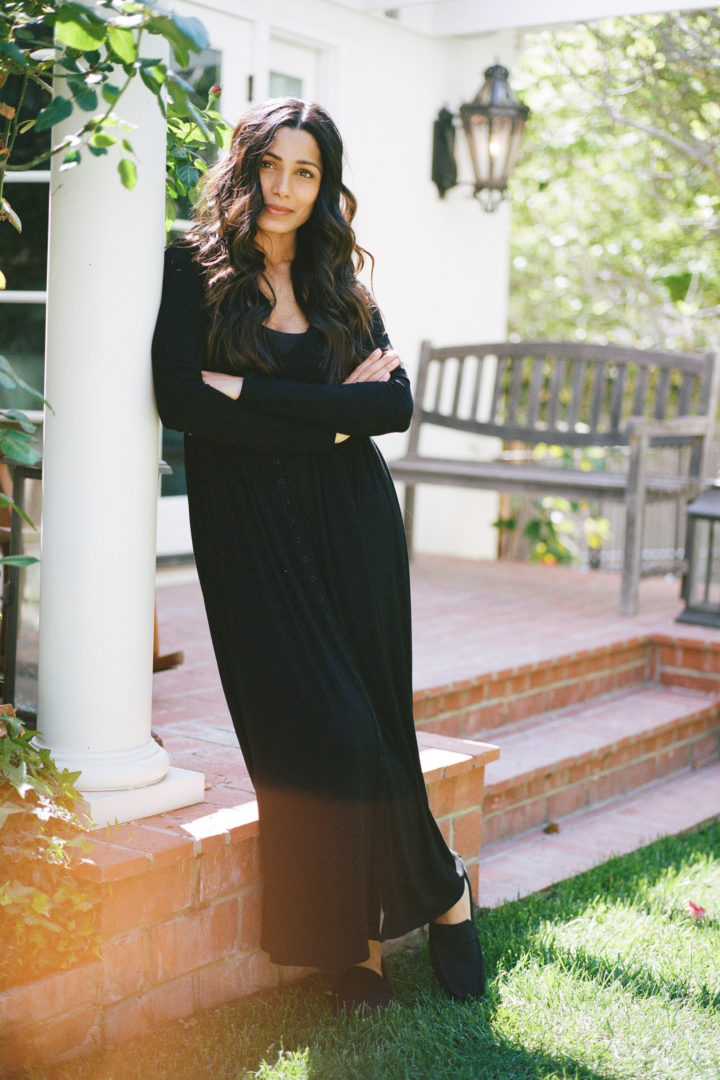
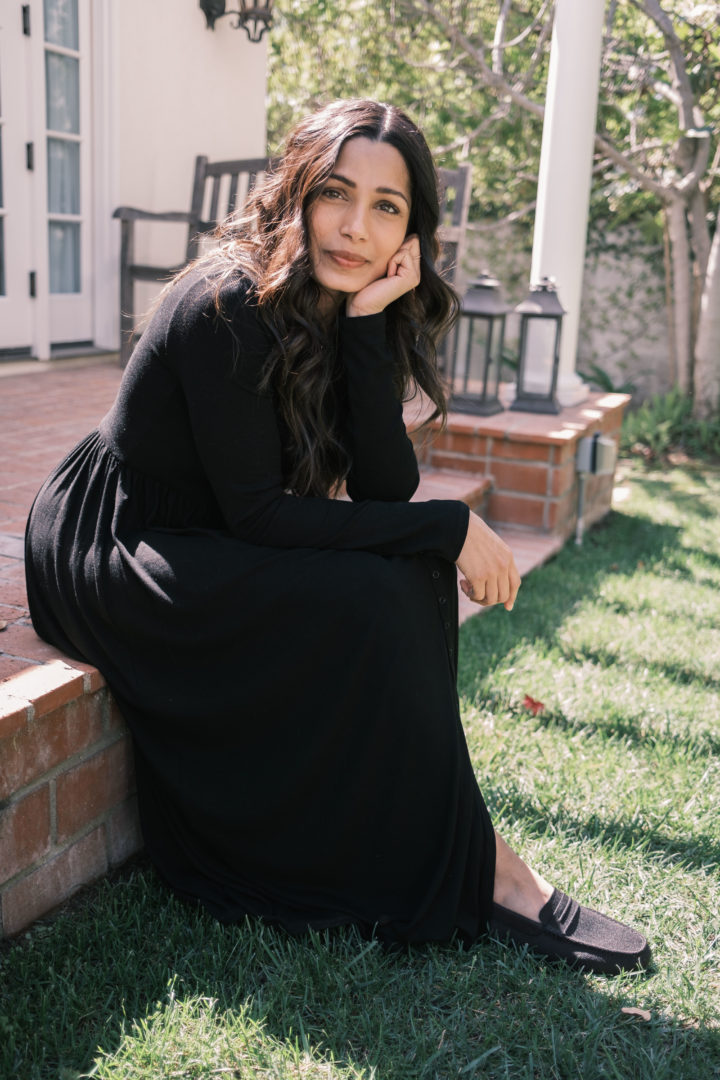
The actress, film producer, and chief impact officer at Anya is on the postpartum journey after having her first child, son Rumi-Ray last November. And it’s a journey she planned for….thoroughly. From devouring postpartum books to preparing her new mother sanctuary, you could say Freida placed more importance on the months following her birth than during the pregnancy, itself.
We stole some time with Freida to discuss how it’s all going, why the postpartum period is so crucial for mama and baby, and the ways her Indian heritage has inspired her self-care during pregnancy and beyond.
How is your postpartum journey going? Highs? Lows? Is it what you expected or a total surprise?
It’s all kinds of ups and downs, challenges and rewards. I’m learning to do and unlearning to do a lot in this new phase as a mother. I don’t know any experience like this in the world, so I can’t compare it. Therefore, there’s nothing I could have expected. Everyday is a new day. It did start off as not knowing anything and listening to all the cooks in the kitchen and then allowing myself to tap into my instincts. And hearing other moms discuss the challenges they faced. The key thing I’ve heard is that you get more relaxed with your second or third baby, so I wanted to bring that relaxation into my first experience.
After the first month of uncertainty, my second month felt more relaxing. Then the third month presented new challenges, because suddenly I felt this American style of competition that you had to be ahead of the game – that earlier is better when it came to certain milestones like napping and sleeping. That corrupted my brain for a split second. But it’s all bullshit anyway. Every baby is different, so I listen to what my baby wants. Nothing works for every baby across the board, which is a huge disservice to all first-time parents.
After that fear took over, it paralyzed me for a few weeks and I had to stop and tap into my anxiety. I realized it was seeping into his life as well and making him anxious. Now, I’ve totally given up on sleep training and we’re both sleeping better. I’ve stopped stressing and it’s been a huge relief for me.
How was your son’s birth? Did it go “as planned?” or were there some surprises there as well?
It was beautiful. I was well aware after a very traumatic experience in my life that postpartum is a journey and something we’re ill prepared for. I learned that early on when I got pregnant with Rumi. I put all the pregnancy books aside and jumped into the 4th trimester and I decided I was going to gear myself up for the year after birth more than stressing about the pregnancy itself. It’s great to know about the body and be in the loop but most of that gets taken care of at the doctor. But then during postpartum, those appointments fall away. You get one appointment at the six week mark. Even then, it’s too late and there’s no information then. So I decided to buck the trend of learning about the trimesters in this linear way and did a deep dive into birth and postpartum. The two books I felt completely immersed with were Kimberly Ann Johnson’s The Fourth Trimester and Ina May’s Guide to Childbirth by Ina May Gaskin.
I also leaned into my Indian traditions of how a mother is taken care of post birth and I really prepped my postpartum sanctuary by how I wanted to be nurtured. So going into birth, which was 10 days before my due date, I wasn’t ready with a hospital bag but I knew to keep my calm throughout it all. I opted for an unmedicated birth, so I knew I had to be prepared for anything. I walked into birth feeling excited. I almost had this sense of euphoria. I was excited to know what labor feels like. I was hoping to transform the word “pain” and change it to “gateway.” Everytime I had a contraction, it was a gateway, an opening. I was one step closer to meeting my son.
I was also very active right before my due date. I took care of my body nutritionally as well. By the time Rumi came, I had a body and mind that supported me through it. Nothing is more beautiful than the preparation of the mind.
How would you describe the difference between the postpartum experience in the US versus India?
It’s night and day. It’s so much more understood and respected in India than here. Over here it feels like a phase. Over there it’s truly an experience that mothers need to be nurtured during this time, not just about the newborn and baby. In India, if the mom isn’t nurtured, the baby isn’t nurtured. Also, in India, the first 30 to 40 days the mother has her maternal mom move in with her or she’ll get some kind of help, like daily massage or her food is cooked. She’s not allowed to get out of bed. I mean, your entire body had to transform to push a baby out. The healing won’t happen overnight. Even 40 days isn’t enough. Emotions are high, hormones are plummeting.
Breastfeeding is an added hill to climb. I had insane latch issues. I had bleeding nipples, constant spasms in my breast tissue. It was not easy. Ancient traditions of India really allows the mother sacred time to rest and recover and re-energize. And so for a mom to go back to work and do work that is a mental and physical load, it’s so unfair and wrong and can have long term repercussions as well. The sanctity of postpartum is not understood in this country. But really the issue is systemic. If the children are the future, nurturing mothers should be our present.
How have you been juggling motherhood and your career plus advocacy work? Any advice or learnings so far?
I haven’t returned to a film set, and I do not want to return to a film set or tv show until I’ve completed four months postpartum. I am working on my production company, which I’m doing from home – which is a lucky thing to do. When I came back into the workforce, I had poor focus. I couldn’t read without falling asleep, I was constantly distracted. I was freaking out at 12 weeks and kind of losing a bit of my life at that point. I spoke to my producing partner, Emily and she talked me off a ledge. She said, let’s put all of your stresses in backpacks. There’s the Rumi backpack, the caring for you backpack, the caring for everyone else backpack. Which one can you take off your shoulders?
What are some of the lifestyle, self-care routines that have helped you through the postpartum phase?
I really enjoyed incorporating Ayurvedic traditions, which was the root of my healing journey as well. In general I turned to more natural ways of self-care and healing. Ayurveda speaks strongly to me. I did Abhyanga massages with medicated oil. When your postpartum, one thing you have in excess is vata – an airy, windy feeling in the body. It’s linked to feeling depressed and low and poor digestion. Oil massages are important to have for a sense of peace. And it’s not a spa. You can get the oil from a trusted source and do it at home with self massages or long stroke massages. Someone can do it for you.
I also ate certain healing foods my mother prepared for me that are typical of South Indian culture. During the first three days postpartum she’d make me a special drink with black pepper called kalijeera mixed with ginger. It helps eliminate any more toxins might be present in the uterus, and helps with constipation. We all know how scary that first BM is.
In the Western culture, everyone brags about that first meal after they give birth. In Indian culture, you’re only allowed extremely beautiful, warming meals – soups and broths and rice congee with good fats in it and homemade ghee. For me I did not have to fear constipation because my mother wasn’t going to allow me to eat junk food. So it’s food, massages lactation balls, etc.
I also added an hour everyday of just me time. No baby, no phone, no husband or mother. Just me and my cup of tea. I love the Anya calming tea. So I’d just sit with a cup of tea staring out the window and not plan the day or think about what I’m going to buy for Rumi. I did it for the first month. It was really healing to sit with my thoughts and process what had happened.
Can you tell us about your work with Anya? What is it about the postpartum experience that left you wanting more or feeling like not enough adequate support is offered for new moms?
It started when I was planning my own pregnancy, which took me a while due to having endometriosis and getting off the pill. I was depleted nutritionally and had to encourage my body to get to my place of health to carry a baby. So that journey had already set my mind going on how little we are prepared for when it comes to the body and hormones. So when Anya came along, everything was aligned. It felt super organic and I was so excited they wanted me to be a part of it.
So many women in the United States and across the world are deprived of the joy of enjoying the postpartum journey. It feels more like suffering or a hill to climb, and one you must climb fast because you have to get back to work. Easing that journey is my calling. I’m a first time mom at 37 years-old who wants to see a better world for mothers across the world. I also love experimenting with Anya’s products. I love the mission of how they’re trying to take care of moms without overwhelming them. It’s streamlined and made easy and simple and divided into first the month, second, third month – so you get what you really need instead of it all overwhelming you.
What would you all women to know about the postpartum experience?
I think there’s so much out there. I prepared so hard for the 4th trimester and felt so armed for success. My advice would be to take a break from focusing on just pregnancy. The pregnancy will be great, especially since we naturally tend to be careful during pregnancy. So my advice to expecting moms is to take time out to think about postpartum. Take a moment to speak to other moms on the journey or read a book. It really poses certain questions to yourself and gives you time to answer them, and for your partner as well.
And if you’re a first time mom who didn’t prep for postpartum, I’d say identify what areas you need the most help in and instead of googling, find the professional. If it’s breastfeeding, find the lactation consultant. If you’re having intense mood swings, start therapy. It’s that kind of work that’s so valuable throughout the postpartum journey.
These 4th Trimester Styles Give "Day To Night" New Meaning Because aren't they one and the same?
By Babe | Photos by HATCH
You’ve spent 10 months dreaming up the perfect nursery, shopping for the sweetest, most cuddle-worthy sheets, blankets and crib, and securing the perfect mid-century modern high chair that matches your kitchen. Now, take a breath and think of you. Or don’t, because we already did. From the bed to the couch and back again, here are the 4th trimester pieces that will make you feel comfortable, coddled, and maybe even a little cute when nothing else does. You’ve done everything for babe, now it’s time to take care of you.
A Nightgown That Gives Back 100% of net proceeds benefits Every Mother Counts.
By Babe | Images courtesy of HATCH
In the spirit of creating a safe motherhood experience for ALL women, HATCH is partnering with Every Mother Counts (EMC), just in time for Mother’s Day.
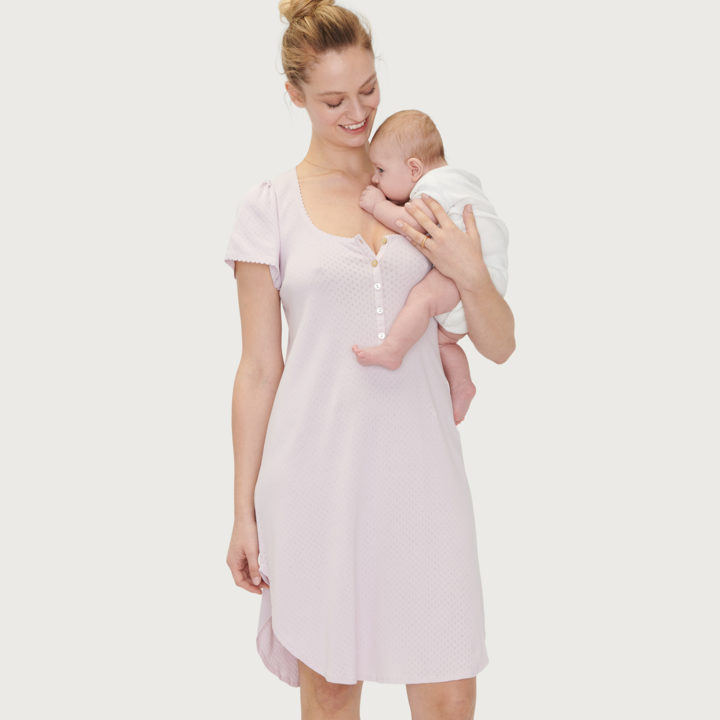
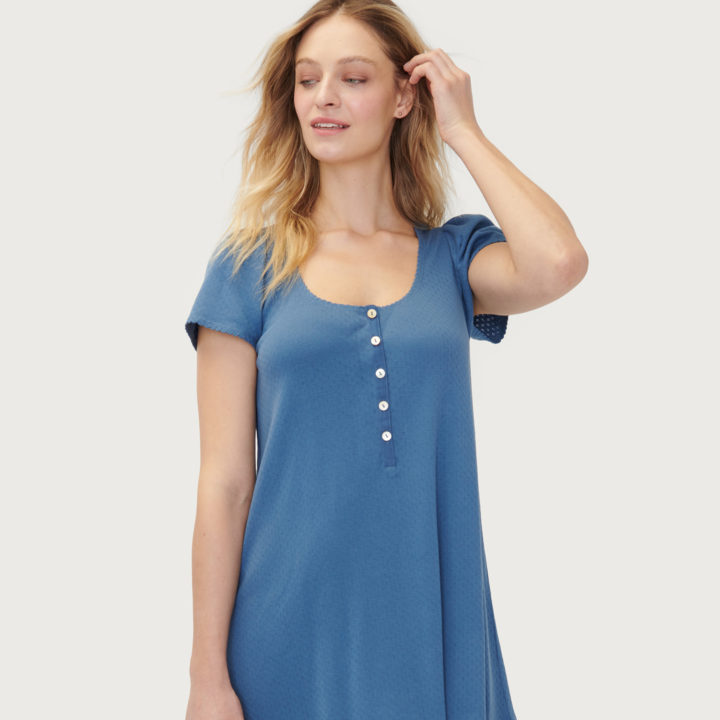
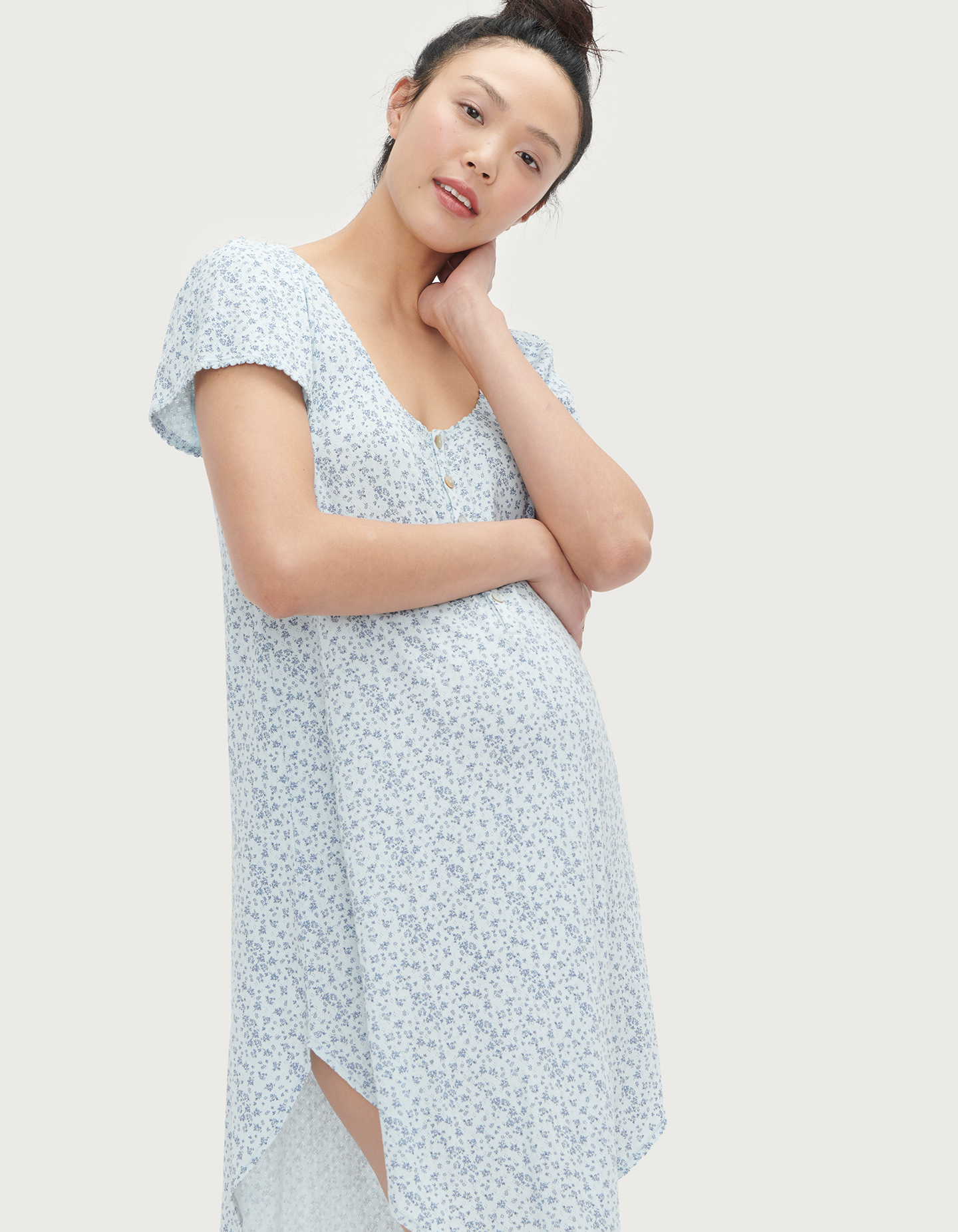
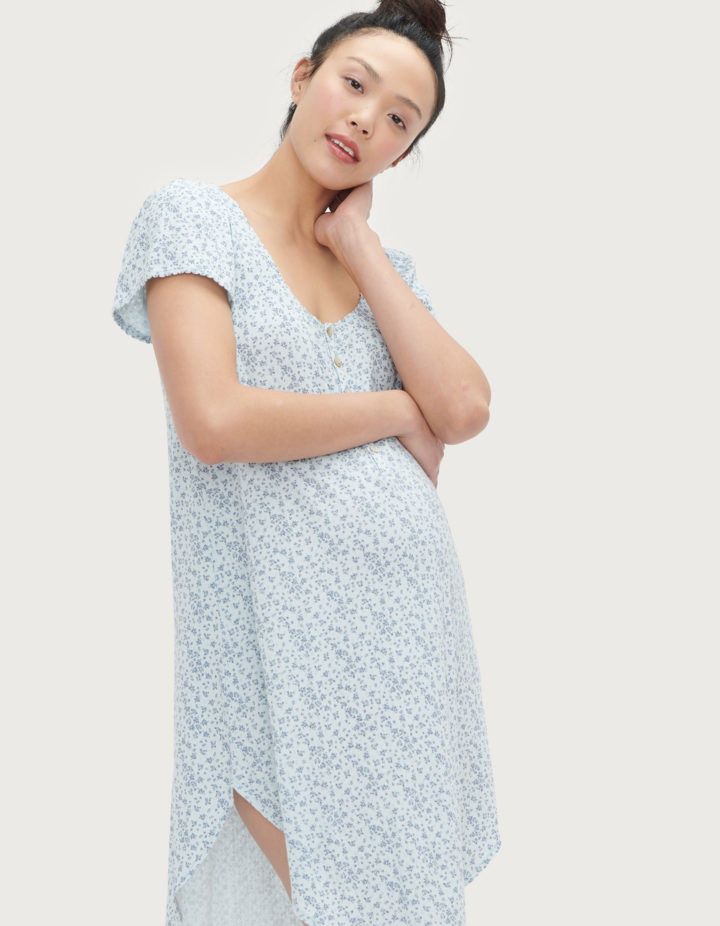
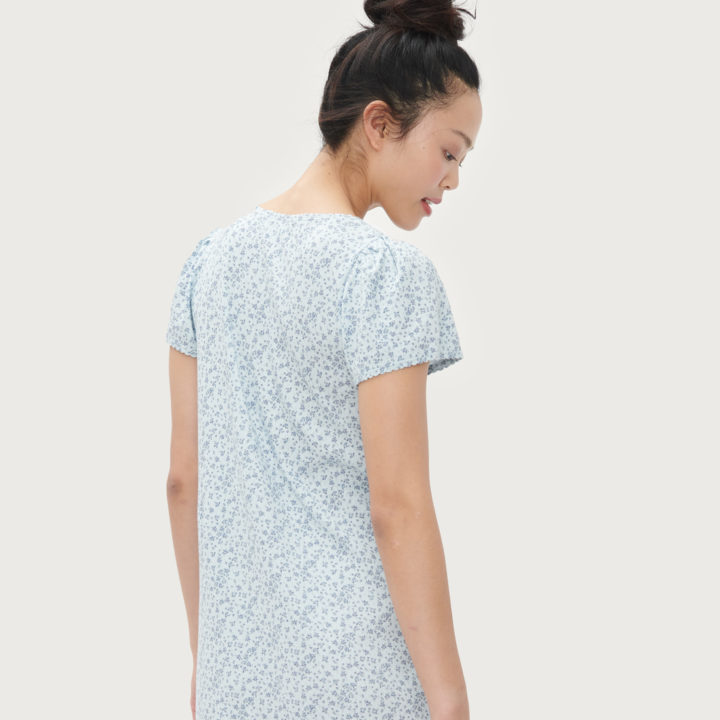
Now through Mother’s Day, 100% of net proceeds from our new Every Mother Counts x Organic Pointelle Nightgown in blue floral will benefit EMC, an organization founded by Christy Turlington Burns dedicated to achieving quality, respectful, and equitable maternity care for all by giving grants and working with partners and thought leaders to increase awareness and mobilize communities to take action.
We’ve been fans of EMC since our own beginnings and can’t think of a better time to help this incredible organization create safe pregnancy and birthing standards for all women globally than right this very second.