Which Baby Classes Should I Sign Up For? And why are there so many?
By Jennie Monness | Illustration by Ana Hard
When it comes to what class to choose for your baby it can be overwhelming because you have no idea what to look for. Depending on your baby’s age, it may feel like you don’t even know what they are able to even see yet let alone what will be “fun” or “enriching.”
Early Childhood and Parenting expert, Jennie Monness of Union Square Play weighs in on what you should look for when it comes to choosing the most optimal class for your baby.
There are a ton of classes out there but they aren’t all designed age appropriately. The thing is, that’s not necessarily a bad thing if you’re just looking for an excuse to get out with your baby, but if you’re truly focused on what will be the most enriching for your baby here’s the things to look for:
Time of day: You never want to choose a class at a time of day that your baby will be hungry or tired. If a baby’s basic needs aren’t met, there is no way they will enjoy a class.
Think about who your baby is: Are they startled by a large group, loud noises? Choosing an indoor music class probably won’t be the best idea until your baby is a bit older and more used to large groups and loud noises. Outdoor classes like those we offered at Hudson Yards would be more appropriate.
Ask yourself, is the class entertaining or engaging? Many classes are entertaining to sit and watch, a puppet show for instance, and it’s a great way to connect with other parents. But will your baby really be involved in a class like this or just sort of sit there watching? If it’s the latter, that’s ok, but just reframe expectations that your baby probably won’t do much.
Look for classes where your baby can move around with little structure. A sensory play class or an open play class is most appropriate and will allow you to see what your baby is interested in. It also allows for more social interaction which is the point of classes altogether – how to spend time with other babies.
If you’re in the New York City area, I encourage you to follow Union Square Play and myself on Instagram for fun, engaging ways to play with your babies at home as well as the latest updates on when Union Square Play will be reopening for in person classes.
The 9 Diapering Mistakes You Never Knew You Were Making From the diaper engineers (and moms) at Kudos
How many MIT grads does it take to create the ideal diaper? Does the number “three” sound about right? Kudos is a Boston-based, engineer-designed diaper that is literally trying to change the world “one tush at a time.” Here, we speak to the team at Kudos as well as expert, advisor, and 5-Time Best of Boston pediatric allergist, Dr. Ann Wang-Dohlman, on diapering mistakes you may not know you’ve been making.
Too much plastic.
Did you know that a typical baby spends over 22,000 hours chilling in diapers before potty training? What’s touching their skin MATTERS! Even though it may feel soft, with most disposable diapers (even natural ones) baby’s bum is touching plastic-based materials all day. Plastic can contain harmful VOCs and phthalates that can be absorbed into the skin and disrupt the endocrine and reproductive systems. “That’s why it was so important to us at Kudos to have 100% cotton touching baby’s skin,” said Amrita Saigal, Founder and CEO of Kudos. “It’s naturally soft, hypoallergenic, and the #1 doctor-recommended material for rash and eczema. for rash and eczema. Plus, our cotton is carbon negative.”
Exposure to allergens.
Diaper companies aren’t required to disclose their ingredients, which makes it really hard to tell what’s in a diaper. “It’s important to look for a diaper that’s free of common allergens,” says Dr. Ann, Pediatric Allergist and Kudos advisor. “Chemical irritants like fragrances, latex and formaldehyde and plastic materials like polyethylene and polypropylene, which are present in a lot of diapers, can result in allergic reactions, like diaper rash.”
Short-term thinking.
Just because you don’t see a diaper rash doesn’t necessarily mean all is well when it comes to baby’s skin. Dr. Ann elaborates: “It’s important to note that reactions can develop over time and may contribute to long term inflammatory conditions in one’s respiratory, gastrointestinal, and/or musculoskeletal systems.”
Ignoring the mantra: Ruffles out.
You know, those ruffles on the edge of the diaper that line the inner thighs when you put the diaper on? They’re called leg cuffs and according to Amrita, their primary purpose is to keep liquids and solids (read: pee and poop) inside the diaper by creating a functional but gentle seal around the baby’s thighs. And here’s a big FYI: They should be folded out as you’re putting the diaper on. When they’re folded in, moisture has a much easier time escaping the diaper and finding its way onto your baby’s leg…and, you know, the couch/crib/bed/parent…
Subpar absorbency.
Not opting for diapers with premium absorbency materials is like going to the toilet paper aisle and selecting a ½ ply option. Not. Good. “Absorbency in a diaper comes down to two factors,” Amrita explains. “First, the Acquisition Distribution Layer (ADL) that funnels and distributes moisture away from baby’s bum; and second the inner core of the diaper which ultimately absorbs and holds in all the moisture.” Unlike most disposable diapers, Kudos are designed with patent-pending DoubleDry™ technology that incorporates two plant-based ADL layers of protection versus just one, to provide superior protection. “We also use a premium material in the core of the diaper that can absorb more than 20 times its weight in liquid,” Amrita adds.
Not sizing up early enough, especially overnight.
“My daughter’s diapers used to leak ALL. THE. TIME before I started using Kudos,” Moira Finicane, Kudos’ Head of Marketing tells us. What she eventually learned: ”You don’t have to wait until your baby has reached the recommended weight range to size up.” This is particularly true when it comes to overnight diapering. Though a larger size might be a little big, it’s going to have more absorbency built-in and that can keep your little one leak-free for longer stretches. “As long as I pull the diaper up high, fold the leg cuffs out, and keep the tabs tight, I’ve found that I’m much more likely to have a wake-free night,” Moira attests.
Not enough dry time.
Putting the diaper on before baby is fully dry can be the determining factor in whether baby is cozy or miz. “Moisture, friction, and allergens,” Amrita explains “Those are the three biggest contributors to diaper rash.” “You also want to pay attention to how dry baby’s bum is before you put the diaper on,” Amrita suggests. “If you’re using wet wipes, wait until your baby’s bum has dried completely before putting a diaper back on.” (P.S. The same thing goes before you apply any diaper cream.) The last thing you want to do is trap in unnecessary moisture on sensitive skin.
Not changing the diaper frequently enough.
Regardless of how good your diaper is, if your baby is sitting in poo and pee for an extended period of time, the risk for rash and other conditions like UTIs increases. Getting a diaper with a wetness indicator is a helpful first step in keeping baby fresh and clean. It’s also a helpful tool for monitoring how hydrated your baby is. Generally, doctors recommend changing your baby’s diaper at least every three hours during the day, and as soon as possible after a #2.
Thinking every natural material is created equal.
The cotton used in Kudos diapers, on the other hand, is carbon negative and made with a breakthrough process that utilizes zero chemicals, water, or process heat.” We no longer live in a world where we can ignore the impact of our purchasing decisions. Understanding the environmental impacts of different materials is the first step. For example, “by choosing cotton over bamboo and plastic,” Amrita explains, “you are making a huge environmental impact. It’s not well known, but the process of converting hard, woody bamboo into that soft fabric you feel in baby products can actually be extremely harsh and environmentally toxic. Cotton on the other hand is carbon negative, and the cotton used in Kudos diapers is made with a breakthrough process that utilizes zero chemicals, water, or process heat.” Since no diaper is fully compostable (something the Kudos team hopes to change over time), the focus has been on sourcing and using as many renewable materials as possible.
This article was written in partnership with Kudos.
One Mama’s Solution to Childcare During the Pandemic Vivvi to the rescue
“There are so many calculations that go into being a parent, whether you have a high-powered job or you stay at home,” Liz Wilkes, CEO of Exubrancy tells us. “What are they going to eat? When should they sleep? What toy should I buy? What books should we be reading? It’s a giant puzzle!”
For Liz and her family, COVID made this puzzle even more complex. A move from the Big Apple to the suburbs provided less programming and structure than the couple had anticipated for their family. And while Liz and her husband were optimistic about figuring out how to make it work, they found themselves wanting something more.
Enter Vivvi’s at-home childcare option: the Vivvi Learning Model brought into the comfort of your own home with trained teachers. Here, Liz shares her personal experience.
Tell us about your daughter and your parenting journey.
My husband and I got married about five years ago and took a few years to settle into married life, focus on our careers, and travel as much as possible, pre-kids. We’re both entrepreneurs, so we had very busy and unpredictable schedules. After some initial difficulty conceiving, we were thrilled to welcome a baby girl, Emilia, into our lives in November of 2019. It was four months before the pandemic. Little did we know what was in store for us!
As an entrepreneur what was your maternity leave plan? Early childcare plans?
I run a company called Exubrancy, which is a global corporate wellness company. We run meditation, fitness, massages, workshops, and events around wellbeing for companies like Spotify and Etsy and hundreds of other companies around the world. Almost five years ago my company was acquired by Tishman Speyer and because of that, my schedule became a bit more conventional. That also granted me a more conventional maternity leave, which wouldn’t have been the case if I had a child pre-acquisition. There are incredible benefits from having formal maternity coverage. That’s not always afforded to female entrepreneurs having children.
I knew that I was going to take about three months off when I had my daughter. I had this whole plan that I was going to go back to work. I’m lucky that our office has a very nice nursing room—I was going to do the pump-at-the-office thing. I remember so vividly going back to work last February and pumping at work for three weeks. It was a total nightmare. I would always forget a pump part, or the logistics of keeping the milk cold would break my brain…It was really, really hard. I’m sure I would have found a rhythm, but I will say one of the huge silver linings when the pandemic hit was that I could keep breastfeeding with relative ease.
My husband is the co-founder of a company called Aktivate and we knew that while he would have a little bit more flexibility, we needed some level of childcare. At the time we lived on the Upper West Side, in New York and we hired a local nanny.
And then COVID…
When the pandemic hit, we decided to go lockdown outside of the city. We eventually moved in with my in-laws because we realized we just couldn’t make it work without childcare. For about two months, we lived with them and they basically watched Emilia every day while we worked.
Once living in this pandemic time became more manageable, we started feeling comfortable having our nanny come to our home part-time again. We thought, “Other days when we don’t have her we’ll just figure it out!” And that was really not sustainable. Suddenly your workweek is cut down and it became really stressful.
Solution?
That’s when I realized that Tishman Speyer had started working with Vivvi and was offering a program where they had educators available to come in-home–like a nanny, but with teachers. For us, it was such a no-brainer because we needed additional part-time coverage and we felt we were really missing out on the rich experiences she would have had growing up in New York City, being able to go to classes all the time and interact with other children. The Vivvi In-Home program felt like the perfect alternative.
What was the process like getting set up with Vivvi?
We vetted a number of potential educators for our family. Vivvi ran a search for us and would pre-interview people and line up interviews for us with candidates they found to be viable. We ended up interviewing three different people. We found Hailey who was the right fit from the moment we interviewed her. She has been our part-time educator ever since. We instantly got back some of that enrichment that we felt like we lost when we were leaving New York.
What’s a day in the life of Emilia like with Vivvi’s In-Home Program?
The days Hailey comes, she’s here from 9:00 to 5:00. One thing that I have loved about her from the beginning is that she’s so oriented around being outside. They spend so much of the day outside in the fresh air just exploring. I like that Hailey has access to Vivvi’s overarching themes from their curriculum and materials which allow Hailey to get creative with Emilia and build a structured, fun day with her.
Every day, we get these fantastic reports from Hailey about her day with Emilia with pictures on an app called Brightwheel. Hailey really notices changes in Emilia week-to-week and reinforces patterns that we’re seeing. It’s great to have someone come in with such an informed perspective and a strong but also very respectful point of view. It feels like Hailey’s really a collaborator with us in Emilia’s future.
Curious about how the right care can help your family thrive? Vivvi is matching families with exceptional educators across the country. Learn more and join an open house here.
This article was written in partnership with Vivvi.
Foodie Eden Grinshpan On eating well and the 4th trimester.
By Babe | Photos by Lizzie ODonnell
Eden Grinshpan’s C.V. reads “Top Chef Canada” host, cookbook author of “Eating Out Loud”, and food influencer. But beyond the bold type, she’s also a proponent of eating fresh, whole foods, a beacon of body positivity, a mom of two, and very funny. Her nearly 150K highly engaged Insta followers may have clicked follow for the recipes, but stay for the daily doses of real life unfiltered—especially as Grinshpan’s clan has grown. Below, we chat with this multi-hyphenate mama about self care, going from 1 to 2, and why toddlers can rarely be trusted with a secret.
This is obviously my second. I definitely, knowing what to expect this time around, had planned things a little bit differently. When I say planned, I mean I actually planned something. With my firstborn, I had no idea what to expect, so I didn’t set anything up for my fourth trimester. I found it to be a little bit challenging. I didn’t have anyone coming and relieving me for an hour or two during the day. So I was incredibly hands on, especially nursing; it was 24/7. It took me a little bit of time to mentally convince myself that I was ready to go again.
How is this pregnancy different from your first one?
It’s like night and day. I keep saying this to everyone. First of all, two different babies, completely different children already, which is incredible that you can already tell this at two months. I’m amazed that these little babies are born with these little personalities. It still blows my mind.
When we had my first, that was four years ago, I had a doula. All my friends were like, “Have a doula, and try and labor at home as long as you possibly can.” My biggest fear was to go to the hospital and they would turn me away, with my firstborn, my first child. So I was like, “I’m going to do this at home.” I also didn’t know if I wanted an epidural. I thought maybe I could handle the pain. I obviously did not know what to expect. So with Ayv, I labored at home from midnight till 6:00 in the morning. By the time I got to the hospital, I was wheeled in, because I couldn’t walk. I couldn’t see. I was six centimeters dilated. It was just the ultimate insane experience. It was intense labor.
How was this birth?
It was so funny, because with Romi, everyone warned me the second one comes a lot faster, so I made this mental note. I was like, “Don’t try and labor at home forever, because I don’t want to give birth at home.” The last thing I need is for my husband to be delivering my child in the main floor of my house. I don’t need him to live through that. I don’t think I could live through that. So I tried to keep that in mind. We went away in my seventh month, which was really pushing it. We came back, quarantined, and on the last day of my quarantine … I was only 37 and a half weeks pregnant, so I’m like, “I’m good. I can still pack my bag and relax.” Nothing was prepared. The last day of quarantine, my water broke. I kid you not. I said to my husband, “I think my water broke,” but obviously, no contractions. After all that time of saying, “I can’t push this one, because I don’t want to give birth at home,” my husband looks at me and he’s like, “Since you’re not having contractions, why don’t we just go to bed? Just go to bed, and wake up in the morning, and we’ll go to the hospital.” I’m like, “That’s a great idea.” What was I thinking? But luck was on my side. We called my mom. We slept, which was like a gift. My mom came at 5:00 in the morning, and we drove to the hospital. I was three centimeters dilated. With my doula, I was like, “No Pitocin. I’m going to do this. Maybe no epidural.” For this one, I was like, “Yeah, sure. Give me Pitocin.”
Not even exaggerating, I had Pitocin at noon and immediately went into labor. At 1:00, they gave me the epidural. After it kicked in, my husband ordered Chipotle and he’s eating his burrito while watching Love it or List it from the early 2000s. We were having a swell old time. By 4:00 the epidural gets super strong and my doctor comes in. At this point I was ten centimeters dilated. It was fast with Romi. I got her out and it only took 30 minutes.
Birth plan?
No. I didn’t have one. My birth plan was not giving birth at home. That was my birth plan. My birth plan was not going into labor in my house or in my car. That was the plan.
My daughter knew before my husband. We did it so backwards. I didn’t even think about what the process should have been like. It was just one of those things that happened. I woke up with Ayv. I was like, “You know what? I’m just going to do a pregnancy test. Why not?” So I went with her to her room, and she was laying out her clothes, and I took a pregnancy test, and she kind of saw. She’s like, “What are you doing?” I’m like, “Mommy’s just testing her pee.” She’s like, “What?” Then I was like, “Oh my God! Mommy’s having a baby.” We ran into my bedroom.My husband was sleeping, and I woke him up. I’m like, “Babe, I’m pregnant.” Ayv was with me, and we were all hugging. Then that day, I dropped her off at school. I was driving away. My daughter’s very loud, and I could hear her saying, “My mom’s having a baby.” She told everyone at her school. When I picked her up from school, the teachers were so awkward, and they were like, “Mazel tov?” I’m like, “Thanks.” They’re like, “How far along are you?” I’m like, “Two weeks.” They were like, “This is awkward.”
Transitioning from 1 to 2?
I feel like one of the silver linings of what’s been happening with COVID is that my husband has been working from home and he still is. I feel like that has really been a big game changer for me. My husband went back to work when Ayv was five days old. So the fact that I get to see him with Romi every day, and I know he’s there, that part’s really amazing. It’s like getting to experience newborn phase in such a different way and with such a different perspective. So it’s been nice. And especially with two kids I knew I needed outside help this time around, so I feel very lucky that we get to have help.
I feel very, very fortunate that we were able to get pregnant naturally. We didn’t really go through a crazy long process. Obviously, it took a bunch of months, but it wasn’t something that was a big ordeal.
Your diet while pregnant and nursing?
It’s actually hilarious, because I felt like I was way more nauseous with my second pregnancy. The first trimester with Romi was challenging. I was scared. I was like, “Why does it all smell like crap? Why?” I lived off of Cream of Wheat. I was basically living like a baby eating food.
I was living with my parents at the time, because it was COVID, and we moved in with them for the help. My mom’s like, “Just eat all of that Cream of Wheat. Full of iron.” I’m like, “God. What’s happening? My life’s sitting here with my mom eating Cream of Wheat.” No. It was great. So the first trimester was really challenging, but the way I cook, which is very Middle Eastern, Mediterranean food, is very veg heavy, colorful and fresh. I really stuck to that. I definitely increased my carb intake. My addiction to bagels skyrocketed. I don’t really deprive myself for cravings ever, so I just went for it. But because I think I eat really light food too, it was a nice balance.
Breastfeeding?
It’s been good. With Ayv, I struggled with the latch. I always complained. I complained on social media about how painful and unnatural the process felt for a really long time. But I was so stubborn and really, really wanted to breastfeed. This time, I feel like, because I guess I’ve done it for so long, the latch happened a lot easier. Plus I had a lactation consultant at the hospital come in and just make sure that I was doing it right. I really didn’t want to have bloody nipples. It was just so painful with Ayv. It was like nursing on top of wounds for months. It was awful.
We got the groove a lot earlier on with Romi. It was a lot easier. But it’s something I think most nursing moms sometimes feel like, “I hope I’m making enough,” or, “I hope she’s getting enough.”
Maternity Leave?
I actually am in the process of renovating my home. My kitchen is almost complete. Once it’s complete, I’m going to start doing a lot more content in my kitchen. The plan is just to continue building and doing fun stuff online. More food content, but also mom content, lifestyle. I have so much fun with my husband, so I always try and include him, because he’s a huge goofball. He’s such a great dad also. He’s just awesome. So it’s just about creating more fun stuff with him, and recipes and cooking videos. There’s always something in the works.
Self-Care?
Well, I’m making a conscious effort to try and not just put my phone down but put my phone away. I don’t think sometimes I even realize how connected I am to it. It takes away from a lot of moments in your life with your friends and your family. So I’m trying to put my phone down, just making sure that we’re all really connected. I also love a long shower, close the door, me time, just stand in a piping hot shower, and just do a face mask. Maybe go for a nice walk. I’m starting to pick up working out and Pilates. I took my first Melissa Wood Health class two days ago, and I actually can’t walk up the stairs. My butt is killing, but it’s amazing, because I swear my body forgot about those muscles. So just getting back into the groove of it.
I do think there’s a lot of pressure socially for people to bounce back, and to look amazing and to feel amazing right from the get go. I just don’t think it’s realistic.
I feel really good in my body, even during and after pregnancy. I think that’s something that we should all be feeling, even though it’s different from what we’re used to. I think different isn’t a bad thing. I think change isn’t a bad thing either. I view my platform as a place for me to show people that it’s okay. I don’t want it to be perfect or even necessarily too precious. For me, it’s okay to have fuck ups.
This isn’t forever. You’re not going to be dealing with newborn phases or a fresh postpartum body forever. Everything changes.
What does the 4th trimester mean to you?
Your baby comes out and is 100% dependent on you and your partner. She’s growing like she would be, basically, in your womb. She’s just out of your womb. I just think that it’s my way of making sure that I know, and whoever’s going through it realizes, we have to be gentle with ourselves, and forgiving, and understanding that this is still such a monumental three months in this process for us. I think it’s okay to just live in a filthy house, and not have to wash your hair, and not be making meals for yourself and your family, and embracing ways to make life easier for yourself. Just cut some slack. We put too much pressure on ourselves. I think it’s about just letting go and just embracing this time. We’re in the trenches. This is hardcore stuff right now.
Advice for moms?
I think my favorite part of social media is finding a community of people that are experiencing something at the same time. I’ve had this happen to me, where I’ll follow someone who says something, and I’m like, “Well, that makes me feel better about that.” I think it’s just about using that in a positive way—where you find people that make you feel good and understanding of what you’re going through. Social media can also be a really negative experience for so many people, because it’s too much of that comparing stuff. Find people who make you feel good. Find your community wherever that is.
It’s CBD…. for Moms From focus to chill, Liweli has you covered.
By Babe | Photos courtesy of Liweli
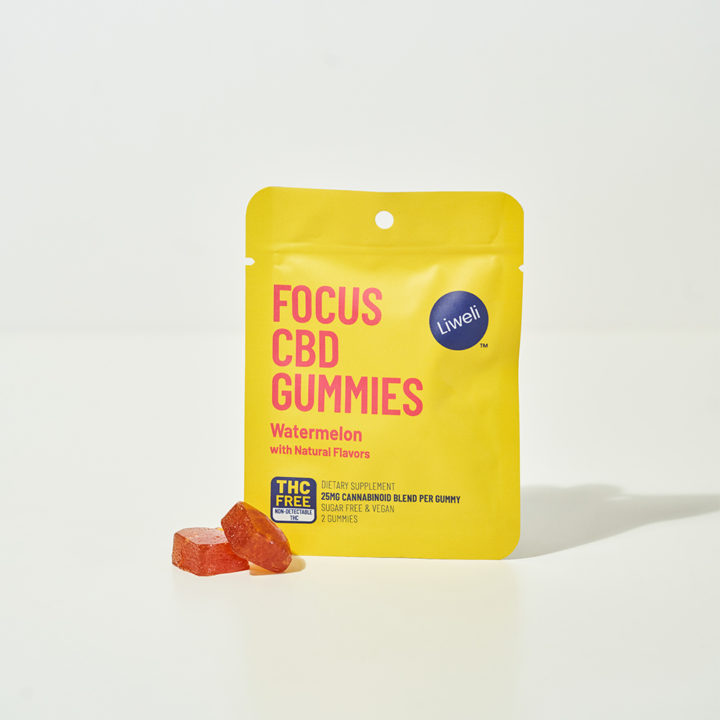
It takes a mom to know how other moms need to chill out. Fortunately for everyone in your play group, Chondita Dayton, a mother of two, Harvard grad and major health and Eastern medicine advocate, founded Liweli, a plant-based CBD brand with fast-acting, water-soluble drink mixes, gummies and mints in fruity flavors stacked with benefits. Plus Liweli owns the entire process, from farm network to formulation, so there’s nothing sketchy about it.
“Acupuncture, reiki, rolfing, gua sha, Ayurveda, chiropractic, functional medicine, traditional Chinese medicine – I have literally tried it all,” says Dayton. “But with two children I have a lot less time to put towards my wellness ‘routine.’ After learning about hemp I knew there had to be a way to make this incredible plant accessible to people of all walks of life.”
The result is CBD with traceability from the place of origin and growing practices (including the quality of the soil and plant genetics) down to the final batch that comes to customer. With Liewli, the hemp is extracted in a cGMP certified facility – which means it has been audited by a third party for its excellent production standards. “One element of our products that is very unique is using custom cannabinoid formulations (all THC free) to achieve different effects,” says Dayton. “For example, our focus products use rare cannabinoids in specific ratios to offer a calm, tuned in energy. For each product, we carefully consider how the customer will be using the product to make it effortless, effective and delicious.”
So for anyone from needing an extra dose of focus to more calming moments in your day, Liweli has got you covered. Just remember, we don’t advocate using CBD during pregnancy or postpartum (for more on that conversation check out our story here), so as always, please consult your medical provider if you have any questions or need more information.
On Raising Free Black Children Birth Stories In Color digs into the experience.
By Birth Stories In Color | photo by @athainablot
This article was written by Birth Stories in Color (BSiC), a podcast where Black, Indigenous, Asian, Latino and Multiracial individuals can share their birthing experiences. It’s a space that specifically celebrates, mourns with and supports them and their transformation through birth. BSiC also emphasizes the role of storytelling as a way to equip future parents. Listening to real birth stories is one way to discover the expected and unexpected parts of the journey. While there are birth stories not being heard, BSiC’s hope is that all who share and listen find this platform to be a community and an invaluable resource for those navigating their own journey.
Raising Black children in America is an experience coupled with joy and challenges. The choices we have to make can often seem audacious. We desire to raise free Black children with joy-filled promises. Our own experiences have caused us to be on guard with everyone our children interact with, including the community helpers we entrust with them. However, we have watched countless videos depicting the violence and disrespect of Black bodies on every platform available. The trauma often leaves inescapable wounds that mar our ability to parent in a way that we deserve.
These are the realities that shape our lived experiences, factors we don’t have the luxury of ignoring or escaping, thus leaving us with reconciling what it is to keep our kids safe and allowing them to live in joy and be free. As two Black parents currently navigating our journey of parenthood, we often share our concerns, frustrations, and most importantly, how we are creating space for our children to live within their birthright of joy. As we often express on BSiC, everyone’s own experience is their own, but sitting in the community will enable us to connect with and take pieces of others’ experiences to help navigate our own.
Black parents can create opportunities for our children to experience and learn about our culture and history that stems through time, before, during, and after our ancestors were stolen from Africa. Our families are starting to embrace and build upon the idea of Black futures. Exploring community engagement that offers up empowerment, a reconnection to cultural traditions is a strategy that centers their lives, unifies our people, and builds self-confidence. Our families can reimagine our world to be how we want it to be. Reimagining our world will take more than thoughts, but that is the starting point.
For many in the Black community, the saying we heard often was “children are meant to be seen and not heard.” Our children are active participants in their daily lives. There is an open conversation about their wants and dislikes. These conversations allow for opportunities for learning and social-emotional awareness. There is always acknowledgment of our mistakes and reconciliation when those mistakes have caused hurt or confusion. While we are their parents and guides, we are also their first encounter in relationships with others. We allow them to build trust in how they feel and how that shapes their communication and connection to others.
There are many stories of our elders’ experiences that have loose ends – we are open with ours—sharing the experiences that have shaped us. Forthcoming with the many layers of life – our joys, mistakes, heartbreaks experienced, and moments of confusion. It provides an opportunity for our children to see us in our humanity as their parents and learn to name their feelings the ways they show up for them. It also serves as a beginning lesson that walking through life does not have to be carried on our own. We can lean into our community to support us in the ways we need. That is, asking for help and accepting help makes us stronger.
There are days of lounging, low expectations, and clearing schedules when necessary. Teaching our children that there can be ease and flow in childhood will carry over to adulthood. The rejection of busyness allows our children to focus on the things that bring them joy and have no ulterior motive. Our bodies are designed to create, do, learn, move, and they are divinely called to rest.
There is a poem by Kahlil Gibran – On Children: The first time we heard it was through a song by Sweet Honey in the Rock. Below is an excerpt that resonates with us the most:
Your children are not your children.
They are the son and daughters of Life’s longing for itself.
They come through you but not from you,
And though they are with you yet, they belong not to you.
As our children teach us in pregnancy and birth, we are not in control of the plan. We are there to guide, protect and ensure their journey of life is honored in its sacredness. The root of parenthood is that it requires us to work on ourselves, sometimes healing our inner child. A lesson that may not always be easy and is ongoing, but of the most importance – fulfilling this, we can show up fully for our children, uplifting free Black children with free Black parents.
How do I Burp my Baby? Our tips for the most feel-good moment of your day.
By Babe | Illustration by Ana Hard
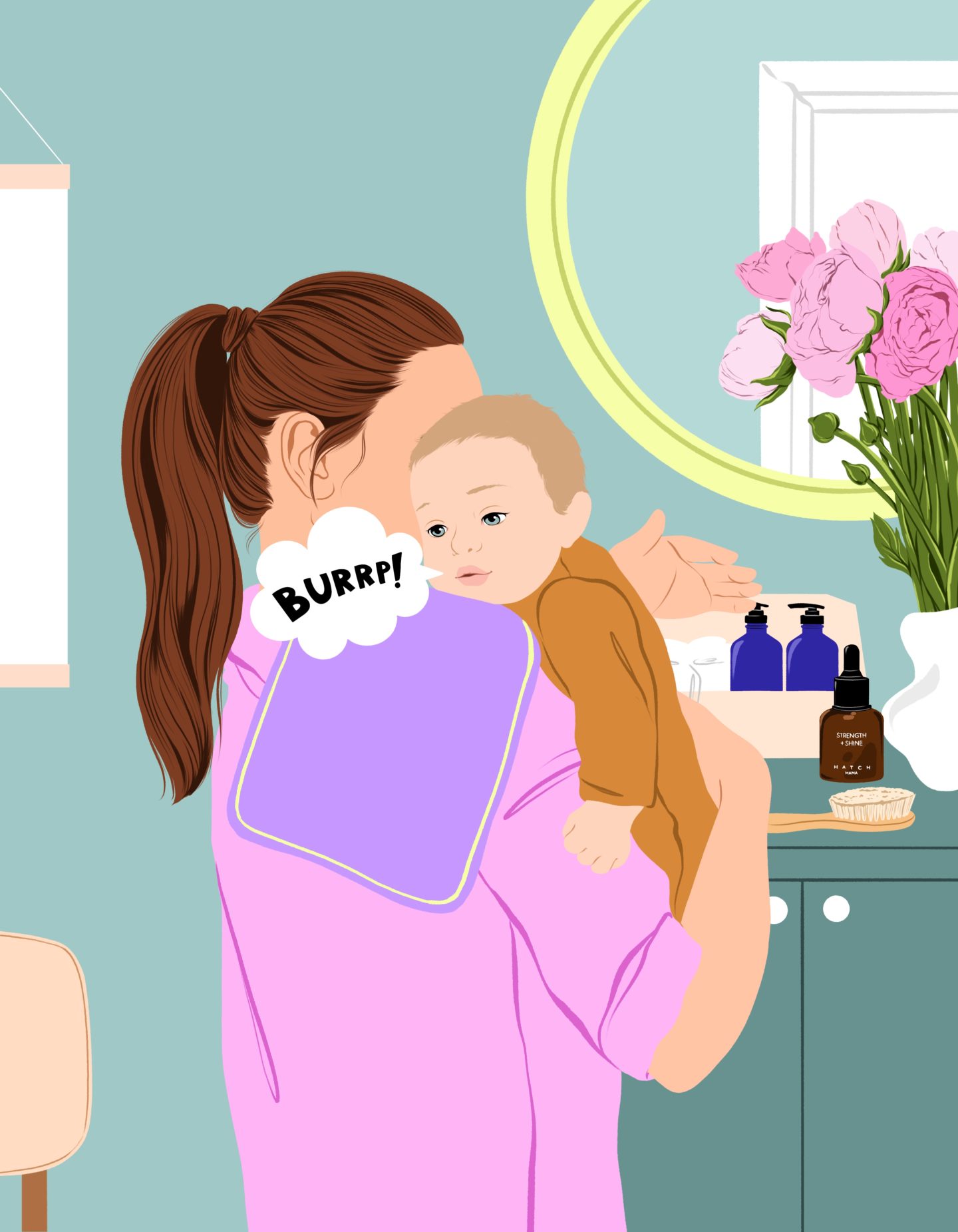
Burping a baby can be a truly joyful experience. The moment they let out that beautiful, oh-so-sweet belch is like winning the feeding lottery.
On the flip side, there’s literally nothing worse than trying to help a babe who just can’t let one out. In case you didn’t know, burping helps babe get rid of some of the air they tend to swallow during feeding. Not being burped often enough and swallowing too much air can make a baby spit up or appear cranky or gassy.
Peep below for our tips on burping your baby like a pro.
Tips for Burping Babe
First things first: Contrary to popular belief, you don’t want to smack your baby’s back when burping but rather try gently patting on your baby’s back, or even firmly circling their back with a flat palm should do the trick. Also, you never quite know what’s going to come out of your baby — whether a dry or wet burp — so always have a cloth nearby. (It’s called burp cloth for a reason!)
Sit upright and, depending on their age, hold your baby against your chest or sit them up on your lap. Your baby’s chin should rest on your shoulder as you support the baby with one hand. With the other hand, gently pat your baby’s back in a circular motion. If on your lap, rest the bottom of your hand on your baby’s chest. Use the other hand to rub the baby’s back.
If your baby seems agitated or grumpy while feeding, stop and try to burp them, and then begin feeding again. When bottle feeding, try burping your baby every two to three ounces. When breastfeeding, burp your baby each time you switch breasts.
If your baby doesn’t burp after a few minutes, change their position. Try burping for a couple of minutes before feeding again. Always burp your baby when mealtime is over.
If your baby spits up frequently, keep them upright after a meal for 10 to 15 minutes. This upright position can help prevent milk from coming back up. But if babe spits up, do not worry. It’s totes normal.
Sometimes, gassiness and fussiness go hand in hand. For example, babies with colic (marked by three hours or more of consistent crying a day) might be extra gassy from swallowing too much air while crying, making the baby even more uncomfortable. If your baby seems particularly uncomfortable, contact your pediatrician or healthcare provider.
Different Burping Techniques
Just like with breastfeeding, there are a few different positions you can try while burping your baby. Feel free to experiment until you find the one that you’re most comfortable with. The most common burping positions include:
1. Over the Shoulder
For this burping method, set your baby in the upright position, with their head gently resting on your shoulder, facing behind you. Your free hand will gently pat or rub your baby’s back. In this position, place a bib over your shoulder, covering the back of your shirt.
2. Face Down, Lying Across Your Lap
Put your baby face down across your lap. Use one hand to support the baby’s head and chin so that they can breathe properly while the other hand pats their back.
3. Sitting on Your Lap
Finally, sit your little one on your lap, facing away from you. Put one hand on the front of their chest and lean them forward slightly, supporting their chin and jaw (but not their throat).
4. Bicycle Method
If the fussiness continues, lie your baby on their back and move their legs back and forth, almost like they’re riding an itsy-bitsy bicycle. For an extra boost, try massaging your baby’s tummy.
Signs of a Baby That Needs To Be Burped
Babies can be tough customers. Eventually, you’ll be an expert in reading their body language, but when you’re still getting to know each other (and especially when they’re still figuring out how to communicate!), it can be tricky to figure out what your babe is trying to tell you.
If you’re a first-time mom and are new to baby burping, keep an eye out for the following signs that your newborn needs to burp:
They wake up relatively soon after feeding. Most of the time, when babies wake up in the night, it’s because they’re hungry. If your sleeping baby quickly wakes after eating, they might need to burp.
They become squirmy mid-feeding.
They stop feeding early. If your baby normally chugs a whole bottle but is getting finicky or stops feeding halfway through, it could be a sign that they need to burp.
They scrunch their knees up. Babies often do this to express discomfort or pain, so it could be a sign that they have trapped gas building up.
Frequent spit-ups while feeding.
A sucking sound while feeding. If it sounds like your babe is sucking in a lot of air, they probably are — in which case, they’ll need to burp pronto.
Different Burping Habits
While every baby will likely need to be burped at some point, there IS a difference between breastfed and bottle-fed babies. Experts say that typically breastfed babies need to be burped less because they swallow less air in the feeding process. (Swallowed air bubbles are what create a need to burp.)
It’s generally a good idea to try burping your babe in between every feeding, just to keep them comfortable. But don’t freak out if they don’t burp every time — sometimes, your little one just doesn’t need to burp, especially if you’re breastfeeding.
Other Important Info
Being a mom means basically being an expert in a lot of things, not just burping your little one. You’ll also become a pro at feeding your newborn, whether you choose bottle feeding or breastfeeding, putting your baby to sleep, and learning how to interpret the minute differences in their cries and facial expressions.
This can be overwhelming at first — trust us, we get it, and we want to help. Keep reading for a full list of some of our must-haves for new moms.
Mom Essentials
If you’re breastfeeding your newborn, invest in some nursing-friendly fits ASAP. Nothing is more annoying than having to hide in a bathroom because you can’t nurse without taking apart your whole outfit, and a good nursing top or nursing jumpsuit will take care of that problem for you.
For one of our favorite nursing-friendly shirts, look no further than The 24/7 Nursing Tank. This postpartum staple is made from a soft and stretchy blend guaranteed to keep you comfy and cool all summer (and winter: hello, hot flashes) long.
The snap front placket and built-in bra provide super easy access to your nips for when your baby starts demanding their next snack. It’s stylish. It’s comfy. Best of all, it makes nursing and pumping a breeze (or at least a tad easier.
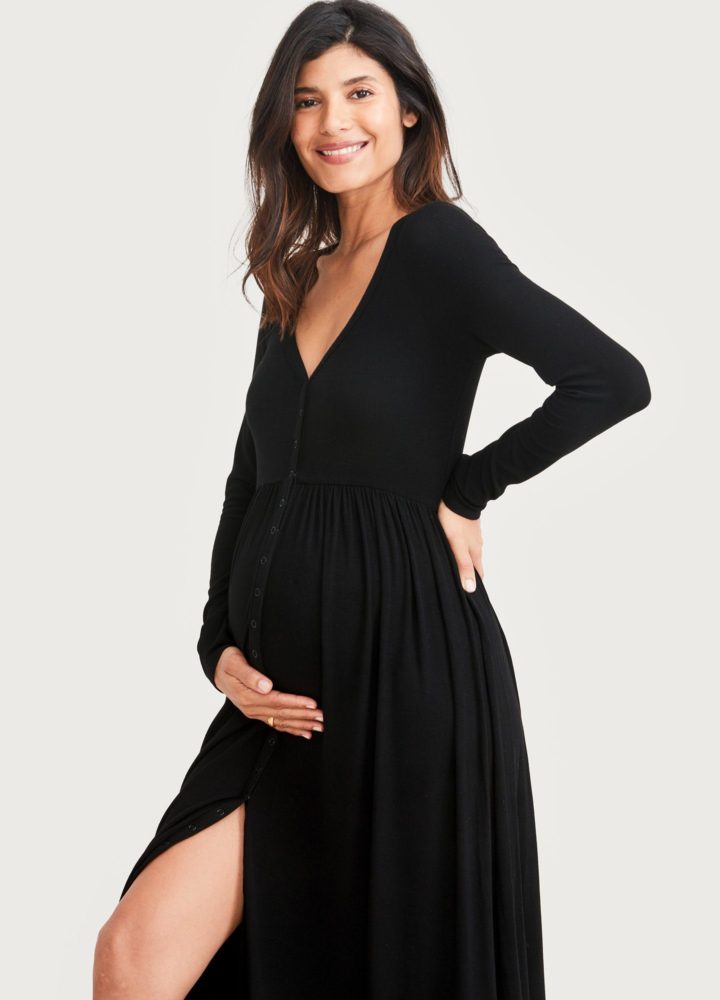
Another one of our fourth-trimester faves: the Softest Rib Nursing Dress. This ribbed knit fabric legit feels like a cloud (and kind of looks like one, too, if you choose the Ivory colorway). Midi length, V-neck, half sleeves, and a fully functional button-up style seal the deal on a dress that’s equal parts functional and flattering.
Baby Essentials
Being a mom means shopping, like, a lot. It can be shocking just how much stuff your little one needs, even just to leave the hospital! One of our biggest tips to new moms is to start making a list of all these essentials early on in your pregnancy so that you can stay on top of the ball and feel totally prepared by the time your due date rolls around.
Those essentials include big-ticket items, such as:
A baby carrier: you’ll need this to bring your baby home from the hospital.
New parents might be feeling stressed and overwhelmed by all this information — that’s okay. Becoming a new mom is a LOT, but that doesn’t mean you can’t handle it. Start by mastering one thing at a time, like burping. Once you’ve got that figured out, then worry about how to manage colic or when to introduce solid foods.
Yes, Even You Can Make Your Own Slime Why didn't we know this before?
“I was this many years old when I discovered that I can make my own slime at home rather than buying single use slime at the store. All you need is one tablespoon Psyllium Husk Powder, one cup cold water, and 3-4 drops of food coloring and/or glitter. Place all ingredients into a non stick pan and mix together. You can add a couple drops of food coloring at this point if you want colored slime.
Heat up on the stove until bubbles start to form and stir the entire time. The slime will start to thicken and stick together. Remove from the heat once the slime is thick enough to lift up on your spoon. Allow it to cool before playing with it.”
44% of Recent Moms Say *THIS* Is Hurting Their Mental Health Bobbie releases the 2021 Feeding Confessionals Report
By Ruthie Friedlander
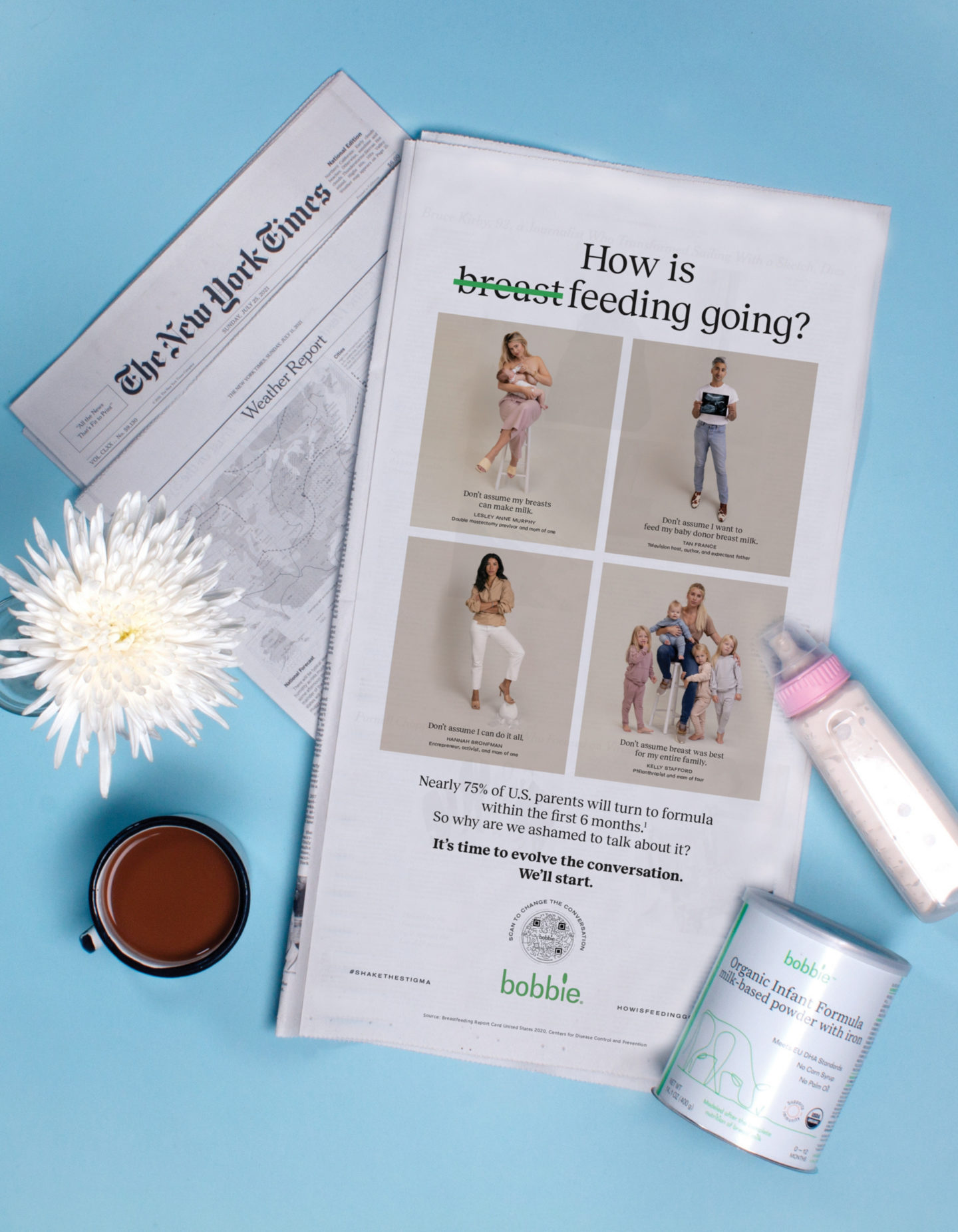
Our friends at organic baby formula brand Bobbie are at it again after last month’s emotional feeding stories from celebs, they are taking it a step further with deep dive feeding confessionals about what infant feeding journeys are really like for everyday parents across the US.
“Feeding Confessionals is a content series highlighting the emotional highs and lows of feeding a baby- our only agenda was to show the actual twists and turns, the tough decisions, and the emotional connection between becoming a new parent and feeding a baby,” the team at Bobbie tells Babe. “It started in 2020 as a yearlong project by Bobbie to showcase personal and raw video diaries from parents across the country.”
In partnership with research company, Wakefield Research, Bobbie surveyed 1000 moms who gave birth over the last two years, to reveal all things postpartum mental health and feeding.
44% of recent moms name at least one feeding-related challenge that is hurting their mental health
46% of moms have lied about their feeding choice (that’s up to 56% for working moms)
40% of recent moms admit to feeling guilty about not being able to pump enough
As if we needed more proof the conversation around feeding needed to be changed…
Bobbie doesn’t stop with simply reporting the research. The infant formula brand is asking for you (yes, you) to participate in their next round feeding confessionals. All you need to do? Click this link and follow the directions for a chance to be featured in this massively impactful series- what they hope will be the largest social study on feeding for modern parents.
Not into sharing your own story? They’ve still thought of you. Bobbie has teamed up with the maternal wellness app Mindful Mamas to offer 20 custom guided meditations to help you through four chapters of a feeding journey: breastfeeding/chestfeeding, pumping, bottle feeding and weaning. From the challenges of weaning before you are ready to making every feed a moment to connect with your baby- these first of their kind meditations are here to support the emotional rollercoaster of year one of feeding a baby. The app and Feeding Journeys content is free until the end of November!
“When we saw the new data that the realities of feeding a baby are not meeting their expectations- we feel a responsibility to share what some of those realities really look like. From being able to make exclusively breastfeeding work, to having a supply drop when you go back to work, to having to toss 100 ounces of breastmilk in the trash because of high lipase– when you watch these emotional and raw feeding confessional diaries you can see that the feeding experience is truly as unique as the baby,” said Kim Chappell VP of Marketing for Bobbie. “By sharing more of these honest realities, by supporting parents in a new way with guided meditations, we’re hoping we can help lower that staggering data point that 79% of parents feel guilty about some aspect of their feeding journey. No one should feel guilty about feeding a baby- period.”
"I stepped out of work during Covid-19 and can't get back in." Peep these career reentry tips by our friends at LUMO.
By Lumo | Illustration by Ana Hard
Heading back to the workplace after an extended period is a toughie. So our friends at LUMO – an executive coaching firm that works with companies in hiring and retaining mothers – weighed in with five steps women can take as they reenter the work force. Whether you clocked out to raise a family or get your children through home schooling, LUMO’s got the tips you need to get back into the swing of your career.
There’s no question that heading back to the workplace after an extended period away can be challenging. At LUMO we call the period after maternity leave the “paradox period.” It’s a time of conflicting emotions. When you’re at work, you’re thinking about home. When you’re at home, you’re anxious about work. Or maybe you’re finding that, while you love your baby dearly, you’re happy to have a break and you feel guilty about that? If any of this sounds familiar, know that you’re not alone.
The “paradox period” is a time when mom guilt and overwhelm can take hold. To stop those nasty demons in their tracks we offer these 5 Steps for a Successful Re-Entry to help you excel as a leader and become more creative, more focused, and more empowered in your roles at home and at work:
Prioritize Your Well-being
Well-being is the access point for everything you want in life: love, abundance, joy, energy, patience, generosity, connection, and success at home and at work. Making your own well-being a priority not only increases your productivity and helps you accomplish more goals, it also broadens your capacity to experience joy and satisfaction in relationship to your many accomplishments.
For many women a commitment to their own well-being lands squarely at the bottom of the to-do list, if it even makes it on the list at all. While some see self-care as an indulgence or a thing to dabble in in one’s “free time,” a commitment to well-being is a foundational necessity when it comes to “Results,” with a capital “R.”
Well-being is an individual practice. Everyone takes care of themselves in different ways, and it’s important to remember that what works for someone else might not work for you.
To begin to identify what does work for you, ask yourself:
What does well-being mean to me? What is the current state of my well-being?
Without any financial or time limitations, what would my ideal version of self-care be? (Dare to dream big!)
From my “blue sky” ideals above, what can I see as a possibility for additional self-care practices in the reality I’m living in right now?
And then begin tracking your well-being in these three categories: Body, Mind, and Connection. How often are you moving your body? Are you stimulating your curious mind? Are you engaging in meaningful conversations with co-workers and friends? When you attend to this holy trinity of well-being you will feel an increased sense of peace and happiness.
Ditch Mom Guilt
The team at LUMO has worked with hundreds of brilliant women who ‘know’ things intellectually – they have taken the class, read the books, and aced the test. And yet…. They still expect themselves to create something impossible: being a *perfect* mother who is everything to everyone, and looks fabulous doing it. WHY? Because there is a gap between what we know intellectually and what we believe at a cellular level in our nervous system. Mom Guilt lives in that gap. It’s not enough for us to know something in our intellect, we have to experience it in our hearts.
Here’s the good news: you have the power to change and transform your experience. You get to say how it goes. If Mom Guilt is rearing its ugly head a little too often, ask yourself:
In what areas of my life do I experience guilt?
What does my guilt sound like? What does it feel like?
What are my undercover “shoulds” around motherhood, and where did they come from?
Hold Your Boundaries
Boundaries are often perceived as something negative, a wall we put up between ourselves and others. Many of us are afraid to set boundaries with our families, bosses, or co-workers, fearing their negative reactions. We worry about offending people or seeming self-centered. Often it feels safer or easier to just say, “yes,” when we want to say “NO!” In the moment, avoiding potentially uncomfortable conversations seems like the best approach.
In order to set healthy boundaries, we have to remember that our top priority as a mom is taking care of ourselves. When mama is fully sourced, she has extra for those in her care. Boundaries are a gift: one that you give to yourself and to others. Think of them as a how-to guide of how we want people to treat us.
If your boundaries are a bit fuzzy, start by asking yourself these questions:
What is my definition of a personal boundary?
If I could set up my ideal boundaries—at home and at work—without any fear of repercussions or retribution, what would my boundaries be?
In what areas of my life do I struggle with setting boundaries (work, family, friends, etc.)? How do I feel when my boundaries have been compromised?
Break Up with Overwhelm
For many new parents, particularly working moms, overwhelm and inadequacy are constant companions. No matter how hard you work or how much time you have, you can’t seem to get out in front of the feeling that you’re not doing enough. While each person’s overwhelm is its own special blend, they all share a strong family resemblance of exhaustion, frustration, and scarcity.
Fundamentally, overwhelm is a dis-empowered relationship to your workload and responsibilities. Overwhelm is a fear-based conversation. It’s low-grade fear in a productivity disguise. Overwhelm doesn’t ask how you’re doing, it asks how much you’ve done, and when you’re going to do more.
If you feel that overwhelm is your default setting, ask yourself:
How do I know when I’m overwhelmed? What are my “tells?”
What are my current coping strategies when I slip into overwhelm?
How can I interrupt my state of overwhelm? Examples: self-care, get support, stop before I say yes, take a break.
Build Support Structures
Mothers are under-supported. This is a problem. And yet, somehow… Mothers are expected to solve this problem. On their own. While under-supported. As women, we feel pulled to do it all, however it’s often at a tremendous cost and “doing it all” isn’t actually our job. Women manage busy careers while often managing the majority of tasks on the home front; from managing the household, to schedule planning, or caring for aging parents and arranging childcare. This leads to overwhelm and exhaustion.
At LUMO we believe that this support deficit is not just a “mom problem.” It is an EVERYONE problem. And the sooner we start getting others enrolled in the support of moms, the happier the whole world will be. But sometimes the thing keeping mom from getting the help she needs is her own lack of willingness to get supported. The fear of what asking for help or support means about her. Is she not doing enough? Is she not a good mom? If she asks for help will people judge her, or see her as lazy or incompetent?
If you’re feeling under supported, start by asking yourself the following questions:
What is my relationship to support? Is it easy or challenging for me to accept assistance?
What support structures do I need that I have been resisting? In a perfect world, in which getting help was effortless, what kind of support would I have?
What support resources do I have that I haven’t tapped?
The “paradox period” can certainly be challenging and rife with emotional and logistical curve balls, but the more grace, compassion, and space you give yourself to find your own way through this curious transition, the less paradoxical – and more peaceful – it will be.